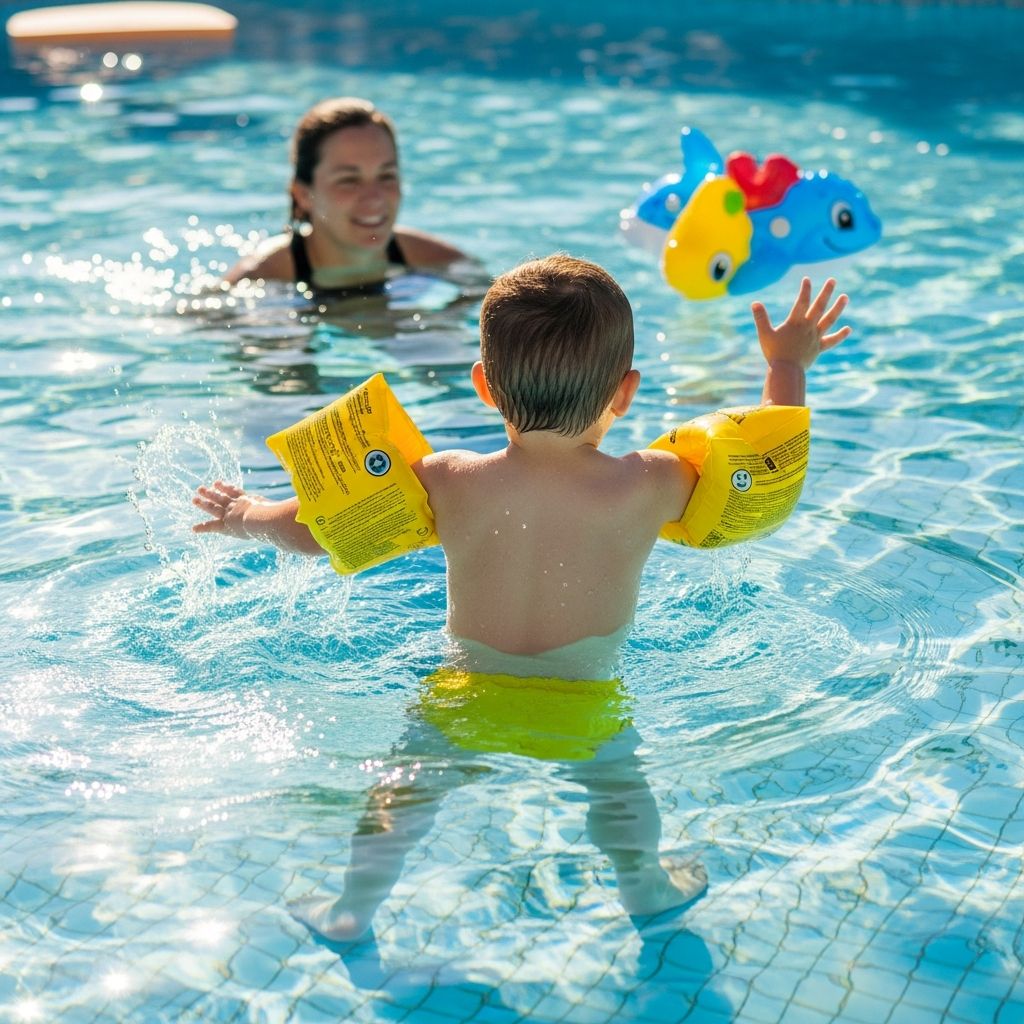
Inflatable armbands, commonly called floaties or water wings, are popular among parents seeking to give toddlers buoyancy in pools or lakes. However, these devices create significant hazards rather than providing reliable protection. Experts from swim schools and safety organizations highlight that floaties foster overconfidence, promote improper body positioning, and fail under real-world conditions, increasing drowning risks—the leading cause of death for children aged 1-4.
Understanding the Allure and Deception of Floaties
Parents often choose floaties for their convenience and vibrant designs, assuming they keep children afloat effortlessly. These inflatable rings slip onto a child’s arms, providing upper-body lift that lets toddlers splash independently. Yet, this apparent freedom masks critical flaws. Swim instructors note that floaties do not qualify as personal flotation devices (PFDs) under U.S. Coast Guard standards, lacking the straps, buckles, and crotch fittings needed for secure attachment.
The primary issue stems from their design: easily punctured or slipped off when wet, they offer unpredictable support. A child jumping or twisting can dislodge them in seconds, leaving them unsupported in deeper water. Moreover, the vertical posture they enforce—arms raised, head upright—contradicts natural swimming mechanics, where horizontal alignment maximizes buoyancy and propulsion.
Key Dangers Posed by Inflatable Arm Floaties
Several interconnected risks make floaties unsuitable for young swimmers. Here’s a breakdown:
- False Confidence in Children: Toddlers wearing floaties associate floating with their own abilities, not the device. Without it, they may boldly enter deep water, believing they can swim independently.
- Parental Complacency: Seeing a child ‘safely’ bobbing prompts relaxed supervision. Parents might step away for a phone call or chat, missing the moment floaties fail.
- Deflation and Slippage: Made of thin vinyl, floaties leak air from punctures or slowly deflate. They slide off arms during vigorous play, especially if not perfectly sized.
- Face-Down Submersion Risk: Upper-body focus leaves legs unsupported, causing forward tipping. A child’s face can submerge while arms remain buoyant, hindering self-righting due to limited mobility.
- Impeded Skill Development: Constant reliance prevents learning to kick, float horizontally, or roll to breathe—core survival skills taught in swim classes.
These factors compound in open water like lakes, where currents exacerbate instability. Statistics from the CDC underscore the urgency: drowning claims over 1,000 U.S. children yearly, with inadequate flotation contributing significantly.
Why Body Position Matters in Water Safety
Human buoyancy thrives in a streamlined, horizontal stance, akin to how fish glide. Floaties disrupt this by hoisting arms overhead, forcing an upright ‘drowning posture’ that exhausts energy and sinks the lower body faster. Children habituated to this never experience natural floating sensations, delaying proficiency in back-floating or forward propulsion.
Contrast this with proper swim training: infants learn breath control and submersion comfort early, progressing to independent reaches for safety. Without props, kids grasp their body’s true water response—sinking if panicked upright, buoyant if relaxed horizontally.
| Floaties Posture | Effects | Ideal Swimming Posture | Benefits |
|---|---|---|---|
| Vertical, arms elevated | Increased sinking speed, fatigue, face submersion | Horizontal, streamlined | Energy-efficient, natural buoyancy, easy propulsion |
| Upper body only support | Legs drag, imbalance | Full body engagement | Balanced movement, skill building |
Safer Alternatives to Floaties for Toddlers
Ditch floaties for vetted options that prioritize safety without hindering progress. Top recommendations include:
- U.S. Coast Guard-Approved Life Jackets: These PFDs feature multiple buckles, leg straps, and head support, keeping children face-up even unconscious. Use only for non-swimmers in open water or boats, never as swim aids.
- Swim Lessons from Certified Instructors: Programs emphasize water acclimation, breath holding, floating, and self-rescue. Start as early as 6 months for comfort building.
- Pool Noodles or Kickboards: Non-inflatable aids for supervised play, promoting horizontal positioning and leg strength without false security.
- Swim Goggles and Rash Guards: Build underwater confidence and protect skin, supporting prop-free exploration.
Reserve life jackets as last-resort backups; daily pool time should focus on unassisted practice within arm’s reach.
Essential Water Safety Rules for Families
Beyond gear, vigilance defines safe swimming. Adopt these protocols:
- Constant Supervision: Assign one adult per child under 5, within touching distance—no distractions.
- Fence Pools: Four-sided barriers with self-latching gates prevent unsupervised access.
- Learn CPR: Every caregiver should certify in pediatric resuscitation.
- Set Water Rules: No running, diving without clearance, or entering deep ends unaccompanied.
- Empty Water Toys: Drain inflatables post-use to avoid toddler temptations.
For special needs children, consult instructors for customized flotation, but prioritize independence where possible.
Starting Swim Training Without Past Floatie Habits
Concerned your toddler’s floatie history created misconceptions? Reboot easily. Begin in shallow, warm water with games fostering natural buoyancy: gentle bobbing, supported kicking, back-holding. Goggles reveal underwater wonders, easing fear. Within weeks, kids rediscover body awareness sans props. Enroll in group lessons for peer motivation and expert guidance—many schools offer free trials.
Progress markers: comfortable submersion (3-6 months), independent back float (1 year), reaching walls (18 months). Track via home videos, celebrating milestones to sustain enthusiasm.
Real Stories Highlighting Floatie Failures
Numerous accounts reinforce expert warnings. One swim school recounts a 3-year-old whose water wings slipped during a pool party; parental distraction allowed submersion before rescue. Another family ditched floaties post-lesson, seeing their child master self-rescue in months. These underscore: devices delay true safety.
Frequently Asked Questions
What age is best to start swim lessons?
From 6 months; early exposure builds comfort without fear.
Can life jackets replace swim lessons?
No—they aid non-swimmers but don’t teach skills. Combine both.
Are puddle jumpers safer than arm floaties?
Not really; they too enforce vertical posture and slip risks.
How do I choose a proper life jacket?
Ensure U.S. Coast Guard approval, snug fit (one finger under straps), and leg strap.
What if my child panics without floaties?
Gradual weaning with instructor support rebuilds confidence.
Empowering Your Child for Lifelong Water Confidence
Transitioning from floaties to skilled swimming transforms pool days from worry-filled to joyful. Invest in lessons, enforce rules, and model safe habits—your proactive steps save lives. With 373 annual U.S. drownings under 5 preventable via training, prioritize real skills over quick fixes.
References
- The False Security of Water Wings — Swim to Shore (Rylie Shore). Accessed 2026. https://swim2shore.com/the-false-security-of-water-wings/
- Are Water Wings Safe? Guide to Swim Safety — Ocaquatics. Accessed 2026. https://www.ocaquatics.com/are-water-wings-safe
- FAQ: Swim Safety Devices and Apparel – Floaties and Water Wings are Dangerous — Hubbard Swim School. Accessed 2026. https://www.hubbardswim.com/blog/post/faq-swim-safety-devices-and-apparel-floaties-and-water-wings-are-dangerous
- Why Floaties Are Not The Best Option For Children — Goldfish Swim School. Accessed 2026. https://goldfishswimschool.com/blog/why-floaties-are-not-the-best-option-for-children/
- Is it okay for my child to wear puddle jumpers or water wings in the pool? — Old City Swim School. Accessed 2026. https://oldcityswimschool.com/okay-child-wear-puddle-jumpers-water-wings-pool/
- Swimming Safety for Kids: Understanding the Risks of Floaties — U.S. Swim Schools. Accessed 2026. https://usswimschools.org/swimming-safety-for-kids-understanding-the-risks-of-floaties/