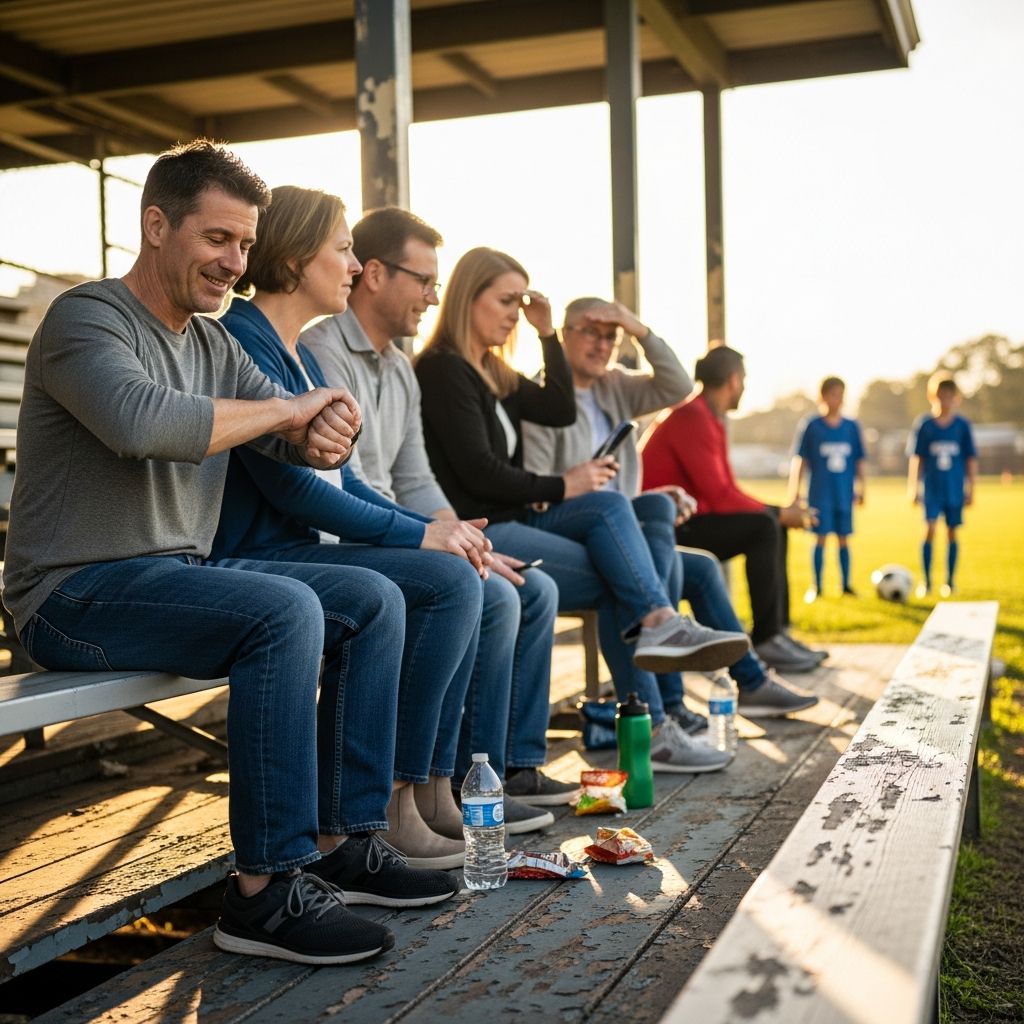
Youth sports can be a gift to families, offering kids friendships, confidence, and lifelong habits of movement. They can also quietly take over your calendar, your budget, and sometimes your emotional health if you are not intentional. This guide is designed to help parents enjoy the benefits of youth sports while avoiding the drama, pressure, and burnout that too often come with the territory.
Why Youth Sports Matter (And Why They Can Get Messy)
Sports introduce children to teamwork, resilience, and the experience of working toward a goal that is bigger than themselves. At the same time, youth sports now operate in a culture of early specialization, intense competition, and high parental involvement, which can quickly shift the focus from growth and fun to rankings, status, and fear of falling behind. Recognizing both sides of this reality is the first step toward making healthier choices for your family.
- Kids often start organized sports earlier than ever, which can amplify both opportunities and pressures.
- Parents are frequently encouraged—directly or indirectly—to invest time and money as if every season is a career-defining moment.
- Social media, travel teams, and showcase events can create the illusion that everyone else is doing “more” for their young athlete.
The Hidden Emotional Load on Sports Parents
Behind every carpool, registration fee, and sideline cheer is an invisible emotional load carried by parents. Many feel responsible not only for logistics but for their child’s happiness, success, and even future opportunities tied to sports. When a child struggles, gets benched, or makes a mistake, parents may feel those moments as personal reflections on their own efforts or sacrifices.
This emotional load can show up as anxiety before games, anger at referees, tension with coaches, and arguments in the car ride home. Left unchecked, it can drive parents to push harder, spend more, and interfere more often, even when those impulses do not truly serve the child.
What Kids Really Want From Sports
While adults often focus on results, most children sign up for sports because they want to play, belong, and have fun. Winning can feel exciting, but for many kids the lasting memories come from friendships, inside jokes, and small personal milestones like making a new skill or being part of a comeback effort.
When parents keep these simple motivations at the center, it becomes easier to evaluate decisions about teams, training, and travel. The question shifts from “Will this help my child get ahead?” to “Will this help my child enjoy and grow through this activity?”
Common Reasons Kids Play
- Having fun with friends.
- Learning and improving at a skill they find interesting.
- Feeling part of a team or community.
- Enjoying movement and competition in a low-stakes environment.
- Spending time with supportive adults and role models.
When Youth Sports Start to Take Over Family Life
There is a difference between being busy and being consumed. Many families find themselves rearranging holidays, skipping extended family events, and planning vacations around tournaments—often without pausing to ask whether the trade-offs still make sense. The slow drift from healthy involvement to total absorption can happen so gradually that it is easy to overlook.
Taking an honest inventory of how sports affect your family’s time, finances, and relationships can help you recalibrate before resentment or burnout takes root.
Warning Signs Sports Are Running the Show
- Every weekend revolves around games or practices, leaving little free time for rest or other interests.
- Siblings routinely feel overlooked because one child’s sports schedule dictates the family calendar.
- Parents feel pressure to say yes to every additional training opportunity, even when it strains finances.
- Family conversations are dominated by performance, rankings, and future tryouts rather than everyday life.
Balancing Benefits and Costs: A Simple Perspective Table
Using a simple framework can help parents see the bigger picture and make choices that align with their values rather than outside pressure. The table below offers a quick reference to weigh upsides and downsides of your current sports commitments.
| Aspect | Possible Benefits | Possible Costs | Questions to Ask |
|---|---|---|---|
| Time | Structure, routine, purposeful activities after school. | Less downtime, limited unstructured play, family fatigue. | Do we still have regular family time and true rest days? |
| Money | Investment in positive experiences and skill building. | Travel, fees, equipment, private training, social pressure. | Are we spending within our means and values, without regret? |
| Emotional Health | Confidence, friendships, sense of belonging. | Performance pressure, fear of failure, anxiety before games. | Does my child seem more joyful or more stressed overall? |
| Family Relationships | Shared experiences, road trip memories, cheering together. | Strain between parents, sibling jealousy, constant arguments about effort or playing time. | Are sports drawing us closer or creating chronic tension? |
Healthy Sideline Behavior: Modeling What You Want Your Child to Learn
Children learn far more from what adults do than from what they say. The way parents react to referees, coaches, mistakes, and outcomes becomes an unspoken lesson in emotional regulation and respect. Calm, supportive behavior from the stands signals that effort and learning matter more than any one call or score.
By contrast, shouting at officials, arguing with coaches, or visibly melting down over a loss teaches kids that control, blame, and perfection are priorities. Even if a parent disapproves of a particular call, responding with composure shows a child how to handle unfair or disappointing situations in life beyond sports.
Practical Sideline Guidelines
- Cheer for effort, hustle, and teamwork more than for goals, points, or statistics.
- Avoid coaching from the sidelines; let the coach be the coach so your child is not pulled in competing directions.
- Refrain from criticizing referees out loud; if something truly concerns you, address it calmly and privately later through proper channels.
- Spend as much time praising sportsmanship as you do celebrating wins.
- Remember that your facial expressions and body language are just as loud as your voice.
The Car Ride Home: Turning a Tense Moment Into a Safe Space
The moments after a game are emotionally charged for kids, especially if they made a glaring mistake, their team lost, or they felt ignored by the coach. The car ride home can either be a pressure cooker full of unsolicited analysis or a safe decompression zone. Parents often rush to correct, advise, or relive every play, unintentionally turning a simple ride into a post-game interrogation.
By shifting the goal from “fixing” performance to listening and supporting, parents can transform this time into an opportunity to reinforce trust and emotional resilience. The aim is not to avoid all feedback but to deliver it when your child is ready and receptive, not when they are raw and overwhelmed.
Car Ride Do’s and Don’ts
- Do lead with connection: ask if your child is hungry, tired, or just wants some quiet time.
- Do offer simple appreciation: “I loved watching you play today.”
- Don’t start with critiques or detailed breakdowns of mistakes.
- Don’t compare your child to teammates or opponents.
- Do ask permission before giving feedback: “Want to hear something I noticed that might help, or prefer to talk later?”
Managing Expectations: Your Dreams vs. Your Child’s Reality
It is natural to hope that your child will shine in something they love, and sports can feel like a promising stage for talent. Problems arise when adult dreams begin to overshadow the child’s voice and actual enjoyment. When every decision is justified by potential scholarships, future opportunities, or imagined careers, the present moment—the season your child is living right now—can get lost.
Healthy expectations are flexible, responsive, and grounded in who your child really is, not who anyone wishes they might become. They leave room for changing interests, growth spurts, plateaus, and even the possibility that sports will become less central over time.
Questions to Reflect On
- Am I more invested in this sport than my child is?
- Would I still support participation at this level if there were no chance of scholarships or recognition?
- How do I react when my child hints that they might want a break or a change?
- Do my comments make it clear that our relationship does not depend on performance?
Protecting Your Child From Burnout
Burnout does not usually arrive overnight. It creeps in as a combination of physical fatigue, emotional exhaustion, and a loss of joy. Children may start complaining of vague aches, dragging their feet to practice, or expressing relief at canceled games. Sometimes they simply go through the motions, playing more out of obligation than excitement.
Parents can play a key protective role by watching for early signs and making adjustments before a child reaches the point of quitting everything in frustration. Building intentional rest and flexibility into the sports year can keep the experience sustainable and enjoyable.
Practical Ways to Prevent Burnout
- Guarantee at least one regular day each week with no sports activities.
- Rotate sports seasonally when possible instead of playing the same sport year-round.
- Allow your child to have non-sport hobbies that are purely for fun.
- Take complaints seriously; ask follow-up questions rather than dismissing them as laziness.
- Normalize taking a season off if your child’s mental or physical health seems to require it.
Money, Guilt, and the Myth of “Falling Behind”
The industry around youth sports can make families feel that every extra camp, clinic, or private lesson is essential. It is easy to slide into the belief that if you do not pay for the best, your child will be permanently left behind. This mindset can trigger guilt for parents who cannot or choose not to spend at that level, even when their decisions are wise and responsible.
Remember that there is no single path that guarantees success, and that overinvestment can increase pressure just as easily as it can create opportunity. What children remember most is not the brand of their gear but the climate around their participation—was it supportive and joyful, or tense and transactional?
Healthy Financial Boundaries
- Set a yearly sports budget as a household, then choose opportunities that fit within it.
- Distinguish between genuine developmental needs and fear-driven extras.
- Be honest with your child about financial limits while emphasizing that those boundaries do not lessen your support or pride.
- Consider lower-cost community leagues or recreational options during some seasons.
Partnering With Coaches (Instead of Battling Them)
Coaches can be powerful influencers in a child’s life, for better or worse. When parents and coaches view each other as enemies, kids are often caught in the middle, unsure whom to trust. Building a respectful, open channel of communication creates a more stable environment and avoids triangulating the child.
While parents should advocate for safety and well-being, not every coaching decision requires intervention. Learning to cope with challenging personalities, limited playing time, or tough feedback can be valuable, as long as the environment remains fundamentally safe and respectful.
Guidelines for Healthy Parent–Coach Relationships
- Introduce yourself early in the season and clarify preferred ways and times to communicate.
- Avoid discussing playing time immediately after games; request a separate, calm conversation if needed.
- Speak respectfully about the coach in front of your child, even when you disagree, so they are not forced to take sides.
- Encourage your child to address minor issues directly with the coach as a way to build self-advocacy skills.
Finding a Sustainable Family Sports Culture
Every family has its own values, rhythms, and limits. A healthy sports culture is less about how many teams your child plays on and more about whether your choices reflect those deeper priorities. Some seasons may be busier, others lighter, but the overarching pattern should leave room for rest, relationships, and growth in multiple areas of life.
When sports are in their proper place, they become a meaningful chapter in your child’s story, not the entire plot. Parents who keep their own emotions in check, set thoughtful boundaries, and treat their child as a whole person—not just an athlete—lay the groundwork for a relationship that will outlast any scoreboard.
Quick Self-Check for Parents
Use this brief checklist a few times each season to gauge whether youth sports are still functioning in a healthy role for your family. Honest answers can guide small course corrections before problems become crises.
- My child smiles and laughs at least sometimes during or after practices and games.
- We have at least one consistent family activity unrelated to sports each week.
- Arguments about sports do not dominate our household.
- Our spending on sports feels intentional, not impulsive or driven purely by comparison.
- I can genuinely say to my child, “I love you exactly the same whether you play well or poorly.”
FAQs About Parenting in Youth Sports
How many sports or teams are too many?
There is no universal number; the right load depends on your child’s temperament, school demands, health, and family capacity. As a guideline, if your child seems chronically exhausted, grades are slipping, or the family has no regular downtime, it is worth scaling back, even if they technically “can” manage the schedule.
Should I let my child quit mid-season?
Generally, it is wise to encourage finishing a season once teammates and coaches are counting on your child. That said, safety and mental health are more important than any schedule, so if your child is being harmed or is truly overwhelmed, it may be appropriate to step in and make a change.
Is specializing in one sport at a young age a good idea?
Early specialization can sometimes accelerate skill development, but it also increases the risk of repetitive injuries and mental burnout. Many children benefit from sampling multiple sports in their younger years, then choosing one or two to focus on later if they still feel motivated.
How can I support my child if they are not a star player?
Celebrate traits that are not tied to statistics, such as effort, kindness to teammates, willingness to learn, or persistence after mistakes. Emphasizing these qualities communicates that your pride in them is not dependent on playing time or awards.
What if my values do not match the team culture?
If the environment consistently clashes with your family’s beliefs about respect, balance, or integrity, consider looking for a program whose philosophy aligns more closely with your own. The right fit often matters more than the flashiest reputation or record.
Final Thoughts: Keeping Perspective Where It Belongs
Youth sports are one way—not the only way—for children to grow in character, confidence, and resilience. When parents protect joy, model respect, and keep long-term relationships at the center, sports can enhance family life instead of consuming it. The real victory is not a trophy but a child who feels loved, supported, and free to carry the lessons of the playing field into every arena of life.