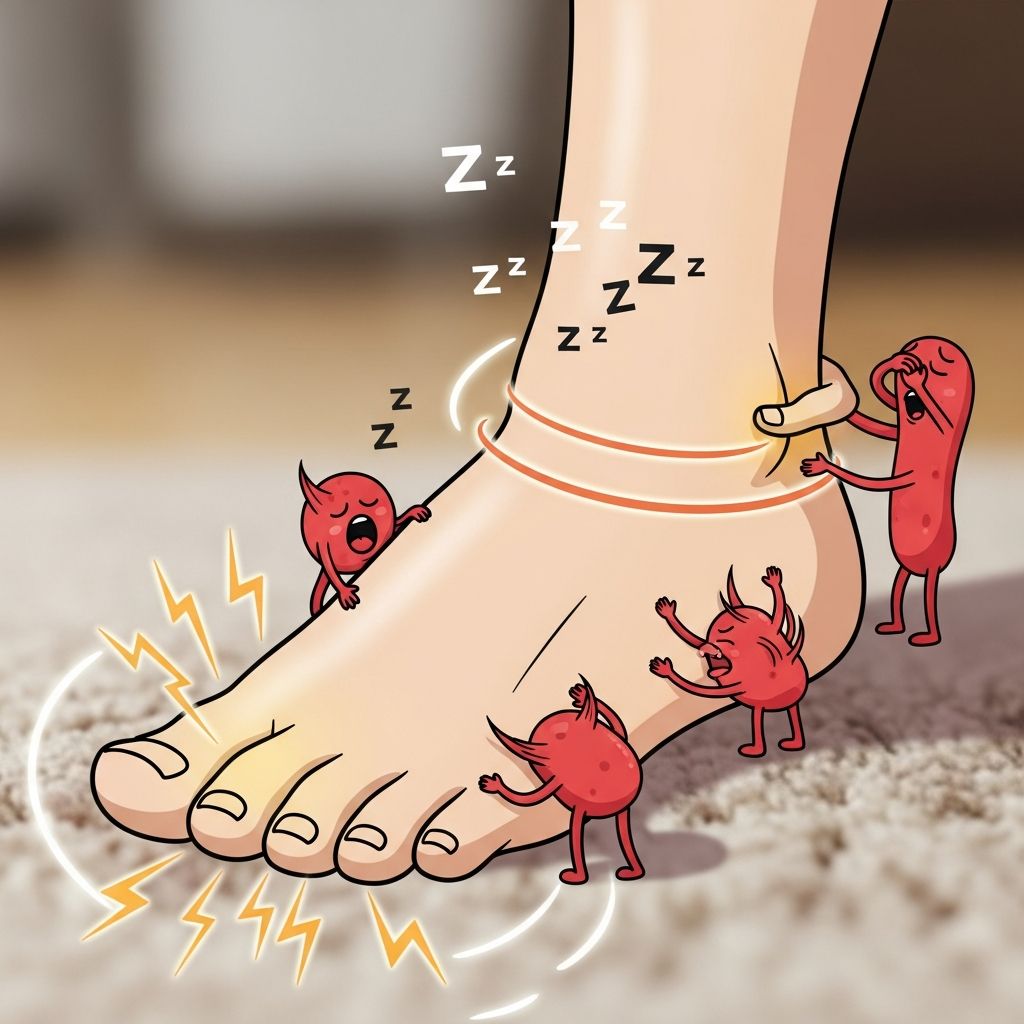
Most kids have felt it: you stand up after sitting in a funny position and suddenly your foot feels tingly, heavy, or hard to move. People say your foot has “fallen asleep,” but it is not really sleeping at all. This guide explains what is going on in a simple way that kids and parents can understand.
What Does It Mean When a Foot “Falls Asleep”?
When a foot “falls asleep,” it usually feels numb, tingly, or full of little prickly sensations sometimes called pins and needles. You might notice that it is harder to move your foot or toes smoothly for a short time.
This strange feeling happens because the nerves in your foot are not sending and receiving signals as well as they normally do. Once those nerves begin working properly again, the feeling slowly returns to normal.
- Numbness: Your foot feels like it is wrapped in thick cotton, and you cannot feel the floor clearly.
- Tingling: Tiny prickly or buzzy feelings, especially when you start moving the foot again.
- Weakness: Your foot might feel heavy or wobbly for a minute or two.
Meet Your Nerves: The Body’s Message Wires
To understand why feet feel tingly, it helps to know what nerves are. Nerves are like tiny electrical wires that carry messages between your brain, spinal cord, and the rest of your body. They tell your muscles when to move and tell your brain what you are touching or feeling.
In your legs and feet, long nerves travel from your lower back all the way down to your toes. These nerves share information about pressure, temperature, pain, and movement so you can walk, jump, and feel the ground beneath you.
- Message to muscles: “Lift your foot,” “wiggle your toes,” or “point your ankle.”
- Message to brain: “The floor is cold,” “the sock is tight,” or “the toy hurts your heel.”
Why Sitting Funny Can Make Feet Tingle
The most common reason a child’s foot “falls asleep” is sitting or lying in a way that squeezes the nerves or the blood vessels that supply the nerves. When this pressure continues for a while, the nerves cannot work as well, and the foot starts to feel strange.
As soon as the pressure is removed and you change position, blood flow and nerve signals return, and the tingly feeling slowly fades away.
Everyday Positions That Can Trigger Tingling
- Sitting with legs crossed tightly for a long time.
- Kneeling or sitting on the feet while playing or watching TV.
- Squatting for a long time during games or activities.
- Sleeping with one leg under the other.
- Wearing shoes or socks that are too tight around the ankle or foot.
None of these positions usually cause lasting harm, but they can temporarily irritate or compress the nerves, leading to that familiar pins-and-needles feeling.
What Happens Inside the Foot When It “Falls Asleep”?
Two main things are happening inside the body when a foot feels numb or tingly: changes in blood flow and changes in nerve messages. These changes are short term when the cause is simple pressure from sitting or leaning.
The table below gives a simple side-by-side look at what is going on.
| What Changes | What It Means | How You Feel It |
|---|---|---|
| Blood flow slows or is partly blocked | Less oxygen and nutrients reach nerves and tissues for a short time. | Foot may feel cool or numb and harder to control. |
| Nerves are pressed or stretched | Nerve signals to and from the brain are interrupted or delayed. | Prickly, buzzing, or “electric” feelings appear when you move again. |
| Signals start up again | Nerves begin firing rapidly to return to normal function. | Strong pins-and-needles sensation that slowly calms down. |
Is It Normal for a Kid’s Foot to Fall Asleep?
For most healthy children, a foot occasionally “falling asleep” after sitting in one position for too long is normal. It is part of how the body responds when nerves and blood vessels are temporarily pressed or bent.
As long as the feeling goes away quickly and does not happen all the time, it is usually not a sign of a serious problem. Learning to change positions more often can reduce how often it happens.
- Typical episodes last from a few seconds to a few minutes after you move.
- The feeling improves on its own without medicine or special treatment.
- Only the area that was being pressed or bent feels different.
Simple Tips to Help a “Sleeping” Foot Wake Up
There are gentle, safe ways to help your foot get back to normal faster once it begins to tingle. These steps are meant for mild, everyday episodes from sitting or resting in one position.
Move slowly at first, because standing on a very numb foot can lead to stumbling or falling. Take your time while the feeling returns.
Steps to Wake Up Your Foot
- Change your position: Uncross your legs, stop sitting on your feet, or stretch them out in front of you.
- Gently wiggle your toes: Start with tiny movements and increase as the feeling returns.
- Rotate your ankle: Make slow circles with your foot in both directions.
- Stand up carefully: Hold onto a chair, wall, or a trusted adult if your balance feels off.
- Take a few light steps: Walk slowly until the pins and needles fade away.
If the feeling does not improve or gets worse, it is a good idea to sit back down and let an adult know what you are experiencing.
Preventing Tingling: Healthy Habits for Kids’ Feet
Although you cannot stop every episode of pins and needles, simple habits can make feet more comfortable and reduce how often they “fall asleep.” Good foot and leg habits also support balance, comfort, and strong muscles.
Parents and children can work together to build these habits during school, playtime, and relaxation.
- Change positions often: Try not to sit in the same way for very long, especially with legs tightly crossed or tucked under the body.
- Stretch breaks: During homework, video games, or long car rides, pause every 30–60 minutes to stand up and stretch.
- Comfortable shoes and socks: Choose pairs that are not too tight around the toes or ankles.
- Stay active: Regular walking, running, and playing help blood flow and nerve health.
- Protect your feet: Avoid hard kicks or heavy objects falling on the feet, which can irritate nerves.
When Foot Tingling Might Be a Warning Sign
While most episodes of a “sleeping” foot are harmless and short lived, there are times when numbness or tingling can hint at a medical problem. Strong pain, repeated numbness without pressure, or changes in movement are reasons to talk with a health professional.
Children may not always know how to describe these feelings, so parents and caregivers can watch for patterns and ask questions when a child mentions frequent odd sensations.
Signs to Tell an Adult or Doctor
- Tingling or numbness appears often, even when you are not sitting or lying in a strange position.
- One foot feels weak or clumsy for a long time, making it easy to trip or stumble.
- There is strong pain, burning, or swelling in the foot or leg.
- Color changes appear in the skin, such as very pale, bluish, or blotchy patches.
- You have trouble walking, standing, or keeping your balance for no clear reason.
- Numbness spreads to other parts of the leg or both legs over time.
These signs do not mean there is always a serious disease, but they are good reasons to get checked. A doctor can examine the nerves, muscles, and blood flow to see what is happening.
How Doctors Check Ongoing Tingling or Numbness
If a child has frequent or long-lasting tingling in the feet, a doctor may perform a simple examination. The visit often starts with questions about when the feelings occur, how long they last, and what makes them better or worse.
The doctor may gently touch or press different areas of the legs and feet, check how strong the muscles are, and watch the child walk. In some cases, special tests are used to look at nerve function or blood flow if needed.
- History: Questions about recent injuries, illnesses, or positions that might press on nerves.
- Physical exam: Testing sensation, movement, and reflexes in the toes, feet, and legs.
- Further tests: In uncommon situations, imaging or nerve studies may be suggested.
Many times, the doctor finds that the tingling is related to position, tight footwear, or minor irritation that can be improved with simple changes.
Helping Kids Talk About Weird Foot Feelings
Children sometimes struggle to explain sensations like numbness or pins and needles. Encouraging them to describe what they feel helps adults decide whether it is a normal, temporary problem or something that needs medical attention.
Parents can offer simple words and questions to make these conversations easier. This also teaches kids to pay attention to their bodies in a healthy, calm way.
- Ask if the foot feels fuzzy, tingly, itchy, or heavy.
- Find out when it started: after sitting, running, sleeping, or for no clear reason.
- Ask whether the feeling moves, stays in one spot, or spreads upward.
- Notice how long it lasts and whether it goes away completely.
Kid-Friendly Safety Tips for Tingly Feet
A “sleeping” foot can make it easier to trip, bump into things, or twist an ankle. A few child-friendly safety tips can keep kids steady while the feeling returns.
These steps are especially useful after getting up from the floor, a car ride, or a deep nap.
- Stand up slowly and hold onto a chair, table, or adult hand.
- Do not try to run or jump until the foot feels normal again.
- Wear slippers or shoes with good grip on slippery floors.
- Let a teacher or parent know if tingling happens during sports or PE.
Frequently Asked Questions
1. Can a foot really “go to sleep”?
No, the foot is not actually sleeping like you do at night. The phrase just means that the nerves in that area are not working normally for a short time because of pressure or limited blood flow.
2. How long should the tingling last?
For most children, the pins-and-needles feeling fades within a few seconds to a few minutes after changing position and moving gently. If the strange feeling lasts much longer or keeps coming back, it is wise to tell a parent or caregiver.
3. Is it dangerous if my foot falls asleep every now and then?
Occasional tingling from sitting in one place too long is usually not dangerous. It is your body’s way of saying, “Time to move and stretch!” However, any numbness that is painful, frequent, or affects walking should be checked by a health professional.
4. Can tight shoes cause numbness?
Yes. Shoes, socks, or straps that squeeze the foot or ankle can press on nerves and blood vessels, causing temporary numbness or tingling. Choosing well-fitting footwear with enough room for the toes can help.
5. Should I see a doctor if my foot tingles after every sports practice?
If tingling only happens briefly when you sit in certain positions, it may not be a cause for concern. But if it appears often during or after exercise, especially with pain, weakness, or swelling, a doctor or sports health professional should evaluate your feet and legs.
6. Can stress or worry cause tingling in my feet?
Strong emotions like stress or anxiety can sometimes make people notice body sensations more, including mild tingling. However, repeated or intense numbness should still be discussed with a doctor to rule out physical causes.
Key Takeaways for Kids and Parents
Feet that “fall asleep” are usually experiencing temporary changes in nerve signals and blood flow, most often from sitting or lying in one position too long. In most cases, moving, stretching, and changing positions help the foot return to normal quickly.
Paying attention to how often tingling occurs, how long it lasts, and whether it affects walking or causes pain helps families decide when to ask for medical advice. With good habits and awareness, kids can keep their feet comfortable, active, and ready for play.