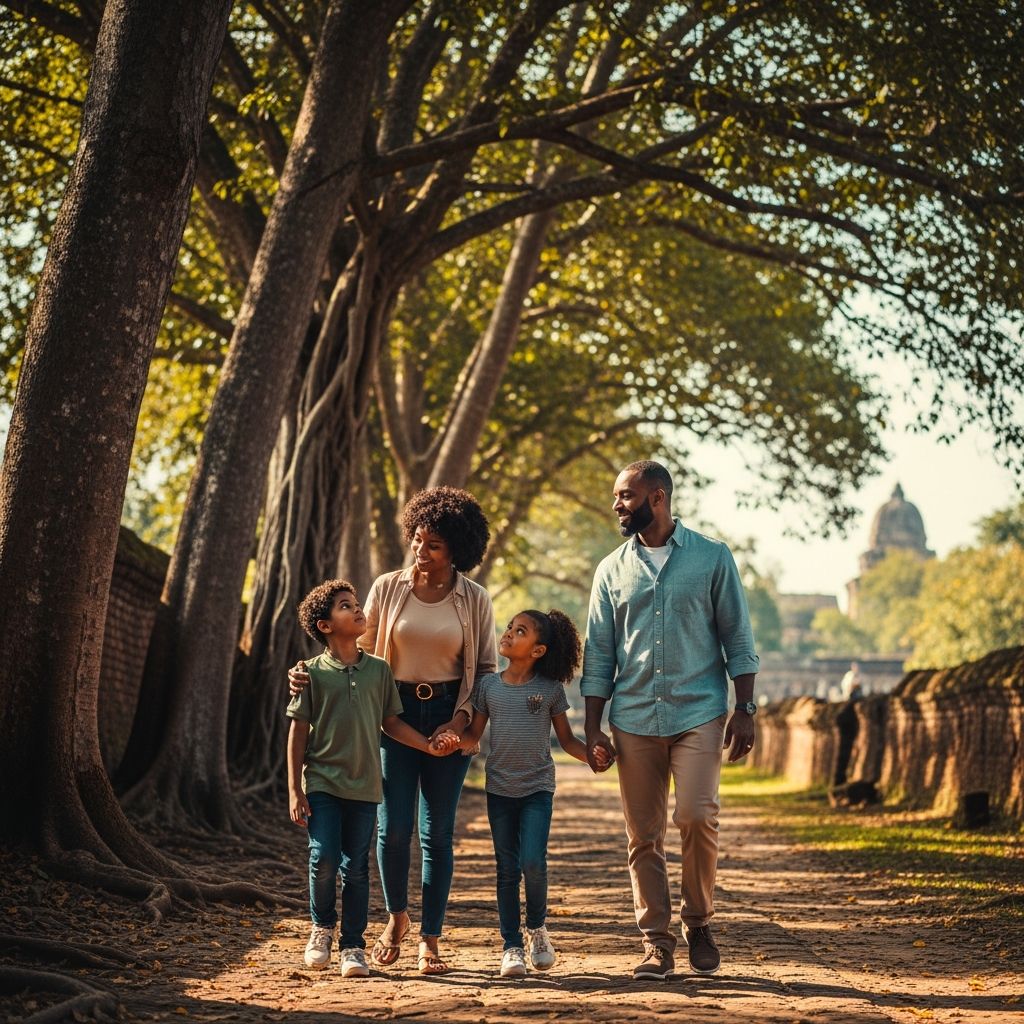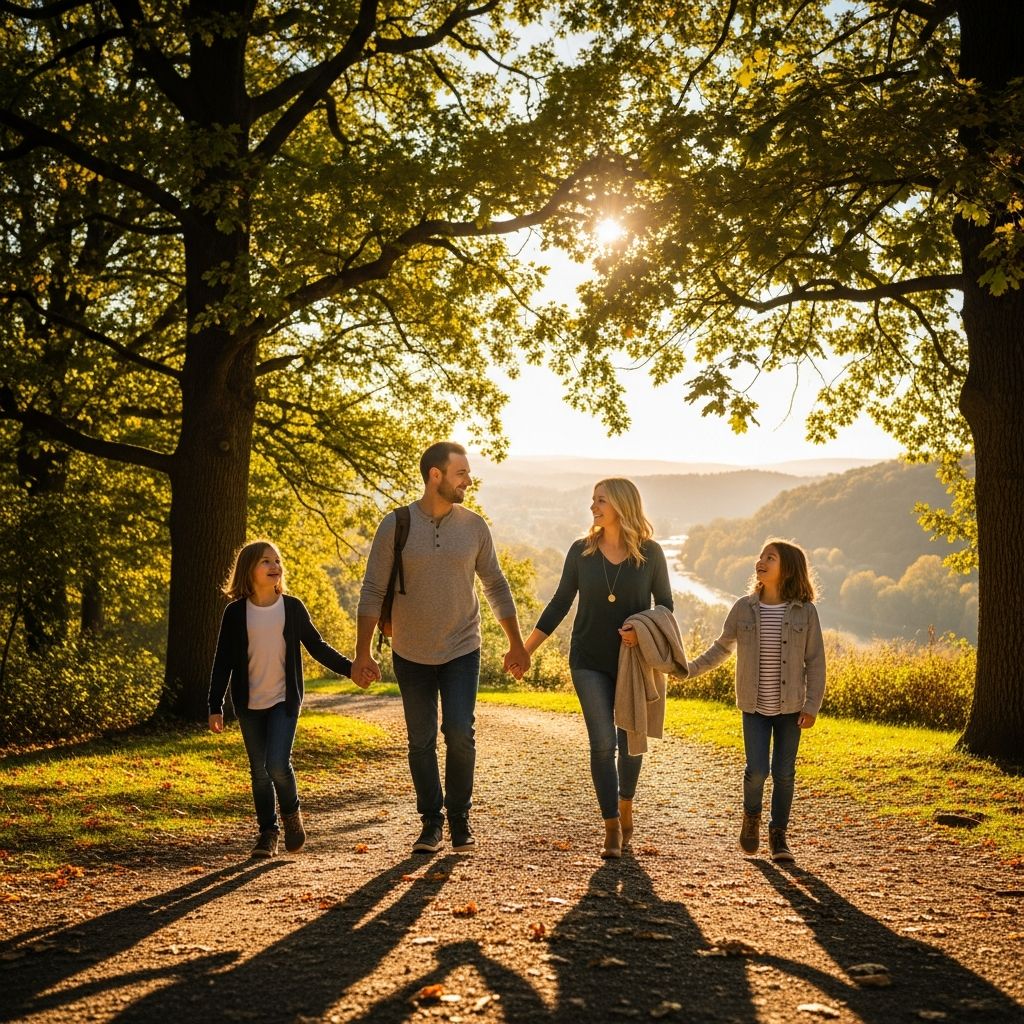
Walking as a family looks almost too simple to matter. Yet this quiet, repeatable ritual can become one of the strongest threads holding a family story together. A daily loop around the block or a weekend wander on a trail can shape how kids feel about home, how partners talk to each other, and how everyone handles stress and change.
This article explores how ordinary walks can become extraordinary anchors in family life: supporting physical and mental health, strengthening connection, and giving children a sense of place and belonging that lasts into adulthood.
The Power of a Simple Shared Ritual
Families are held together less by big vacations and more by small, predictable moments that repeat over time. One shared activity that appears regularly in research on family well-being is simply doing things together on purpose—whether that’s cooking, games, or movement.
When a walk becomes part of the family rhythm, it quietly offers:
- Predictability — Kids know, “After dinner, we walk.” That consistency builds a sense of safety and routine.
- Shared experience — Everyone is in the same place, doing the same thing, which naturally creates conversation and inside jokes.
- Low pressure time — No agenda, no screens, no performance. Just moving in the same direction together.
Over months and years, those small loops around a neighborhood or park become the backdrop for family stories: where you walked with a crying toddler, where you talked through a big decision, where your child first biked ahead on their own.
Why Walking Is a Perfect Family Activity
Many bonding activities require planning, equipment, or money. Walking is different: it is accessible, free, and adaptable to almost every stage of life. Research on family bonding shows that what matters is not how impressive the activity is, but that you are together, interacting, and emotionally available.
| Reason | Why Walking Works So Well |
|---|---|
| Low barrier to entry | No training, special clothing, or equipment required; families of all fitness levels can participate. |
| Built-in conversation space | Walking side by side reduces eye contact pressure, which can make it easier for kids and teens to open up. |
| Flexible and scalable | Works for toddlers in a stroller, grade schoolers on scooters, and teens with headphones temporarily slipped off. |
| Zero cost | Unlike many activities, a walk costs nothing but time and attention. |
| Works in most settings | Neighborhood sidewalks, city blocks, rural roads, local parks, or nature trails can all become your family route. |
Health Benefits for Kids and Parents
Beyond bonding, walking is a gentle but powerful way to take care of everyone’s body and brain. Public health guidelines emphasize regular physical activity for children and adults, and walking fits easily into that recommendation.
Physical Health
- Supports healthy growth — Moderate activity like walking contributes to healthy bones, muscles, and weight regulation in children.
- Builds lifelong habits — When kids grow up seeing movement as a normal part of family life, they are more likely to stay active as adults.
- Improves cardiovascular health — Regular walking can lower blood pressure and improve heart health in adults and older children.
Mental and Emotional Health
- Stress relief — Physical activity is linked to reduced stress, anxiety, and depressive symptoms for both children and adults.
- Emotional regulation — Time with attentive caregivers is associated with better emotional control and self-esteem in children.
- Nature’s bonus effect — When walks happen outdoors in green spaces, research suggests additional benefits for resilience, focus, and problem-solving.
In other words, a family walk is not just a stretch of time to get from point A to B. It can be a reset button for everyone’s nervous system after a long day of school, work, and screens.
How Walking Together Strengthens Family Bonds
Family bonding activities are known to improve communication, foster trust, and build a sense of belonging. Walking weaves all of these into a single, repeatable act.
Unscripted Conversations
Side-by-side movement can loosen up conversations that feel awkward in more formal settings. Without the intensity of eye contact or the distractions of home, it can be easier for kids to share what’s really on their minds.
- Little kids point things out—dogs, leaves, trucks—and naturally practice language and curiosity.
- Older children may slowly move from short answers to longer stories once the walk becomes a familiar routine.
- Teens often talk more when there is some activity happening; walking gives them something to do while they talk.
Sense of Belonging and Identity
Psychologists describe families as systems that create identity: “This is who we are; this is what we do.” Regular shared activities, like walks, contribute to that identity by giving children clear, lived experiences of “us.”
- Shared landmarks — The bend in the path, the house with the cat in the window, the tree that changes every season become “ours.”
- Family stories — “Remember when it rained on us here?” or “This is where you finally made it up the hill on your own” become part of family narrative.
- Emotional safety — Knowing there is a predictable time when the family is together can increase a child’s sense of security and support.
Modeling Healthy Behavior
Children learn by watching. When caregivers show up for a simple daily or weekly walk, they are quietly communicating values:
- “Movement matters.”
- “Being together matters.”
- “We slow down and make time for each other.”
Studies on family activities and child development suggest that the type of shared activity and time spent together are both linked to better social and emotional outcomes in children. Walking is an easy way to meet both of those criteria.
Designing a Family Walking Ritual
You do not need a perfect plan to start. A meaningful ritual can grow from something as simple as “We walk once around the block after dinner on weekdays.” The key is to make it realistic enough that you can keep repeating it.
Practical Steps to Get Started
- Choose a simple route that feels safe, familiar, and easy to reach from home.
- Attach it to something you already do, like after dinner or before bedtime, so you do not have to rethink it every day.
- Keep it short at first—even 10–15 minutes counts. You can always extend it later.
- Invite participation, don’t demand it, especially with older kids and teens. Encouragement works better than pressure.
- Dress for comfort—shoes and coats that make walking pleasant will reduce complaints and resistance.
Making Walks Engaging for Kids
Children are more likely to enjoy and stick with activities when they feel involved and when the time is playful.
- Let kids choose small variations in the route occasionally (“left or right at this corner?”).
- Turn it into a search game: count red doors, squirrels, or license plates from a certain state.
- Invite them to share something from their day after a set landmark, like “At the big tree, everyone says one good thing about today.”
- Allow quiet stretches; not every walk has to be chatty for it to be valuable.
Adapting Walks Through Different Ages
Family walks will look different as children grow. The ritual can stay the same even as the logistics change.
With Babies and Toddlers
- Use strollers or carriers so the walk can be about your movement and their observation.
- Point out simple things: trees, birds, cars. This supports language and cognitive development.
- Keep routes short and flexible in case of meltdowns or weather changes.
With School-Age Kids
- Let them walk, scoot, or bike alongside you at a safe pace.
- Use walks to talk about their day, friends, and feelings—without turning every walk into a “meeting.”
- Incorporate nature: collect leaves, notice seasonal changes, or observe the sky and clouds.
With Teens
- Respect autonomy: offer walks rather than requiring them, and be open to one-on-one walks instead of whole-family outings.
- Consider walking to a destination they care about (a café, store, or field) instead of a loop for its own sake.
- Allow space for them to talk or stay quiet; being physically together still matters, even when conversation is sparse.
Using Walks During Stress and Transitions
Research on family time highlights how shared activities can buffer stress and support kids through change by reinforcing the family as a reliable support system.
Walks are especially useful during:
- Big life changes — moves, new schools, or new siblings. The route may be different, but the ritual can stay recognizable.
- Conflict or tension — moving your bodies together in the same direction can ease difficult conversations or provide a pause after arguments.
- Grief or loss — walking can offer quiet togetherness when words are hard.
In these seasons, the message beneath the walk may be, “Our world is changing, but we still show up and move forward together.”
Balancing Screens, Schedules, and Walking Time
Modern family life is crowded with demands: school, work, activities, and screens. Studies on family activities suggest that even small, regular pockets of shared time can improve communication and connectedness, especially when they are relatively free of digital distractions.
To protect walking time:
- Treat it as an appointment, not an afterthought.
- Make it a screen-light zone: phones away except for safety or quick photos.
- Be realistic: three walks a week might be better than aiming for daily and then feeling like you’ve failed.
Frequently Asked Questions (FAQs)
How long should a family walk be to make a difference?
Even 10–20 minutes can be meaningful if it is consistent and relatively free from distractions. For physical health, public health guidelines often recommend around 60 minutes of moderate activity daily for children and 150 minutes weekly for adults; walking can contribute to those totals.
What if my kids complain or refuse to go?
Start small, keep it playful, and offer choices rather than commands. Let children help choose the route, bring a toy or scooter, or plan a simple game for the walk. Over time, many kids come to enjoy the predictability and attention they receive during that time.
Is walking still useful if we already do other sports?
Yes. Organized sports often focus on performance and schedules, while walks are low-pressure and inclusive for all family members. They serve more as emotional and relational time than as training, even though they also support health.
Can we count walks in busy places, like city streets, as family walks?
Absolutely. While nature offers extra benefits, walking together through urban neighborhoods still provides movement, conversation, and shared experience. If possible, occasionally mix in green spaces like parks for added cognitive and emotional benefits.
How do family walks help children’s development?
Studies link time spent in positive family activities with better social-emotional development, communication skills, and self-esteem in children. Walking provides a regular context for these interactions to happen in an unforced, natural way.
References
- The Benefits of Family Bonding Activities — Pontchartrain Pediatrics. 2023-03-15. https://www.pontchartrainpediatrics.com/the-benefits-of-family-bonding-activities
- Exercising as a Family: Building Health, Happiness, and Stronger Bonds — Princeton Medicine. 2022-05-10. https://www.princetonmedicine.com/blog/exercising-as-a-family-building-health-happiness-and-stronger-bonds
- Family Bonding Activities to Build Stronger Connections with Your Kids — Cosmo Together. 2023-07-01. https://cosmotogether.com/blogs/news/family-bonding-activities-to-build-stronger-connections-with-your-kids
- The Importance of Spending Time with Family — Hidden Paradise Camp. 2021-09-20. https://hiddenparadisecamp.org/the-importance-of-spending-time-with-family/
- The Power of Family Bonding: Strengthening Connections Through Shared Activities — PM Pediatric Care. 2022-11-08. https://pmpediatriccare.com/blog/the-power-of-family-bonding-strengthening-connections-through-shared-activities/
- The Impact of Family Bonding Activity Type and Time on Young Children’s Social-Emotional Development — Child & Society (Wiley). 2023-02-01. https://onlinelibrary.wiley.com/doi/10.1111/chso.12974
- 9 Benefits of Outdoor Play as a Family — Connections Academy. 2023-04-12. https://www.connectionsacademy.com/support/resources/article/benefits-of-outdoor-play-as-a-family/