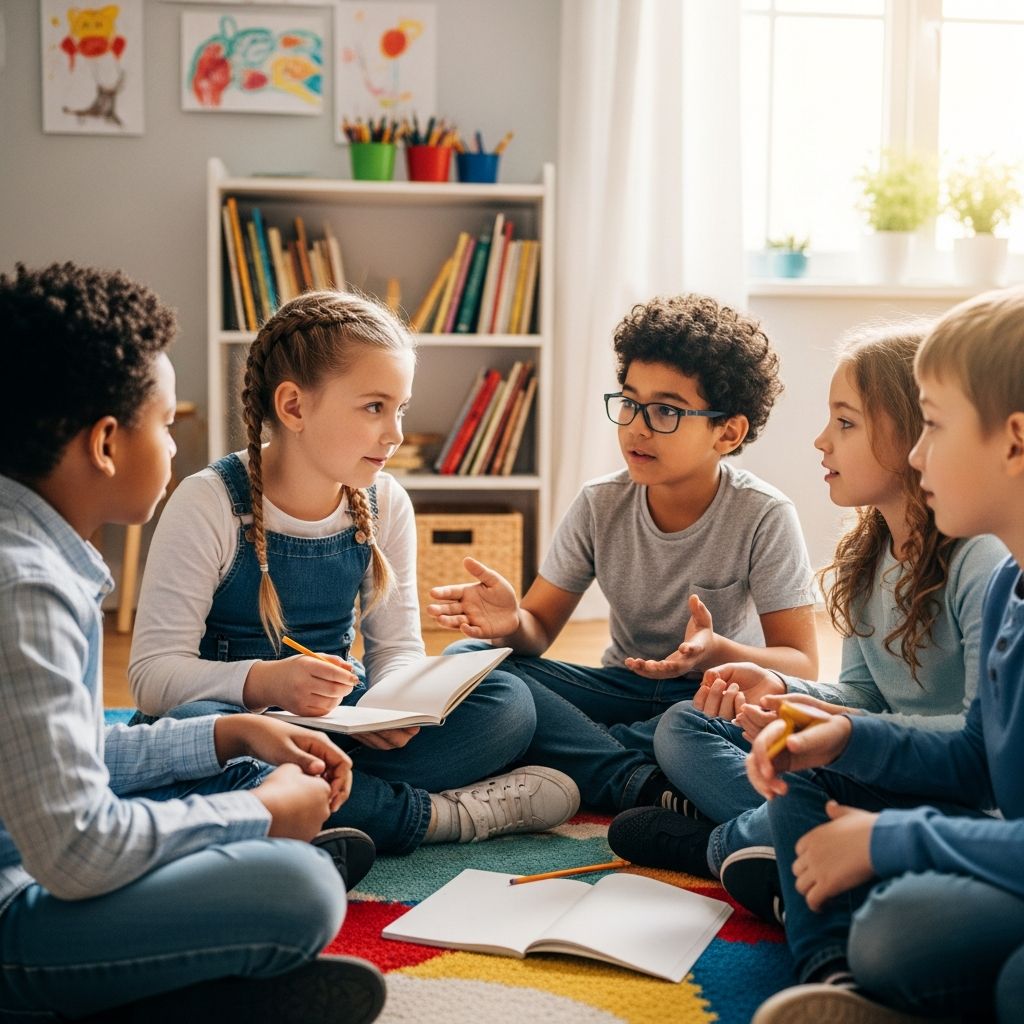
Encouraging children to voice their thoughts and feelings from an early age lays the groundwork for emotional resilience, strong relationships, and academic achievement. By creating environments where kids feel safe to speak, parents foster critical skills that extend far beyond childhood.
The Critical Role of Communication in Early Childhood Growth
Communication development starts at birth and shapes every facet of a child’s life, from emotional awareness to cognitive progress. Infants begin with cries and coos, evolving into complex sentences by preschool years, influencing social interactions and learning readiness.
Strong communication skills enable children to articulate needs, reducing frustration and building self-assurance. Research from the National Institute on Deafness and Other Communication Disorders (NIDCD) outlines milestones showing that by age 2, most children use simple phrases, and by 4, they tell stories and follow multi-step directions. Delays in these areas can signal needs for intervention, but proactive parental involvement often bridges gaps effectively.
- Emotional Foundations: Expressing feelings like frustration or joy helps children regulate emotions, promoting empathy and mental health.
- Social Connections: Turn-taking in conversations and reading nonverbal cues strengthen friendships and group play.
- Cognitive Boost: Discussing problems enhances reasoning and problem-solving abilities.
Key Milestones in Children’s Communication Journey
Understanding developmental stages helps parents track progress and intervene timely. The NIDCD provides a reliable checklist for birth to 5 years.
| Age Range | Receptive Skills (Understanding) | Expressive Skills (Speaking) |
|---|---|---|
| Birth-3 Months | Turns toward sounds; recognizes familiar voices | Cries differently for needs; coos |
| 4-6 Months | Responds to name; understands ‘no’ | Babbles; laughs |
| 7-12 Months | Follows simple directions; points to objects | Says 1-2 words like ‘mama’; gestures |
| 1-2 Years | Points to body parts; follows 2-step instructions | Uses 50+ words; 2-word phrases |
| 3-4 Years | Understands time concepts; recounts stories | Speaks in sentences; tells stories |
| 4-5 Years | Follows 3-step commands; groups objects | Uses future tense; clear speech |
These milestones vary slightly, but consistent progress indicates healthy development. Variations may stem from multilingual homes or individual paces, but persistent lags warrant professional assessment.
Building Expressive Skills: Receptive, Social, and Fluency Components
Effective communication comprises multiple layers. Receptive language involves comprehending spoken words, vital for following instructions and grasping narratives. Expressive skills allow sharing ideas through speech and gestures, essential for classroom participation.
Social pragmatics—using language contextually—includes maintaining eye contact, adjusting tone, and conversational turn-taking. Fluency ensures smooth delivery without excessive pauses or repetitions. Harvard’s Center on the Developing Child emphasizes ‘serve and return’ interactions, where adults respond to a child’s cues, wiring the brain for communication.
Activities like babble play, where parents mimic infant sounds, sharpen listening and imitation, accelerating expressive growth.
Practical Strategies for Parents to Nurture Open Expression
Parents play the primary role in cultivating communication. Modeling active listening—through eye contact and paraphrasing—teaches validation.
- Create Language-Rich Spaces: Read daily, label objects, and narrate routines to expand vocabulary.
- Encourage Dialogue: Ask open-ended questions like ‘What made you feel that way?’ to prompt elaboration.
- Promote Play-Based Practice: Role-playing games build social language and problem-solving.
- Be Patient with Emotions: Name feelings during tantrums to teach regulation.
- Limit Screens: Prioritize interactive talk over passive viewing for better outcomes.
These approaches, supported by responsive caregiving, enhance neural pathways for language.
How Expression Fuels Emotional and Social Intelligence
Verbalizing emotions prevents behavioral outbursts and cultivates empathy. Children who say, ‘I’m sad because my toy broke,’ process feelings constructively, fostering resilience. Socially, clear expression aids collaboration, reducing conflicts in peer settings.
Cognitive benefits include advanced reasoning; discussing puzzles verbally refines logic. Long-term, early proficiency correlates with literacy and academic success, per NIH studies. Secure attachments from responsive interactions further amplify these gains.
Recognizing Delays and When to Seek Support
Not all children hit milestones uniformly. Red flags include no babbling by 12 months, limited words by 2 years, or speech unintelligible to strangers by 4.
- No single words by 16 months
- Loss of previously acquired language
- Avoidance of eye contact or social engagement
- Frequent frustration without words
Early intervention via speech therapy yields high success due to brain plasticity. In areas like Houston, services address receptive and expressive needs promptly.
Academic and Lifelong Advantages of Strong Communication
Children with robust skills excel in school: better instruction comprehension, active participation, and writing articulation. This confidence spills into engagement, predicting higher achievement.
Lifelong perks include career success and relationships, as early communicators show greater social competence and earnings potential. Societies benefit from reduced disparities through inclusive early support.
Frequently Asked Questions (FAQs)
What if my child is a late talker?
Monitor milestones; many catch up, but consult professionals if delays persist beyond 18 months for tailored strategies.
How much daily interaction is needed?
Consistent, quality ‘serve and return’ exchanges throughout the day suffice—no need for structured sessions.
Does bilingualism hinder development?
No; it enriches cognition, though temporary mixing of languages is normal.
Can screens help communication?
Limited educational content may aid, but interactive human talk is superior.
When is speech therapy appropriate?
If milestones are missed or social/emotional impacts appear, early assessment maximizes gains.
Creating a Home Culture of Open Dialogue
Transform family dynamics by prioritizing expression. Dinner table shares or emotion journals validate voices, modeling healthy habits. Cultural contexts influence styles, but universal responsiveness builds trust.
By age 5, children in supportive homes converse fluidly, debate ideas, and empathize deeply—setting lifelong trajectories.
References
- Communication Skills Development: Unlock Your Child’s Voice — Therapy for Life. 2023-2024. https://therapyforlife.com/speech-therapy-in-houston/communication-skills-development-unlock-your-childs-voice/
- Understanding the Importance of Communication Development in Early Childhood — Building Blocks Therapy. 2023-05-15. https://www.buildingblockstherapy.org/blog/understanding-the-importance-of-communication-development-in-early-childhood
- Developing Communication Skills — Evolve Psychology. 2024. https://evolvepsychology.com/resources/adhd/medication-for-adhd-parents
- Speech and Language Developmental Milestones — National Institute on Deafness and Other Communication Disorders, NIH. 2024-08-15. https://www.nidcd.nih.gov/health/speech-and-language
- Serve and Return: Back-and-forth exchanges — Center on the Developing Child, Harvard University. 2023. https://developingchild.harvard.edu/key-concept/serve-and-return/