Dad jokes are more than corny puns and theatrical eye-rolls. They are a small but powerful parenting tool that blends language play, gentle teasing, and emotional coaching into one surprisingly effective package.
Whether you are a seasoned pun-master or a nervous beginner, understanding why these jokes work can help you use them to build connection, resilience, and confidence in your kids.
What Exactly Is a “Dad Joke”?
The term dad joke has become so common that it entered major dictionaries as a recognizable style of humor: usually a clean, obvious, or predictable pun, often perceived as endearingly unfunny.
Researchers and psychologists tend to describe dad jokes with a few key features:
- Simple wordplay – often based on puns, double meanings, or sound-alike words.
- Clean and family-friendly – safe for kids and mixed company.
- Predictable or corny punchlines – the payoff is intentionally mild.
- Playful embarrassment – part of the humor is how awkward or “bad” the joke is.
In short, a dad joke is less about being the funniest joke in the room and more about inviting everyone into a shared, slightly cringey moment.
The Psychology Behind Dad Jokes
On the surface, dad jokes seem like harmless silliness. Beneath that, they provide a rich example of how humor and relationships interact.
Dad Jokes as “Anti-Humor”
Many dad jokes violate joke-telling norms. Instead of an unexpected, sharp punchline, you get something flat, predictable, or groan-worthy.
Psychologists describe this as a form of anti-humor — the joke is funny because it refuses to be genuinely clever, and that refusal itself becomes the source of amusement.
- The listener expects a “proper” punchline.
- Instead, they get something shamelessly cheesy.
- The resulting discomfort and eye-roll become part of the shared laugh.
Teasing Without Harm
Research on fathers and humor suggests that dads often favor a teasing style of interaction with their kids. When done well, this teasing:
- Is good-natured and clearly playful.
- Targets the situation or the joke, not the child’s worth.
- Signals, “You’re safe, and we can laugh together at something silly.”
Dad jokes fit perfectly into this category: the joke is so bad that the embarrassment is shared, and often the dad himself is the main object of ridicule.
Why Dad Jokes Are Secretly Good for Kids
It is easy to dismiss dad jokes as pointless cringe, but several lines of research link this style of playful teasing and wordplay to benefits in emotional development, resilience, and relationship building.
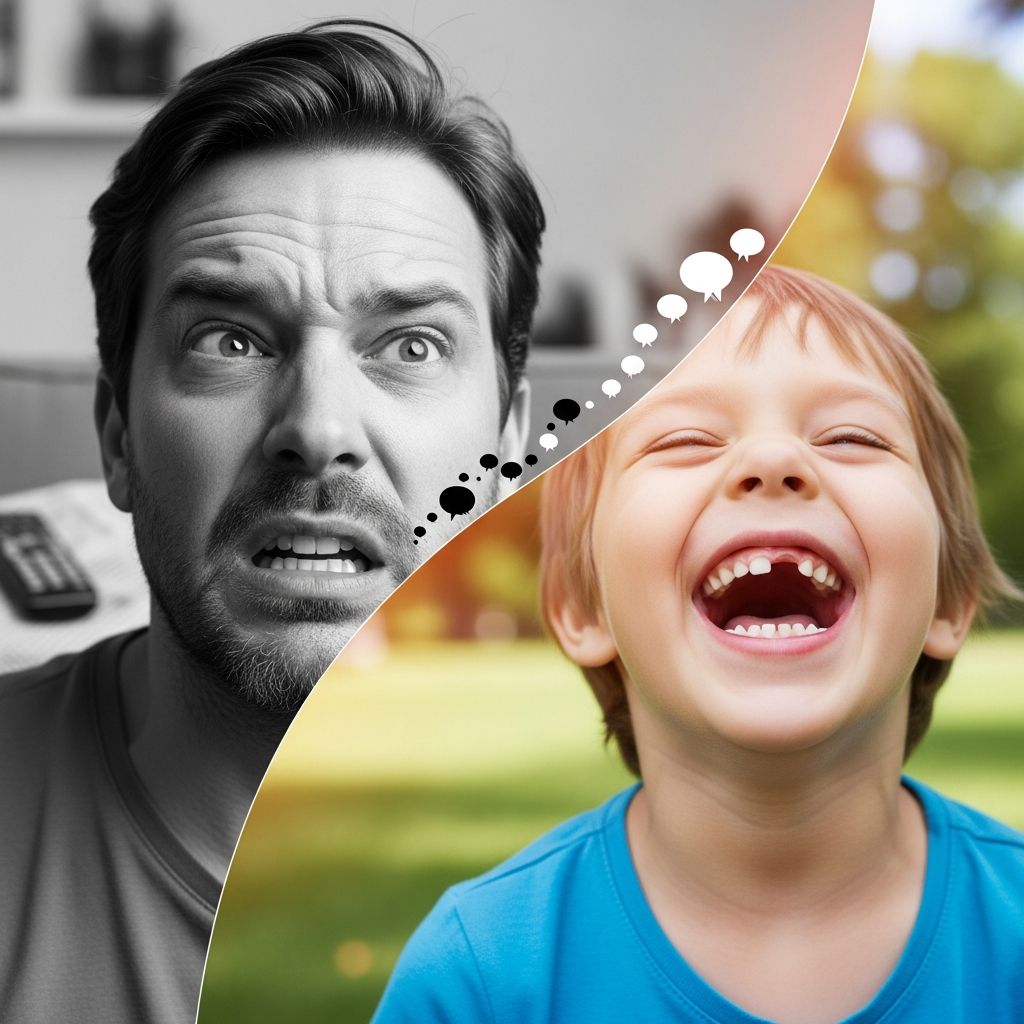
1. Building Resilience to Embarrassment
Embarrassment is a normal part of growing up, especially in adolescence. Psychologists note that children and teens are often highly sensitive to how others see them. Dad jokes provide frequent, low-stakes practice at handling that feeling:
- The joke is intentionally awkward or uncool.
- The child may blush, squirm, or protest — but nothing truly bad happens.
- Over time, they learn that a little social discomfort is survivable, even funny.
Some researchers compare this to a verbal version of rough-and-tumble play: light, controlled challenges that teach kids to regulate their emotions and reactions.
2. Supporting Emotional Regulation
Studies on fathers’ rougher play styles suggest that when play stays within safe, affectionate bounds, it helps children learn to manage big feelings like excitement, frustration, and mild fear. The same principle can apply to teasing humor:
- Kids feel a small surge of embarrassment or annoyance.
- They get a chance to notice and regulate those feelings.
- They discover more constructive responses than lashing out or shutting down.
Practiced over years, this can contribute to stronger impulse control and emotional flexibility.
3. Encouraging Language and Cognitive Skills
Wordplay-based jokes invite kids to stretch their language abilities. Understanding a pun requires the listener to juggle two meanings at once and notice subtle shifts in context.
When children engage with dad jokes, they are practicing:
- Vocabulary growth – you have to know both meanings or references to understand the joke.
- Metalinguistic awareness – recognizing that words are symbols that can be played with in flexible ways.
- Inference and problem-solving – the brain actively searches for the hidden twist or double meaning.
Even if the punchline falls flat, the thinking process it triggers can be surprisingly rich.
4. Strengthening Family Bonds
Humor is one of the most reliable social glues humans have. Light, inclusive jokes create a sense of belonging and shared experience.
Dad jokes contribute to family connection when they:
- Become running gags or recurring bits everyone recognizes.
- Signal “inside knowledge” — only family members know the backstory or reference.
- Turn groans into a ritual: the eye-roll becomes a playful way of saying, “I know you, and we do this together.”
How Dad Jokes Work in the Brain
Understanding a pun or a cheesy joke activates multiple mental processes at once. Even if the joke is “bad,” the brain is busy.
| Process | What Happens During a Dad Joke |
|---|---|
| Language processing | The brain decodes the literal meaning of the setup, then searches for alternative meanings that might complete the joke. |
| Prediction and violation | We predict a clever punchline; instead we get a corny or obvious one. That mismatch itself can trigger amusement. |
| Social interpretation | We read the speaker’s intent: this is safe, playful, and not meant to harm or insult. |
| Emotional regulation | We feel a flash of secondhand embarrassment or cringe, then convert it into laughter, eye-rolls, or playful protest. |
Simple Guidelines for Responsible Dad Joking
Not every joke is helpful, and not every child responds the same way. Thoughtful use of dad jokes means tuning into your kids’ personalities and limits.
Do: Keep It Safe and Affectionate
- Focus on wordplay and situations, not your child’s appearance, abilities, or vulnerabilities.
- Make sure the target of the joke is usually you or the language itself.
- Use a warm tone and body language so kids know the interaction is playful.
Don’t: Cross the Line into Bullying
- Avoid jokes that repeat an insecurity your child has shared.
- Do not keep going if your child looks genuinely upset or humiliated.
- Skip sarcasm that cuts down their intelligence or effort.
Notice and Adjust
When used well, dad jokes invite participation. Pay attention to how your child responds:
- If they smile, protest playfully, or start making their own puns, you are likely in a healthy zone.
- If they withdraw, snap, or seem hurt, scale back and check in with them.
Tips to Start (or Upgrade) Your Dad Joke Game
You do not have to be a natural comedian to use dad jokes effectively. A few simple practices can help you build a playful, pun-filled environment at home.
1. Use Everyday Moments
Opportunities for gentle wordplay appear all day long:
- Reacting to common phrases (“I’m starving” or “I’m bored”).
- Playing with product names, street signs, or menu items.
- Using homophones or sound-alike words in casual conversation.
2. Invite Kids to Join the Game
Turn dad jokes into a collaborative activity rather than a one-way performance:
- Ask, “Can you top that?” after you make a pun.
- Start a family pun challenge on long car rides.
- Celebrate attempts, even if the joke does not quite land.
3. Balance Repetition and Novelty
Running jokes are part of the charm, but fresh material keeps kids engaged.
- Keep a small list of favorite jokes your family loves to groan at.
- Rotate in new ones so it does not feel like the same line every time.
- Let your kids decide which jokes become “classics” to repeat.
4. Model Laughing at Yourself
Perhaps the most important function of dad jokes is how they demonstrate that it is okay to look silly.
- Laugh when your own joke flops.
- Admit when your pun made no sense and try again.
- Show your kids that being imperfect is not a disaster — it is human.
Different Ages, Different Reactions
A toddler and a teenager will not respond to the same joke in the same way. Adjusting your style to your child’s stage can keep humor positive and effective.
Early Childhood
- Kids enjoy repetition, funny sounds, and simple, obvious twists.
- Focus on silly rhymes, exaggerated voices, and playful mislabeling (“Is that a banana on your head?”).
- Keep jokes gentle and very easy to understand.
School-Age Kids
- They start to appreciate actual wordplay and can understand simple puns.
- Knock-knock jokes, riddles, and short one-liners work well.
- Encourage them to make up and share their own jokes, even if they are nonsense.
Preteens and Teens
- They may react with dramatic eye-rolls — this is normal, especially as peer approval becomes more important.
- Respect clear boundaries (for example, not joking in front of friends if they hate that).
- Use more subtle or clever wordplay when they are receptive; they may secretly appreciate it more than they admit.
Dad Jokes and Modern Fatherhood
Compared to earlier eras, contemporary fathers are often more emotionally present, hands-on, and involved in day-to-day family life. Within this context, dad jokes can be seen as part of a broader shift toward soft power — leading through warmth, play, and connection instead of authority alone.
To deliver a truly cringey pun, a dad has to be willing to look ridiculous. That willingness to play the fool for a laugh is a powerful message to kids: you do not have to be perfect to be loved, and you can risk a bit of silliness to connect with others.
Frequently Asked Questions (FAQs)
Q: Are dad jokes good or bad for kids?
Used thoughtfully, dad jokes are generally positive. Research suggests that playful teasing and word-based humor can help kids build emotional regulation, resilience to embarrassment, and stronger bonds with caregivers, as long as the jokes stay kind and respectful.
Q: Can dad jokes ever go too far?
Yes. If jokes target a child’s insecurities, repeat hurtful themes, or continue after the child clearly wants them to stop, they can slide into bullying rather than bonding. Parents should watch for signs of genuine distress and adjust accordingly.
Q: Do dad jokes require a special sense of humor?
No. Most dad jokes are simple and rely on everyday language. The key ingredient is not comedic talent but a willingness to be playful, accept groans as part of the fun, and stay tuned in to your child’s reactions.
Q: Are dad jokes only for fathers?
Despite the name, anyone can tell “dad-style” jokes — mothers, grandparents, caregivers, teachers, or older siblings. What matters is the style: gentle, pun-based, and more about connection than about impressing an audience.
Q: Do kids who tell jokes benefit too?
Yes. When children invent and share their own jokes, they practice language skills, creativity, and social timing. Encouraging them to take turns being the family comedian can boost confidence and give them practice leading playful interactions.
References
- Hye-Knudsen, M. — Aarhus University. 2021-03-01. https://pure.au.dk/portal/en/publications/dad-jokes-and-the-deep-roots-of-fatherly-teasing/
- Hye-Knudsen, M. — The Psychologist, British Psychological Society. 2023-02-01. https://www.bps.org.uk/psychologist/dad-jokes-thats-way-eye-roll
- Schonbrun, Y. — Relational Riffs (Substack). 2023-06-15. https://relationalriffs.substack.com/p/the-science-of-dad-jokes
- Cringey Dad Jokes Teach Your Kids A Valuable Life Lesson — Fatherly. 2022-06-14. https://www.fatherly.com/health/dad-jokes-teach-kids-valuable-lesson-embarrassment
- The Power of Dad Jokes: More than Just Groans — Good Dads. 2023-03-20. https://gooddads.com/the-power-of-dad-jokes-more-than-just-groans/