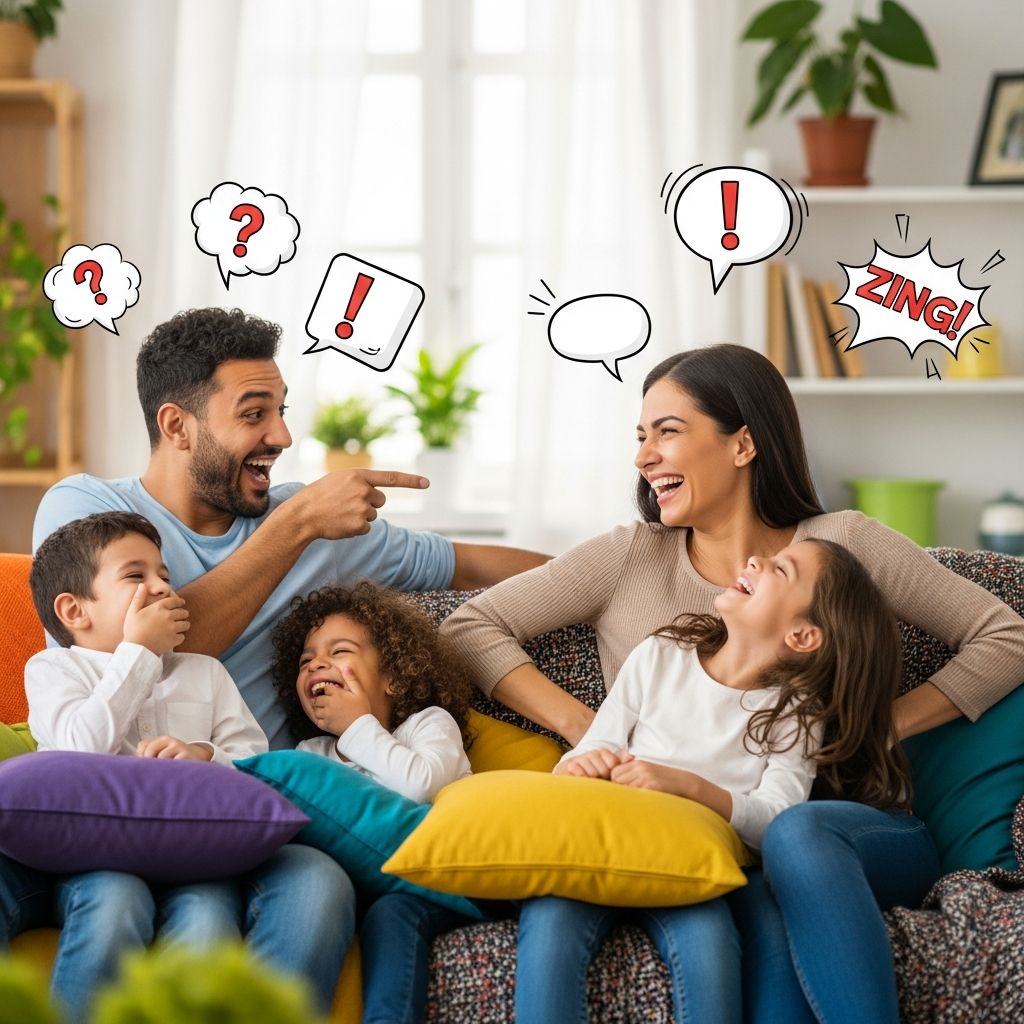
Few playground jokes are as instantly recognizable as the classic opening: “Yo mama…”. These quick one-liners can be silly, clever, or biting – and they have a surprisingly long history. For many kids, they are a first taste of fast-paced verbal sparring. For parents, they can be either a headache or a helpful way to talk about teasing, boundaries, and humor.
This guide uses the spirit of traditional “yo mama” jokes as inspiration, but reshapes it into something more thoughtful, family-friendly, and fun. You will learn where these jokes come from, why they matter to kids, and how to keep the laughter from crossing the line into real hurt.
1. What Exactly Is a ‘Yo Mama’ Joke?
A ‘yo mama’ joke is a short insult joke that targets someone’s mother, usually starting with a phrase like:
- “Yo mama so…” followed by an exaggerated description.
- “Your mom…” plus a silly or absurd statement.
Classic versions poke fun at things like:
- Exaggerated size or strength
- Clumsiness or forgetfulness
- Wild, impossible situations (for example, living on the moon)
At their best, these jokes are over-the-top and obviously fictional, which is exactly what can make them feel playful instead of cruel. At their worst, they can reinforce stereotypes or turn into personal attacks, especially when they touch on real insecurities like body image, poverty, or family circumstances.
2. A Surprisingly Ancient Comic Tradition
It might feel like ‘yo mama’ jokes were invented in the schoolyards of the 1990s, but history suggests the basic idea is far older. Researchers have traced mother-based insults and riddles back thousands of years.
- Archaeologists studying ancient Babylon uncovered a clay tablet from around the second millennium BCE that appears to contain a riddle built around an insult to someone’s mother.
- Historical records from different cultures show that insulting a person’s mother has long been a high-stakes way to provoke, entertain, or challenge others in public.
In modern U.S. culture, the style most people recognize today developed out of “the dozens”, a competitive exchange of insults historically associated with African American communities. Scholars describe the dozens as a verbal game where participants trade outrageous, often mother-focused insults to show wit, resilience, and status. Sociologist John Dollard’s classic 1939 study analyzed these exchanges as a way for marginalized groups to express anger, practice self-control, and build social bonds.
Over time, this tradition filtered into mainstream entertainment, showing up in movies, television, stand-up comedy, and of course, on school playgrounds everywhere.
3. Why Kids Love ‘Yo Mama’ Jokes
From a parent’s point of view, it can be confusing that kids laugh so hard at something that sounds rude on the surface. Developmental research on humor and play helps explain why these jokes hit such a nerve.
| Reason Kids Enjoy Them | What’s Going On Beneath the Surface |
|---|---|
| They feel slightly forbidden. | Breaking a minor social rule in a safe way gives kids a sense of power and independence. |
| They are easy to remember and remix. | The repeating format (“Yo mama so…”) lets kids plug in their own silly ideas, practicing creative language play. |
| They are part of peer culture. | Trading these jokes signals belonging; children quickly learn what’s popular and what gets a laugh. |
| They test emotional boundaries. | Kids experiment with how far they can go without genuinely upsetting someone, learning about empathy and consequences. |
Psychologists note that playful teasing can help children practice social problem-solving and emotion regulation, as long as the play is balanced and not one-sided. For parents, the goal is not to ban every edgy joke, but to teach kids how to read the room, respect others, and recognize when a joke stops being fun.
4. The Anatomy of a Good, Harmless Joke
Not all ‘yo mama’ jokes are created equal. Some are mean, some are lazy, and some are genuinely clever. Teaching kids to recognize the difference can turn them into more thoughtful comedians and kinder friends.
4.1 The Classic Structure
Most jokes in this style follow a simple structure:
- Setup: “Yo mama so…”
- Exaggeration: an impossible or wildly overstated trait
- Punchline: a surprising twist that ties the exaggeration into something familiar
For example, a playful, non-hurtful version might exaggerate how much someone’s mom reads, bakes, or cheers at games, rather than targeting sensitive topics.
4.2 Red Flags to Watch For
Parents can teach simple “red flag” rules for jokes. A ‘yo mama’ line is more likely to hurt if it:
- Mocks someone’s real body size or appearance
- Targets disability, illness, or mental health
- Hints at sexual content or objectification
- Makes fun of poverty, race, culture, or religion
- Keeps going after somebody who already looks uncomfortable
These topics touch on real-life pain and often mirror the kinds of bullying behavior that schools work hard to prevent. A useful family rule is: if it would be hurtful coming from a stranger, it is probably not a good joke among friends.
5. Turning ‘Yo Mama’ Jokes into Positive Play
You do not have to outlaw the phrase “yo mama” at home to keep things kind. Instead, you can redirect the creativity into humor that builds connection rather than tearing people down.
5.1 Flip the Script: From Insult to Compliment
One playful twist is to keep the structure but change the intent. Encourage kids to invent compliment jokes, where absurd exaggeration celebrates someone instead of mocking them, such as inventing ridiculous levels of kindness, skill, or bravery.
Benefits of this approach include:
- Kids still get to feel clever and edgy.
- The family practices noticing each other’s good qualities.
- Children learn that humor can lift people up instead of putting them down.
5.2 Use Impossible, Cartoon-Level Exaggerations
Another strategy is to insist that jokes stay in the realm of the clearly impossible. When the exaggeration is obviously unreal, it is easier for everyone to see the line between play and reality.
- Swap “real” traits (like weight or income) for imaginary ones (superpowers, magical items, space travel).
- Encourage surreal or absurd images – the stranger, the better.
By exaggerating far beyond anything that could be real, kids are practicing a form of imaginative thinking that psychologists link to both creativity and language development in childhood.
6. Talking to Kids About Boundaries and Feelings
Because ‘yo mama’ jokes sit right on the edge between silly and cruel, they create natural openings for important conversations. Here are a few approaches families find helpful.
6.1 The “Three-Check” Rule
Teach kids to do three quick checks before they tell a joke that targets someone’s family:
- Check the topic: Is this about something serious in real life?
- Check the person: Does this friend actually enjoy these kinds of jokes?
- Check yourself: Am I okay if they joke back at me the same way?
If any answer is “no,” the joke probably is not worth telling.
6.2 Practicing Opt-Out Language
Not every child wants to trade barbs, and that is okay. It helps to rehearse simple phrases kids can use to opt out without escalating the situation, like:
- “I’m not into mom jokes. Let’s talk about something else.”
- “That one felt mean, not funny. Can we stop?”
- “Let’s do silly jokes, not personal ones.”
Role-playing these scenarios at home can make it easier for children to speak up under peer pressure, a skill widely recognized as important for preventing bullying.
7. A Quick Look at ‘Yo Mama’ Through the Ages
Though this guide focuses on family use today, a short timeline helps kids and adults appreciate how long people have been teasing each other in similar ways.
| Period | Highlight | What It Shows |
|---|---|---|
| Ancient Mesopotamia | Clay tablets with mother-based riddles and jokes discovered by archaeologists. | People have used family-focused humor for thousands of years. |
| Classical & early modern eras | Literature in several cultures includes sharp remarks about opponents’ mothers. | Mother insults were part of public wit and political jabs, not just playgrounds. |
| 20th-century United States | “The dozens” becomes widely known as a stylized insult game in African American communities. | Verbal sparring around mothers becomes codified as a social and cultural practice. |
| Late 20th century & beyond | Movies, TV, and stand-up spread the “Yo mama so…” pattern to global audiences. | The joke evolves into a pop-culture meme, adapted by kids worldwide. |
Sharing this timeline with older children can help them see that even familiar playground jokes have complex roots in history, culture, and power.
8. FAQs About ‘Yo Mama’ Jokes for Parents
Q1: Should I ban ‘yo mama’ jokes completely at home?
Total bans often make something more attractive to kids, especially if their peers are doing it anyway. Many families find it more effective to set clear boundaries (no jokes about real appearance, money, health, or trauma) and to model kinder, more creative humor instead.
Q2: My child came home upset after hearing a ‘yo mama’ joke. What should I do?Start by listening carefully and acknowledging their feelings. Ask what exactly was said and who was present. Together, talk about whether it was meant as a joke that went too far or as deliberate bullying. You can then coach your child in responses, consider contacting the teacher if it is part of a pattern, and reinforce that being hurt does not mean they are “too sensitive”—it means the line was crossed.
Q3: How can I tell if kids are just joking or actually bullying?
Researchers distinguish playful teasing from bullying by looking at power, repetition, and intent. If the same child is always the target, seems afraid or withdrawn, or if the jokes keep going after they ask them to stop, the situation is moving toward bullying rather than mutual play. A one-time exchange among close friends who all enjoy the game is very different from constant targeting.
Q4: Are these jokes ever okay in school settings?
Many schools discourage any joke that targets a person’s family or identity, because it can easily escalate. That said, some teachers use discussions about ‘yo mama’ jokes to talk about respectful communication, empathy, and digital citizenship, especially as children start repeating jokes they see online.
Q5: How do I handle it if another parent’s child uses harsh ‘yo mama’ jokes with mine?
If it is a one-time incident, you can model a calm response: let the child know those jokes are not okay in your home, and redirect the play. If it is recurring and your child is distressed, consider a respectful conversation with the other parent, focusing on how your child feels rather than blaming. In school contexts, involving a teacher or counselor can help ensure consistent expectations for everyone.
References
- The Origins Of ‘Yo Mama’ Jokes Are A Lot Older Than You Think — Grunge. 2022-06-29. https://www.grunge.com/877329/the-origins-of-yo-mama-jokes-are-a-lot-older-than-think/
- The Origin of the Yo Mama Joke — Scripted. 2015-05-08. https://www.scripted.com/content-marketing/yo-mama-joke-history
- The “Yo mama” joke — Wikipedia. 2024-05-23. https://en.wikipedia.org/wiki/%22Yo_mama%22_joke
- The ‘Your Mom’ Joke: A Brief History — Cracked. 2022-08-08. https://www.cracked.com/article_32705_the-your-mom-joke-a-brief-history.html
- Strategies of the Warring States (Zhan Guo Ce) — Various translators & editors. (Classical text; date of original composition approx. 3rd–1st century BCE.) https://ctext.org/zhan-guo-ce
- The History and Origin of the “Yo Mama” Meme — Marly Warren, Prezi. 2014. https://prezi.com/p/vmp2_je3lkxh/the-history-and-origin-of-the-yo-mama-meme/