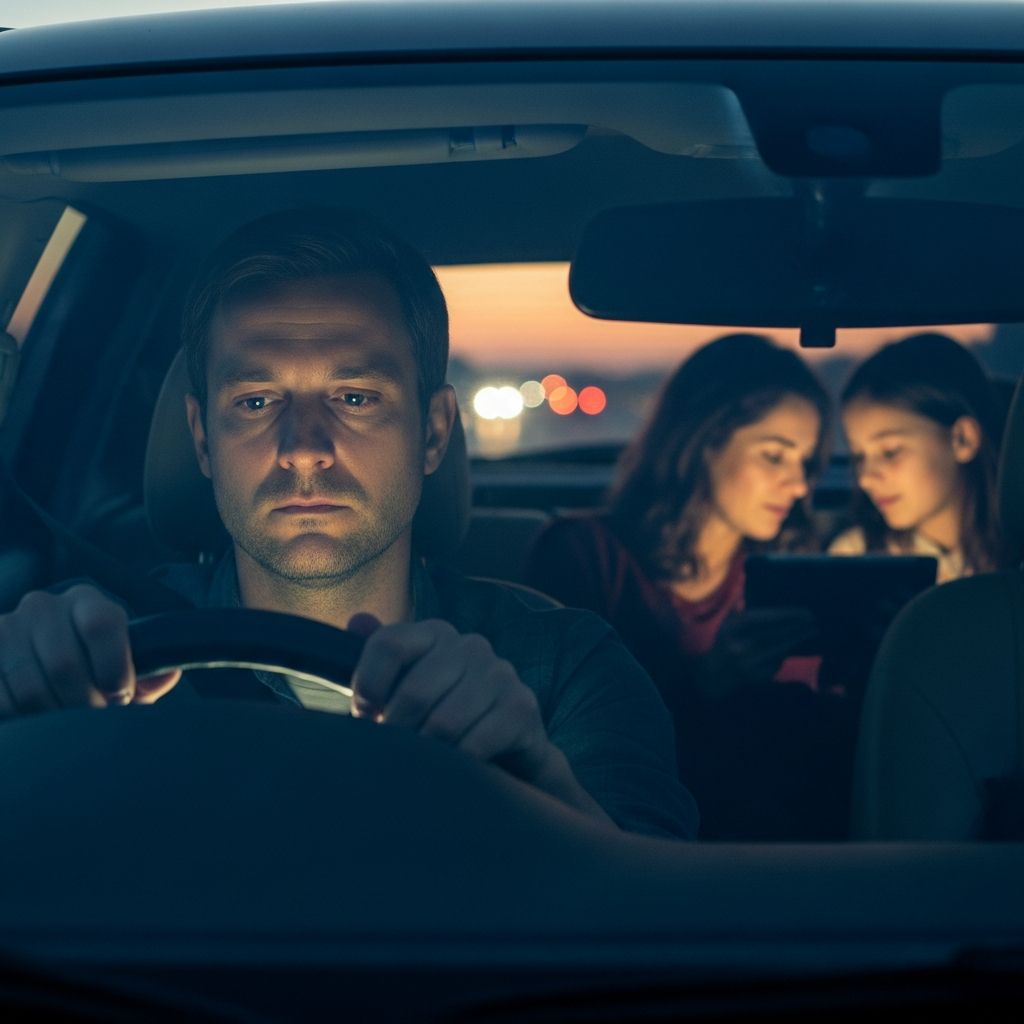
In many young families, a simple car ride becomes a snapshot of how parenting really feels: one parent in the backseat soothing the baby, and the other alone up front, quietly missing the company they used to have.
The Viral Car-Ride Moment
A short video making the rounds on social media shows a dad driving while mom sits in the backseat with their baby, and dad jokingly complains that he is feeling “lonely” up front by himself. The clip is funny and lighthearted, but it also hits a nerve for a lot of parents who see their own reality in that scene.
Instead of a couple chatting side-by-side in the front seats, the new normal is one adult focused on driving and logistics, while the other leans over a car seat, handing out snacks, toys, and comfort. The dad’s playful complaint captures a real sense of missing the closeness and attention that used to come more easily before kids entered the picture.
Why Moms Often Sit in the Backseat
There are several reasons many families naturally fall into a routine where mom sits in the backseat with the baby and dad drives up front. Some of these reasons are practical, while others are rooted in expectations and habits.
- Safety and soothing: When babies are fussy, anxious, or still very young, it can feel safer and more reassuring for a parent to sit right next to them, especially on longer drives.
- Feeding and caregiving: If mom is nursing, pumping, or the baby is simply more attached to her, she may be the default person to respond to cries and needs.
- Established routines: Once a family gets used to this configuration, it often continues by default, even when the child is older and less dependent.
- Cultural expectations: In many families, there is still an unspoken assumption that mom will handle the emotional and hands-on care, while dad takes the driving and “logistics” role.
None of these reasons are inherently wrong, but they can create an emotional gap that sneaks up on parents when they realize how much their couple time has shifted into kid-centered time.
How Dads Experience the Front Seat
For the dad in the video, the front seat becomes both a symbol of responsibility and a symbol of isolation. He is doing something essential—getting his family safely from point A to point B—but he is also physically separated from the emotional action happening in the back.
This leads to a mix of feelings that many fathers recognize:
- Loneliness: He misses the shared conversation and jokes he used to have with his partner when they both sat up front together.
- Jealousy (in a playful way): He sees mom and baby bonding behind him and wishes he were part of that little bubble of closeness.
- Pride: Even while feeling left out, he may feel proud to be the one “in charge” of driving and protecting his family on the road.
- Ambivalence: There can be a tug-of-war between understanding why mom needs to be back there and still wishing things felt more equal or balanced.
His joke about being lonely is funny precisely because it is honest. It reveals a vulnerable side of fatherhood that usually stays hidden under the surface of everyday tasks.
Is It Really a Double Standard?
One subtle layer in this situation is the feeling that if dad expressed sadness or frustration, it might be brushed off, while a mom’s similar complaint would be taken more seriously. This can feel like a double standard, especially to fathers who are highly involved and emotionally invested.
Some dads worry that speaking up about feeling lonely, left out, or sidelined will make them sound selfish, especially when a baby’s needs are obviously more urgent. At the same time, many moms also feel unseen and overburdened by the physical and emotional labor of constantly sitting in the back seat, tending to every small crisis while the other adult seems more comfortable up front.
- Dads’ perspective: “If I say I’m upset, I’m told to toughen up or remember it’s not about me.”
- Moms’ perspective: “I’m literally bent over a car seat the whole drive; of course I’m upset and exhausted.”
Both experiences can be true at the same time, and acknowledging that can reduce resentment on both sides.
What the Comments Often Reveal
Videos like this tend to spark lively comment sections where parents share their own car-ride strategies, frustrations, and jokes. While every thread is different, a few common themes usually appear.
| Type of Comment | Typical Message |
|---|---|
| Supportive of Dad | People relate to his loneliness and appreciate that he is honest and involved. |
| Defensive of Mom | Viewers point out how hard it is to constantly soothe and entertain kids in the back. |
| Humorous Takes | Parents joke that the front seat becomes a kind of quiet “time-out” for adults. |
| Practical Advice | Some suggest rotating who sits in the back or switching roles on longer trips. |
Reading these reactions, it becomes clear that this is not only about one dad in a single car. It is about how many families are negotiating new expectations around emotional support, gender roles, and what it means to be truly present for each other while raising kids.
Attachment, Bonding, and the Backseat
New parents often worry about whether their baby is equally attached to both mom and dad, and videos like this can stir up those fears. When one parent is almost always in direct contact—rocking, feeding, soothing—it can seem like the baby “prefers” them.
In the context of car rides, this plays out as mom being the default comfort provider, and dad feeling like a distant driver who is important but not cuddly. Over time, this can reinforce patterns where dad does more of the driving and errands, while mom continues to manage the emotional and physical load of being constantly within reach of the child.
- Babies bond with consistency: The parent who responds most often becomes the go-to source of comfort in stressful moments.
- Dads can build their own routines: Even if mom is often in the backseat, dads can create regular one-on-one rituals—bedtime routines, weekend outings, or a special song at every red light.
The goal is not to keep score, but to stay mindful that both parents need chances to be the comforter, the driver, and the companion.
Emotional Labor and the Mental Load
The video’s humor also quietly highlights the concept of emotional labor: the invisible work of noticing, anticipating, and managing feelings, needs, and social dynamics. In many heterosexual couples, moms still tend to carry more of this load, even when dads are loving and highly engaged.
In a single car ride, emotional labor can look like:
- Keeping track of who has eaten, who is tired, and who might melt down.
- Remembering snacks, toys, wipes, extra clothes, and soothing strategies.
- Reading everyone’s mood and smoothing over tension with humor or distraction.
Meanwhile, the parent driving has their own mental load—navigation, traffic, timing, and safety—but may not realize how much invisible work is happening right behind them. When both kinds of labor are acknowledged and valued, resentment has less room to grow.
How Couples Can Stay Connected (Even When Separated by a Car Seat)
One of the reasons the dad’s complaint feels so relatable is that many couples miss the ease of connection they had before children. The front-seat loneliness is not just about geography; it is about longing for more shared moments.
Here are practical ways couples can stay emotionally connected, even when one person is in the front and the other in the back:
- Rotate roles: On longer drives, switch who sits in the back every so often so both parents get bonding time and both get a break.
- Use the drive for check-ins: When the baby is calm or asleep, use hands-free conversation to talk about more than just logistics—share feelings, dreams, and even silly thoughts.
- Create small rituals: Maybe the driver chooses the playlist, and the backseat parent narrates funny observations. Tiny rituals make the car feel like a shared space again.
- Validate each other: A quick “Thank you for sitting back there” or “Thanks for driving again” can go a long way in making both people feel seen.
These changes do not require more time or money, just a bit of intention and empathy.
Letting Dads Voice Their Feelings
Another powerful layer of this story is that the dad actually says out loud that he feels lonely. Even if he is half-joking, he is still naming a feeling that many fathers swallow down because they believe they have to stay stoic and unbothered.
Allowing dads to express sadness, jealousy, or frustration without automatically labeling them as selfish can strengthen the relationship rather than weaken it. When both parents trust that their feelings matter, they are more likely to problem-solve together instead of silently drifting apart.
- Partners can respond with curiosity: “Tell me more about what feels lonely up there.”
- Dads can use humor as an opener, then follow up with honest conversation later, away from the chaos of the car.
In this way, a silly car-ride complaint can become the starting point for deeper understanding.
Practical Tips for Balancing Car-Ride Roles
Families evolve as kids grow, and the routines that worked with a newborn may not make sense with a toddler or school-age child. Reviewing and adjusting car-ride roles can help everyone feel more balanced and less stuck.
- Age-based changes: Once a child is old enough to self-soothe or entertain themselves safely, consider having both adults in the front again for some trips.
- Special “Dad-backseat days”: Plan certain drives where dad sits in the back on purpose to build his own playful car-time relationship with the kids.
- Short vs. long drives: On very short trips, it may not be necessary for anyone to sit in the back at all. On long trips, plan shifts so no one is stuck in the same role the entire time.
- Shared planning: Instead of assuming mom will pack everything, create a shared checklist on your phone that both parents contribute to and review together.
These small adjustments can turn the car from a place of quiet resentment into a moving space of teamwork and connection.
Frequently Asked Questions
Is it unsafe for a parent to sit in the backseat with the baby?
From a safety standpoint, the most important factor is that everyone is properly restrained: the baby in an age- and size-appropriate car seat, and adults wearing seat belts in any seat. Whether an adult sits in the front or the back is usually a matter of comfort, attachment needs, and family preference rather than safety itself, assuming all restraints are used correctly.
Will my baby be less attached to dad if mom always sits in the back?
Attachment forms over many repetitive, caring interactions across different settings, not just in the car. While frequent backseat time with mom can deepen that specific bond, dads can build strong attachments through their own consistent routines: bedtime, bath time, morning play, or weekend adventures. Intention and reliability matter more than any single routine.
How can dads talk about feeling left out without starting an argument?
It can help to start with appreciation before sharing a vulnerable feeling. For example, a dad might say, “I really appreciate all you do back there with the baby. Sometimes I still feel a little lonely in the front and miss you next to me.” Focusing on feelings rather than blame (“I feel” instead of “You always”) keeps the conversation open and less defensive.
Should parents always rotate who sits in front and who drives?
There is no universal rule, but many families find it helpful to switch roles at least occasionally, especially on longer trips. Rotating allows each parent to experience both the driving responsibilities and the emotional demands of backseat caregiving, which can increase empathy and reduce the sense that one person is always “stuck” in the harder job.
How can couples keep their relationship strong when so much attention goes to the kids?
Small, regular efforts often matter more than rare big gestures. Protecting a few minutes for connection each day, using car rides to talk when possible, sending encouraging messages, and planning simple at-home date nights can help partners remember they are a couple as well as co-parents. The key is staying curious about each other’s inner world, not just managing schedules and chores.
A Light Moment With a Serious Message
On the surface, a dad saying he feels lonely in the front seat while mom sits in the back with the baby is just a funny moment. Underneath, it taps into real questions about how families share emotional labor, how dads express their softer feelings, and how couples can stay close while raising children.
By listening to each other’s experiences—whether in the front or the backseat—parents can transform a potentially divisive pattern into an opportunity to grow closer and more understanding, one car ride at a time.