Why Biographies Matter in Early Childhood Education
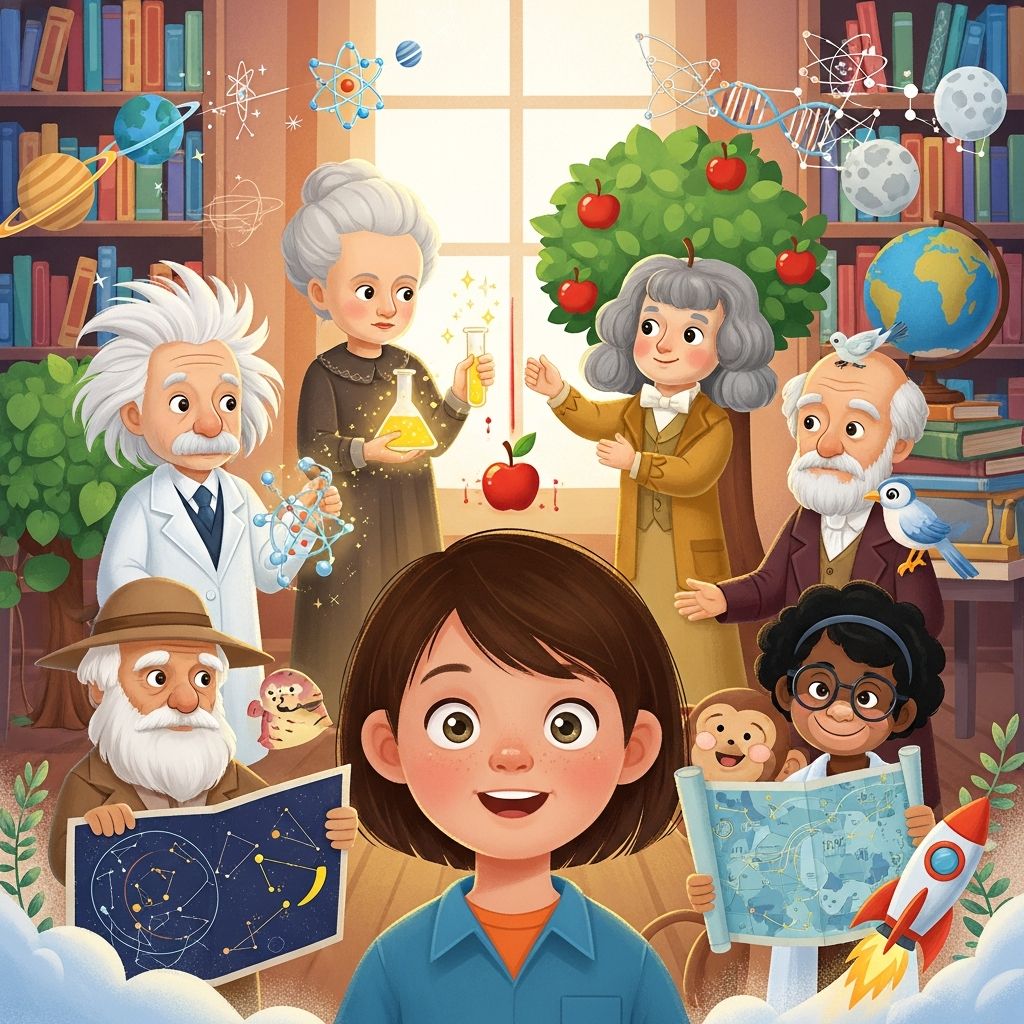
Children’s literature serves as a powerful tool for shaping how young minds understand the world around them. Biographical narratives, particularly those featuring accomplished professionals, offer more than entertainment—they provide windows into different career paths and demonstrate that exceptional achievements begin with ordinary childhoods. When authors craft stories about real people, especially those in fields like science and medicine, they humanize complex professions and make abstract concepts tangible for developing minds.
The surge in children’s biographical literature over recent years reflects a broader educational shift toward making STEM fields more accessible and appealing to younger audiences. Rather than presenting science as an exclusively adult domain, these books showcase how curiosity, persistence, and asking questions form the foundation of scientific thinking. By introducing children to the early lives of accomplished scientists and public health figures, educators and authors help normalize scientific inquiry as an achievable path rather than an exclusive career reserved for the exceptionally gifted.
The Rise of Rapid-Publication Children’s Books on Contemporary Figures
One remarkable development in publishing has been the emergence of children’s books about contemporary figures, created at unprecedented speed. Traditional children’s book publishing typically spans two to three years from conception to release. However, recent developments have challenged this timeline, with some publishers managing to produce quality children’s literature in dramatically compressed timeframes. This acceleration reflects both publishing innovation and societal demand for age-appropriate content addressing current events and prominent figures in the news.
The ability to produce children’s books more rapidly has democratized storytelling about living subjects. Rather than waiting for historical distance before featuring someone in children’s literature, publishers can now create relevant, timely narratives that allow young readers to engage with contemporary figures while they remain relevant to family conversations and classroom discussions. This represents a significant shift in how children’s literature responds to cultural moments.
Introducing Scientific Method Through Personal Narrative
The most effective children’s biographies about scientific figures transcend simple chronological retellings. Instead, they weave the subject’s personal development with the evolution of their scientific thinking. Books that follow this approach typically trace how childhood experiences—curiosity about natural phenomena, encouragement from family members, or specific moments of discovery—shaped the individual’s later professional approach.
By connecting a scientist’s formative years to their adult accomplishments, children’s biographies demonstrate that scientific inquiry isn’t born fully formed. Rather, it develops gradually through asking questions, making observations, and remaining open to new information. Young readers learn that scientists were once children who wondered about how things worked, struggled with problems, and refined their thinking over time. This narrative arc is far more instructive than isolated facts about scientific achievements.
Connecting Personal Stories to Larger Scientific Concepts
Quality children’s biographies create bridges between personal narratives and broader scientific understanding. For instance, books about medical professionals can naturally incorporate discussions about infectious diseases, vaccine development, and public health infrastructure without overwhelming young readers with jargon. The personal story provides context that makes technical information more comprehensible and memorable.
When children learn about a scientist’s interest in a particular disease or their motivations for pursuing specific research, abstract scientific concepts become connected to human purpose. This contextual framing helps children understand that science isn’t merely a collection of facts to memorize—it’s a disciplined way of asking questions and seeking answers to problems that matter. The emotional investment in a person’s story often translates into intellectual engagement with the science they pursue.
Design Elements That Make Children’s Science Biographies Accessible
Successful children’s books about scientific figures employ deliberate design strategies to maintain engagement across different reading levels. Illustrations play a crucial role, providing visual representation of historical settings, scientific equipment, and the subject at various life stages. Quality illustrations help children who are still developing reading fluency remain engaged with the narrative while they’re building vocabulary.
Typography, layout, and the strategic use of white space also contribute to accessibility. Books designed for early readers typically feature larger fonts, shorter paragraphs, and visual breaks that prevent text-heavy sections from overwhelming young readers. Additionally, many contemporary children’s biographies include supplementary materials such as timelines, historical photographs, or sidebars that provide deeper context without interrupting the main narrative flow. These design elements transform educational content into visually inviting stories that children want to explore.
Age-Appropriate Complexity and Content Considerations
Children’s books about scientists and medical professionals must carefully calibrate complexity to match developmental stages. Picture books for younger children (ages 4-8) typically focus on personality traits, curiosity, and simplified versions of the subject’s contributions. They emphasize how the person asked questions and solved problems rather than delving into technical mechanisms of their discoveries.
Books targeting older elementary readers (ages 6-9 and beyond) can incorporate more detailed information about actual scientific work, historical context, and the challenges the subject faced. However, even at these levels, authors maintain narrative momentum and emotional engagement rather than shifting entirely into instructional register. The balance between storytelling and education is critical—books that prioritize facts over narrative lose their power to inspire, while those that ignore accuracy undermine their educational value.
Table: Children’s Science Biography Options by Age Group
| Age Range | Reading Level | Focus Areas | Content Depth |
| 4-8 years | Early readers/Picture books | Personality, curiosity, childhood | Simplified narratives with illustrations |
| 6-9 years | Chapter books | Problem-solving, career development | Moderate detail with narrative structure |
| 9+ years | Novels/Graphic formats | Historical context, scientific concepts | Technical information with narrative framing |
Educational Value Beyond Entertainment
Children’s biographies about accomplished figures serve multiple educational functions. They normalize diverse career paths and demonstrate that achievement in specialized fields is attainable. Books featuring scientists and medical professionals particularly help counter stereotypes about who belongs in STEM fields. When children see biographies of individuals from various backgrounds pursuing scientific careers, they internalize the message that these paths are open to people like them.
Additionally, biographical narratives teach resilience and problem-solving in concrete ways. Rather than abstract discussions about overcoming obstacles, children witness how specific individuals faced challenges, adapted their approaches, and persisted. This narrative-based learning often proves more memorable and motivating than direct instruction about these qualities.
Supplements and Extended Learning Materials
Many contemporary children’s science biographies include supplementary content that extends learning beyond the main narrative. Backmatter might feature historical photographs, timelines, glossaries defining scientific terms, or discussion questions designed for classroom or family use. Some books include practical activities or “tips for future scientists” that encourage children to apply the thinking patterns of the subject they’ve learned about.
These additional materials transform books from standalone stories into educational tools that support multiple learning objectives. Teachers can use discussion questions to deepen comprehension, while families can explore activities together. Glossaries help children build scientific vocabulary in context, and timelines provide historical perspective about how scientific understanding has evolved.
The Role of Author Research and Accuracy
Quality children’s biographies about real figures require substantial research from authors. Acclaimed children’s authors often conduct interviews with their subjects or consult with family members, colleagues, and primary sources to ensure accuracy. This commitment to research distinguishes authoritative biographies from speculative or oversimplified accounts.
When children’s books are grounded in accurate information—even while simplifying for age appropriateness—they build trust and establish appropriate models of how to learn about others. Children who read carefully researched biographies develop expectations about accuracy and the importance of consulting reliable sources.
Questions Parents and Educators Ask
Q: At what age should children begin reading biographies?
A: Children can engage with biographical concepts through picture books as early as ages 4-5, though these focus on simple narratives about the subject’s personality and interests. More complex biographical narratives suited to independent reading typically become appropriate around ages 7-9.
Q: How do I know if a children’s biography is accurate?
A: Look for author credentials and research notes. Quality children’s books often include information about the author’s research process, acknowledgments of sources, and backmatter with verified information. Publisher reputation also provides guidance—established publishers typically maintain editorial standards for accuracy.
Q: Can children’s biographies about living figures become outdated?
A: Yes, they can. Biographies published during someone’s lifetime capture information current at that time, but may not reflect later developments in their career or changes in their field. This presents an opportunity for teachers and parents to discuss how knowledge evolves and to update children’s understanding with current information.
Q: How should I use children’s biographies in classroom settings?
A: Children’s biographies work well for introducing career paths, inspiring STEM interest, teaching reading comprehension, and facilitating discussions about problem-solving and persistence. Many include discussion questions and activities. Consider pairing biographies with hands-on activities related to the subject’s field of work.
Q: What makes children’s biographies different from adult biographies?
A: Children’s biographies simplify complex information, focus on relatable personality traits and challenges, use accessible language, include illustrations, and typically emphasize inspiration and relatability. They serve educational goals differently than adult biographies, which often provide comprehensive historical analysis.
References
- Dr. Fauci: How a Boy From Brooklyn Became America’s Doctor — Science Friday / Kate Messner. 2020. https://www.sciencefriday.com/segments/anthony-fauci-kids-book/
- Dr. Fauci Children’s Book Information — 6abc Philadelphia / Simon and Schuster. 2020. https://6abc.com/post/dr-fauci-childrens-book-covid-19-anthony/10440062/
- Dr. Fauci: A Little Golden Book Biography — Penguin Random House / Suzanne Slade. 2022-08-02. https://www.penguinrandomhouse.com/books/696801/dr-fauci-a-little-golden-book-biography-by-suzanne-slade-illustrated-by-fanny-liem/
- Fauci Fan Club – What to Read to Your Kids — What to Read to Your Kids Blog. 2021-09-16. https://whattoreadtoyourkids.com/2021/09/16/dr-fauci-picture-book-biography/
- Children’s Book About Dr. Fauci Helps Show That We Are Always Learning — CBS Boston / Kate Messner. 2021. https://www.youtube.com/watch?v=Nzlaqkh8Cjo
- Dr. Fauci: A Little Golden Book Biography — Read Brightly. 2022. https://www.readbrightly.com/books/9780593484067/dr-fauci-a-little-golden-book-biography-by-suzanne-slade-illustrated-by-fanny-liem/