Understanding Voluntary Generosity in Early Childhood
One of the most challenging parenting moments occurs when two children want the same toy simultaneously. The instinctive adult response is often to demand that the child currently using the item surrender it immediately. However, developmental psychology and contemporary educational philosophies suggest that this approach may undermine the very traits parents hope to cultivate. Children who are coerced into surrendering their possessions do not learn generosity—they learn compliance born from powerlessness.
The distinction between forced compliance and authentic generosity shapes how children develop their social capacities throughout their lives. When adults impose sharing as a requirement rather than a choice, they inadvertently communicate that children’s preferences and feelings are subordinate to adult convenience or abstract ideals of kindness. This message becomes deeply embedded in how children perceive their own value and autonomy.
Developmental Readiness and the Stages of Social Understanding
Child development research demonstrates that the capacity for genuine sharing emerges gradually through distinct developmental stages. Children under three years old do not possess the cognitive or emotional sophistication to understand ownership concepts in the abstract sense. Their relationship with objects is concrete and immediate—if they are holding something, it belongs to them in that moment, not as a permanent possession.
As children progress through their preschool years, they begin to develop theory of mind—the understanding that others have thoughts, desires, and perspectives separate from their own. This foundational cognitive skill must be in place before sharing can become truly meaningful. Without it, forced sharing feels arbitrary and punitive rather than connected to prosocial values.
By the end of the early childhood period, typically around age five or six, children naturally begin to recognize that sharing creates connection and pleasure. This organic development occurs when children have not developed negative associations with relinquishing their possessions. They learn that offering something to another person can be an avenue for friendship and mutual enjoyment, rather than an experience of loss.
The Psychological Impact of Coerced Sharing
When adults force children to share before they are developmentally ready, several problematic patterns emerge:
- Resentment toward generosity: Children begin to associate sharing with loss and frustration rather than joy. This negative emotional association can persist into adulthood, making genuine generosity feel burdensome rather than rewarding.
- Possession anxiety: Instead of learning healthy ownership, children who are regularly forced to surrender their items develop protective behaviors, clutching possessions more tightly and becoming possessive rather than secure.
- Diminished autonomy: When adults constantly intervene to dictate toy distribution, children lose opportunities to develop self-regulation and conflict resolution skills. They learn to wait for adult direction rather than working through problems independently.
- Distorted fairness concepts: Children may internalize the message that crying or demanding behavior yields results, rather than learning that persistence, patience, and communication are the actual pathways to their goals.
Turn-Taking as an Alternative Framework
Rather than imposing sharing, many educators and parents implement a turn-taking system that respects both children’s need for focus and their growing understanding of fairness. In this model, a child using a particular toy, game, or material is allowed to complete their engagement with it without interruption. Once the child has finished, the material returns to a common space where another child may access it.
This approach honors several developmental needs simultaneously. First, it allows children to experience uninterrupted flow—the psychological state where learning and creativity flourish most powerfully. When children can sustain their attention on an activity without external interruption, they develop deeper problem-solving abilities and greater satisfaction.
Second, turn-taking demonstrates fairness as a principle based on time and sequence rather than on adult judgment about who deserves what. Children can understand that “when you finish, it will be your turn” in ways that feel logical and equitable, even when they are impatient.
Third, this framework naturally builds anticipation and patience. As children wait for their turn, they begin to internalize that delayed gratification is both manageable and worthwhile. These skills transfer to countless other domains throughout development and adulthood.
The Emergence of Authentic Generosity
When children are not forced to share, something remarkable occurs—they often become more generous on their own terms. Without the pressure and resentment that accompany coercion, children naturally begin to notice when peers want something they possess. This observation triggers developing empathy and social awareness.
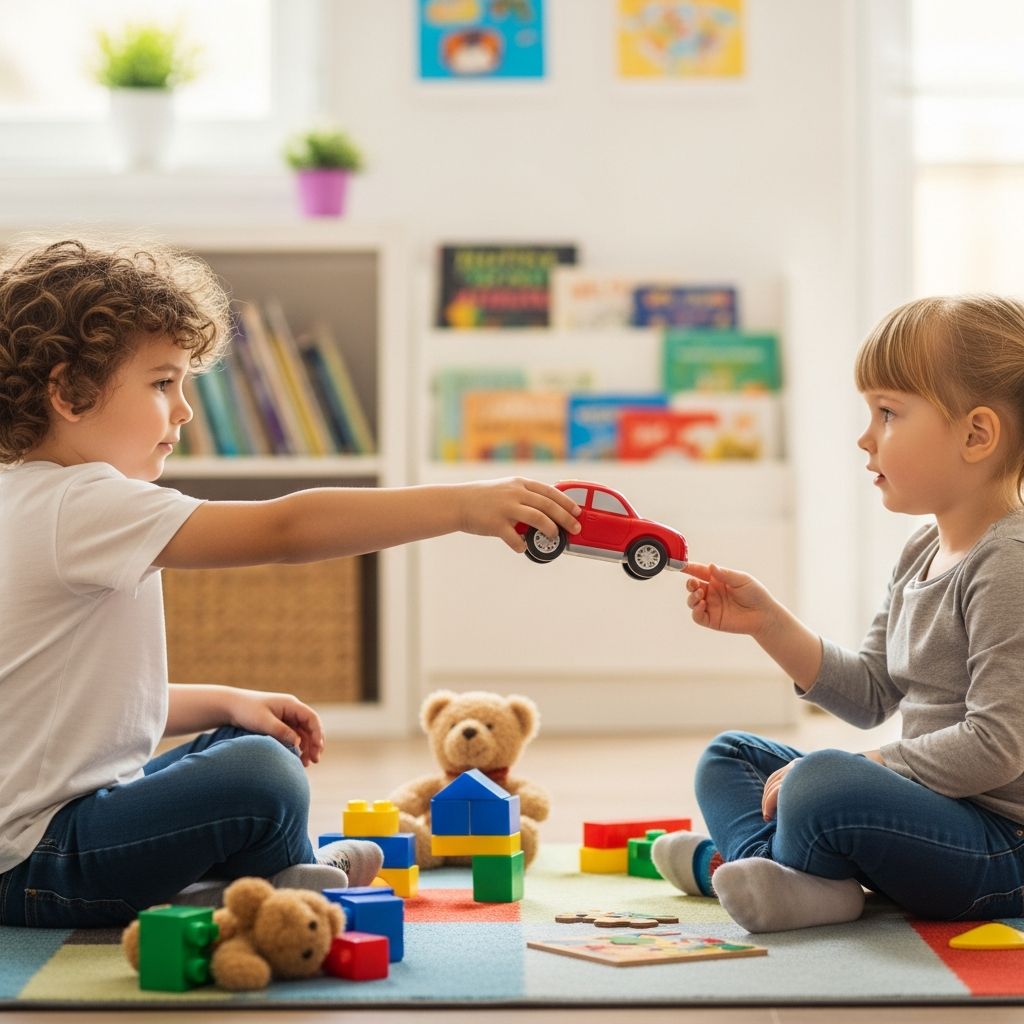
When a child chooses to offer a toy or material to another child voluntarily, the experience is entirely different from forced sharing. The offering child experiences pride and joy in creating happiness for someone else. The receiving child perceives the gesture as kindness rather than as an externally imposed transfer of property. This dynamic builds genuine social bonds and reinforces the intrinsic motivation to be kind.
Parents and educators report that children who have not been forced to share often become remarkably generous on their own initiative. They share because they want to, not because they have to. This distinction is psychologically and developmentally significant. Internal motivation for prosocial behavior is far more stable and predictive of future kindness than compliance motivated by external pressure.
Building Critical Social and Emotional Skills
When adults refrain from forcing sharing, they create space for children to develop several essential competencies:
Self-Advocacy and Boundary Setting
Children need to experience their own preferences being respected to develop healthy boundaries and the ability to express their needs. When a child can say “no” to a sharing request without adult punishment, they learn that their feelings matter. This foundation becomes crucial as children grow and must navigate peer pressure, uncomfortable social situations, and eventually establish professional and personal boundaries.
Conflict Resolution and Communication
Without adult intervention in every possession dispute, children must develop language and strategies to manage disagreements. They learn to propose alternatives: “You can have this when I’m done” or “Do you want to play together?” These conversations build communication skills that generalize to all future relationships.
Emotional Regulation and Self-Discipline
When children must wait for a turn or accept that someone doesn’t want to share their item, they face natural disappointment. Learning to sit with and manage disappointment is a crucial component of emotional regulation. Children who develop these skills early show greater resilience and psychological well-being throughout life.
Additionally, when a child recognizes independently that they are finished with an activity and willingly allows another child access, they are exercising self-discipline. This internal motivation differs fundamentally from obedience to external rules, and it translates into greater capacity for self-control across contexts.
Empathy Through Lived Experience
Empathy is not successfully taught through instruction; it is internalized through experience. When children experience not getting what they want and recognize that others experience the same disappointment, genuine empathy develops. When they have their own preferences respected, they become better able to respect the preferences of others.
Creating Environments That Support Voluntary Sharing
Several practical strategies help foster voluntary generosity without coercion:
- Provide multiples: When possible, having duplicate toys or materials reduces conflict by design. Children are less likely to feel desperate for access to something if similar alternatives exist.
- Use visual communication: In Montessori environments, materials on shelves are understood to be available; materials in use are understood to be unavailable. Visual cues help children understand the status of items without constant adult explanation.
- Model turn-taking language: Adults can verbalize the turn-taking concept: “I see you want that. She’s using it right now. When she’s done, it will be your turn.” This frames waiting as a normal, manageable part of social life.
- Teach negotiation skills: Rather than enforcing sharing, guide children toward solutions: “Can you ask if you could work together?” or “How long do you think you’ll need that?”
- Validate the desire without enforcing the outcome: A child who doesn’t want to share can hear: “I see you want to keep playing with that. That’s okay. She’ll have to wait for her turn.” This respects the child’s autonomy while maintaining the expectation of eventual turn-taking.
Distinguishing Personal Items from Shared Resources
An important nuance exists between items that are genuinely a child’s personal possessions and materials that exist in shared spaces. A child’s stuffed animal or blanket is a personal object that a child should never be forced to share. Personal items are important for emotional security and the development of healthy attachment. Forcing a child to share these items can damage their sense of safety.
In contrast, toys at a park or in a shared classroom are community resources. Children can learn that shared spaces operate differently from home. They may more readily relinquish toys that never belonged to them personally. This distinction helps children develop nuanced understanding of property and social contexts.
Addressing Peer Expectations and Social Norms
One common parental concern is that if children are not forced to share, they will face social rejection or be perceived as selfish by peers. In reality, the opposite often occurs. Children who can comfortably articulate “I’m still playing with this” without adult enforcement tend to have healthier peer relationships than children who comply without understanding or genuine willingness.
Peer groups naturally develop norms around sharing and turn-taking. When children see that taking turns actually allows everyone to enjoy materials rather than being fought over, they begin to adopt turn-taking voluntarily. Social learning operates more powerfully than adult mandates in shaping peer culture.
Long-Term Outcomes of Respecting Ownership Autonomy
Children who are not forced to share but are guided toward voluntary generosity develop into adolescents and adults with several positive characteristics. They tend to have stronger self-awareness about their own needs and preferences. They experience generosity as chosen rather than obligatory, which increases the likelihood they will be genuinely kind throughout their lives. They have stronger conflict resolution skills because they have practiced negotiation repeatedly in low-stakes contexts.
Perhaps most importantly, these children develop a secure sense of self. They know that their preferences matter, that their boundaries will be respected, and that they have autonomy over their own possessions and choices. This foundation supports psychological resilience and healthy relationships across all contexts.
Frequently Asked Questions
Q: Will my child become selfish if I don’t force them to share?
A: Research indicates the opposite tendency. When children’s autonomy is respected, they develop intrinsic motivation for generosity. Children who are not coerced often become more generous on their own terms because they associate sharing with positive emotions rather than loss and resentment.
Q: At what age should children begin sharing?
A: Children under three are developmentally unprepared for true sharing. By ages four to five, children typically develop the cognitive capacity to understand sharing conceptually and often begin spontaneous generosity. Rather than age as a strict marker, look for signs of theory of mind and social awareness.
Q: How do I handle sharing requests at playgroups or daycare?
A: Communicate with caregivers about your approach. Many settings can accommodate turn-taking rather than forced sharing. You might say: “We’re working on turn-taking at home. When my child is finished, the other child can have a turn.” This frames the expectation as developmental rather than unusual.
Q: What if my child has a toy that belongs to a friend visiting our home?
A: Distinguish between the visiting child’s item (which they have the right to reclaim) and your child’s items. Your child should never be forced to share personal possessions. However, they can learn that shared toys in common areas operate under turn-taking principles.
Q: How do I teach fairness if I’m not enforcing sharing?
A: Fairness emerges through experience with turn-taking and natural consequences. When children see that patient waiting results in access rather than demanding behavior, they internalize fairness principles. Guide them with language: “When she’s done, it will be your turn. I know waiting is hard.”
References
- Chronicles of a Momtessorian – Montessori Tidbits Part 4: The Montessori Approach to Why Children Shouldn’t Be Forced to Share — Montessori parenting resource. 2026. https://chroniclesofamomtessorian.com/montessori-tidbits-part-4-the-montessori-approach-as-to-why-children-shouldnt-be-forced-to-share/
- Why We Don’t Enforce Sharing — Fiore Montessori School. 2026. https://www.fioremontessori.com/post/why-we-dont-enforce-sharing
- A Montessori Approach to (not) Sharing — Montessori in Real Life. 2019. https://www.montessoriinreallife.com/home/2019/12/28/a-montessori-approach-to-not-sharing
- Why Montessori Teachers Don’t Encourage Children to Share — The Montessori Room. 2026. https://themontessoriroom.com/blogs/montessori-tips/why-montessori-teachers-don-t-encourage-children-to-share
- Why We Don’t Make Our Kids Share — And Why They Do Anyway — Momtessori Life. 2016. https://momtessorilife.com/2016/06/02/why-we-dont-make-our-kids-share-and-why-they-do-anyway/