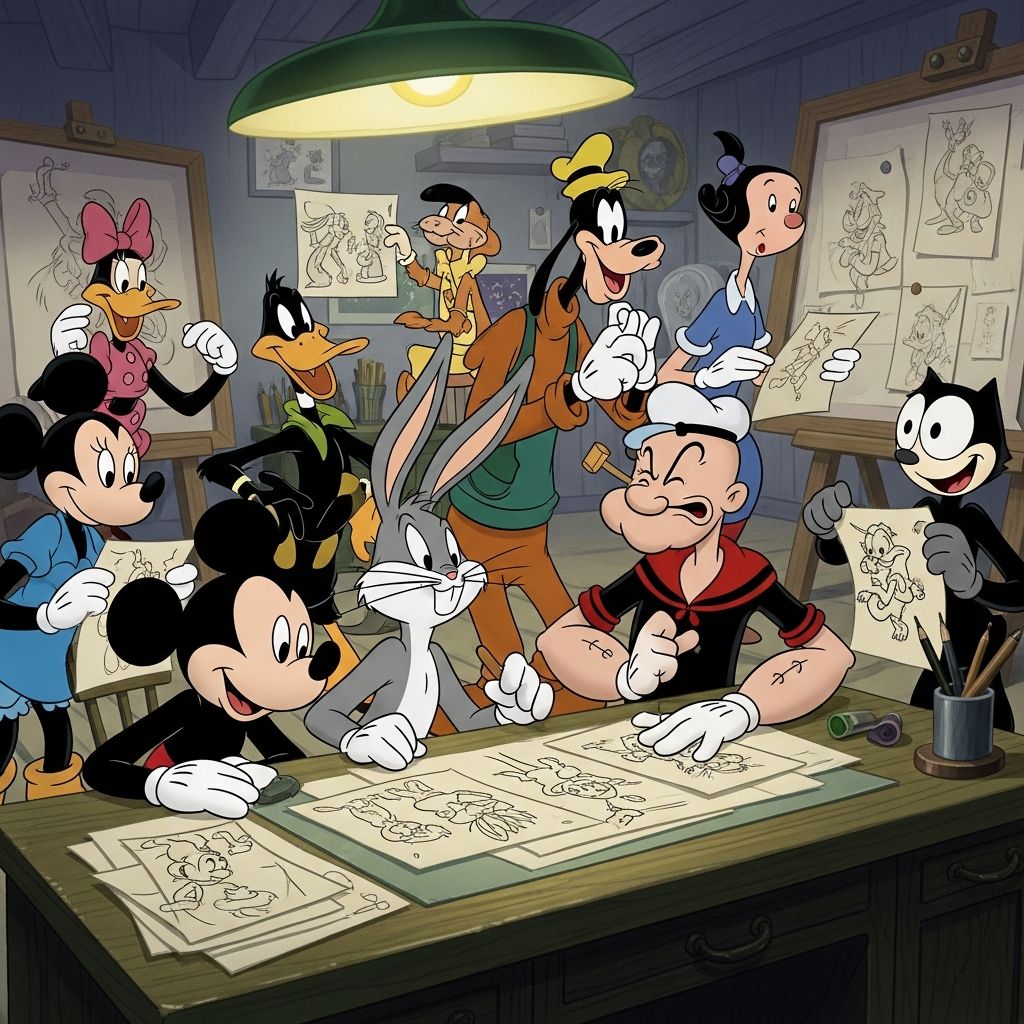
Cartoon characters with oversized white gloves are so common that most viewers stop questioning them by childhood, yet that tiny design choice grew out of very real technical limits, cultural habits, and uncomfortable racial history. Over time, this visual quirk evolved from a drawing shortcut into a powerful symbol of nostalgia and personality in animation. Understanding how gloves became standard in cartoons reveals just how much human history quietly sits behind the simplest lines on the screen.
The Strange Normal: A World of Gloved Characters
Animated icons from early cinema to modern video games often share one striking trait: bright gloves that stand out from their bodies. When audiences see those puffy white hands, they instantly recognize the character as part of a long cartoon tradition rather than an attempt at realism. This visual shorthand persists even in color, high-resolution media where the original technical reasons no longer apply.
- Gloves help instantly separate hands from the rest of the character’s design, especially in fast motion.
- The look has migrated from film into television, comics, theme parks, and video games.
- Audiences now associate gloves with a certain playful, vintage cartoon spirit.
Hand-Drawn Beginnings: When Every Frame Hurt
To understand cartoon gloves, it helps to picture the earliest animators drawing thousands of individual frames on paper or celluloid. Every curve and finger had to be redrawn by hand, again and again, for every tiny movement. Anything that simplified the design of a character’s hands saved hours of work and reduced the risk of inconsistencies between frames.
Animators adopted a style now often described as “rubber-hose” animation: rounded limbs, minimal joints, and simple shapes instead of detailed anatomy. That style extended to the hands, which became rounded mitts with minimal finger separation. Adding gloves cleverly emphasized expression, while keeping the forms easy to repeat at high speed.
How Gloves Helped Animators
- Fewer lines meant faster drawing and less visual wobble between frames.
- Large, simplified shapes allowed viewers to read gestures clearly, even on early low-resolution screens.
- Consistent glove shapes made it easier for multiple animators to work on the same character without obvious style clashes.
Black-and-White Film and Invisible Hands
Early cartoons were produced in black and white, which posed a major readability problem for animal characters. A dark-furred character with dark hands would lose all hand detail against its own body or against dark backgrounds. The audience could hear music or slapstick but might miss critical gestures, facial touches, or interactions with objects.
White gloves solved that instantly: a bright, high-contrast shape that popped off a darker silhouette. When a character pointed, waved, or played an instrument, the gloves tracked the action clearly. Viewers could follow emotional beats and comedic timing through the motion of those stark, visible hands.
Visual Contrast at Work
| Design Problem | Effect in Black-and-White | How Gloves Helped |
|---|---|---|
| Dark hands on dark body | Gestures vanish into character silhouette | White gloves outline the hand shape clearly |
| Fast movement | Blurred limbs and unclear poses | Bright shapes create strong, readable arcs |
| Complex backgrounds | Hands blend into scenery tones | High contrast separates hands from environment |
Humanizing the Non-Human
Gloves did more than solve technical issues; they subtly shifted how audiences related to cartoon animals and objects. Bare paws, claws, or hooves emphasized a creature’s animal nature, while gloves read as a piece of clothing associated with human beings. Putting gloves on animals suggested that they lived closer to the human world than to the wild.
This move toward humanization shows up in many design decisions: slightly upright posture, clothes, shoes, eyebrows, and of course, gloved hands. The gloves act like a bridge between species, implying that however strange the character’s body may be, the mind and emotions are close enough to human for viewers to connect with.
- Gloves cue the audience that a character can handle tools, play instruments, or perform stage-like gestures.
- The fashion-like accessory makes the character feel dressed, not naked, even when the rest of the design is minimal.
- Hands become a stage for personality: dainty, clumsy, exaggerated, or elegant, depending on the acting.
Fewer Fingers, Stronger Poses
Many classic cartoon gloves have only four visible fingers instead of five. This choice started as a pragmatic timesaver, since drawing an extra digit on every hand in every frame multiplied the workload. Reducing fingers simplified silhouettes and posed less risk of awkward, cramped compositions.
Over time, the four-fingered, gloved hand became a design language of its own. It helped separate cartoon reality from the real world, signaling to audiences that they were watching an exaggerated, symbolic space. The missing digit rarely bothered viewers because the gestures remained readable and expressive.
The Uncomfortable Roots: Minstrelsy and Blackface
The history of cartoon gloves cannot be separated from the history of racial caricature. In the era when animation was first taking shape, stage performances featuring white actors in blackface makeup were widespread entertainment in the United States. These shows often relied on exaggerated stereotypes, including darkened faces, emphasized lips, and white gloves that popped against the makeup.
Early animators drew heavily from stage traditions they knew, borrowing not only gags and rhythms but also visual cues. Some early cartoon characters carried over design elements that resembled those blackface performers: simplified dark heads, light facial features, and the striking contrast of white-gloved hands. This connection complicates the seemingly innocent look of gloved cartoon characters and reminds modern viewers that the animation industry grew up in a racially charged cultural environment.
What This Legacy Means Today
- Recognizing the connection does not mean every gloved character was meant as a racist caricature, but it does reveal the visual language animators inherited.
- Modern creators increasingly confront and discuss this legacy when revisiting classic characters or designing new ones.
- Audiences benefit from understanding how popular imagery can carry traces of older, more troubling traditions.
From Necessity to Nostalgia
As animation moved into color film, and later digital production, the original technical reasons for white gloves became less pressing. Artists could easily color hands differently from bodies, adjust lighting, and maintain clarity without resorting to high-contrast accessories. Yet the gloves stayed, because by then they had become an iconic part of certain characters’ identities.
Today, gloves function as a nostalgic callback to the early days of animation. Viewers see them and immediately associate the look with slapstick humor, bouncy movement, and simple, joyful cartoon energy. Designers sometimes lean into this association on purpose when they want a character to evoke a retro or classic feel, even when the story itself is new.
Gloves Beyond Cartoons: Games, Mascots, and Merchandise
The gloved cartoon hand has long since escaped traditional animation and spilled into other forms of media. Video game heroes, corporate mascots, and theme-park walk-around characters often share the same basic visual idea: a bright glove that contrasts with the rest of the design. For costume performers, large white gloves also serve practical purposes, such as hiding seams and allowing expressive gestures from a distance.
Merchandise reinforces the image further. Plush toys, costumes, and branded products rely on the glove as a instantly recognizable symbol of a character’s identity. Over time, fans come to see the gloves not as a random prop but as an essential element, much like a specific hat or color scheme.
Design Lessons from a Simple Glove
For artists and storytellers, the history of cartoon gloves offers several valuable lessons about visual communication. Small details can solve multiple problems at once: readability, emotional connection, production efficiency, and branding. The glove demonstrates how one design choice can accumulate meaning over decades.
It also illustrates that no visual solution is culturally neutral. A design born from technical limits and stage traditions can carry forward both creative brilliance and the baggage of its time. Modern creators who understand that history can make more informed, deliberate choices about when to echo the past and when to depart from it.
Key Takeaways for Creators
- Clarity of motion often matters more than anatomical accuracy in character design.
- Small, repeated shapes (like gloves) can become powerful branding tools over time.
- Researching visual history helps avoid repeating harmful tropes unintentionally.
FAQs About Cartoon Gloves
Do cartoon characters still need gloves with modern animation technology?
From a purely technical standpoint, modern animators can show detailed hands without gloves, thanks to color, lighting, and higher image quality. However, gloves remain useful when a design calls for high visibility, stylized silhouettes, or a deliberate nod to classic animation traditions.
Are gloved cartoon characters always connected to racist imagery?
No, many gloved characters were created primarily to solve design and production problems, and later to preserve recognizable branding. That said, the look developed in a cultural landscape shaped partly by blackface performance, so its history includes uncomfortable associations that are worth acknowledging and studying.
Why do so many gloved characters have four fingers?
Four-fingered hands reduce drawing time and simplify silhouettes without sacrificing clarity in gestures. Over time, this convention became part of the exaggerated, symbolic language of animation, signaling that the world on screen operates by cartoon logic rather than strict realism.
Why are the gloves usually white?
White created the strongest contrast in early black-and-white films, making hand movements readable against dark bodies and backgrounds. Even after color became standard, the bright white glove remained visually striking and easily recognizable, so animators and marketers kept the tradition.
Why do some modern characters skip gloves entirely?
Contemporary design often aims for more realism or cultural specificity, especially in shows that blend comedy with grounded storytelling. In those contexts, bare hands may better match the tone, setting, or identity of the character, while gloved hands are reserved for works that consciously embrace a more stylized, vintage, or theatrical look.
From Sketch to Symbol
What began as a practical fix for black-and-white film and grueling hand-drawn production has grown into a loaded visual emblem. Cartoon gloves embody the intersection of technology, race, performance, and nostalgia in a single graphic detail. The next time a gloved hand waves from the screen, it carries with it nearly a century of artistic shortcuts, audience expectations, and cultural memory stitched into each soft, exaggerated finger.