Creating a safe living space is crucial for families with young children, as home accidents are a leading cause of injury among kids under five. This guide offers practical, actionable advice to identify and eliminate hazards throughout your home, drawing from expert recommendations to help prevent common risks like falls, poisoning, burns, and choking. By systematically checking each area, parents can foster a secure environment that supports healthy development.
General Home Precautions: Foundation of Safety
Before diving into specific rooms, address overarching hazards present in every household. Secure heavy furniture to walls using brackets to prevent tip-overs, a frequent cause of serious injuries. Cover all unused electrical outlets with plugs or safety covers, and tuck away cords from lamps, appliances, and blinds to avoid strangulation or electrocution risks. Install smoke and carbon monoxide detectors on every level, testing them monthly and replacing batteries annually. Keep emergency numbers—such as poison control at 1-800-222-1222, fire, and police—posted near phones and saved in devices for quick access.
- Block access to unsafe zones with gates or locks.
- Store firearms unloaded in locked cabinets, ammunition separately, and use trigger locks if applicable.
- Dispose of small objects like coins or toy parts that could cause choking; anything fitting through a toilet paper roll tube is dangerous for toddlers.
- Check product recalls regularly via official government sites for cribs, toys, and gear.
Kitchen Hazards and Protection Strategies
The kitchen poses multiple dangers from hot surfaces, sharp tools, and toxic substances. Always turn pot handles inward on stovetops and use rear burners to keep them out of reach. Never leave cooking unattended, and install stove knob covers or guards to deter curious hands. Store knives, heavy pots, and breakables in high cabinets or locked drawers. Keep cleaners, detergents, and chemicals in original containers on upper shelves or secured areas, labeling any mixed solutions clearly as poisonous.
Prohibit children from handling microwaved items, as steam can cause burns. Wipe spills immediately to prevent slips, and use appliance locks on dishwashers and ovens. Teach kids to stay low and exit during fire alarms, practicing escape routes twice yearly.
| Hazard | Prevention Tip |
|---|---|
| Hot liquids | Test temperature before serving; keep out of reach. |
| Cleaning products | Lock in cabinets; use child-resistant caps. |
| Sharp utensils | Store in drawers with safety latches. |
| Hot oven/stove | Use guards and supervise constantly. |
Bathroom Safeguards Against Slips and Scalds
Bathrooms require vigilant measures due to water, heat, and medications. Set water heaters to 120°F maximum to avoid scalds, and test bathwater with your elbow before use. Place nonslip mats inside tubs, showers, and on floors. Empty tubs and sinks after use, and install toilet locks to prevent drowning play. Store razors, soaps, shampoos, and cleaners in locked cabinets; keep medicines and vitamins similarly secured, returning them immediately after use.
Never leave young children unattended in baths—even for seconds—and close bathroom doors when not in use. Unplug and store hair dryers and curling irons far from water sources, coiling cords out of sight. For added security, use splashguards around sinks.
- Install grab bars near toilets for older toddlers learning balance.
- Opt for low-flow showerheads to control temperature fluctuations.
- Teach handwashing without running hot water unsupervised.
Sleeping Areas: Optimizing Bedroom Security
Bedrooms should prioritize suffocation prevention and fall protection. Use cribs meeting current standards: slats no more than 2 3/8 inches apart, firm snug-fitting mattresses, and no pillows, blankets, bumpers, or toys for infants to reduce SIDS risk. Position cribs away from windows, cords, and heaters. For toddlers, lower bed rails and avoid bunk beds under age six without full guardrails.
Secure dressers and nightstands to walls, pad sharp corners, and use mesh-sided playpens with sides fully raised. Nightlights should have cool bulbs kept unreachable. Ensure windows have stops limiting openings to 4 inches or guards.
Living and Play Spaces: Entertainment Without Risk
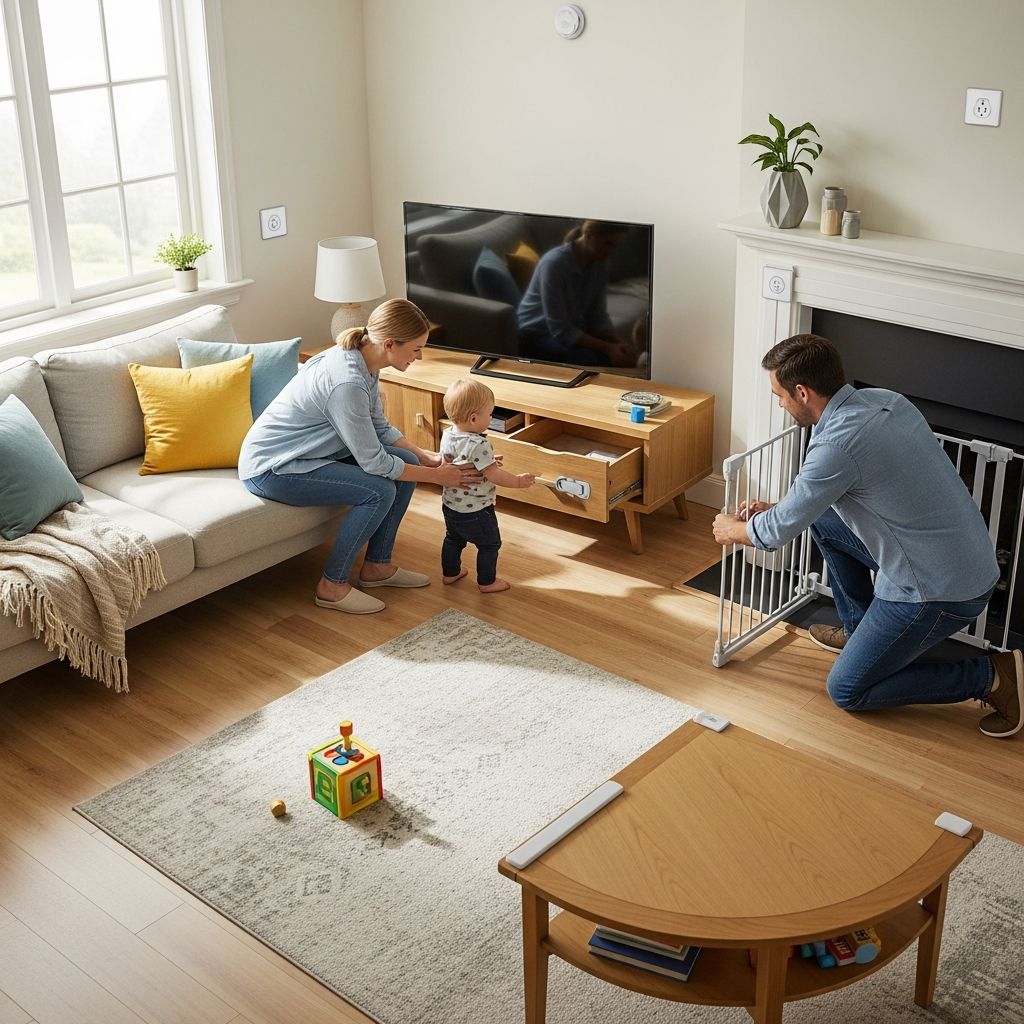
Family rooms see high activity, amplifying furniture and entertainment hazards. Anchor TVs low on sturdy bases or wall-mount them; secure shelves and entertainment centers. Place corner guards on tables and fireplaces, screening hearths and storing tools high. Move chairs from windows to prevent climbing access. Rugs need nonslip backing to avoid trips.
For play, choose age-appropriate toys sans small parts or magnets. Toy chests must have lid supports preventing slams and no locks trapping kids inside. Keep remote controls and batteries away.
Entryways, Stairs, and Outdoor Zones
Transitions like stairs demand gates: hardware-mounted at tops, pressure types at bottoms. Cover floor heaters and pad stair edges. Doorknob covers on exterior doors stop wanderers. Outdoors, fence pools with self-locking four-sided barriers at least 4 feet high. Clear walkways, store lawn tools and mowers securely, and inspect playsets for rust or splinters. Keep kids indoors during yard work.
Automatic garage doors should reverse on obstruction; keep chemicals like gasoline locked away.
Laundry, Garage, and Utility Areas
These often-overlooked spaces hide toxins and machinery. Lock laundry rooms during cycles, storing detergents high. In garages, elevate paints, tools, and sports gear. Install CO detectors near fuel-burning appliances. For basements, gate access and light stairways well.
Seasonal and Ongoing Vigilance
Safety evolves with children’s growth stages. Holiday decorations need cord covers; summer brings pool watches within arm’s reach. Winter mandates space heater clearance of 3 feet from flammables, never in bedrooms. Annual checks include ladder storage and blind cord cuts with tassels.
Practice fire drills: two exits per room, meeting spot outside, stop-drop-roll training. Non-toxic plants and no latex balloons indoors further minimize risks.
Frequently Asked Questions (FAQs)
What is the top priority for childproofing?
Start with securing furniture and installing detectors, as tip-overs and fires cause most severe injuries.
How often should I check safety devices?
Monthly for batteries and gates; quarterly for anchors and locks.
Are window blinds safe for toddlers?
Cut loops, use cord shorteners; inner cord stops prevent strangling.
What if my home has a pool?
Fence completely with self-latching gates; never rely on floaties alone.
Can older kids help with safety checks?
Yes, involve them in age-appropriate tasks like spotting cords to build awareness.
References
- Home Safety Checklist — American College of Emergency Physicians. Accessed 2026. https://www.emergencyphysicians.org/article/health–safety-tips/home-safety-checklist
- Childproofing Your Home: A Room-by-Room Safety Checklist — University of Georgia Cooperative Extension. 2023. https://fieldreport.caes.uga.edu/publications/C1049/childproofing-your-home-safety-checklist/
- Home Safety Checklist — St. Louis Children’s Hospital. Accessed 2026. https://www.stlouischildrens.org/health-resources/pulse/home-safety-checklist
- Home Safety Checklist — Minnesota Department of Health. Accessed 2026. https://www.health.state.mn.us/communities/injury/pubs/documents/homesafechk-eng.pdf
- Home Safety Checklist — Safe Kids Worldwide. Accessed 2026. https://www.safekids.org/checklist/home-safety-checklist-pdf