The Asymmetry in Modern Gender Expectations
Contemporary culture celebrates the expansion of girls’ horizons with genuine enthusiasm. Young women are encouraged to pursue careers in STEM, athletics, leadership, and every field imaginable. This cultural shift represents genuine progress. Yet this same cultural moment contains a paradox that deserves serious examination: while girls are freed from traditional constraints, boys increasingly face their own set of rigid expectations that remain largely unquestioned.
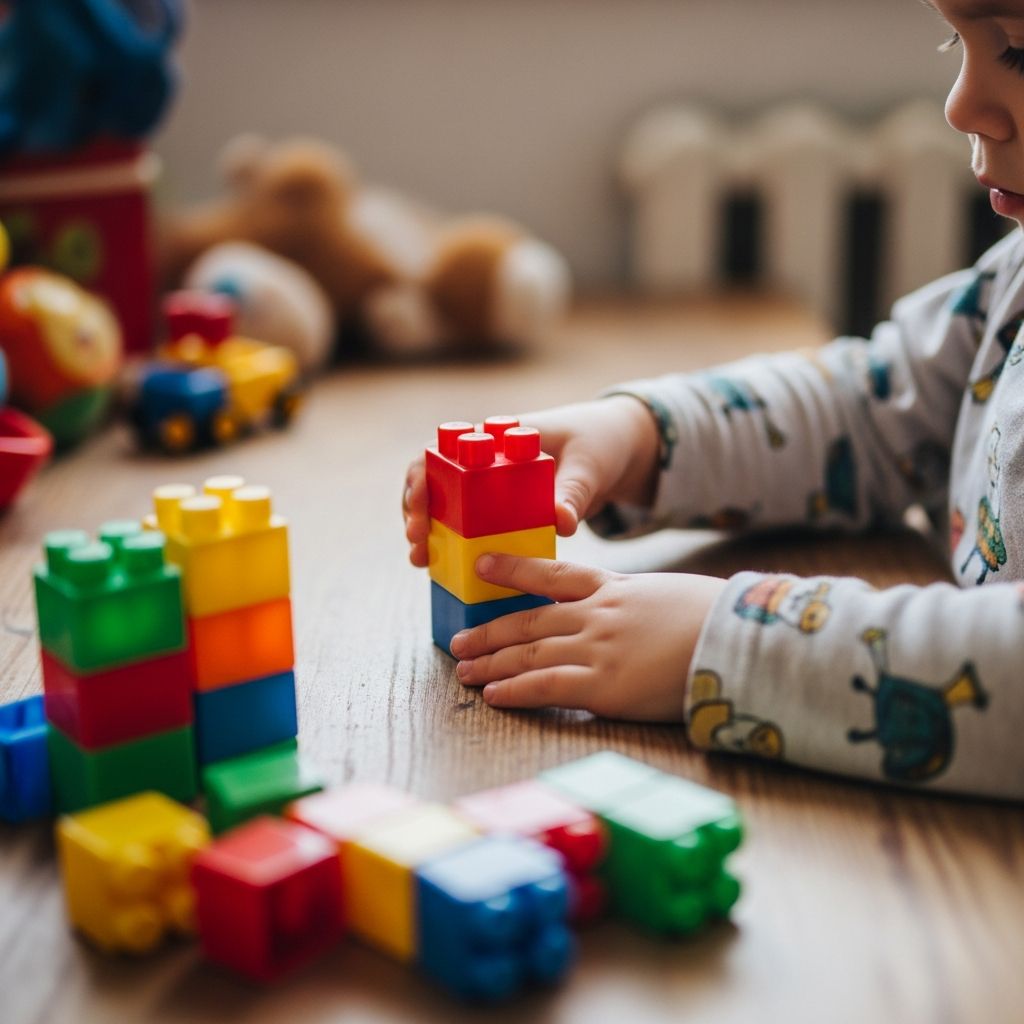
Research demonstrates this imbalance with striking clarity. Parents show significantly more tolerance when daughters engage in traditionally masculine activities—playing sports, building with construction toys, or pursuing engineering interests—than when sons explore traditionally feminine pursuits. The asymmetry reveals a troubling truth about our current approach to childhood development: we have declared that girls can be anything, but many families and communities still operate under the assumption that boys must remain within narrowly defined boundaries.
Understanding the Research Behind Parental Attitudes
Behavioral scientists have documented how parental responses shape children’s sense of possibility. Studies examining family dynamics show that parents actively intervene more frequently to redirect boys away from gender-nonconforming activities. When a daughter chooses football or woodworking, parents often respond with encouragement or at least neutrality. When a son shows interest in dance, cooking, fashion design, or caregiving activities, the reaction frequently differs—sometimes dramatically.
This differential treatment begins remarkably early in childhood. By age seven, children have already internalized gender stereotypes through countless daily messages. These messages come not from overt lectures but from the subtle signals embedded in which toys are offered, which activities are encouraged, and how adults respond when children venture outside prescribed gender roles. Teachers, relatives, and community members reinforce these patterns through casual language that would never be considered appropriate if directed toward girls.
The Language of Limitation
Examine the everyday phrases that pepper conversations about boys in playgrounds, classrooms, and homes. Adults commonly assert that “boys can’t sit still,” “boys are naturally aggressive,” or “boys just aren’t readers.” Progressive parents who would never tolerate similar statements about girls—such as claiming girls are biologically unsuited for mathematics or inherently passive—often deploy these same deterministic frameworks when discussing boys.
This casual gender essentialism creates a self-fulfilling prophecy. When adults consistently communicate to children that their gender determines their capacities and appropriate interests, children incorporate these messages into their developing identities. The phrase “boys will be boys” functions as a cultural permission slip for limitation rather than an acknowledgment of biological reality. It suggests that certain behaviors are inevitable and immutable, requiring management rather than growth.
The Educational Achievement Gap: Multiple Contributing Factors
Contemporary education statistics reveal that girls now outperform boys at virtually every academic level, from elementary school through university completion. This measurable difference has sparked considerable debate, with many analyses focusing exclusively on biological differences in brain development. While neuroscience does confirm that boys’ brains develop certain executive functions on a different timeline than girls’ brains, research also indicates this biological reality deserves far more nuanced interpretation than simple deficit narratives provide.
Educational researchers increasingly identify socialization patterns as significant contributors to academic performance gaps. Boys receive fewer direct social permissions to value academic achievement as a marker of success or identity. They encounter cultural messaging that positions intellectual effort or emotional engagement as feminine or uncool. They may internalize narratives suggesting that school environments inherently mismatch their capabilities, leading to disengagement even when they possess the ability to succeed.
Emotional Development and Social Permission
Perhaps the most consequential area where gender stereotypes limit boys involves emotional capacity and expression. Traditional masculinity narratives require boys to suppress vulnerability, minimize emotional awareness, and distance themselves from the very skills that build healthy relationships—empathy, communication, and emotional attunement. These constraints come at measurable psychological cost.
When boys learn that displaying emotion equals weakness, they lose access to one of humans’ primary tools for processing difficult experiences. They may develop patterns of emotional suppression that persist into adulthood, contributing to higher rates of untreated mental health conditions, difficulty forming intimate relationships, and in extreme cases, higher rates of suicide among men. The socialization that begins when we tell young boys to “toughen up” rather than validate their feelings accumulates across the lifespan.
Creating genuine freedom for boys requires explicitly valuing emotional development as equally important for sons as for daughters. This means affirming that sadness deserves acknowledgment, that fear can coexist with courage, and that asking for help represents strength rather than failure.
Interests and Activities: Where Restrictions Become Visible
The restrictions boys face become most visible when examining which activities and pursuits receive encouragement or criticism. A girl interested in dance receives widespread celebration. A boy with identical passion for dance often encounters skepticism, ranging from gentle discouragement to active mockery. The same pattern emerges across the arts, caregiving professions, culinary pursuits, and any field traditionally coded as feminine.
This restriction extends to clothing choices, color preferences, and toy selection. When a young boy gravitates toward clothing in pastel colors or prefers playing with dolls, he encounters resistance that a girl choosing trucks or camouflage patterns simply does not face. These seemingly trivial preferences matter because they signal to children which aspects of human experience belong to them and which remain forbidden.
The Impact of Social Separation and Gender Categorization
School environments frequently reinforce gender boundaries through both intentional and unintentional practices. Language that groups children by gender, physical separation of boys and girls during certain activities, and rules that vary by perceived gender all contribute to children developing stronger in-group identification and out-group bias based on gender. This categorization encourages children to view gender as a primary organizing principle of social life and to police their own behavior to maintain appropriate group membership.
When children internalize these boundaries as meaningful and important, they begin applying stereotypes not as descriptive observations but as prescriptive rules about how people “should” behave. A boy might conclude that enjoying certain activities means he doesn’t truly belong to his gender group—creating internal conflict and prompting hiding authentic interests to maintain social belonging.
What Expanded Freedom for Boys Would Require
Expanding possibilities for boys demands concrete changes across family, educational, and cultural systems. Parents must examine their own responses when sons show interest in activities outside traditional masculine domains. This requires honest self-reflection about discomfort and a commitment to modeling acceptance despite any personal hesitation.
Schools can eliminate unnecessary gender separations and ensure that all students encounter examples of men and women working across all fields and roles. Curriculum materials should include stories of men in caregiving professions, artistic pursuits, and nurturing roles, just as they include women in leadership and professional positions. Teachers can actively challenge casual gender essentialism, responding to statements like “boys are naturally messy” with the same skepticism they would apply to limiting statements about girls.
Cultural narratives require deliberate expansion. When public figures embrace interests outside traditional masculine bounds—whether celebrity men pursuing cooking, fashion, dance, or any pursuit traditionally coded as feminine—these examples normalize broader possibilities. Each person who models that masculinity encompasses diverse interests and expressions creates permission for others.
The Reciprocal Benefits of Breaking Stereotypes for Everyone
Freeing boys from restrictive stereotypes benefits not only boys themselves but girls, families, and society broadly. When boys develop emotional literacy alongside girls, they become better equipped for adult relationships built on genuine communication and mutual understanding. When boys see men modeling vulnerability and emotional engagement, they develop more complex understanding of human capacity. When boys pursue interests authentically rather than performing expected masculinity, they discover genuine sources of fulfillment rather than simply conforming.
For girls, breaking down boys’ stereotypes matters because these restrictions often reinforce the idea that traditionally feminine qualities and pursuits carry lower status. If boys must reject feminine interests to maintain masculine identity, this implicitly communicates that feminine is less desirable. A cultural environment where both boys and girls freely pursue diverse interests sends the message that all human expressions have equal worth.
Practical Steps for Parents and Educators
- Notice and question automatic assumptions about what activities or interests “suit” boys versus girls
- Actively encourage sons to explore arts, creative pursuits, and caregiving activities without hesitation
- Model emotional expression and vulnerability, showing that these qualities characterize strength rather than weakness
- Validate a full range of emotions in boys rather than channeling all feeling into activity or competition
- Examine school and community structures that unnecessarily separate children by gender
- Seek out diverse representations of men in all professions and roles through media, books, and community connections
- Respond to gender-based mockery with clear messages that all people deserve freedom to pursue authentic interests
The Broader Cultural Conversation
Moving beyond gender stereotypes requires culture-wide recognition that human development benefits from freedom and possibility equally for all children. The current moment celebrates expansion of girls’ horizons—rightfully so. Yet this expansion remains incomplete as long as boys face corresponding contraction of their own possibilities. Genuine progress toward a more equitable society requires extending the same message to boys: you deserve the freedom to explore, to create, to nurture, to dance, to feel, and to become whoever you authentically are.
This represents not a diminishment of girls’ advancement but a completion of it. A world that values all human expressions and allows all children—regardless of gender—to develop their full range of capacities and interests creates space for genuine human flourishing. Both boys and girls benefit when society affirms that the full spectrum of human qualities and pursuits belongs equally to everyone.
Frequently Asked Questions
Q: Are there genuine biological differences between boys and girls that affect development?
A: Yes, research confirms that boys’ brains develop certain executive functions on a different developmental timeline than girls’ brains, and these differences persist through adolescence. However, biological differences do not determine behavior or appropriate interests; they simply mean that developmental expectations and educational structures may need adjustment rather than reinforcing stereotypes that serve as self-fulfilling prophecies.
Q: How can parents support sons interested in traditionally feminine activities without creating social problems?
A: Parents can affirm their son’s interests while preparing him for potential social friction, helping him develop resilience and self-confidence rooted in authentic choice rather than peer pressure. Supporting diverse interests strengthens children’s sense of self and demonstrates that parental acceptance matters more than external judgment.
Q: Does allowing boys to pursue diverse interests somehow undermine healthy masculinity?
A: Healthy masculinity encompasses the full range of human qualities and capabilities. Restricting boys to narrow expressions of masculinity actually undermines development of emotional intelligence, relational capacity, and authentic identity—all components of genuine strength and maturity.
Q: What specific school policies could help expand possibilities for boys?
A: Schools can eliminate unnecessary gender separations, ensure all students encounter men and women across diverse professions through curriculum and guests, challenge casual gender essentialism in teacher language, and provide equal encouragement for all students across arts, athletics, academics, and service-oriented activities regardless of traditional gender associations.
Q: How do I respond when my son’s peers mock his interests?
A: Validate that peer pressure exists while affirming that authentic interests matter more than conformity. Help your son develop language to respond to mockery confidently. Model that you value his genuine interests over social popularity, and help him find communities—whether through activities, online groups, or clubs—where his interests are celebrated rather than criticized.
References
- Girls Can Be Anything—So Why Are We Still Stereotyping Boys? — Motherly. 2024. https://www.mother.ly/life/girls-can-be-anything-so-why-are-we-still-stereotyping-boys/
- Girls Can Be Anything but Boys Will Be Boys — Ruth Whippman, Substack. 2024. https://ruthwhippman.substack.com/p/girls-can-be-anything-but-boys-will
- Gender Stereotyping Is Learned — The Psychologist’s Child. 2023. https://www.thepsychologistschild.com/post/gender-stereotyping-is-learned