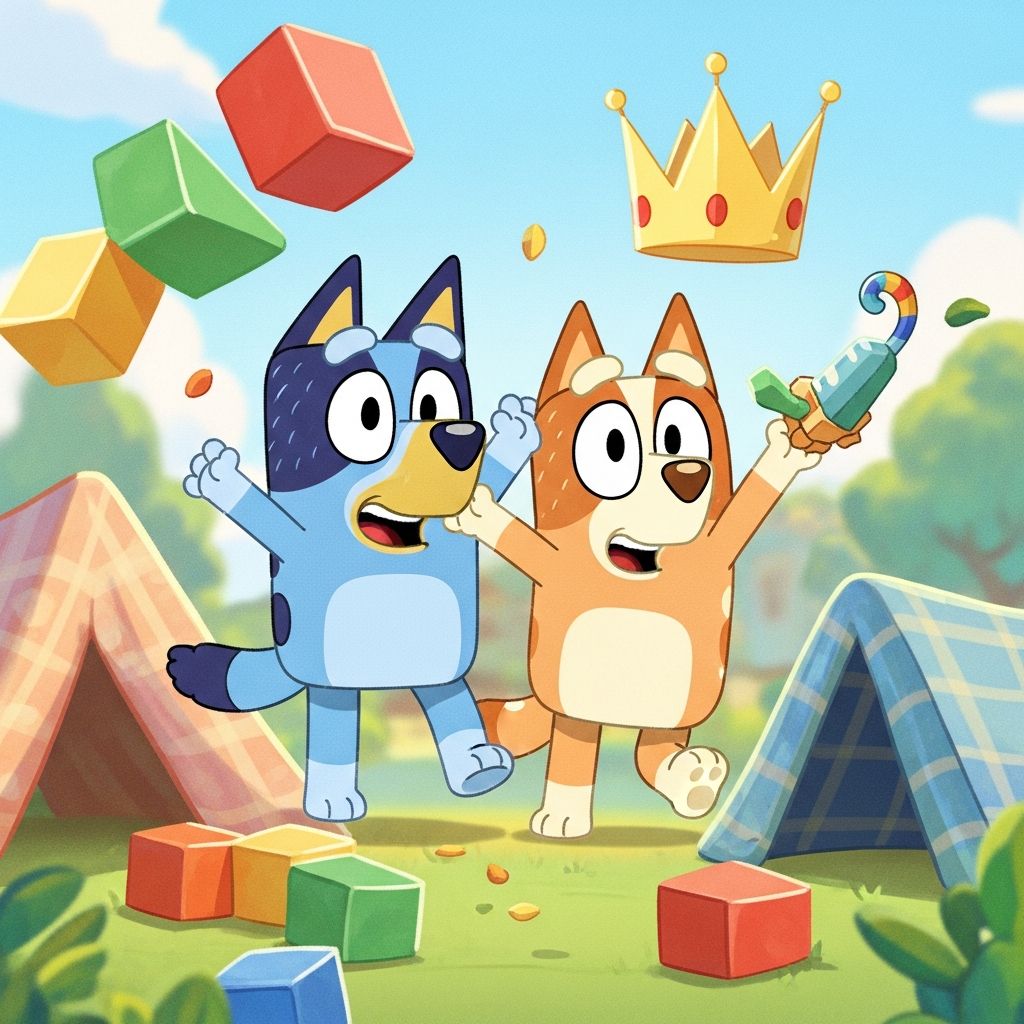
For a sweet, seven-minute Australian cartoon about talking dogs, Bluey carries a surprising amount of emotional weight. Parents binge it, kids worship it, and social media can’t stop arguing about it. One of the most unexpected debates to spill onto TikTok is a simple but fascinating question: why doesn’t Bluey have a real villain?
Instead of cackling bad guys and dramatic showdowns, the show offers something quieter: everyday frustrations, big feelings, and family misunderstandings that feel uncomfortably familiar to adults. The viral conversations about a “Bluey villain” reveal more than just fan theories—they expose what parents hope kids will learn from stories, and what they fear those stories might be missing.
The TikTok Spark: A Cartoon With No Bad Guy
On TikTok, creators have spent countless videos dissecting Bluey moments that feel intense, unfair, or even villainous—only to realize there’s rarely a clear “bad” character. Instead, conflict comes from:
- A parent who is distracted or too tired to play at that exact moment
- A friend who takes the game too far or forgets someone’s feelings
- A sibling who wants something different from the rest of the group
For many adults online, this is both refreshing and disorienting. They grew up with villains who wore capes or carried magic staffs. In Bluey, the “antagonist” is often time, disappointment, or a small mistake. TikTok’s obsession with labeling a villain in this world says less about the show and more about how strongly people still crave neat moral lines.
Why Parents Go Looking for a Villain
Parents who comb through episodes in search of a villain—whether jokingly or seriously—are responding to deeper anxieties about what stories owe their children. The instinct makes sense: adults want their kids to clearly see:
- Who is right and who is wrong
- What choices are safe and what choices are harmful
- That bad actions usually come with consequences
In classic kids’ media, a villain acts as a convenient symbol for all of the “don’t do that” lessons. Think of the greedy, selfish, or cruel character whose downfall teaches the moral. Without that template, some viewers feel unmoored. TikTok videos that frame certain adults or side characters as “the real villain of Bluey” are often a way of restoring the old narrative structure people are used to, even if the show itself resists it.
Bluey’s Quiet Rejection of Simple Good vs. Evil
Part of what makes Bluey so powerful is its refusal to flatten anyone into pure good or pure bad. Parents make mistakes but also apologize. Kids melt down, learn to self-regulate, and try again. Neighbors are sometimes irritating and sometimes heroic. The show leans into a basic truth of family life: nobody is one thing all the time.
This approach reframes conflict as a learning opportunity rather than a showdown. Instead of defeating a villain, characters usually have to do something harder:
- Admit that they hurt someone’s feelings
- Accept a limit they don’t like, such as bedtime or leaving the playground
- Live with the fact that life isn’t perfectly fair
For kids, this slow, messy style of storytelling may actually be more useful than crystal-clear “good versus bad.” Life rarely hands out villains with theme music. Most of the time, children are navigating mixed motives, clumsy apologies, and misunderstandings—which is exactly the world Bluey mirrors.
Emotional Complexity in Puppy-Sized Stories
On the surface, the series is about a blue heeler puppy who loves to play. Underneath that, though, episodes often explore surprisingly layered emotions. Some stories sit with disappointment, grief, or jealousy in ways that resonate strongly with adults.
What TikTok tends to latch onto are episodes where an adult choice lands awkwardly—or where a child’s hurt goes partially unresolved. Those moments can feel villainous when viewed quickly in a viral clip, but in context they dramatize something more nuanced: no one has perfect emotional timing, and no one can protect kids from every uncomfortable feeling.
Modern Parenting Expectations Meet Kids’ TV
Part of the intensity around the “Bluey villain” debate comes from how closely parents study the show. Many adults use Bluey as a kind of unofficial parenting course, taking notes on how the parents set boundaries, apologize, or re-enter play after losing patience.
When viewers see Bandit or Chilli make a decision they personally wouldn’t, some feel betrayed. The parent figures are so idealized in many episodes that any wobble can come across as a narrative failure rather than a deliberate humanizing choice. Social media amplifies that reaction, turning one imperfect moment into a trending critique of “bad parenting” in the show.
Table: Classic Kids’ Villains vs. Bluey’s Conflicts
| Aspect | Traditional Villain Story | Bluey Style Conflict |
|---|---|---|
| Main source of conflict | External character who is clearly bad | Everyday situation, misunderstanding, or emotion |
| Visual cues | Scary design, dark colors, dramatic music | Ordinary characters in regular settings |
| Resolution | Villain is defeated or punished | Characters talk, repair, or accept a limit |
| Lesson | “Don’t be like the bad guy” | “Feelings are complex, and relationships take work” |
| Emotional tone | High stakes, sometimes scary | Gentle, reflective, often bittersweet |
Why Some Parents Still Want a Villain
Despite appreciating the nuance, some parents on TikTok argue that a clear villain can be helpful for kids. Their reasons often include:
- Villains simplify moral lessons for very young viewers
- Stories with big baddies can be cathartic—children enjoy seeing justice done
- Cartoon villains can safely externalize fears that kids can’t yet name
These parents aren’t necessarily criticizing Bluey as a whole. Instead, they are asking whether a diet of only gentle, realistic stories leaves anything out. From this angle, the “Where is the Bluey villain?” topic becomes a stand-in for a larger question: how much should children’s media reflect real life, and how much should it amplify it into fantasy?
Bluey’s Alternative: Everyday Antagonists
Rather than introducing a recurring nemesis, the show leans on what could be called “everyday antagonists.” These are not evil individuals but forces that push against what the main character wants:
- Time—bedtime, school hours, and adults’ work schedules
- Rules—social norms, family expectations, and safety limits
- Development—skills kids haven’t yet mastered, like waiting or sharing
In this sense, Bluey teaches children that the biggest obstacles in life are rarely villains. They are more often boring realities or internal struggles. That message aligns with contemporary ideas in child development, which emphasize emotional literacy over simple punishment-based tales of good and evil.
How TikTok Changes the Conversation Around a Kids’ Show
One thing that makes this debate feel new is the existence of TikTok as a public parenting salon. Instead of chatting about the show at school pickup or in a group text, adults post their reactions to millions of strangers. Clips are remixed, duetted, and responded to in chains of commentary.
That dynamic can exaggerate extremes. A creator who jokingly labels a character “the villain of Bluey” might spark a wave of serious analyses about that character’s failings. Conversely, a heartfelt defense of the show’s realism can be read as an attack on any media that does use villains. The algorithm thrives on controversy, even when the original point was nuanced.
Children Watching, Adults Projecting
An important wrinkle in all of this: kids and adults rarely watch the same episode in the same way. Adults bring their own histories into every scene—a parent who once felt dismissed as a child may bristle at a throwaway line, while someone who grew up with chaotic caregivers might find the Heeler parents almost painfully idyllic.
Children, meanwhile, are usually focused on the game, the joke, or the emotional payoff. For them, it often doesn’t matter whether there is a classic villain. What matters is whether the main character’s feelings make sense and whether there is some form of comfort, growth, or reconnection by the end.
What the Villain Debate Reveals About Us
The urge to crown a “villain of Bluey” ultimately reveals more about viewers than about the show’s writers. It highlights:
- How strongly adults want stories to model ideal parenting
- How uncomfortable it can feel when a beloved character stumbles
- How deeply people rely on simple labels—hero, villain, sidekick—to make sense of behavior
In some ways, the absence of a true villain is an invitation. It asks adults to sit with imperfect characters who mostly mean well and occasionally fall short, just like real families. That is sometimes less satisfying than watching a wicked character get their comeuppance—but it may be far more honest.
How Bluey Encourages Co-Viewing and Conversation
Another reason the show works without villains is its design for co-viewing: children and caregivers are meant to watch together, then talk. Instead of spelling out a moral through a bad guy’s defeat, episodes leave space for questions:
- “Do you think that was fair?”
- “What could they have done differently?”
- “How would you feel if that happened to you?”
This format turns the adult into the guide, not the show. That can be challenging—parents have to be more engaged—but it also allows lessons to be tailored to a child’s temperament, age, and current struggles.
Is There a Downside to a Villain-Free World?
Still, it is worth acknowledging the limits of a purely villain-free universe. If kids only ever see conflicts that are mild and rooted in misunderstandings, they may have fewer narrative tools for recognizing genuinely harmful behavior when they encounter it.
That does not mean Bluey needs a cackling arch-nemesis. Instead, it suggests that this gentle series might be best viewed as part of a broader media mix. Children can benefit from some stories that explore clear wrongdoing and others, like Bluey, that linger in the grey areas where most real-life frustrations live.
Practical Tips for Parents Watching Bluey
For caregivers swept up in the TikTok chatter—or simply curious about how to use the show well—here are a few practical ways to lean into what it already does best:
- Name the real conflict. Instead of asking who the “bad guy” is, talk about what made the situation hard: tiredness, conflicting needs, fear, or lack of information.
- Model imperfection. When a parent in the show apologizes or changes course, use it as a chance to say, “Grown-ups make mistakes too, and we can fix them.”
- Invite perspective-taking. Ask which character your child feels closest to in that episode and why.
- Contrast with other stories. If your child also loves shows with obvious villains, compare how it feels when the conflict is a big battle versus a small misunderstanding.
FAQs About Bluey and “Villains”
Does Bluey ever introduce an actual villain?
There is no ongoing, classic villain whose purpose is to oppose the main characters in every episode. Conflicts usually come from circumstances, different perspectives, and emotional hurdles rather than from an evil mastermind.
Is it bad for kids if a show has no clear bad guys?
Not necessarily. Many child development experts appreciate stories that show realistic, fixable conflicts and emphasize empathy. However, variety in media can help kids understand both everyday conflicts and more extreme forms of harm.
Why are adults on TikTok so emotional about Bluey?
Because the show is written with adults in mind as co-viewers, it often surfaces unresolved feelings about people’s own childhoods, parenting styles, or relationships. Social media simply gives those reactions a large, public stage.
Should I worry if my child prefers shows with villains?
Not automatically. Many children enjoy big, dramatic conflicts and clear lines between right and wrong. You can balance those shows with gentler ones like Bluey and talk openly about the differences in how each story handles choices, consequences, and feelings.
How can I tell if a Bluey episode is right for my child?
The best approach is to watch together, especially the first time. If a particular theme feels too intense or confusing, pause and explain, or simply skip that episode for now. The show’s short format makes experimentation easier.
Rethinking What Kids Need From Stories
The TikTok-fueled hunt for a “Bluey villain” offers an unexpected gift: it nudges adults to reconsider what a story must include to be meaningful. Heroes and villains are one powerful way to explore right and wrong. So are messy, realistic families who love each other, get it wrong, and try again tomorrow.
In a world full of loud narratives about enemies and battles, there is quiet value in a show that suggests something different—that sometimes the hardest work is not defeating a villain, but understanding someone else’s point of view. Bluey may never introduce a traditional big bad, and that might be exactly why it matters so much to both the kids on the couch and the parents scrolling TikTok afterward.