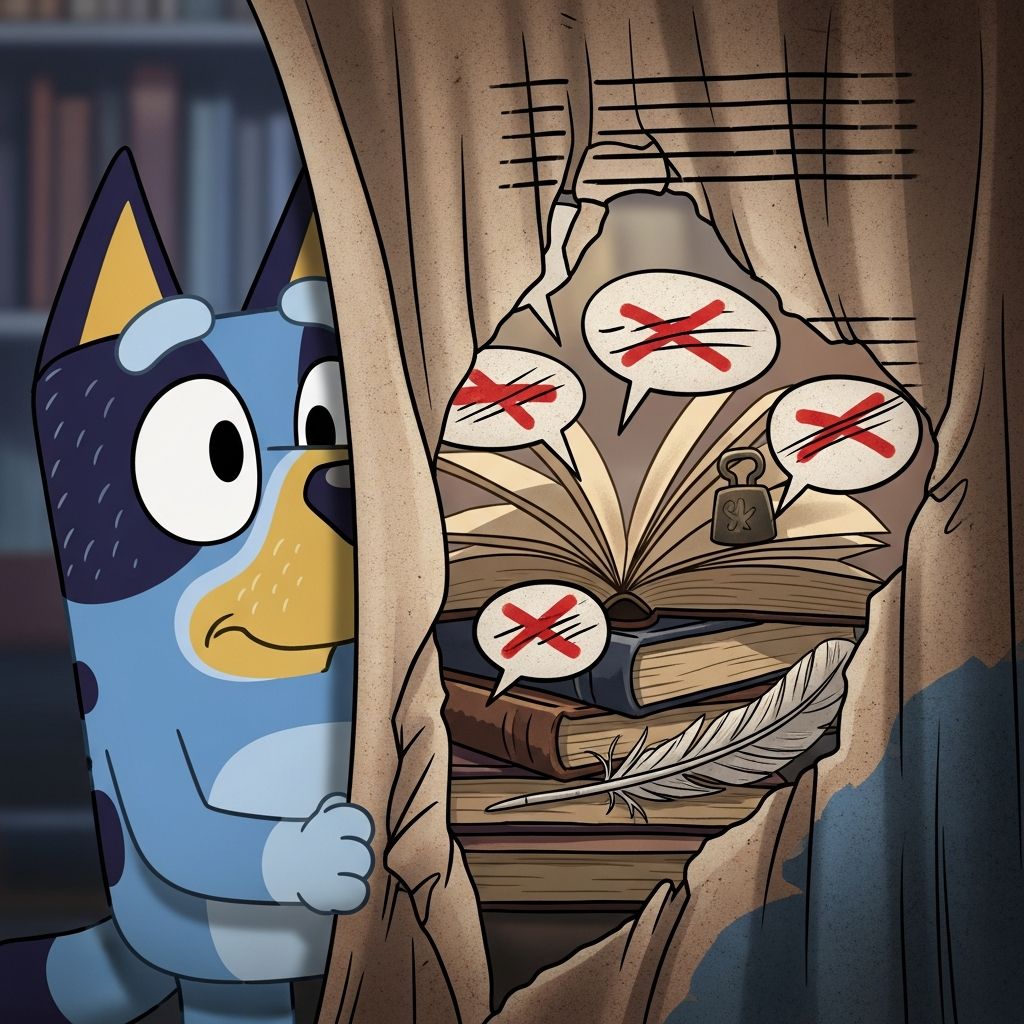
When a gentle, heartwarming kids’ show like Bluey finds itself at the center of an international debate, it usually signals that something bigger is going on than just a disagreement over cartoons. The censorship of a scene from the episode commonly known as “Exercise” quickly turned from a programming note into a wider discussion about fat shaming, body image, and what responsible children’s television should look like.
How a Single Scene Triggered a Global Edit
The controversy focused on the original opening scene of the episode as it aired in Australia. In the first broadcast, Bluey’s dad, Bandit, steps on a scale, seems disappointed, grabs his stomach, and comments that he needs to exercise. Chilli then also weighs herself and reacts negatively to her own body. This brief exchange set up a family exercise montage that, on paper, looks like a harmless story about movement and health.
However, many viewers and health professionals argued that the tone of the scene leaned on body dissatisfaction and self-criticism rather than the joy of being active. The idea that parents must dislike their bodies in order to be motivated to move raised red flags for people concerned about how children learn to think about weight and appearance.
What the Broadcaster Changed — and Why
After sustained critique, the Australian Broadcasting Corporation (ABC) confirmed that it edited the episode and updated the version supplied to partners like Disney. In the revised cut:
- The bathroom weighing scene is removed.
- The episode now begins with Bandit heading outside to exercise, without explicit reference to his weight.
- Bandit’s body shape remains exactly the same; there is no dramatic before-and-after reveal.
The broadcaster explained that the story could still highlight movement and family fun without anchoring it in self-loathing or scale anxiety. This approach aligns with contemporary public health guidance that emphasizes building healthy behaviors in children through positive experiences rather than weight-focused messaging.
What Critics of the Scene Were Concerned About
For many parents, teachers, and clinicians, the issue was not that Bandit wanted to exercise. It was how the motivation was framed and who might be watching. Key concerns included:
- Normalizing self-criticism: Seeing beloved parental figures pinch their bodies and frown can teach kids that this is a normal, expected way to talk about themselves.
- Reinforcing weight stigma: When the trigger for change is “I hate how I look” rather than “I want to feel strong and energetic,” children may absorb the message that larger bodies are inherently bad or shameful.
- Risk for body dissatisfaction: Research shows that weight-focused comments from adults, even indirect ones, are associated with higher body dissatisfaction and disordered eating in children and adolescents.
- Parents as role models: Kids closely mirror how their caregivers talk about food, movement, and appearance, and early exposure to negative body talk can shape attitudes well into adulthood.
Why Body Image in Childhood Matters So Much
Decades of research underline why health professionals are wary when kids’ media leans on jokes or plot points about weight. Studies have found that:
- Body dissatisfaction can appear in children as young as preschool and is associated with lower self-esteem and higher depressive symptoms later on.
- Weight-based teasing and stigma are linked to increased risk of disordered eating, including restrictive dieting and binge episodes.
- Youth who experience weight stigma are more likely to avoid physical activity, not less, contradicting the idea that shame “motivates” healthier behavior.
Public health guidelines increasingly recommend that adults avoid focusing on weight or shape when talking to kids about health, instead emphasizing strength, fun, skills, and how bodies feel.
Promoting Movement Without Shaming Bodies
One of the ironies of the Bluey debate is that the core of the episode — a family moving and playing together — fits very well with what pediatric and public health organizations encourage. Where it became controversial was how that movement was framed.
Two different approaches to the same behavior can send very different messages:
| Weight-Centered Framing | Health & Joy-Centered Framing |
|---|---|
| “I need to exercise because my belly is too big.” | “I want to move more so I feel strong when I play with you.” |
| “The scale says I should lose weight.” | “My body feels stiff from sitting. Let’s go outside and stretch.” |
| Focus on appearance and numbers. | Focus on energy, mood, and skills. |
Organizations such as the World Health Organization (WHO) and the U.S. Centers for Disease Control and Prevention (CDC) urge families to emphasize regular physical activity for its benefits to heart health, emotional wellbeing, and sleep, rather than as a punishment for weight gain.
The Divided Fan Response
Reactions to the edit revealed a split in how audiences interpret both the episode and the responsibilities of children’s media:
- Supporters of the change argued that the scene unintentionally reflected the kind of body shaming many adults grew up with and are trying not to pass on. They viewed the quick response and edit as proof that Bluey takes feedback seriously and is willing to evolve.
- Opponents of the change felt the controversy was overblown, insisting the episode simply showed parents trying to improve their health. Some worried that removing scenes like this shields children from the reality that adults struggle with their bodies.
Interestingly, even some fans who liked the original episode acknowledged that the bathroom scene could be misread as endorsing self-criticism, especially by young viewers who lack the context to see it as satire or commentary.
Bluey’s Track Record: Learning in Public
Bluey has been widely praised for showing parents who make mistakes, own up to them, and apologize — a model many caregivers appreciate. When the producers agreed to alter the “Exercise” episode, it was perceived by some commentators as an extension of that ethos: acknowledging unintended harm and adjusting, rather than doubling down.
In interviews, cast members have emphasized that the show aims to be inclusive and to listen when communities point out concerns. That does not mean every complaint results in an edit, but this case signaled that the team considered the potential impact on children living with body image struggles — or on parents actively recovering from diet culture — substantial enough to warrant a change.
The Bigger Conversation: Representation of Bodies in Kids’ Media
The strong reaction to a brief bathroom scene reflects a broader cultural shift. Many viewers are now asking harder questions about how children’s content portrays bodies, food, and fitness:
- Are larger bodies treated mainly as punchlines or transformation projects?
- Do caregiving characters only exercise as a response to shame, or do they also move because it’s fun?
- Are kids shown enjoying food and movement without moral labels like “good” or “bad”?
Researchers studying media influences on children have found that repeated exposure to weight-based jokes and stereotypes can reinforce bias and stigma, which may make children more likely to tease peers or feel inferior if their own bodies do not match an idealized image.
What Parents Can Do When These Episodes Air
Whether you preferred the original cut or the edited version, moments like this can be opportunities to talk with kids. Some practical strategies include:
- Ask open questions: “How do you think Bandit felt when he looked in the mirror?” can reveal what your child is taking away from the scene.
- Reframe the message: Emphasize that bodies come in many shapes and that moving is about feeling good and staying strong, not about punishing ourselves.
- Challenge negative self-talk: If kids repeat lines like “my tummy is too big,” gently question where that idea comes from and affirm that their body deserves care and respect.
- Share your own growth: For some families, it can be powerful to say, “When I was younger, grown-ups talked about their bodies like this. I’m trying to do it differently now.”
Lessons for Creators of Children’s Stories
The Bluey censorship debate offers several takeaways for writers, animators, and broadcasters working in kids’ media:
- Intent is not impact: A scene meant to be funny or relatable can still land as hurtful for viewers with lived experience of stigma or disordered eating.
- Health can be shown without numbers: Stories can highlight stamina, play, and joy without putting scales or clothing sizes at the center.
- Consulting experts helps: Involving child psychologists or public health specialists can flag potentially harmful patterns before an episode airs.
- Edits are not necessarily censorship: For some creators, revising older material is a way of aligning with updated understandings of mental and physical health.
Frequently Asked Questions (FAQs)
Was the Bluey “Exercise” episode completely banned?
No. The episode was not fully banned. Instead, the broadcaster removed the original bathroom weighing scene and distributed an edited version that begins directly with Bandit going outside to exercise.
Why did people call the scene fat shaming?
Critics argued that Bandit and Chilli’s disappointment on the scale, combined with grabbing their bodies and expressing dissatisfaction, reinforced the idea that feeling bad about your size is a normal or necessary trigger for exercise, which can contribute to weight stigma and body dissatisfaction in young viewers.
Isn’t teaching kids about exercise important?
Yes. Major health organizations recommend that children accumulate at least 60 minutes of moderate to vigorous physical activity daily, ideally through play and sport. The concern was not exercise itself but tying movement to shame about appearance rather than to health, fun, and confidence.
Do small scenes in cartoons really affect children’s body image?
No single scene is usually decisive, but repeated exposure to weight-focused jokes, negative body talk, and stereotypes can contribute to children internalizing body dissatisfaction and weight bias over time, especially when those messages are modeled by trusted adult characters.
Does editing the episode mean Bluey gave in to “cancel culture”?
Some viewers see it that way, but others interpret the edit as an example of a creative team listening to feedback and aligning their work with contemporary evidence about children’s mental health and body image. Either way, it has sparked a valuable discussion about how we want media to talk about bodies, health, and self-worth.
References
- First Parents Warned Against ‘Bluey,’ Now Star Speaks Out About Fatphobic Scene — DisneyFanatic / Melanie Zanetti interview summary. 2023-08-11. https://www.disneyfanatic.com/bluey-cartoon-melanie-zanetti-speaks-out-fatphobic-scene-pk1/
- Why The ‘Bluey’ Fat Shaming Episode Got Censored Right Away — Fatherly. 2022-05-06. https://www.fatherly.com/entertainment/fat-shaming-bluey-episode-excercise-censored
- Stigma, Obesity, and the Health of the Nation — Puhl R, Heuer C. The American Psychologist. 2010-05-01. https://doi.org/10.1037/a0018859
- Weight Bias and Bullying in Children and Adolescents — Puhl R, King K. Pediatric Clinics of North America. 2013-06-01. https://doi.org/10.1016/j.pcl.2013.02.011
- Guideline for Obesity in Children and Adolescents — World Health Organization. 2023-10-09. https://www.who.int/publications/i/item/9789240073113
- Physical Activity Guidelines for Americans, 2nd edition — U.S. Department of Health and Human Services / Office of Disease Prevention and Health Promotion. 2018-11-01. https://health.gov/our-work/physical-activity/current-guidelines