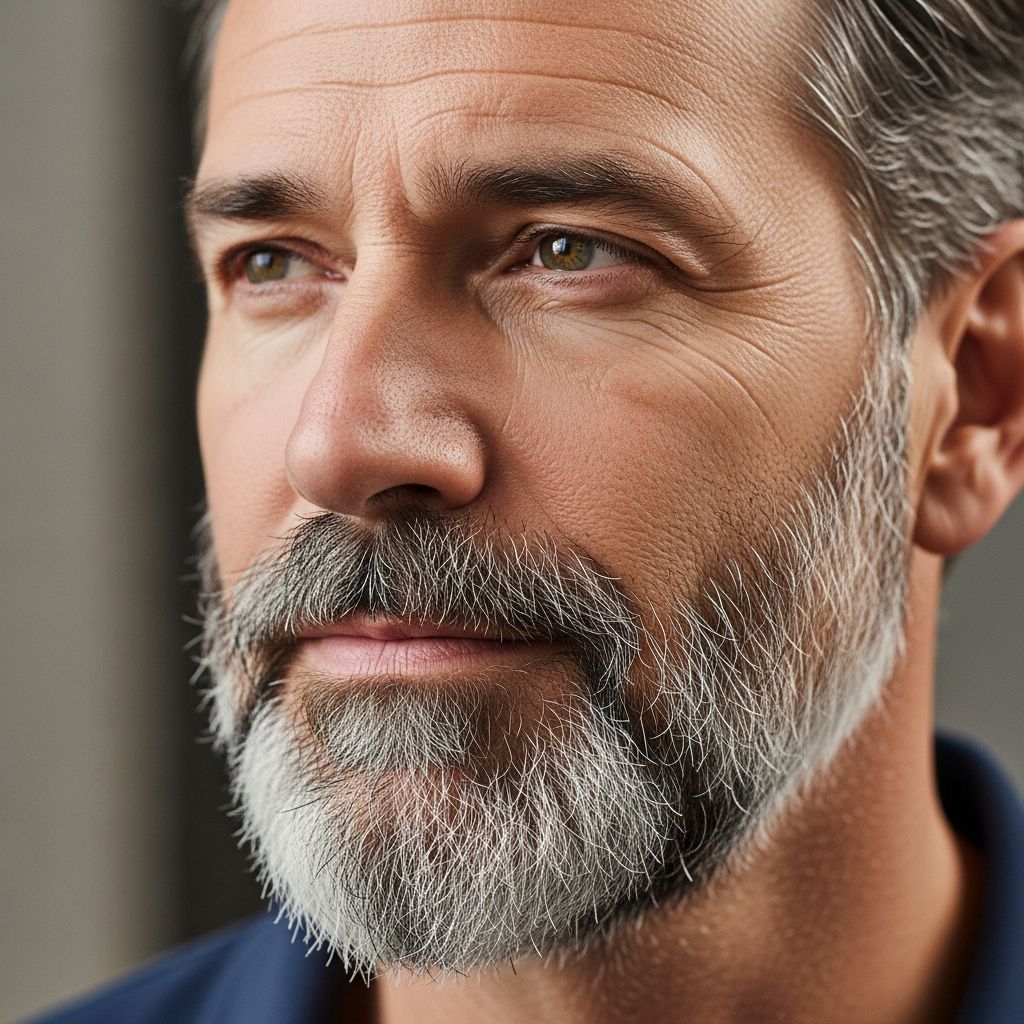
Facial hair, particularly beards, frequently loses pigmentation well before scalp hair, a phenomenon rooted in distinct biological and environmental influences on hair follicles. This article delves into the mechanisms, risk factors, and practical interventions to address this common aging marker.
Biological Foundations of Hair Pigmentation
Hair color derives from melanin, a pigment produced by specialized cells called melanocytes within hair follicles. These cells synthesize eumelanin for dark tones and pheomelanin for lighter shades during the hair growth cycle’s anagen phase. As follicles age, melanocyte stem cells (MeSCs) deplete or malfunction, halting melanin transfer to keratinocytes, resulting in unpigmented gray or white strands.
Facial hair follicles differ structurally from scalp follicles. Beard follicles are shorter-cycled, coarser, and more exposed, accelerating wear on melanocytes. Research highlights that MeSCs in facial regions may exhaust faster due to higher metabolic demands and proximity to skin surface stressors.
Key Triggers Accelerating Facial Graying
Genetic Predisposition
Heritable factors dictate graying timelines, with genes like IRF4 regulating melanin synthesis. If relatives experienced early beard whitening, individuals face elevated risk, often noticing changes in their 30s while scalp hair remains vibrant.
Oxidative Damage from Daily Exposures
Reactive oxygen species (ROS) accumulate in follicles, impairing enzymes like tyrosinase essential for melanin production. Facial hair endures direct UV radiation, pollution, and grooming chemicals, amplifying ROS beyond scalp protection by denser hair coverage. Antioxidant deficits, such as low catalase, exacerbate this in beards.
Stress and Hormonal Disruptions
Chronic stress elevates norepinephrine, depleting melanocytes via fight-or-flight responses. Adrenal hormones deplete MeSC reserves preferentially in stress-sensitive facial follicles. Thyroid imbalances or B12 shortages further hasten pigment loss.
Why Facial Hair Leads the Graying Charge
Beards gray first because facial follicles activate post-puberty under androgen influence, starting with fewer melanocyte reserves than lifelong-active scalp follicles. Shorter anagen phases (1-2 months vs. 3-7 years on scalp) mean faster turnover, exhausting pigment cells sooner. Studies confirm beards show 5-10 years earlier depigmentation.
| Follicle Type | Anagen Duration | Melanocyte Density | Typical Graying Age |
|---|---|---|---|
| Scalp | 3-7 years | High | 40-50 |
| Beard | 1-2 months | Moderate | 30-40 |
| Eyebrows | Weeks | Low | 35-45 |
This table illustrates structural disparities driving uneven graying patterns.
Nutritional Strategies to Preserve Pigment
Deficiencies in B vitamins, copper, iron, and zinc disrupt melanogenesis. B12 supports methionine synthase for homocysteine metabolism, preventing toxic buildup toxic to melanocytes. Copper activates tyrosinase; folate aids DNA repair in stem cells.
- Incorporate copper-rich shellfish, nuts, seeds.
- Boost B12 via eggs, dairy, fortified cereals or supplements if deficient.
- Antioxidant powerhouses: berries, spinach, green tea neutralize ROS.
- Ferritin levels above 70 ng/mL correlate with delayed graying.
A Mediterranean diet emphasizing these nutrients may postpone facial graying by years.
Lifestyle Modifications for Slower Graying
Quitting smoking restores vascular flow to follicles, reducing ROS by 30%. Scalp massages enhance circulation, delivering nutrients to beard roots; daily 5-minute routines stimulate dormant melanocytes.
- UV shield: Hats or SPF 30+ beard oils block photo-oxidation.
- Sleep 7-9 hours: Circadian genes regulate MITF, pigment master switch.
- Moderate exercise lowers cortisol, preserving MeSCs.
Stress protocols like mindfulness cut norepinephrine spikes, proven to stabilize pigmentation in trials.
Emerging Therapies Targeting Reversal
Topical α-MSH analogs like palmitoyl tetrapeptide-20 reactivate melanocytes, yielding 90% repigmentation in case studies over 5 months with biotin synergy.
Low-level laser therapy (LLLT) at 650nm boosts mitochondrial ATP in follicles, enhancing melanin via Wnt signaling. Weekly sessions show 20-40% color retention.
Antioxidant serums with catalase mimics or pseudocatalase address H2O2 buildup, central to graying. Oral PARP inhibitors and mTOR modulators enter trials for PHG reversal.
Medical Evaluation for Premature Cases
Graying before 30 warrants thyroid panels (TSH, T4), B12/ferritin assays, and autoimmune screens. Vitiligo or pernicious anemia often manifest facially first. Dermatologists may prescribe fluoxetine for stress-induced cases, noting reversibility.
Frequently Asked Questions
Can diet alone reverse beard graying?
Nutrition corrects deficiencies driving 15-20% of premature cases but rarely fully reverses established graying without topicals. Consistency yields visible slowing in 3-6 months.
Does shaving delay facial hair graying?
No; graying occurs at follicle level, independent of visible length. Shaving may highlight new growth contrasts.
Are gray beards unhealthy?
Cosmetic primarily, but early onset signals oxidative or nutritional stress worth addressing for overall vitality.
How effective are anti-gray serums?
Promising in small studies (e.g., Greyverse 2%), with 70-90% improvement when combined with lifestyle. Results vary genetically.
Will stress management regrow pigment?
Yes, reducing norepinephrine halts further loss; some regain 10-30% color post-intervention.
Embracing the Silver Beard Aesthetic
While prevention dominates, many embrace salt-and-pepper looks for distinguished appeal. Trimming enhances contrast; argan oils hydrate wiry grays. Ultimately, graying reflects life’s exposures—a badge of resilience.
(Word count: 1678)
References
- Gray Hair: From Preventive to Treatment — PMC/NCBI. 2024. https://pmc.ncbi.nlm.nih.gov/articles/PMC12182098/
- What causes gray hair, and can I stop it? — American Academy of Dermatology (AAD). 2023-10-12. https://www.aad.org/public/everyday-care/hair-scalp-care/hair/gray-hair-causes
- Why Beards Turn Gray First — Toppik Hair Blog. 2023. https://www.toppik.com/blogs/hair-blog/why-beards-turn-gray
- Gray Hair: Causes and What To Do About It — Cleveland Clinic. 2024-05-15. https://health.clevelandclinic.org/why-hair-turns-gray
- What are the treatment options for premature greying of beard hairs? — DrOracle.ai. 2024. https://www.droracle.ai/articles/625483/what-are-the-treatment-options-for-premature-greying-of
- A Study Says Gray Hair May Be Reversible — Popular Mechanics. 2024-08-20. https://www.popularmechanics.com/science/health/a70201936/gray-hair-could-be-reversible-research/