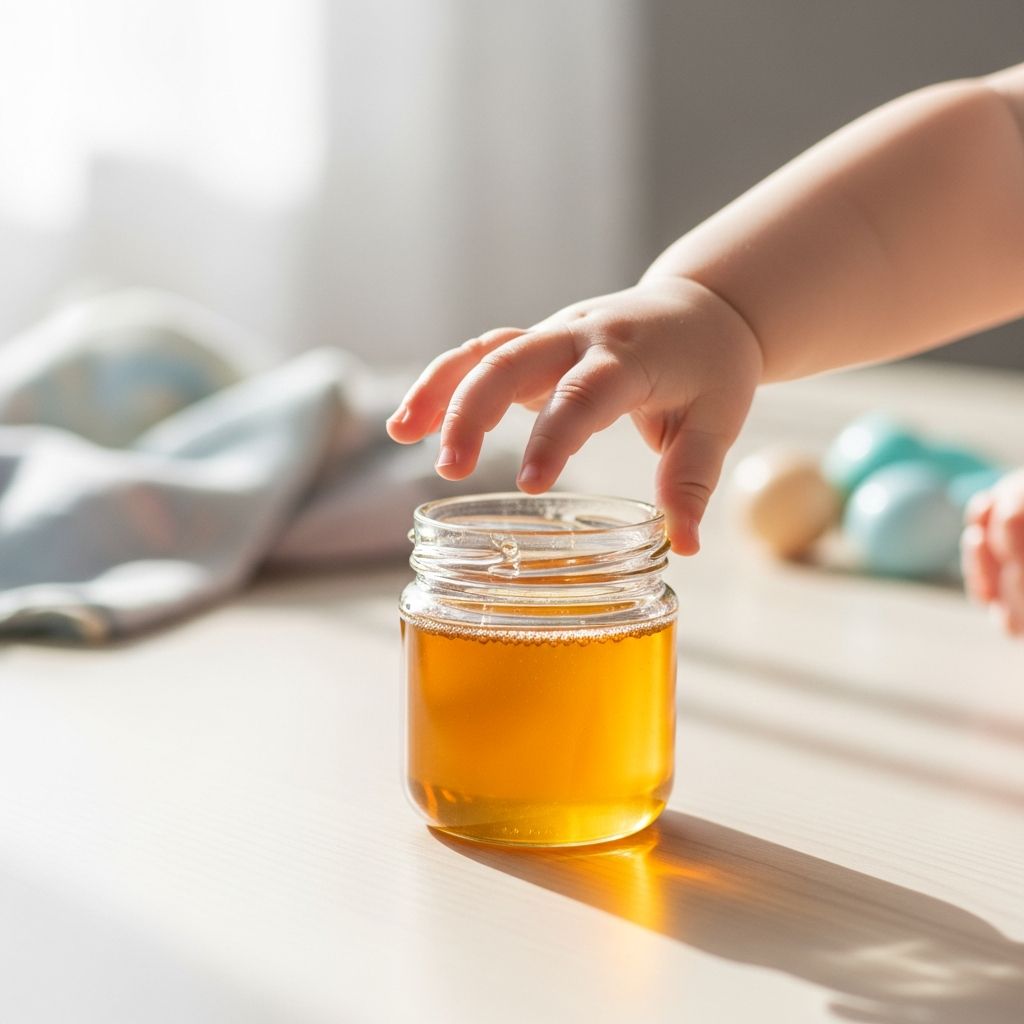
Honey is a natural sweetener that many families enjoy, but for babies under 12 months it can pose a serious health risk called infant botulism. This article explains why honey is unsafe for young infants, what infant botulism is, how to spot early warning signs, and what to do if you are worried about your baby.
What Is Infant Botulism?
Infant botulism is a rare but potentially life-threatening illness that affects babies younger than one year when certain bacteria grow in their intestines and make a powerful nerve toxin. The toxin interferes with the way nerves communicate with muscles, leading to weakness, poor muscle tone, and in severe cases, breathing problems.
The illness is caused when a baby swallows spores of Clostridium botulinum (or closely related species). These spores are harmless to older children and adults, but in young infants they can germinate in the gut and produce toxin.
Why Honey Is Risky for Babies
Honey can contain C. botulinum spores even when it looks and tastes normal. The spores do not change the color, smell, or flavor of honey, and they are not removed by pasteurization or typical food processing.
Health authorities around the world advise that babies under 12 months should not eat honey in any form:
- Raw, unpasteurized, or “natural” honey
- Pasteurized or processed honey
- Honey in baked goods, teas, or home remedies
- Honey-containing cough syrups or herbal products
For older children and adults, honey is safe because their digestive systems and gut bacteria prevent the spores from growing.
Who Is at Risk of Infant Botulism?
Infant botulism occurs almost exclusively in babies less than 12 months old. The highest risk is between 2 and 6 months, but cases can occur anywhere in the first year.
Important risk points:
- Age under 1 year – the gut and immune system are still developing.
- Exposure to spores – through honey or possibly dust and soil containing the bacteria.
- No immunity – infants lack the protective gut environment that older people have.
In many cases, the exact source of spores cannot be found, but honey is the only food clearly linked to infant botulism and is therefore specifically avoided.
How Infant Botulism Develops in the Body
Understanding the process can help explain why symptoms often seem gradual at first.
| Step | What Happens |
|---|---|
| 1. Ingestion of spores | Baby swallows C. botulinum spores, often from honey or contaminated dust. |
| 2. Germination in the gut | In the infant’s large intestine, spores can germinate into active bacteria because the gut flora is immature. |
| 3. Toxin production | The bacteria produce botulinum neurotoxin, which is absorbed from the intestine into the bloodstream. |
| 4. Nerve blockage | The toxin blocks the release of acetylcholine at nerve endings, preventing muscles from contracting. |
| 5. Muscle weakness | Weakness and decreased muscle tone spread from the head and face downwards through the body. |
Early Signs and Symptoms Parents May Notice
The first symptoms of infant botulism are often subtle. Parents may notice that something is “off” before the baby seems seriously ill.
Common early warning signs include:
- Constipation (often the first symptom) – fewer or no bowel movements compared with the baby’s usual pattern.
- Poor feeding – difficulty sucking, less interest in feeding, or taking longer to finish a bottle or breastfeed.
- Weak cry – a cry that is softer, more hoarse, or different from normal.
- Decreased facial expression – less smiling, a “mask-like” face.
- Tiredness and lethargy – baby seems unusually sleepy or less responsive.
These signs can be mistaken for minor illness or normal baby behavior, which is why paying attention to changes from your child’s usual pattern is important.
Progressing Symptoms: When It Becomes an Emergency
As more toxin affects the nerves, muscle weakness usually spreads from the face down the body in a typical “descending” pattern. This can lead to more serious symptoms, such as:
- Floppy body or “rag doll” feel – poor head control, weak neck and trunk muscles.
- Droopy eyelids (ptosis) – eyes may appear half-closed or hard to open.
- Weak sucking and gag reflexes – difficulty swallowing, drooling, choking with feeds.
- Shallow or difficult breathing – rapid breathing, pauses, or using chest muscles more to breathe.
- Reduced movement of arms and legs – limp limbs or less kicking and waving.
Infant botulism does not typically cause fever, runny nose, or a rash, and babies usually remain alert even when very weak. This combination of alertness with increasing floppiness can be a key clue for doctors.
When to Call the Doctor or Seek Emergency Care
Get medical help right away if your baby:
- Has new or persistent constipation along with poor feeding or unusual weakness
- Has trouble sucking, swallowing, or seems to choke on feeds
- Has a noticeably weaker cry or seems too tired to cry
- Feels floppy or has difficulty holding up their head
- Shows any breathing difficulty – fast, shallow, noisy breathing, or pauses
Call your local emergency number or go to the nearest emergency department immediately if you are worried about your baby’s breathing or if they are difficult to wake.
How Doctors Diagnose Infant Botulism
There is no single quick office test for infant botulism. Doctors rely on a combination of clinical assessment and laboratory testing.
The evaluation may include:
- Detailed history – age, feeding patterns, bowel habits, exposure to honey or dusty/soil environments.
- Physical exam – checking muscle tone, reflexes, eye movements, facial expression, and breathing.
- Stool testing – samples are examined in a specialized laboratory for botulinum toxin and the bacteria.
- Other tests – in some cases, doctors may order blood tests or nerve and muscle studies to rule out other causes of weakness.
Because waiting for lab confirmation can take time, treatment is often started if the doctor strongly suspects infant botulism.
Treatment and Hospital Care
Most babies with infant botulism need to be treated in the hospital, and many are admitted to an intensive care unit so their breathing and swallowing can be closely monitored.
Key parts of treatment include:
- Supportive care – careful monitoring of breathing, heart rate, and hydration.
- Help with feeding – thickened feeds, tube feeding, or intravenous fluids if the baby cannot safely swallow.
- Respiratory support – oxygen or mechanical ventilation (a breathing machine) if needed.
- Botulism immune globulin (human) – a specialized medicine containing antibodies that neutralize the toxin and can shorten the illness.
With prompt treatment and good supportive care, the vast majority of infants with botulism survive and eventually recover, though full recovery may take weeks to months.
Recovery and Long-Term Outlook
Recovery from infant botulism is usually gradual because the nerves must repair themselves and form new connections.
Over time, parents may notice:
- Stronger sucking and feeding
- More active movements of arms and legs
- Improved head control and posture
- Return of normal facial expression and cry
Most babies do not have long-term neurological problems once they have recovered. In some cases, follow-up with pediatric specialists and physical or occupational therapists helps babies regain strength and reach developmental milestones.
How to Prevent Infant Botulism
Not every case can be prevented, because spores in the environment are difficult to eliminate. However, one important step is fully within parents’ control: avoid honey in the first year of life.
Practical Prevention Tips
- Do not feed honey to any baby under 12 months, even in tiny amounts or mixed in other foods.
- Read ingredient labels on cereals, snacks, and teas that might contain honey.
- Avoid using honey as a home remedy for cough, colds, or sore gums in young infants.
- Inform grandparents, babysitters, and childcare providers about the no-honey rule.
- Keep in mind that breastfeeding parents can safely eat honey; the spores are not passed into breast milk.
Even though honey is the only food clearly linked to infant botulism, spores can also come from soil and dust in the environment. It may help to avoid letting young infants dig or sit directly in soil and to keep their hands and toys clean, but there is no guaranteed way to remove spores from the environment entirely.
Safe Ways to Sweeten Foods for Older Babies
Once your child is older than 12 months, honey can be introduced as part of a varied diet. For younger babies who have started solids (around 6 months), you can use other options to add flavor:
- Pureed fruits such as banana, pear, or apple
- Breast milk or formula mixed with cereals
- Unsweetened applesauce or mashed berries (if age-appropriate)
Added sugars are not necessary for infant nutrition, so talk with your pediatrician about healthy ways to introduce new flavors.
Common Myths About Honey and Babies
Misunderstandings can lead to unsafe practices. Here are some frequent myths and the facts behind them.
| Myth | Reality |
|---|---|
| “A small taste of honey is harmless.” | Even tiny amounts of honey can contain spores, and no minimum safe dose is known for infants under 1 year. |
| “Only raw honey is dangerous.” | Bacterial spores can survive typical processing; both raw and pasteurized honey can carry spores. |
| “Cooking or baking destroys the spores.” | Normal cooking temperatures do not reliably kill C. botulinum spores, so baked goods made with honey are still unsafe for infants. |
| “If my baby is healthy, honey is fine.” | Even healthy, full-term infants have immature gut flora and remain at risk until after 12 months of age. |
Frequently Asked Questions (FAQs)
My baby accidentally ate honey. What should I do?
If your baby is under 12 months and had honey, do not panic. A single exposure does not guarantee illness, but you should contact your pediatrician for advice and watch closely for constipation, poor feeding, or unusual weakness over the next several days.
How soon after exposure do symptoms of infant botulism appear?
Symptoms typically develop over several days, often within 3 to 30 days after the spores enter the body, and may first show up as constipation or poor feeding.
Is corn syrup a risk for infant botulism?
Years ago, corn syrup was suspected as a possible source, but modern, highly processed corn syrup has not been clearly linked in the same way as honey. Current major guidelines focus on avoiding honey specifically; if you have concerns, discuss sweeteners with your pediatrician.
Can formula or breast milk cause infant botulism?
Commercial infant formula and breast milk are not recognized sources of C. botulinum spores when produced and handled properly. Breastfeeding may even slow the onset or lessen the severity of illness if it occurs.
When is honey finally safe for my child?
Major health organizations recommend waiting until after your child’s first birthday to offer honey in any form. At that age, the digestive system and gut microbiome are more mature and able to prevent the spores from growing.
References
- Infantile Botulism — StatPearls Publishing/NCBI Bookshelf. 2023-09-18. https://www.ncbi.nlm.nih.gov/books/NBK493178/
- Infant botulism — Health Canada. 2023-06-06. https://www.canada.ca/en/health-canada/services/food-safety-vulnerable-populations/infant-botulism.html
- Botulism: Causes, Symptoms & Treatment — American Academy of Pediatrics / HealthyChildren.org. 2024-02-15. https://www.healthychildren.org/English/health-issues/conditions/infections/Pages/Botulism.aspx
- Botulism – Symptoms and causes — Mayo Clinic. 2022-07-12. https://www.mayoclinic.org/diseases-conditions/botulism/symptoms-causes/syc-20370262
- Clinical Overview of Infant Botulism — U.S. Centers for Disease Control and Prevention (CDC). 2020-10-09. https://www.cdc.gov/botulism/hcp/clinical-overview/infant-botulism.html
- Botulism — NHS (National Health Service, UK). 2023-08-02. https://www.nhs.uk/conditions/botulism/
- Infant Botulism: Causes, Symptoms & Treatment — Cleveland Clinic. 2022-09-23. https://my.clevelandclinic.org/health/diseases/infant-botulism
- Frequently Asked Questions (FAQs) About Infant Botulism — California Department of Public Health. 2022-03-01. https://www.cdph.ca.gov/Programs/CID/DCDC/CDPH%20Document%20Library/FAQs_English_Updated_March2022_ADA.pdf