Navigating the World of Infant Bottle Nipples
Selecting the appropriate bottle nipple for your infant might appear straightforward at first glance, but it significantly impacts feeding success, comfort, and overall nutrition. The nipple size and flow rate directly influence how efficiently your baby receives nourishment and whether feeding sessions become moments of bonding or sources of frustration. Understanding the nuances of nipple selection helps parents make informed decisions that support their baby’s developmental needs and feeding preferences.
Many parents underestimate how critical this decision truly is. A nipple that doesn’t match your baby’s developmental stage or sucking capability can lead to feeding difficulties, inadequate milk intake, or unnecessary stress during what should be enjoyable mealtimes. This comprehensive guide explores everything you need to know about bottle nipple dimensions, flow variations, and age-appropriate transitions.
The Foundation: What Makes Nipple Size Important
Bottle nipple sizes determine the flow rate—essentially how quickly milk or formula flows into your baby’s mouth during feeding. This seemingly small detail has considerable implications for your infant’s comfort and feeding efficiency. A nipple with inappropriate flow can cause your baby to struggle, choke, or become frustrated, potentially leading to inadequate nutrition and prolonged feeding sessions.
The relationship between nipple size and baby development is straightforward: as your infant grows stronger and develops more sophisticated sucking capabilities, they require nipples that accommodate faster milk delivery. Conversely, newborns with underdeveloped sucking reflexes need slower-flow nipples that prevent overwhelming them with too much milk too quickly. Recognizing this progression is essential for supporting optimal feeding development.
Age-Based Nipple Selection Chart
Most bottle manufacturers organize nipples into levels or sizes corresponding to age ranges and developmental milestones. While these guidelines provide helpful starting points, individual babies vary considerably in their feeding preferences and capabilities. The following chart outlines typical recommendations across different developmental stages:
| Nipple Level/Size | Age Range | Flow Characteristics | Best For |
|---|---|---|---|
| Extra Slow/Preemie | Birth-0 months (Preterm) | Minimal flow; slowest option available | Premature infants; slower sucking reflexes |
| Level 1/Slow | 0-3 months | Slow, gentle flow; mimics breastfeeding | Newborns learning to latch; breastfed babies transitioning to bottles |
| Level 2/Medium | 3-6 months | Moderate flow; faster than Level 1 | Growing infants with increased feeding frequency |
| Level 3/Fast | 6+ months | Faster milk delivery | Older babies beginning solid foods; increased appetite |
| Level 4/Extra Fast | 9+ months | High-speed flow for rapid drinking | Mobile, hungry babies requiring efficient feeding |
Physical Characteristics Beyond Age Guidelines
While age provides a general framework, your baby’s individual sucking style matters more than their chronological age when determining the ideal nipple size. Some infants demonstrate enthusiastic, vigorous sucking from birth, while others prefer a more leisurely approach to feeding. Understanding your specific baby’s feeding personality helps you make adjustments that optimize their comfort.
Enthusiastic Versus Gentle Feeders
Babies who suck with considerable force and intensity often benefit from lower-flow nipples, even if age charts suggest they should be using faster-flow options. These vigorous feeders naturally generate strong suction and compression, creating increased milk flow through their efforts alone. Providing them with high-flow nipples can result in overflow, sputtering, and milk coming out of their nose or mouth unexpectedly. Conversely, slower feeders who adopt a more relaxed, methodical approach may require higher-flow nipples to ensure adequate milk transfer and prevent feeding sessions from extending excessively long.
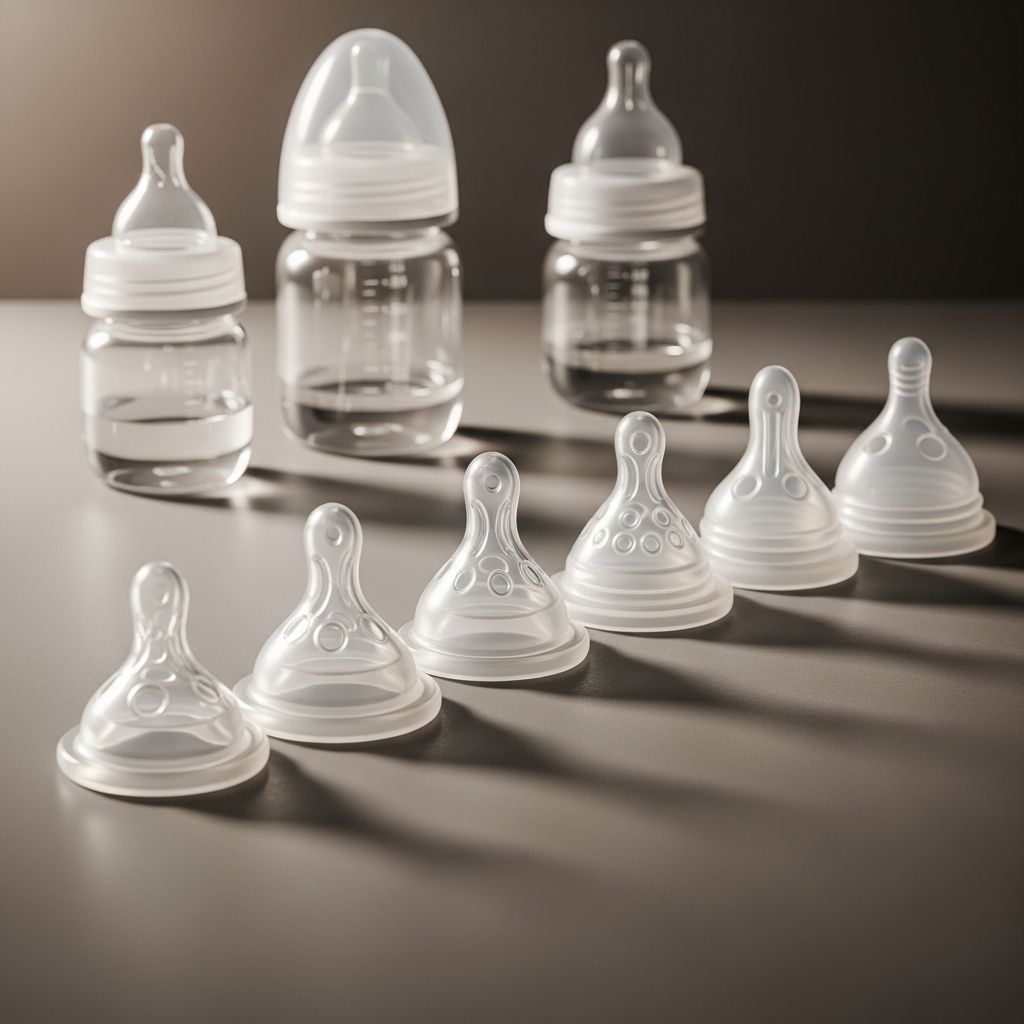
Different Nipple Shapes and Their Purposes
Beyond sizing and flow rates, nipples come in various shapes, each designed to address specific feeding preferences and oral development goals. Understanding these variations helps parents select the option most compatible with their baby’s needs and comfort.
Round Nipples
The traditional round nipple shape represents the most common and straightforward option available. This design works well for many newborns accustomed to bottle-feeding and provides reliable, predictable milk delivery. Round nipples are familiar to most parents and remain a popular baseline choice.
Breast-Shaped Nipples
Designed to mimic the contours of human breasts, these flat or contoured nipples facilitate easier transitions between breastfeeding and bottle-feeding. The shape encourages similar latching mechanisms to those used during breastfeeding, making them particularly valuable for babies receiving both breast and bottle nutrition. These nipples help maintain consistent feeding technique across different feeding methods.
Orthodontic Nipples
These specially designed nipples feature a flat bottom with a rounded top, creating a shape that fits comfortably within your baby’s mouth while supporting healthy oral development. Orthodontic nipples distribute pressure more evenly and promote proper mouth positioning during feeding, which can benefit long-term dental and palate development.
Recognizing When Your Baby Needs a Larger Nipple
Determining the right time to transition to a larger nipple size requires careful observation of your baby’s feeding cues and behavior patterns. Several clear indicators suggest your infant has outgrown their current nipple size and would benefit from moving to the next level.
- Prolonged feeding sessions: If your baby consistently takes longer than 20-30 minutes to complete a bottle, they may be struggling with insufficient milk flow and could benefit from a faster-flow nipple.
- Falling asleep during feeding: When babies become drowsy or fall asleep before finishing their bottle, it often indicates they’re not receiving milk quickly enough and tiring from the effort.
- Frustration or impatience: Signs of irritation, pulling away, or apparent aggravation during feeding suggest the flow rate isn’t meeting their current needs or preferences.
- Collapsed nipples: If you notice the nipple collapsing inward during sucking, your baby may be creating excessive suction force because the current flow rate requires them to work harder than necessary.
- Insufficient milk intake: Monitor your baby’s weight gain and diaper output; if these indicators suggest inadequate nutrition, flow rate adjustment might help improve milk transfer efficiency.
- Playing rather than feeding: When babies begin treating the bottle as a toy rather than a food source, it may indicate they’re receiving nourishment quickly and no longer need to focus intently on the feeding process.
Building Your Infant Feeding Supply
Establishing an adequate inventory of bottles and nipples prevents constant washing cycles and ensures you’re always prepared for feeding times. The quantity needed varies based on your baby’s age and feeding frequency.
Bottle Quantities
Newborns typically benefit from having 6-8 bottles available, providing sufficient options for multiple daily feedings while allowing time for thorough cleaning and sterilization between uses. This quantity prevents the frustration of running out of clean bottles during high-demand feeding periods in the early weeks. As babies mature and transition toward more solid foods (around 6 months), you can generally reduce this quantity to 4-6 bottles, since feeding frequency typically decreases and your daily routine becomes more predictable.
Nipple Quantities and Variety
Maintaining multiple nipples of each size provides flexibility and ensures continuous availability during washing cycles. Experts recommend keeping 2-4 nipples per bottle size and flow rate combination. Additionally, having several different nipple sizes on hand allows you to experiment and adjust as your baby grows or as their preferences become clearer. If you’re managing the transition from breastfeeding to bottle-feeding, prioritizing slow-flow nipples initially and gradually introducing faster-flow options as your baby develops helps maintain feeding consistency and reduces confusion between different feeding methods.
Starting Right: Initial Nipple Selection Strategy
When beginning bottle-feeding with a newborn, most experts recommend starting with the nipple included with your bottle purchase, as manufacturers typically include age-appropriate options. This baseline provides a safe starting point without requiring immediate experimentation. If you notice your baby struggling, becoming frustrated, or showing signs of inadequate feeding after several attempts, then consider transitioning to a nipple with different flow characteristics.
For babies making the transition from breast to bottle, slow-flow nipples are essential initially, as they better mimic the flow rate of breastfeeding and help maintain consistent sucking patterns across different feeding methods. This approach prevents nipple confusion and supports smoother transitions between feeding types.
Monitoring Progress and Making Adjustments
Successful bottle feeding requires ongoing attention to your baby’s cues and developmental changes. Let your baby’s actual drinking style and feeding behavior guide decisions, rather than rigidly adhering to age-based recommendations. Some babies progress through nipple sizes quickly, while others remain content with the same size for extended periods. This variation is completely normal and reflects individual differences in development and preference.
Regular observation of feeding duration, your baby’s contentment level, and physical signs like weight gain helps you make informed decisions about timing for transitions. When you notice multiple indicators suggesting a change would help, implement the transition gradually, allowing your baby several feeding attempts with the new nipple size before making a final determination about whether it’s the right choice.
Frequently Asked Questions
Q: Can my baby use the same nipple size throughout their entire bottle-feeding journey?
A: While some babies remain content with one nipple size for extended periods, most require transitions as they grow stronger and their feeding efficiency improves. Flow rate typically needs to increase over time, even if physical nipple size remains the same, since your baby’s sucking capability develops significantly during their first year.
Q: Does every bottle brand require different nipple sizes?
A: Nipple sizing systems vary between manufacturers, and nipples from different brands may not be compatible with bottles from other companies. However, within most brands, nipple sizing follows similar progression patterns. Always verify compatibility before purchasing replacement nipples for your specific bottle brand.
Q: How do I know if my baby is getting too much milk too quickly?
A: Signs include milk leaking from your baby’s nose or mouth, frequent sputtering or coughing, gagging, or the baby seeming overwhelmed during feeding. These indicators suggest the flow rate is too fast and you should consider moving to a lower-flow nipple, regardless of age guidelines.
Q: Should I transition all nipples at once or gradually?
A: Gradual transition works better for most babies. Try the new nipple size for a few feeding sessions while continuing to use the previous size for other feedings. This approach allows you to assess whether the new size is actually helping before fully committing to the change.
Q: What’s the difference between nipple size and flow rate?
A: Nipple size refers to the physical dimensions, while flow rate describes how quickly milk comes out. Some brands use the same physical nipple size across multiple age groups but vary the internal hole size or design to create different flow rates.
Q: Can I reuse nipples from my first child for a second baby?
A: Nipples can wear down over time and may develop small cracks or damage not visible to the naked eye. For optimal safety and feeding efficiency, using new nipples for each child is recommended, though gently used nipples in excellent condition may be acceptable with careful inspection.
Bringing It All Together: Making Your Decision
Selecting appropriate bottle nipples involves understanding your baby’s developmental stage, individual feeding style, and growth patterns. While age-based guidelines provide helpful frameworks, your baby’s unique preferences and behavior patterns ultimately guide the best choices. Pay close attention to how your baby responds to different nipple sizes, observe feeding duration and contentment levels, and remain flexible about adjusting as needed.
The goal is transforming feeding time into comfortable, nourishing experiences that support healthy development and create positive associations with mealtimes. When you find the nipple size and flow rate that matches your baby’s needs, feeding becomes smoother, more efficient, and genuinely enjoyable for both parent and infant. Remember that this isn’t a permanent decision—as your baby grows and develops, their needs will change, and you’ll transition through different nipple options. Trust your observations, stay responsive to your baby’s signals, and don’t hesitate to experiment until you discover what works best for your family.
References
- An All-Around Guide to Bottle Nipple Sizes — Momcozy. 2024. https://momcozy.com/blogs/breastfeeding/guide-choosing-bottle-nipple-sizes
- All You Need to Know About Bottle Nipples — Tommee Tippee. 2024. https://www.tommeetippee.com/en-us/parent-room/parents-guide-to-baby-bottle-nipples/
- Size Chart Baby Bottle 140ml — Herobility. 2024. https://herobility.com/pages/size-chart-baby-bottle-140
- A Guide to Choosing the Right Baby Feeding Bottle & Nipple — Baby Company. 2024. https://babycompany.ph/blogs/news/a-guide-to-choosing-the-right-baby-feeding-bottle-nipple
- Which Natural Response Nipple Suits My Baby Best — Philips Avent. 2024. https://www.usa.philips.com/c-f/XC000021137/which-natural-response-nipple-suits-my-baby-best
- Dr. Brown’s Nipple Level Guide — Dr. Brown’s Baby. 2024. https://drbrownsbaby.com/blogs/articles/dr-browns-nipple-level-guide