Seeing a baby yank on their own hair or grab a handful of someone else’s can be startling and even painful, especially when the behavior keeps happening. Yet for most infants and toddlers, hair pulling is a short-lived stage linked to curiosity, self-soothing, or communication rather than a serious disorder. In a smaller number of children, repeated hair pulling can be part of a condition known as trichotillomania, a disorder of compulsive hair pulling that causes noticeable hair loss and distress.
This guide explains common reasons babies pull hair, simple ways to respond, signs that the behavior may be more than a phase, and how professionals typically help when it becomes persistent or harmful.
Why Babies Pull Hair
Hair pulling in babies usually has multiple overlapping causes rather than one single reason. Understanding the context can help you respond more effectively and with less anxiety.
- Exploration of sensations: Babies explore the world with their hands and mouths, and hair is an interesting texture to grab, twist, and pull.
- Self-soothing or comfort: Some babies twirl or tug hair when they feel tired, overstimulated, or upset, using the repetitive motion to calm themselves.
- Response to discomfort: Teething, ear discomfort, or scalp irritation may lead a baby to rub or pull at hair near the painful area as a way to cope.
- Attention-seeking: If pulling hair reliably gets a big reaction from adults or siblings, a baby may repeat it as a way to gain attention.
- Early habit formation: Repeated hair pulling can become a familiar routine a child gravitates to in certain situations, even after the original trigger is gone.
Normal Hair Pulling vs. Concerning Patterns
Occasional hair pulling is common in infancy and early childhood and rarely needs medical treatment. Persistent or intense pulling that causes visible hair loss, skin injury, or emotional distress may signal a more serious pattern.
| Feature | Likely Typical Phase | Possibly Concerning |
|---|---|---|
| Frequency | Occasional, tied to tiredness or frustration | Frequent, most days, or for long stretches |
| Impact on hair | No visible thinning or bald spots | Noticeable patches of missing or shortened hair on scalp, lashes, or brows |
| Child’s awareness | Done casually and easily redirected | Seems driven or hard to interrupt; child may hide the behavior |
| Emotional context | Linked to momentary fussiness, boredom, or sleepiness | Linked to ongoing anxiety, low mood, or significant stress |
| Associated behaviors | Typical baby habits like thumb-sucking | Repetitive habits like skin picking or severe nail biting |
Most babies who pull hair do not have trichotillomania, which more often appears in later childhood or adolescence, but the diagnosis can occur in younger children when there is repetitive, compulsive pulling and clear hair loss.
Common Situations When Babies Pull Hair
Parents often notice patterns in when and where hair pulling happens. Recognizing these patterns can guide practical prevention strategies.
- Before sleep: Many babies tug or twirl hair as they settle down, similar to how others clutch a blanket or suck a thumb.
- During feeding: Some little ones reach up to the back of their head or their caregiver’s hair while breastfeeding or bottle-feeding as a comforting routine.
- When teething or ill: Pulling hair around the ears or neck can coincide with gum pain, ear discomfort, or general irritability.
- When bored or relaxed: Children with developing hair-pulling habits may pull more when quietly watching screens, riding in the car, or lying in bed.
How to Respond in the Moment
Your immediate reaction shapes how quickly the behavior fades or becomes a habit. Calm, consistent responses work better than big emotional reactions or punishment.
- Stay neutral and gentle: Avoid shouting or sharply pulling the baby’s hand away; instead, calmly release the hair and offer an alternative object.
- Redirect hands: Offer a soft toy, teething ring, or small blanket to grab instead of hair, especially during known trigger times like feeding or bedtime.
- Use brief words: A short phrase such as “Hands gentle” or “Hair stays” can be repeated without lecturing, even for toddlers.
- Protect your own hair: Tie hair back, wear it up, or use a soft headband when holding a baby who tends to grab.
Preventing Hair Pulling from Becoming a Habit
Because repetition strengthens habits, small proactive changes can keep occasional hair pulling from turning into a default coping strategy.
- Identify triggers: Notice whether pulling appears with tiredness, overstimulation, boredom, teething, or stress and try to address the underlying issue.
- Build soothing routines: Predictable bedtime and naptime routines can reduce reliance on hair pulling for comfort.
- Offer acceptable fidgets: Soft cloths, textured toys, or a small stuffed animal can meet the need for touch without hurting hair or skin.
- Minimize attention to the behavior: Calmly interrupt and redirect, but give more enthusiastic attention when the child uses hands in gentle or playful ways.
When Hair Pulling Becomes a Disorder
Trichotillomania is a mental health condition in which a person repeatedly pulls out their hair, resulting in noticeable hair loss and significant distress or impairment.
In young children, the condition may involve:
- Recurrent pulling of scalp hair, eyelashes, or eyebrows leading to uneven or patchy areas.
- Difficulty stopping even when the child or family wants the behavior to end.
- Episodes that occur during both stress and relaxation, such as while watching television or lying in bed.
Some individuals with trichotillomania also chew or swallow the pulled hair, which can cause digestive complications when large hairballs form in the stomach or intestines.
Red Flags: When to Call a Professional
Contact a pediatrician or child mental health professional if any of the following occur, as they may signal a need for assessment and tailored support.
- Clearly visible bald spots, thinning patches, or missing eyelashes or eyebrows.
- Bleeding, scabbing, or signs of infection on the scalp or skin where hair is pulled.
- Hair pulling multiple times a day or for extended periods that is hard to interrupt.
- Signs that the child eats or chews pulled hair, especially alongside stomach pain or vomiting.
- Significant emotional distress, anxiety, withdrawal from social activities, or low self-esteem linked to hair pulling.
What Evaluation and Treatment May Look Like
If hair pulling is intense or persistent, professionals may evaluate the child’s medical history, emotional health, and environment to understand contributing factors and rule out other causes of hair loss.
For older children and adolescents with trichotillomania, treatment often emphasizes behavioral strategies and family support.
- Habit reversal training: A structured approach that helps a child notice early urges to pull and substitute a different action, such as clenching fists or playing with an object.
- Parent coaching: Guidance for caregivers on responding calmly, reducing criticism, and creating a supportive environment.
- Addressing co-occurring issues: Anxiety, depression, or attention difficulties can influence hair pulling and may also need treatment.
Medication may be considered in older children or adults when behavioral strategies alone are not enough, but medication is usually not the first step and must be managed by a qualified clinician.
Supporting Your Child Emotionally
Even when hair pulling is mild, the way caregivers talk about it influences how a child feels about their body and sense of control. A supportive tone helps reduce shame and defensiveness.
- Avoid labeling: Try not to refer to the child as “a hair puller”; instead, describe the behavior as something they do, not who they are.
- Focus on strengths: Point out skills and positive traits unrelated to appearance, especially if hair loss is visible.
- Use simple explanations: For older toddlers or preschoolers, short phrases like “Your hands like to stay busy; let’s give them a toy” can feel less shaming than scolding.
Protecting the Scalp and Hair
When a child repeatedly pulls hair from the same area, reducing physical damage becomes as important as addressing the habit itself. Over time, chronic pulling can lead to skin problems and changes in hair growth.
- Gentle hairstyles: For older toddlers, loose braids or soft caps (used briefly and safely) can sometimes make it harder to grab hair.
- Skin care: A pediatrician may recommend mild cleansers, moisturizers, or treatments if the scalp is irritated or infected.
- Avoid harsh products: Strong chemicals or tight styles can further stress already fragile hair and skin.
Frequently Asked Questions
Is it normal for my baby to pull my hair?
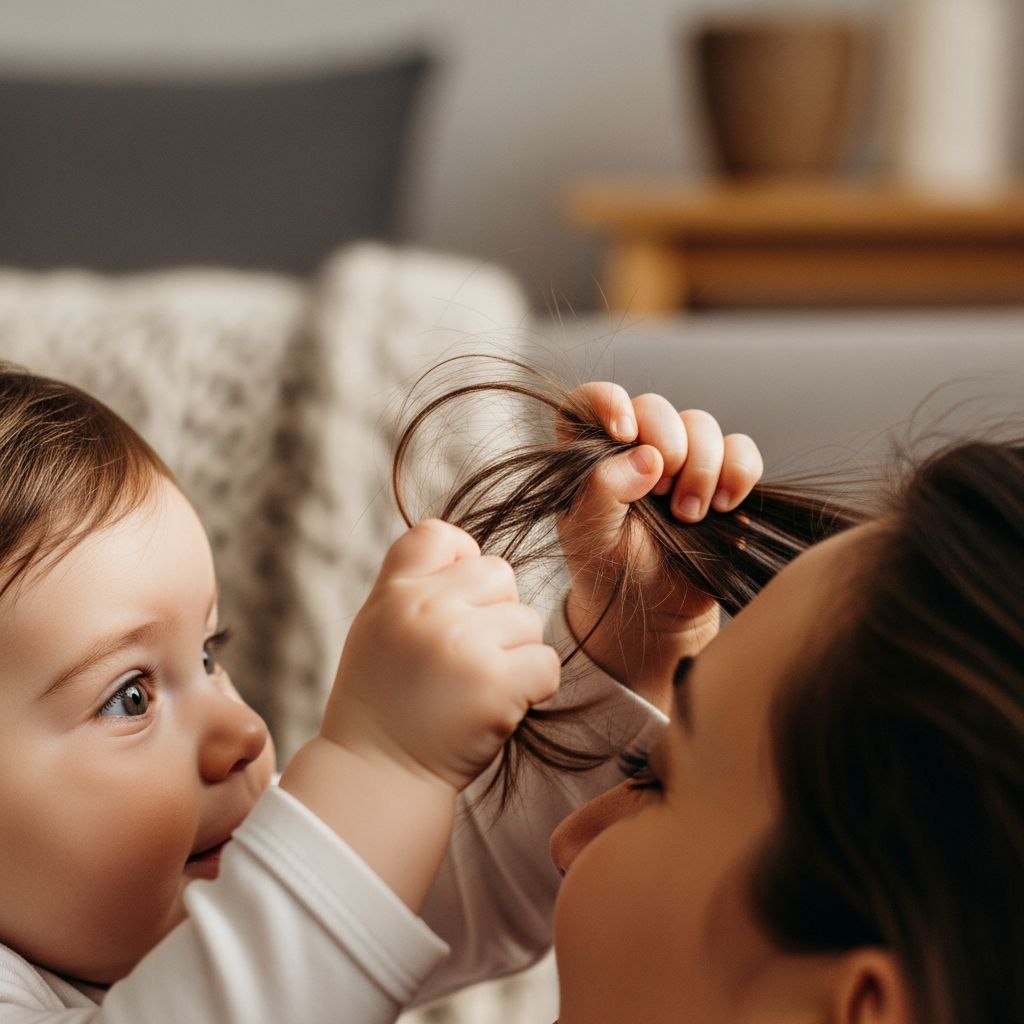
Grabbing and pulling an adult’s hair is very common in infancy because hair is easy to reach and provides strong sensory feedback. Most babies grow out of this stage as they develop better motor control, communication skills, and boundaries, especially when caregivers gently redirect their hands.
Can hair pulling cause permanent bald spots in children?
Occasional pulling is unlikely to cause lasting damage, but intense or chronic pulling over months or years can lead to scarring, infections, and changes in hair growth in some areas.
My toddler pulls hair only when watching TV. What does that mean?
Some children develop a pattern of hair pulling in relaxed or passive situations, such as watching screens or lying in bed. This pattern is consistent with what studies describe as “automatic” hair pulling, which can happen with little conscious awareness and may need gentle, consistent redirecting or professional guidance if severe.
Should I punish my child for pulling hair?
Punishment usually does not help and can increase anxiety, which in turn may worsen repetitive behaviors. Experts generally recommend calm interruption, redirection, and positive reinforcement for alternative behaviors rather than scolding or discipline.
Could hair pulling mean my child has another mental health condition?
Some children with trichotillomania also experience anxiety, depression, or attention difficulties, but many do not. Only a qualified professional can evaluate whether hair pulling is part of a broader pattern that needs specific treatment.
Key Takeaways for Parents
- Occasional hair pulling in babies and toddlers is often a normal phase tied to exploration or self-soothing rather than a sign of serious illness.
- Consistent, calm responses and simple environmental changes can reduce the behavior and prevent it from becoming a strong habit.
- Seek professional help if there is clear hair loss, skin damage, eating of hair, significant distress, or difficulty interrupting the behavior.