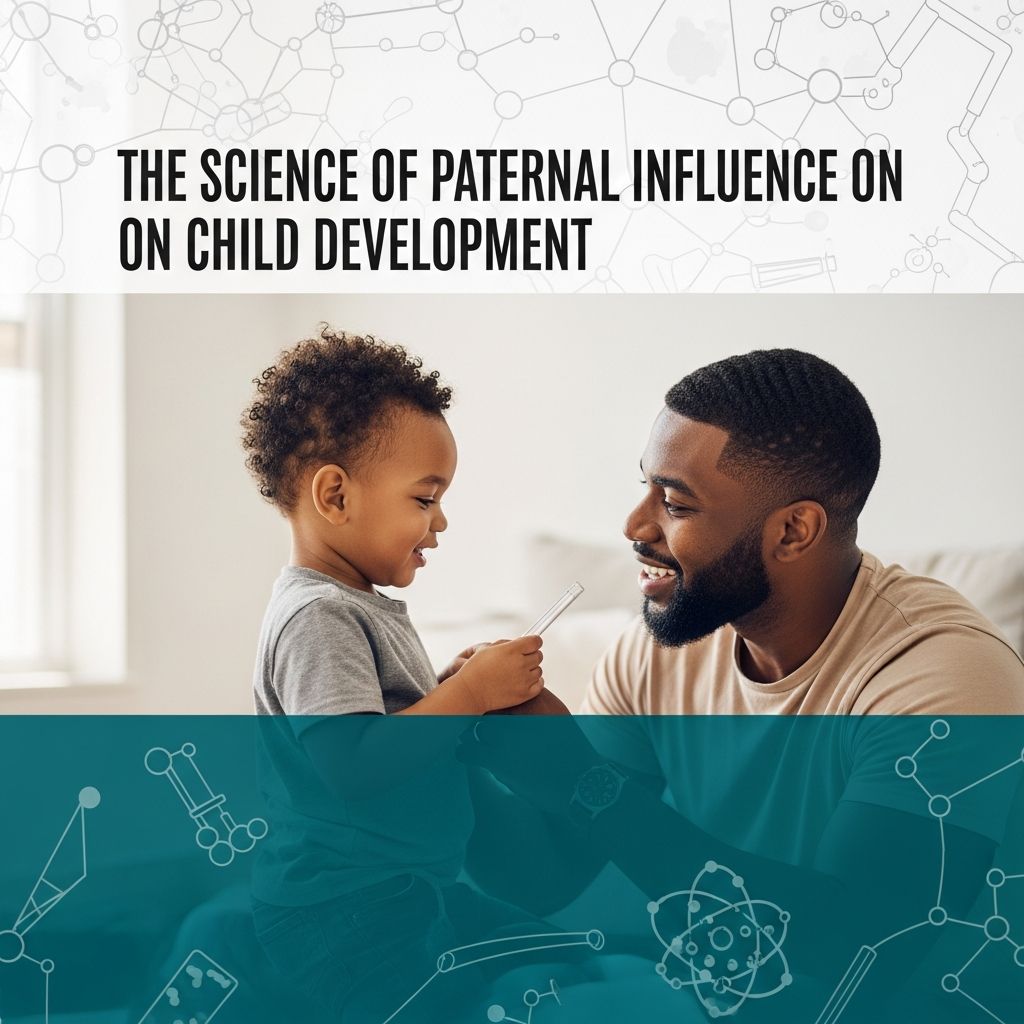
Understanding the Profound Impact of Active Fathering on Child Trajectories
The role of fathers in shaping children’s lives extends far beyond the traditional notion of financial provision. Contemporary research demonstrates that paternal engagement fundamentally alters children’s developmental pathways across multiple dimensions—cognitive, emotional, social, and behavioral. When fathers actively participate in their children’s lives, the ripple effects span from infancy through adulthood, influencing educational attainment, mental health resilience, and long-term life outcomes. The scientific evidence accumulated over decades reveals that paternal involvement is not merely beneficial; it is transformative, operating through biological mechanisms that affect both parent and child simultaneously.
The Neurobiological Transformation of Becoming a Father
One of the most compelling discoveries in neuroscience concerns how fatherhood fundamentally rewires the male brain. When men transition into fatherhood, their brains undergo significant structural and functional changes that enhance their capacity for nurturing, empathy, and attachment. These modifications are not psychological constructs but measurable alterations in brain architecture and chemistry that emerge within weeks of a child’s birth.
Research utilizing advanced neuroimaging techniques has revealed that fathers experience expansion in brain regions associated with nurturing instincts and emotional bonding. The prefrontal cortex, responsible for thought, goal orientation, and problem-solving, shows heightened activation in new fathers. Simultaneously, areas linked to empathy and attachment demonstrate increased gray and white matter density within the first few weeks following birth. Additionally, fathers develop new neurons—a phenomenon known as neurogenesis—which nature appears to have designed as a biological mechanism for establishing enduring emotional connections with their offspring.
The neurochemical foundation of this transformation centers on oxytocin, commonly referred to as the “bonding hormone” or “love hormone.” When fathers engage with their infants, oxytocin levels increase, triggering adaptive behavioral responses that enhance caregiving capacity. This biochemical bond mirrors the neurological connection forged between mothers and infants during pregnancy, demonstrating that fathers possess innate biological systems specifically designed for paternal bonding and child-rearing engagement.
Differential Parenting Styles and Complementary Roles
While both mothers and fathers contribute substantially to child development, research consistently demonstrates that they do so through distinctly different psychological approaches and behavioral patterns. Understanding these differences is essential for recognizing the unique value each parent brings to the family dynamic.
Fathers demonstrate particular aptitude in fostering independence and autonomy in their children. Rather than focusing primarily on immediate comfort and safety—areas where mothers typically excel—fathers tend to encourage children to push boundaries, take measured risks, and develop confidence in confronting novel situations. This paternal orientation manifests in everyday interactions: fathers are more likely to encourage a child to climb higher, jump further, or attempt a challenging task independently. They support children in making their own decisions, managing household responsibilities, and navigating the transition from dependence to self-sufficiency.
Fathers also employ distinctive communication patterns that stimulate cognitive development. Research indicates that fathers ask more open-ended “wh-” questions (what, when, where, why, who) compared to mothers, a communication style that directly enhances language development and critical thinking skills. This questioning approach encourages children to explain, analyze, and justify their thoughts, building neural pathways associated with executive function and abstract reasoning.
In certain cultural contexts, fathers play specialized protective roles. Within Black households, for instance, fathers uniquely contribute to teaching older children strategies for protecting themselves from violence and navigating systemic threats, a form of guidance that is both practical and emotionally significant.
Educational and Academic Achievement Outcomes
The relationship between paternal engagement and academic success represents one of the most quantifiable benefits of active fathering. Children with highly involved fathers demonstrate measurably superior educational outcomes compared to their peers with less engaged paternal figures.
The statistical evidence is striking: children with actively involved fathers are approximately 43% more likely to earn top grades (A’s) throughout their academic careers. Conversely, these same children are 33% less likely to repeat a grade, indicating sustained academic progress without developmental setbacks. These improvements emerge not from fathers necessarily serving as tutors, but through the emotional support, encouragement, and cognitive stimulation that engaged fatherhood provides.
Beyond grades, paternal involvement correlates with higher college enrollment rates. Children close to their fathers demonstrate substantially elevated likelihood of entering higher education institutions following high school completion. This advantage extends into economic stability, as these individuals are more likely to secure stable employment, establishing financial trajectories that reflect their educational achievements.
The mechanisms underlying these academic benefits appear multifaceted. Paternal encouragement of risk-taking and independence fosters the confidence necessary to tackle challenging academic material. The cognitive stimulation from distinctive paternal communication patterns enhances language and analytical skills. Perhaps most significantly, children who feel emotionally secure in their paternal relationship experience reduced stress and anxiety, neurological states conducive to learning and memory consolidation.
Behavioral Outcomes and Risk Reduction
Research examining behavioral trajectories reveals that paternal engagement serves as a protective factor against multiple forms of problematic conduct throughout childhood and adolescence. The evidence spans diverse behavioral categories and demographic groups.
| Outcome Measure | Risk Reduction with Engaged Father | Significance |
|---|---|---|
| Adolescent Delinquency | Substantially Lower | Particularly pronounced in boys |
| School Misconduct | Decreased Acting Out | Fewer behavioral incidents reported |
| Teen Pregnancy | 75% Reduction | Girls with close fathers at lowest risk |
| Incarceration | 80% Reduction | Major protective effect across demographics |
| Risky Behaviors | Substantially Reduced | Includes substance use and violence |
The protective mechanisms appear to operate through multiple pathways. First, paternal involvement provides emotional security and attachment, reducing the internal distress that often drives antisocial behavior. Second, fathers’ emphasis on accountability and clear boundary-setting—characteristic of authoritative parenting—establishes behavioral expectations without the harshness of authoritarian approaches. Third, fathers’ presence and monitoring reduce opportunities for unsupervised risk engagement, while their encouragement of independence channeled appropriately builds prosocial confidence rather than destructive rebellion.
Boys particularly benefit from paternal modeling of emotional regulation and conflict resolution. When fathers demonstrate how to manage frustration, disappointment, and anger constructively, sons internalize these behavioral templates, reducing reliance on aggression or delinquency as coping mechanisms.
Mental Health and Emotional Resilience Throughout Development
Perhaps no domain of child development demonstrates more clearly the transformative power of paternal engagement than psychological well-being and emotional resilience. Research spanning multiple decades documents that father involvement directly influences children’s vulnerability to depression, anxiety, and other mental health challenges.
Girls demonstrate particular sensitivity to paternal relationships during adolescence and young adulthood. Sixteen-year-old girls who maintain close connections with their fathers show markedly better mental health outcomes at age thirty-three, a longitudinal effect that suggests paternal relationships establish foundational psychological patterns extending decades into the future. Girls with engaged fathers experience significantly lower rates of depression and anxiety disorders, with protective effects particularly pronounced during the developmentally vulnerable transition periods of puberty and emerging adulthood.
Boys similarly benefit from paternal relationships in terms of emotional resilience and psychological adjustment. Paternal closeness during middle childhood and adolescence protects against loneliness, a psychological state increasingly recognized as foundational to multiple mental health disorders. The emotional security derived from paternal attachment provides buffering against the social stresses and identity confusion characteristic of adolescence.
The symbiotic nature of paternal emotional benefits deserves emphasis: fathers themselves experience psychological gains through engagement with their children. Research demonstrates that involved fathers develop greater empathy, compassion, and emotional sophistication. This mutual emotional enrichment creates feedback loops wherein healthier fathers provide more emotionally attuned parenting, which in turn supports children’s emotional development, which further reinforces paternal engagement and satisfaction.
Physical Health Outcomes and Early Developmental Support
Paternal involvement influences not only behavioral and psychological domains but extends to measurable physical health outcomes beginning in infancy. These effects emerge through biological mechanisms and behavioral support systems established early in development.
In cases of premature birth, paternal visitation frequency and engaged caregiving directly influence hospital discharge timing and post-discharge adaptation. Infants whose fathers maintain regular contact during neonatal intensive care demonstrate improved weight gain trajectories and require shorter hospitalization periods. Following discharge, these infants show enhanced development and more robust bonding patterns. The mechanism appears to involve paternal presence reducing infant stress levels, thereby promoting metabolic efficiency and healing.
Paternal support during the breastfeeding or chestfeeding process produces cascading benefits for the entire family unit. When fathers actively encourage and support the nursing parent, maternal confidence and milk production increase, while the nursing parent experiences reduced anxiety and stress. This supportive environment creates positive associations with feeding, enhancing infant nutrition and the bonding experience for both mother and child.
Beyond infancy, paternal encouragement of physical activity, outdoor play, and risk-appropriate exploration contributes to healthy physical development, cardiovascular fitness, and motor skill acquisition. The willingness of fathers to tolerate and even encourage scrapes, falls, and minor injuries—within safe parameters—facilitates the physical confidence and capability development that characterizes healthy child development.
Authoritative Parenting and the Balance of Warmth With Boundaries
The quality of paternal engagement matters as much as its quantity, with research consistently identifying authoritative parenting—characterized by warmth combined with clear expectations and consistent boundaries—as optimal for child development across multiple outcome measures.
Authoritative fathers are simultaneously emotionally responsive and behaviorally firm. They set clear expectations while explaining the reasoning behind rules. They follow through with consequences while maintaining emotional connection. They express approval and affection while also challenging children to improve and achieve. This balanced approach produces superior outcomes in emotional regulation, academic achievement, social relationships, and behavioral conduct compared to either permissive parenting (warm but lacking boundaries) or authoritarian parenting (strict with limited emotional warmth).
The research on authoritative paternal parenting reveals enhanced self-regulation in children, fewer emotional difficulties, and greater social competence. Children raised by authoritative fathers develop internalized behavioral controls rather than relying solely on external monitoring, meaning they maintain appropriate conduct even in unsupervised settings. This internalization represents a fundamental developmental achievement with lifelong implications.
Long-Term Life Trajectory and Future Success Indicators
When aggregated across multiple life domains, paternal engagement produces startling effects on overall life trajectories. The cumulative advantages of paternal involvement compound across development, creating substantial differences in adult outcomes.
Children who maintain closeness with their fathers demonstrate a constellation of advantages in early adulthood: they are twice as likely to pursue and complete higher education, substantially more likely to achieve economic stability through gainful employment, and dramatically less likely to experience incarceration. For girls specifically, the protective effects against teen pregnancy are particularly pronounced, with daughters of engaged fathers experiencing 75% lower pregnancy rates compared to peers with absent or minimally involved fathers.
These outcomes likely reflect the cumulative benefits across domains documented by research. The improved emotional stability protects against impulsive decision-making. The enhanced academic achievement opens educational pathways. The reduced behavioral problems avoid criminal justice involvement. The stronger sense of self-worth and identity foster confidence in pursuing ambitions. Paternal engagement, therefore, represents one of the most powerful predictors of positive adult outcomes available to researchers examining developmental trajectories.
Implications for Family Systems and Societal Well-Being
The evidence supporting paternal engagement extends beyond individual child and family benefits to broader societal implications. When fathers remain involved, engaged, and psychologically present in their children’s lives, community-level outcomes improve measurably. Lower delinquency rates reduce strain on juvenile justice systems. Higher educational attainment increases economic productivity and tax revenues. Better mental health outcomes reduce demand on mental health services. Enhanced family stability strengthens communities.
Conversely, paternal absence creates cascading negative effects. Children without involved fathers demonstrate elevated rates of poverty, behavioral disorders, academic failure, and early mortality. The absence of paternal influence represents a significant public health concern with documented costs to healthcare systems, criminal justice institutions, and social services.
Contemporary fatherhood research increasingly emphasizes that paternal engagement is not merely a personal choice affecting individual families but a social determinant influencing population health and societal outcomes. Investment in supporting fathers—through parental leave policies, co-parenting resources, and cultural messaging affirming paternal engagement—represents evidence-based public health strategy.
Common Questions About Fatherhood and Child Development
Q: Can fathers form equally strong attachments to infants as mothers do?
A: Yes, research demonstrates that fathers and infants can develop attachments of equivalent strength to maternal attachments. When both parents are involved from birth, infants form concurrent attachments to each parent, with the quality of paternal attachment determined by engagement level rather than biological sex.
Q: At what age does paternal engagement become most critical?
A: While paternal involvement matters throughout all developmental stages from infancy to adulthood, paternal influence appears particularly consequential during middle childhood and adolescence. During these periods, paternal closeness demonstrates especially strong protective effects against depression, loneliness, and delinquency.
Q: How much time does a father need to invest to see meaningful developmental benefits in children?
A: The evidence emphasizes that both quality and quantity of paternal time matter. While research indicates consistency and frequency of engagement are important, the nature of interaction—emotional responsiveness, cognitive stimulation, and security provision—may matter more than absolute hours spent together.
Q: Do the benefits of paternal engagement differ between sons and daughters?
A: While both boys and girls benefit substantially from paternal engagement, the specific protective effects differ. Boys particularly benefit in terms of behavioral regulation and academic motivation, while girls demonstrate enhanced mental health outcomes and reduced risk of early pregnancy.
Q: Can paternal involvement compensate for other family or environmental risks?
A: While paternal engagement cannot entirely eliminate effects of poverty, trauma, or systemic disadvantage, research demonstrates that involved fatherhood significantly buffers against these adversities, reducing negative outcomes and promoting resilience even in challenging circumstances.
References
- A Father’s Impact on Child Development — Children’s Bureau. 2024. https://www.allforkids.org/news/blog/a-fathers-impact-on-child-development/
- The Psychology of Fathering — Psychology Today. October 2024. https://www.psychologytoday.com/us/blog/psychology-yesterday/202410/the-psychology-of-fathering
- We Need Dads More Than Ever — Institute for Family Studies. https://ifstudies.org/blog/we-need-dads-more-than-ever
- Dads Rock: The Evidence — American Institute for Boys and Men. https://aibm.org/research/dads-rock-the-evidence/
- Understanding the Benefits of an Engaged Father to the Family Unit — Partners for Family Health. January 2022. https://partnersforfamilyhealth.org/
- The Importance of Fathers — Montana State University Extension. https://www.montana.edu/extension/
- Responsible Fatherhood Programs: Children Benefit from a More Integrated Family Approach — Society for Research in Child Development. https://www.srcd.org/research/responsible-fatherhood-programs-children-benefit-more-integrated-family-approach