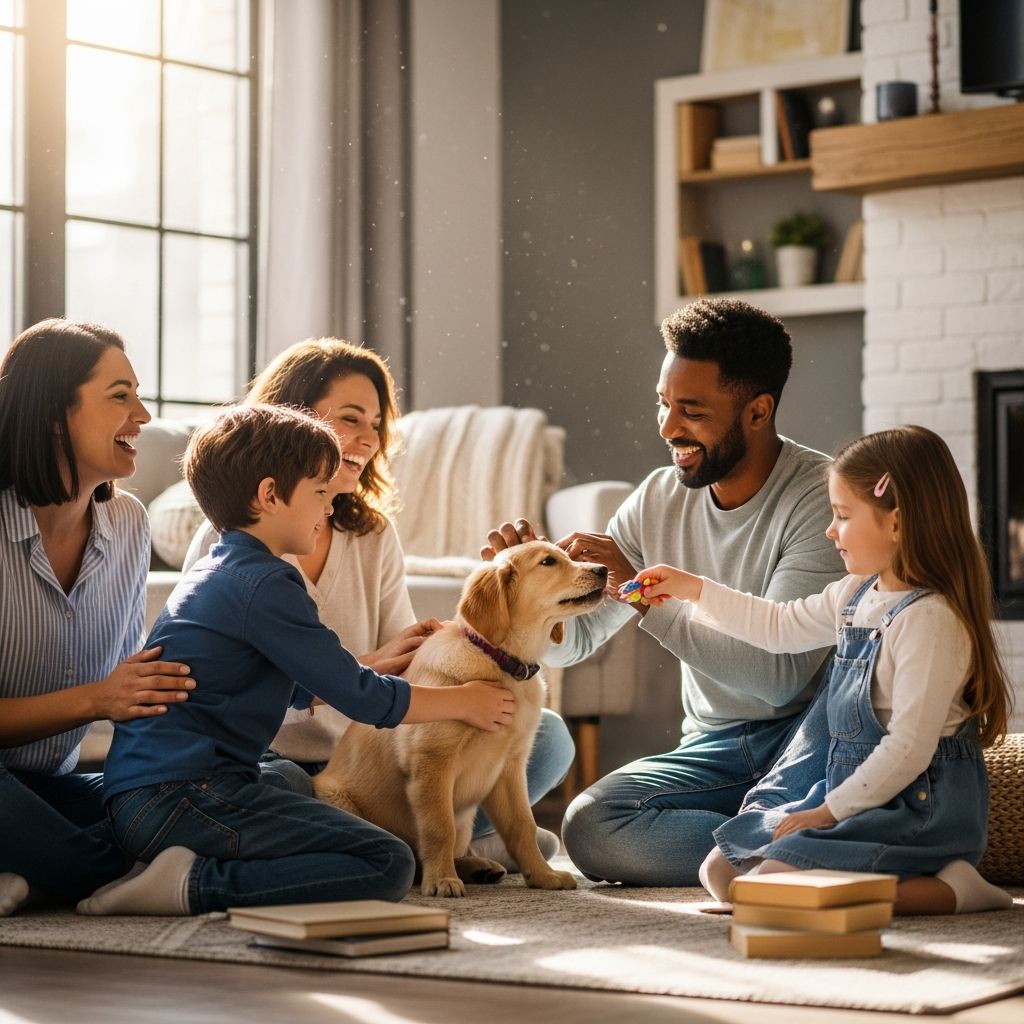
If you are wondering whether a dog would be a blessing or a burden for your family, you are not alone. Many parents weigh the muddy paws, vet bills, and chewed toys against the idea of loyal companionship, more laughter, and priceless childhood memories. This guide explores how a well-chosen, well-cared-for dog can become a powerful force for connection, health, and growth in your household.
The Emotional Heartbeat Of Your Home
Dogs have an uncanny ability to sense mood, respond to tone, and offer comfort without needing a single word. A family dog often becomes the emotional anchor of the household, greeting each person with the same enthusiastic welcome whether their day went brilliantly or terribly.
For children, this creates a sense of being seen and accepted exactly as they are. For adults, it can soften the edges of a stressful day and provide a daily reminder that small, simple joys still matter.
- Children can confide worries and fears to a dog without fear of judgment.
- Parents often find that a dog’s presence diffuses tension after arguments or difficult conversations.
- Shared affection for the dog can create a neutral, comforting space when family members are having a hard time connecting with each other.
Built-In Lessons In Responsibility And Empathy
Most parents want their children to grow into kind, responsible adults, and a dog can be a powerful partner in that mission. Caring for a living creature makes abstract ideas like “responsibility” and “empathy” very concrete.
Instead of lectures, kids receive daily, practical opportunities to show up for another being. A hungry dog waiting by the bowl or a restless dog pacing at the door makes the concept of follow-through very real.
Age-Appropriate Tasks For Kids
- Preschoolers: Help scoop food (with supervision), assist in brushing, and participate in simple play.
- Early elementary: Add water to the bowl, help with short walks, throw toys, and put away the dog’s belongings.
- Older kids and teens: Take primary responsibility for one or two tasks such as walking, grooming, or training sessions.
As children meet these responsibilities, they learn that their actions have real consequences, and they develop empathy by tuning into the dog’s needs and emotions.
More Movement, Less Screen Time
For many families, evenings and weekends quietly disappear into streaming shows, games, and scrolling. A dog changes that by adding a compelling, furry reason to get outside and move. Walks, fetch, and backyard games all demand a bit of physical effort from every family member.
Even small changes add up: walking around the block before dinner, playing tug-of-war in the yard, or visiting a nearby trail on weekends can gradually shift a family’s habits toward a more active lifestyle.
| Day | Activity | Approx. Time | Who Participates |
|---|---|---|---|
| Monday | Neighborhood evening walk | 20–30 minutes | One parent + one child |
| Wednesday | Indoor training games (sit, stay, tricks) | 15 minutes | Kids lead, parents supervise |
| Friday | Backyard fetch or hide-and-seek with treats | 20 minutes | Whole family |
| Sunday | Park hike or long walk | 45–60 minutes | Whole family |
Over time, these small, enjoyable routines help both adults and children build stamina, improve mood, and spend more time in fresh air rather than in front of a screen.
Stronger Social Skills For Kids (And Adults)
Dogs do more than bring families together; they also open doors to the outside world. A dog on a leash invites conversation in a way that few other things do. Children who might be shy in other settings often find it easier to talk when the topic is their pet.
Dog parks, training classes, and neighborhood walks naturally expose your family to a wide range of people. Conversations that start with “What’s your dog’s name?” can turn into new friendships for kids and adults alike.
- Children practice introducing themselves and answering questions about their dog.
- Parents gain more casual, low-pressure interactions with neighbors and other families.
- Shared interests in training, health, or particular breeds can build supportive micro-communities.
A Gentle Boost For Mental Well-Being
For many people, dogs act as a soft buffer against anxiety and low mood. The simple rhythm of daily walks, feeding, and play can be soothing and predictable when life feels overwhelming. The act of petting a calm, content dog often has a naturally relaxing effect.
Children and teens, who may not always want to open up to parents, often find comfort in simply sitting quietly with the family dog. Adults, meanwhile, benefit from the sense of purpose that comes from caring for a creature that depends on them every day.
- Daily routines around the dog add structure to mornings and evenings.
- Physical contact—like brushing, petting, or cuddling—can feel grounding during stressful times.
- Knowing the dog needs a walk can nudge family members to step outside when they might otherwise withdraw.
Security, Comfort, And A Sense Of Safety
Not every family wants or needs a formal “guard dog,” but even a friendly pet can provide a sense of security. The sound of paws padding through the house at night or a bark at an unexpected knock can reassure adults and children alike that they are not alone.
For kids who are sometimes frightened of the dark or nervous about staying home with one parent, the presence of a calm, familiar dog can significantly ease worries. The dog’s watchful companionship helps the home feel less empty and more protected.
- A dog’s natural alertness offers early warning of unusual sounds around the home.
- Children may sleep better knowing their dog is nearby.
- Families who travel with their dog often feel safer in new environments, such as cabins or rentals.
Shared Routines That Bring The Family Together
Every dog creates a set of daily rituals that can become the backbone of family life: morning walks, after-school greetings, evening play, and weekend adventures. These small, predictable moments offer consistent opportunities for bonding that fit naturally into the day.
Instead of everyone scattering to separate rooms and devices, time with the dog invites shared activity and conversation. The dog becomes a unifying presence, giving everyone something positive and lighthearted to focus on together.
Examples Of Connection-Building Rituals
- One parent and one child take turns doing the evening walk and use that time for one-on-one conversations.
- Family members gather to teach the dog a new trick every weekend and celebrate progress together.
- Everybody participates in a weekly “spa session” for the dog: brushing, nail checks, and lots of praise.
Preparing Thoughtfully Before You Bring A Dog Home
As wonderful as dogs can be, they are not living plush toys. They need time, money, and emotional bandwidth. Before you commit, it helps to have an honest conversation as a family about what you can realistically provide and what you expect in return.
Consider energy level, size, and temperament, as well as the ages and personalities of your children. Some families thrive with a high-energy dog that joins every outdoor adventure; others do better with a calmer companion that prefers gentle walks and lots of snuggling on the couch.
| Factor | Questions To Ask |
|---|---|
| Time | Who will walk the dog morning and night? Is someone home enough for training and bathroom breaks? |
| Budget | Can you cover food, grooming, vet visits, training classes, and emergency care? |
| Space | Does your home comfortably fit the size and energy level of the dog you want? |
| Allergies | Has everyone spent time around dogs to check for allergic reactions? |
| Long-Term Commitment | Are you prepared for 10–15 years of care, including changes in your family’s schedule or living situation? |
Answering these questions honestly helps ensure that your home is truly ready to welcome a dog and that your new companion can thrive alongside your family.
Creative Ways To Include Your Dog In Family Life
Once your dog has settled in, the real fun begins. Integrating your pet into everyday life adds warmth and personality to even ordinary routines. With a bit of creativity, your dog can become part of traditions, holidays, and special occasions.
These touches do not have to be elaborate; small, repeatable gestures often become the most cherished memories your children carry into adulthood.
- Celebrate the dog’s “gotcha day” with a special treat, photos, and a family walk.
- Include the dog in seasonal activities like pumpkin picking, picnics, or family hikes.
- Let kids design a simple “job” for the dog on school mornings, such as being part of the goodbye ritual at the door.
- Create a photo wall or digital album chronicling the dog’s life alongside your children’s milestones.
Frequently Asked Questions About Getting A Family Dog
1. What is the best age for a child to have a dog?
There is no single perfect age; what matters most is supervision and clear boundaries. Very young children can enjoy a dog as long as adults closely monitor all interactions and teach gentle handling, while older kids can take on more responsibility as they mature.
2. Should we adopt from a shelter or go to a breeder?
Both routes can lead to a wonderful family dog. Shelters often have mixed-breed and adult dogs who already have some training, while responsible breeders can help match you with a puppy whose temperament suits family life; research, patience, and careful screening matter far more than the specific path you choose.
3. How much time does a dog actually require each day?
The answer depends on age, breed, and personality, but you should expect to devote time to walks, play, training, feeding, and basic care every single day. Puppies and very active dogs typically need more engagement, while older or calmer dogs may be satisfied with shorter bursts of focused attention spread throughout the day.
4. Can a dog live happily in an apartment or small home?
Yes, many dogs thrive in smaller spaces as long as their exercise and mental stimulation needs are consistently met. Regular walks, enrichment toys, training games, and time outside the home are more important than yard size alone.
5. What if my child is nervous around dogs?
Nervousness does not automatically mean a dog is a bad idea, but it does call for extra patience and planning. Consider starting with calm, well-trained dogs belonging to friends or training centers, and gradually build positive experiences before bringing a dog into your home.
Making The Choice That Fits Your Family
A dog can bring immense joy, teach powerful life lessons, and deepen bonds in ways that are hard to measure. At the same time, the decision to bring a dog into your home deserves honest self-reflection about your time, resources, and long-term plans.
If your family is ready for both the fun and the hard work, a four-legged companion might not just change your daily routine—it may shape the stories your children tell about their childhood for the rest of their lives.