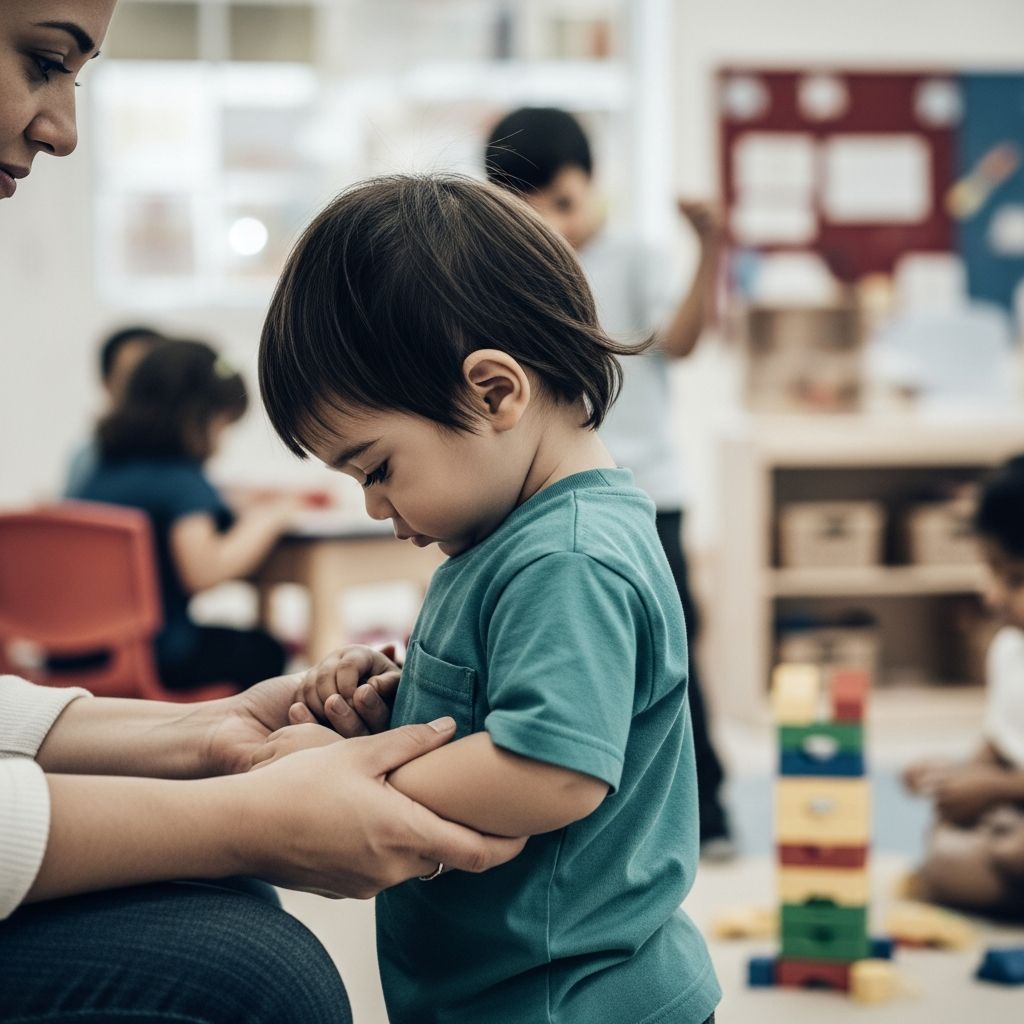
Many parents feel shocked and worried when a teacher reports that their sweet 3-year-old has been pushing, hitting, or copying rough play at preschool. It can be tempting to panic, blame the school, or feel ashamed. In reality, early aggression is a common, developmentally normal way for young children to communicate needs they cannot yet express in words.
This article explains why children copy peers’ behavior, what these actions mean emotionally, and how to respond in a calm, consistent, and emotionally connected way that helps your child grow more kind and confident over time.
Why Preschoolers Copy Rough Behavior
Three-year-olds are like social sponges. They learn how to act by closely observing what other children do and how adults respond. When a peer pushes to get a toy, grabs something, or uses physical force to solve a problem, your child is watching very carefully.
- Imitation is learning: Children copy others to experiment with power, problem-solving, and belonging.
- Attention is powerful: If the child who hits gets the toy or a lot of attention, your child may think, “That’s how I get what I want.”
- Limits are still forming: At three, empathy, impulse control, and language are still developing, so copying happens quickly, often without thinking.
Seeing your child copy harmful behavior is not a sign that you have failed as a parent. It is a signal that your child needs guidance, connection, and coaching to learn a better way.
What Aggressive Behavior Means at Age Three
When your child hits, pushes, or bites, the behavior is usually the visible tip of an emotional iceberg. Underneath are feelings, needs, and skills that are still under construction.
- Frustration: Your child may feel blocked from a toy, activity, or adult attention and react physically before thinking.
- Overwhelm: Noise, crowds, changes in routine, or tiredness can lower a child’s capacity to cope.
- Confusion about rules: A child who sees different expectations at home, school, or on screens may not clearly understand what is okay.
- Social experimentation: “What happens if I do this?” is a genuine question at this age.
Recognizing the need beneath the behavior allows you to respond with empathy and guidance instead of fear and harshness.
First Steps When the Teacher Calls
Hearing that your child has hurt someone can trigger embarrassment, anger, or defensiveness. Before reacting, pause and ground yourself so that you can become your child’s calm leader.
- Take a few slow breaths and remember that early aggression is common and changeable.
- Remind yourself: “My child is having a problem, not being a problem.”
- Aim to be curious with the teacher instead of confrontational or apologetic.
Rather than jumping to conclusions, gather information so you and the school can work as a team.
What to Ask the Preschool Teacher
A brief, focused conversation with your child’s teacher can shed light on patterns and triggers. Ask open-ended questions and listen without rushing to fix or defend.
- “Can you walk me through what happened before my child hit or pushed?”
- “Are there particular times of day or activities when this tends to happen?”
- “What does my child seem to be trying to get or avoid in those moments?”
- “How do you usually respond? What seems to help or make it worse?”
- “Are other children involved in similar behavior?”
These questions help identify whether the behavior is tied to transitions, sharing, a specific peer, sensory overload, or something else. Once you know the pattern, you can plan targeted support.
Common Triggers and How to Address Them
While each child is unique, certain situations frequently lead to hitting or pushing at age three. Use the table below to consider what might be happening for your child.
| Trigger | What Your Child May Feel | Helpful Adult Response |
|---|---|---|
| Another child grabs a toy | Anger, unfairness, panic about losing access | Teach phrases like “I’m using that” and practice turn-taking at home. |
| Crowded or noisy play areas | Overstimulation, stress, need for space | Ask teachers to offer quieter corners, and build in calm time before and after school. |
| Transition time (cleanup, lining up) | Anxiety about change, feeling rushed or bossed | Use visual schedules and give advance warnings about transitions at home and school. |
| Copying a “tough” peer | Desire to fit in, curiosity about power | Talk about what real strength looks like: kindness, asking for help, using words. |
| End-of-day fatigue or hunger | Low self-control, irritability | Adjust sleep schedule, offer a filling snack, and keep after-school time simple and calm. |
Talking to Your 3-Year-Old After an Incident
Conversations with a three-year-old need to be short, concrete, and emotionally safe. Avoid lectures or shaming, and aim for connection first, teaching second.
Helpful principles:
- Talk when your child is calm, not in the heat of the moment.
- Use simple language and clear cause-and-effect: “When you hit, it hurts.”
- Focus on what they can do next time, not only what they did wrong.
You might gently say something like, “Your teacher told me you pushed your friend when you both wanted the same truck. You really wanted a turn. Pushing hurts. Next time you can say ‘My turn, please’ or ask the teacher for help. Let’s practice together.”
Teaching Kindness and Boundaries at Home
Home is the safest place for your child to practice new skills. Small, consistent routines build empathy and self-control more than occasional big talks.
- Model gentle touch: Narrate what you do. “I’m moving you gently,” “I’ll move the cat softly.”
- Use simple family rules: For example, “We keep bodies safe,” “We use words, not hands.” Repeat these calmly and often.
- Praise specific behavior: “You waited for your turn with the swing. That was patient and kind.”
- Play cooperation games: Build towers together, roll a ball back and forth, or do puzzles side-by-side to rehearse taking turns and sharing space.
The goal is not perfection but progress. Every day offers many tiny chances to reinforce caring behavior.
Preventive Strategies Before and After School
Minor adjustments to your family’s daily rhythm can significantly reduce aggressive incidents. Predictability and emotional connection are especially protective at this age.
- Morning connection: Spend a few minutes fully focused on your child before school—reading a short book, snuggling, or playing a quick game. Feeling securely connected makes it easier for your child to manage challenges later.
- Preview the day: Briefly explain what to expect (“Playtime, snack, outside, then pickup”). This lowers anxiety about transitions.
- After-school decompression: Keep the first 20–30 minutes low-key. Offer a snack, some outdoor time, or quiet play instead of errands or screens.
When children feel less rushed and more connected, they have more capacity to share, wait, and use their words.
Responding in the Moment When Your Child Hits
At home or on the playground, your response in the moment teaches your child more than any explanation. Aim to be firm about safety and gentle about your child’s dignity.
- Move quickly to ensure safety. Step between children, hold your child’s hand or body gently but firmly, and stop the behavior.
- Name what you see. “You hit. Hitting hurts.” Keep your tone calm and steady.
- State the limit. “I won’t let you hit. We keep bodies safe.”
- Offer an alternative. “You can say ‘My turn’” or “You can stomp your feet on the ground, not on people.”
- Repair if possible. Support your child to check on the other child, offer a gentle touch if welcomed, or say a simple “Sorry.” Do not force apologies, but encourage making amends.
Over time, this consistent pattern teaches that feelings are acceptable, but hurting others is not. Your calm presence is the model your child will eventually copy.
Aligning Home and School Responses
Children thrive when expectations and responses are reasonably consistent across environments. If the preschool is using one language and home uses another, your child may feel confused about what is expected.
- Ask the teacher which phrases or visuals they use (“gentle hands,” “hands to self,” picture rules) and use similar wording at home.
- Share what calms your child (a particular song, deep breaths, a quiet corner) so teachers can use the same tools.
- Agree on a simple plan: what adults will do during incidents, how they will help your child repair, and how updates will be shared with you.
When your child receives the same message—“You are safe, loved, and we will help you use your words”—learning accelerates.
When Aggression Becomes a Pattern
Occasional hitting or pushing is typical in preschool. However, ongoing or escalating aggression deserves extra attention. Watch for signs that your child needs more support:
- The behavior is frequent (daily or many times per day) over several weeks.
- Your child seems often tense, sad, fearful, or withdrawn about school.
- Other children avoid playing with your child.
- The preschool reports that injuries or intense incidents are occurring.
If these signs appear, schedule a longer meeting with the teacher or school director to discuss possible changes in classroom routines, supervision, or support strategies. You may also consider consulting a pediatrician or child development specialist to rule out underlying issues such as language delays, sensory processing challenges, or anxiety.
Supporting Your Own Emotions as a Parent
It is easy to become swept up in guilt or worry: “Did I do something wrong? Is my child becoming a bully?” These thoughts are understandable but rarely helpful. Your emotional state directly affects how calmly and effectively you can guide your child.
- Confide in a trusted friend, partner, or support group instead of processing everything in front of your child.
- Notice and challenge harsh self-talk. Replace “I’m a terrible parent” with “I’m a caring parent facing a challenging behavior.”
- Take small actions to care for yourself—short walks, deep breaths, brief breaks from parenting tasks when possible.
Children learn emotional regulation partly by watching how adults handle stress. By tending to your own wellbeing, you are indirectly helping your child too.
Frequently Asked Questions
Does hitting at age three mean my child will be violent later?
No. Early physical aggression is extremely common and, in most cases, decreases as language, empathy, and self-control grow. What matters most is not that hitting happens, but how consistently adults respond—setting clear limits while staying emotionally connected.
Should my child change schools because of this behavior?
A school change is rarely the first or best solution. First, talk with the teachers about how they supervise, teach social skills, and respond to aggression. If they are open to collaboration and proactive strategies, it is usually better for your child to stay and learn with familiar caregivers, unless there are serious safety concerns or a poor overall fit.
Should my child be punished at home for things that happen at school?
Adding punishment at home for incidents that happened hours earlier at school usually does not teach the lesson you hope for. Your child may not clearly connect the consequence to the behavior. It is more effective to use home time for connection, practice, role-play, and brief, calm conversations about what to do differently next time.
What if my child is also being hurt by peers?
If your child is both copying and receiving rough behavior, it is important to advocate for adequate supervision and clear classroom rules. Ask the school how they protect all children, how they intervene when one child repeatedly targets another, and how they help children repair relationships. At home, emphasize body safety, consent, and the right to ask adults for help.
When should I seek professional help?
Consider consulting a professional if aggression is frequent and severe, does not improve with consistent guidance, interferes with friendships, or occurs alongside other concerning signs such as sleep problems, significant language delays, or intense anxiety. A child psychologist, developmental pediatrician, or family therapist can assess your child’s needs and coach you on tailored strategies.
Key Takeaways for Parents
- Hitting, pushing, and copying peers’ rough behavior at age three are signals of unmet needs and lagging skills, not proof that your child is “bad.”
- Your calm, consistent response—protecting safety, setting clear limits, and teaching alternatives—gradually shapes more kind and confident behavior.
- Working together with teachers, tending to routines, and caring for your own emotional state create the conditions for your child to thrive socially and emotionally.
With patience, empathy, and steady guidance, most children move through this challenging phase and emerge more capable of handling big feelings and complex friendships without their hands ever needing to do the talking.