It can be deeply unsettling when a sweet, playful 3-year-old suddenly hits, kicks, pushes, or gets rough with other children. You may find yourself wondering if something is wrong, whether you have failed as a parent, or how to keep everyone safe while still being kind and supportive. This guide explains what is happening beneath the surface and offers practical, respectful tools for responding.
Why Three-Year-Olds Can Seem So Rough
At around age three, children experience a powerful mix of big emotions, growing independence, and limited self-control. They can want to behave well and still end up pushing, hitting, or grabbing when overwhelmed. Understanding the developmental picture helps you respond more calmly instead of taking the behavior personally.
Most rough or aggressive moments are not signs of a “bad child” but signals that the child’s emotional and nervous systems are overloaded. Seeing these behaviors as communication rather than defiance changes how you respond.
Common Triggers Behind Rough Behavior
- Frustration and blocked desires: Not getting a toy, losing a game, or hearing “no” can feel overwhelming to a young child.
- Fatigue and hunger: A tired or hungry preschooler has much less capacity to control impulses.
- Overstimulation: Loud, busy environments, parties, or long days can overload their senses.
- Anxiety or insecurity: New situations, transitions, or family stress can leak out as roughness.
- Need for connection: Children who feel disconnected may act out to draw attention, even negative attention.
Roughness, Aggression, And Normal Development
Three-year-olds live in a world where feelings arrive fast and strong. They are just beginning to learn how to wait, share, and use words instead of hands. Occasional hitting or pushing during conflicts is common in this stage, especially when children are tired or overstimulated.
What matters most is not the presence of rough moments but how adults guide the child through them. With warm, consistent support, most children learn to use more peaceful strategies over time.
| Normal for Age 3 | May Need Extra Support |
|---|---|
| Occasional pushing or hitting during conflicts, especially when tired or hungry. | Frequent, intense aggression multiple times per day over many weeks. |
| Calms with adult support and responds somewhat to limits. | Has great difficulty calming even with support; aggression escalates despite limits. |
| Shows remorse or concern after an incident (even if brief or indirect). | Seems unconcerned about hurting others or appears to enjoy causing pain. |
| Roughness mainly in specific, stressful situations. | Aggression across many settings: home, playground, preschool, family gatherings. |
| Incidents decrease with consistent guidance. | Behaviors escalate over time, or other warning signs appear (sleep issues, regression, extreme withdrawal). |
What Is Your Child Trying To Tell You?
A rough or aggressive act is often the visible tip of an emotional iceberg. Underneath the behavior there may be fear, jealousy, shame, confusion, or sensory overload. Children rarely have the words or perspective to explain what they feel.
Instead of asking “How do I stop this immediately?” it is more useful to ask, “What is this behavior telling me about my child’s inner world right now?” This question invites curiosity rather than blame.
Possible Messages Hidden Inside Roughness
- “I feel out of control and I don’t know how to calm down.”
- “I’m scared I’ll lose you or lose this special thing, so I grab or push.”
- “The world feels too loud and too close, and I need space.”
- “I don’t know how to ask for a turn, so I use my body instead.”
- “I’m copying what I’ve seen others do when they are angry.”
First Priority: Safety With Calm Authority
When a child becomes rough, your first job is to keep everyone safe. This does not require anger, threats, or shame. It calls for steady, confident leadership and clear, simple boundaries.
Think of yourself as a calm guardian: you prevent harm while staying emotionally available, even when you disapprove of the behavior.
Simple Steps To Secure Safety
- Move closer: Gently position yourself between your child and the other person or object.
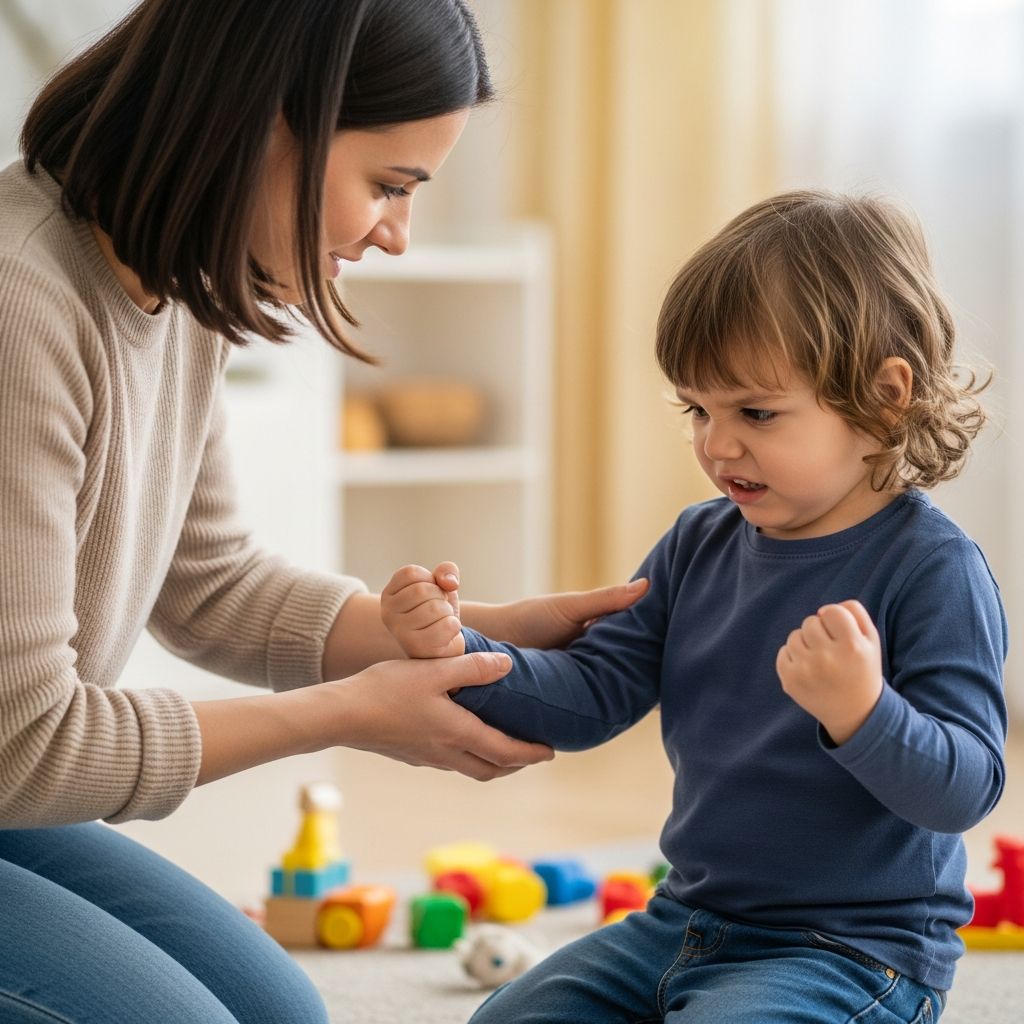
- Hold or block if needed: If they are about to hit, you may hold their hands or body firmly but gently and say very few words.
- Use short, clear statements: For example: “I won’t let you hit. I’m here.”
- Lower your voice: A quiet, steady voice helps the child’s nervous system begin to settle.
- Wait for the storm to pass: The teaching can come later, when everyone is calmer.
Responding In The Heat Of The Moment
Effective responses balance three elements: protection, empathy, and limit-setting. Too much focus on punishment can heighten fear and shame, while ignoring the behavior can leave others unsafe and the child confused.
Using calm, consistent scripts supports your child in learning new patterns over time.
Example Phrases You Can Use
- “I see you’re really mad. I won’t let you hurt.”
- “Your hands are not for hitting. I’ll help you move away.”
- “You wanted the toy and he had it. That’s hard. We take turns.”
- “You’re having a hard time stopping. I’m going to hold your hands to keep us safe.”
- “We’ll talk more when your body is calmer. I’m right here.”
Teaching Peaceful Skills After Everyone Calms
The real learning happens after the emotional wave has passed. Once your child is calm, their brain can better absorb guidance about what to do differently next time. This is the moment to teach skills, not during the peak of a meltdown.
Short, simple conversations repeated many times are more effective than long lectures. Consistency is your strongest teaching tool.
Key Skills To Practice
- Using words for feelings: Teach phrases like “I’m mad,” “I’m scared,” or “I want a turn.”
- Asking instead of grabbing: Practice saying, “Can I have it when you’re done?”
- Body awareness: Help them notice when their body is getting tense, hot, or wiggly.
- Calming tools: Show how to squeeze a pillow, stomp feet in place, or take “dragon breaths” (slow deep breaths).
- Repair and empathy: Guide them to check on the other person: “Are you okay?” or offer a gentle gesture like bringing a toy or drawing a picture.
Prevention: Setting Your Child Up For Success
While you cannot prevent every rough moment, you can significantly reduce their frequency and intensity. Prevention is less dramatic than crisis management, but over time it is where the biggest change happens.
By paying attention to your child’s patterns and adjusting routines, expectations, and environments, you make it easier for them to stay regulated.
Practical Prevention Strategies
- Protect sleep and meals: Plan playdates and errands when your child is rested and fed.
- Watch for early signs: Notice when they start to get loud, clingy, wild, or spacey; those are often early warning signs.
- Limit overwhelming situations: Shorten events, choose calmer environments, or take more frequent breaks.
- Practice ahead of time: Role-play taking turns, saying “stop,” and asking for space before going to the playground or a party.
- Offer regular connection: Daily one-on-one time, even 10–15 minutes, can reduce attention-seeking behavior.
When Roughness Shows Up As Sensory Seeking
Some children are not acting out of anger when they are rough; they are seeking strong sensory input. They may crash into furniture, body-slam others, chew on objects, or squeeze too hard when hugging. For these children, their bodies crave intense sensations.
If the roughness seems playful but too strong, your child might need more appropriate outlets for movement and pressure.
Ways To Channel High-Energy Bodies
- Set up a “crash zone” with cushions, pillows, and soft mats for jumping and falling safely.
- Offer heavy work tasks like pushing a laundry basket, carrying books, or helping move cushions.
- Use safe wrestling rules with you, such as a special time and place with clear signals to stop.
- Give fidget toys or chew-safe items for mouths and hands that always need something to do.
Keeping Siblings And Other Children Safe
Parents often worry most about the safety of siblings, cousins, or peers. Balancing protection for one child with compassion for the rough child can feel like walking a tightrope. Clear boundaries and proactive planning can help.
Your role is to be the strong, fair leader of the group, not a referee who only steps in after someone gets hurt.
Protective Strategies With Multiple Children
- Stay nearby during known triggers: If conflicts usually erupt over a particular toy, be physically close when that toy is in play.
- Use zones or stations: Set up different areas for different activities to give space between children.
- Rotate high-conflict toys: Put them away for special supervised times instead of leaving them accessible all day.
- Teach siblings to call for help: Give them simple phrases like, “Mom, I need help,” rather than pushing back.
- Validate both children: Acknowledge the hurt child’s feelings while still supporting the rough child in learning better choices.
Handling Public Incidents With Confidence
When rough behavior happens in public, embarrassment can make it hard to stay calm. You may feel judged or pressured to react harshly. Remember that your job is to protect and teach your child, not to perform good parenting for strangers.
Preparing simple plans and phrases in advance helps you act intentionally even under the uncomfortable gaze of others.
Public-Place Survival Tips
- Keep expectations realistic: Limit the length and complexity of outings with a three-year-old.
- Have an exit strategy: Be willing to leave early or take a quiet break in the car or a side area.
- Use brief explanations: Say something like, “We’re taking a break to calm down” instead of lengthy justifications.
- Focus on your child, not the audience: Tune out others’ expressions and return your attention to your child’s need for guidance and comfort.
Looking At Your Own Triggers As A Parent
Many adults feel especially triggered by rough or aggressive behavior, often because of their own upbringing or beliefs about what it means to be “good.” When your nervous system goes into alarm, it becomes much harder to respond calmly.
Taking care of your own emotional state is not selfish; it is a crucial part of helping your child grow out of these behaviors.
Ways To Support Yourself
- Pause and breathe: Before reacting, take a slow breath or briefly look away to ground yourself.
- Challenge harsh thoughts: Replace “My child is a bully” with “My child is struggling and needs help.”
- Seek support: Talk with trusted friends, partners, or professionals about your worries and anger.
- Care for your basics: Adequate rest, movement, and small moments of joy make calm parenting more possible.
When To Consider Professional Help
Some children need more support than parents can provide alone, and seeking help is a sign of wisdom, not failure. If your child’s aggression is frequent, severe, or causing significant problems in daily life, it may be time to consult a pediatrician or child mental health professional.
Early support can prevent patterns from becoming more entrenched and offers you tailored strategies for your unique child.
Signs To Discuss With A Professional
- Daily or near-daily aggressive incidents over several months.
- Injuries to siblings, peers, or themselves.
- Very limited ability to calm even with your help.
- Loss of previously learned skills (like language, toileting, or social interaction).
- Significant concerns raised by preschool or childcare staff.
Frequently Asked Questions
Is my 3-year-old’s aggression my fault?
Blaming yourself rarely helps. Many factors shape a child’s behavior, including temperament, experiences, and developmental stage. What matters now is how you support your child from this point forward, not whether you caused the problem.
Should I use time-outs for hitting?
Brief separations can sometimes reduce chaos, but they often do not teach better skills on their own. Many families find it more effective to use “time-in” approaches, staying close, enforcing limits physically if needed, and then coaching better strategies once everyone is calm.
How do I discipline without being harsh?
Discipline simply means teaching. You can be firm and clear about limits—such as “No hitting”—while still being kind, empathic, and playful at other times. Consistency, not harshness, is what helps children feel safe enough to learn.
What if other parents think I’m too soft?
It is easy to feel judged, but your responsibility is to your child’s long-term emotional health and safety. A calmer, more connected approach often looks gentler on the surface but is actually very clear and structured beneath the warmth.
Will my child always be like this?
Most children become much less rough as their language, self-awareness, and impulse control develop, especially when guided with calm limits and emotional support. While no one can predict the future, your consistent presence and teaching make a powerful difference over time.
Raising a three-year-old who sometimes gets rough or aggressive can feel lonely and frightening, but it does not mean your child is destined to be cruel or out of control. With patient guidance, clear boundaries, and a commitment to connection, you can help your child transform wild moments into opportunities for growth, empathy, and resilience.