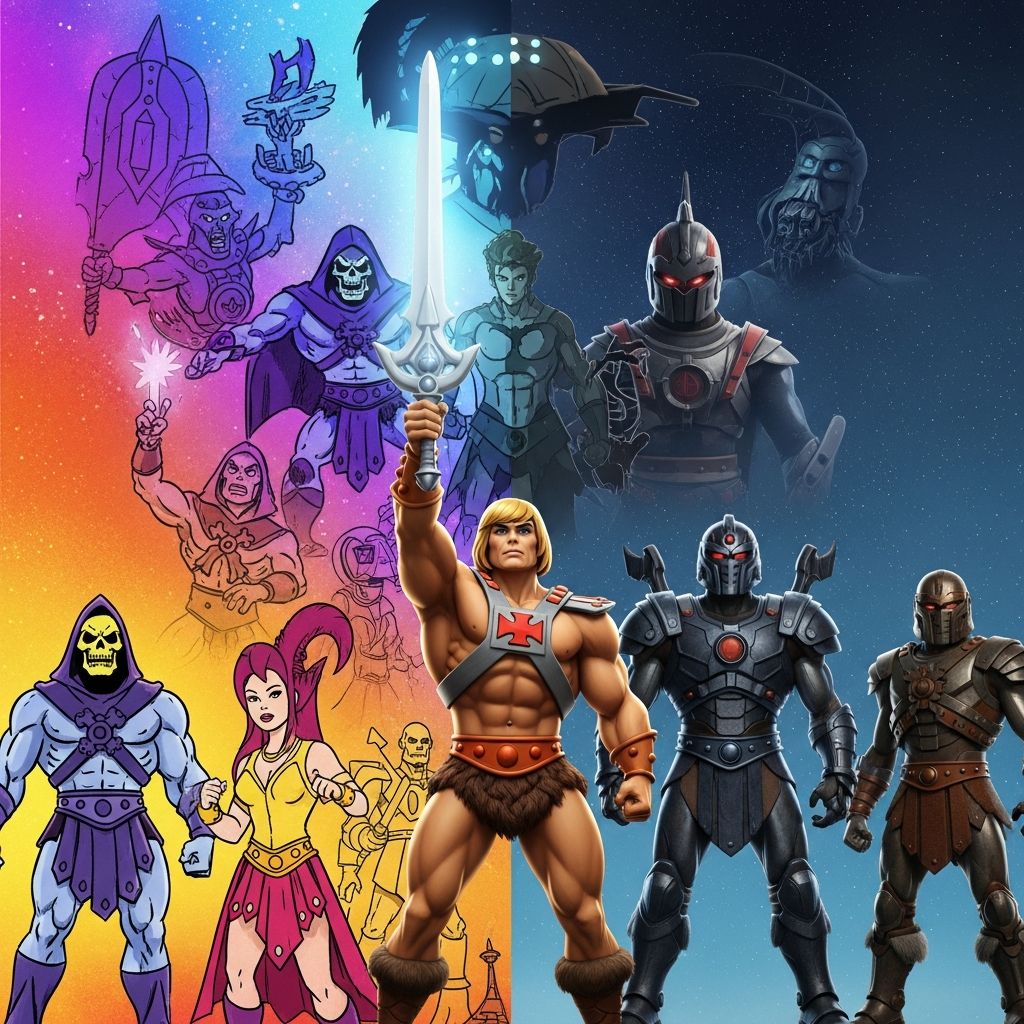
He-Man and the Masters of the Universe has been reinvented again and again for more than four decades. For parents and longtime fans, that means a big question: which He-Man show should you actually watch now, and in what order?
This guide walks through all five major He-Man TV versions—from the 1980s phenomenon to the latest Netflix revivals—and explains how they differ in story, style, and suitability for kids and nostalgic adults.
Why There Are So Many He-Man Shows
He-Man began in the early 1980s as a toy-driven fantasy series, but over time it has become a multi-platform franchise spanning animation, comics, films, and games. Mattel owns the brand and has periodically rebooted it to reach new generations of children while keeping older fans engaged.
- 1980s: Launch of the original syndicated cartoon to promote the toy line.
- Early 1990s: A sci-fi-leaning follow-up took the hero into space.
- Early 2000s: A more serialized remake attempted to modernize the lore.
- 2020s: Multiple Netflix projects aimed separately at kids and adults.
Because each era reimagines Eternia differently, it helps to know what tone and themes you’re signing up for before pressing play.
The Five Main He-Man Series at a Glance
| Series | Years | Primary Audience | Where It Fits |
|---|---|---|---|
| He-Man and the Masters of the Universe (1983) | 1983–1985 | Kids & families | The original classic |
| The New Adventures of He-Man | 1990–1991 | Kids | Loose sci-fi sequel |
| He-Man and the Masters of the Universe (2002) | 2002–2004 | Older kids & teens | Modernized remake |
| Masters of the Universe: Revelation | 2021– | Teens & adults | Nostalgic sequel for grown-ups |
| He-Man and the Masters of the Universe (Netflix CGI) | 2021–2023 | Kids & tweens | Full CGI reimagining |
1. The 1983 Original: Pure ’80s Power Fantasy
He-Man and the Masters of the Universe (1983–1985) is where everything started. Produced by Filmation, the series followed Prince Adam, who transforms into He-Man to defend Eternia from Skeletor’s schemes. The show ran in first-run syndication, a common distribution model for U.S. children’s animation in the 1980s.
What It Feels Like Today
Viewed now, the original is a charming time capsule:
- Bright, colorful animation with a limited budget but iconic designs.
- Simple, episodic plots where good always triumphs clearly over evil.
- End-of-episode moral lessons summarizing positive behaviors for kids, a common practice in 1980s children’s TV guided by concerns about advertising and educational value.
Best For
- Young kids who can handle fantasy action without much nuance.
- Parents wanting to share the exact show they watched growing up.
- Anyone interested in animation history and toy-era storytelling.
2. The New Adventures of He-Man: Spacebound and Divisive
The New Adventures of He-Man pushed the franchise into a more overt science-fiction setting. Rather than battling Skeletor primarily in Eternia’s castles and forests, He-Man now fights in sleek space environments, accompanied by a new cast and redesigned villain.
How It Differs
- Heavier sci-fi tone: Starships, advanced tech, and far-future aesthetics dominate.
- Altered character designs: Leaner He-Man and a more exaggerated Skeletor look that many older fans never embraced.
- Less fantasy magic: The original’s blend of sorcery and technology tilts strongly toward technology.
Who Might Still Enjoy It
- Kids who love space adventures and aren’t attached to classic designs.
- Completionist fans who want to trace the whole TV history.
- Viewers curious about how the franchise experimented in the 1990s.
3. The 2002 Reboot: A Sharper, More Serialized Eternia
In the early 2000s, Cartoon Network and Mattel revived the property with a new He-Man and the Masters of the Universe (2002) animated series. It leaned into more detailed world-building and character development than was typical of the 1980s original.
What Makes the 2002 Version Stand Out
- Stronger continuity: Story arcs unfold over multiple episodes, reflecting the early 2000s shift toward serialized kids’ animation.
- Richer backstories: Characters such as Skeletor, Man-At-Arms, and the royal family have more defined motivations and relationships.
- More intense action: Battles feel higher stakes and visually more dynamic, though still broadly appropriate for older children.
Why Fans Still Talk About It
Although the show was ultimately cancelled without a full conclusion, it is often cited by long-time followers as one of the most satisfying blends of nostalgia and modern storytelling. Its look and tone bridge the gap between the original and contemporary action cartoons.
Age and Audience
- Best for kids roughly 8+ who can follow longer story arcs.
- Great for parents who want something more sophisticated than the 1980s show but not as dark as modern teen-targeted animation.
4. Masters of the Universe: Revelation – A Sequel for Adults
Masters of the Universe: Revelation is a Netflix series positioned as a direct narrative continuation of the 1980s show, but with a tone aimed squarely at older fans. Developed with a high-profile voice cast and produced by Powerhouse Animation, known for Castlevania, it uses a more anime-influenced style and more complex themes.
Key Differences from Earlier Shows
- Mature storytelling: The series explores loss, faith, and identity with more emotional weight than children’s versions.
- Higher on-screen stakes: Characters face lasting consequences, and the story does not reset each episode.
- Nostalgia-driven details: Iconic transformation sequences, catchphrases, and familiar relationships are reintroduced, then subverted.
Is It Suitable for Kids?
Revelation is not explicit in the way adult-only animation can be, but it is clearly designed for viewers who grew up with He-Man and now expect more mature scripts. Families should consider the following:
- It includes intense fantasy violence and heavier emotional scenes than earlier series.
- The pacing and themes may be better appreciated by teens and adults familiar with the original context.
Many parents might choose to watch Revelation themselves first, then decide if older children are ready for it.
5. Netflix’s CGI He-Man: A Fresh Start for Today’s Kids
Netflix also launched a CGI-animated He-Man and the Masters of the Universe aimed at a new generation of children. This show is not a direct continuation of previous versions; instead, it reimagines the mythology from the ground up with a different look, character dynamics, and technology-focused world-building.
Notable Features
- Full 3D CGI animation: Stylized characters and fast-paced action sequences designed to appeal to children used to modern streaming cartoons.
- Team-based power sharing: Multiple characters access the power of Grayskull, reinforcing friendship and teamwork over a lone hero narrative.
- High-tech fantasy setting: The designs blend magic with armored suits, vehicles, and digital interfaces, aligning with contemporary kids’ media aesthetics.
Why Kids May Prefer This Version
- Short seasons with clear arcs that are easy to binge.
- Relatable character dynamics emphasizing found family and cooperation.
- Modern pacing closer to current children’s action series on streaming platforms.
Comparing Tone, Themes, and Visual Style
Each He-Man era reflects different expectations for children’s television at the time of release. Media research shows that children’s programming has gradually shifted from simple, stand-alone moral tales toward more complex narratives and character development, especially on cable and streaming services.
| Series | Story Structure | Visual Style | Theme Focus |
|---|---|---|---|
| 1983 Original | Self-contained episodes | 2D, limited animation | Clear morals, good vs. evil |
| New Adventures | Mostly episodic | 2D, sci-fi redesigns | Space adventure, technology |
| 2002 Reboot | Light serialization | Sharper 2D action style | Heroism, destiny, loyalty |
| Revelation | Heavily serialized | Anime-influenced 2D | Loss, belief, legacy |
| Netflix CGI | Season-long arcs | 3D CGI | Teamwork, identity, empowerment |
Which He-Man Should You Start With?
Your ideal starting point depends on who is watching and what you want out of the series.
For Parents Sharing Nostalgia with Young Kids
- Begin with the 1983 original for its straightforward lessons and iconic moments.
- Sprinkle in a few episodes of the 2002 reboot if your child wants more detailed stories.
For Teens and Adults Who Grew Up with He-Man
- Revisit key episodes of the 1983 series to refresh the basics.
- Then watch Masters of the Universe: Revelation as a sequel that builds on that foundation.
- Optionally sample the 2002 series for another interpretation of the same lore.
For Kids Who Have Never Heard of He-Man
- Start directly with Netflix’s CGI He-Man, which assumes no prior knowledge.
- If they become curious about the character’s history, you can introduce earlier versions as “time travel” visits to He-Man’s past media incarnations.
How He-Man Reflects Changing Ideas About Kids’ TV
Across four decades, He-Man has quietly tracked broader trends in children’s television and media:
- Content standards and safety: The 1980s series relied on clear-cut moral endings partly in response to ongoing public concern about the impact of commercial animated programs on children’s values.
- Serialized storytelling: By the 2000s, cable networks were more open to continuing storylines, leading to He-Man arcs with more persistent consequences.
- Streaming-era design: Modern Netflix iterations are built around bingeable seasons and higher-budget visuals to compete with other global franchises targeted at children and families.
For families, this means you can choose a version that matches your child’s media literacy level and attention span while still tapping into the same basic fantasy of courage, friendship, and standing up to evil.
Frequently Asked Questions (FAQs)
Q: Is there a “definitive” He-Man series I have to watch first?
A: No. Each series stands on its own. If you value nostalgia, start with the 1983 original. If you want a modern take for kids, the CGI Netflix series works perfectly well as an entry point.
Q: Which He-Man show is safest for very young children?
A: The 1983 cartoon and the CGI Netflix series are the most accessible for younger viewers. Both feature fantasy action, but with clear heroes, bright visuals, and strong emphasis on doing the right thing.
Q: Is Masters of the Universe: Revelation too intense for kids?
A: Revelation targets teens and adults, with heavier themes and stronger emotional stakes than earlier versions. Many families choose to preview it themselves before deciding whether older children are ready.
Q: Do I need to watch every show to follow the Netflix versions?
A: No. The CGI He-Man completely reimagines the story. Revelation benefits from familiarity with the 1980s series, but you can still follow the basic plot if you know the core premise of Prince Adam becoming He-Man.
Q: Are the He-Man shows educational or just entertainment?
A: The original series explicitly included moral lessons at the end of episodes, reflecting 1980s expectations that children’s programs include pro-social messages. Later versions emphasize character growth, teamwork, and consequences through the plot itself rather than on-screen lectures.
References
- Mattel, Inc. Annual Report 2021 — Mattel, Inc. 2022-03-10. https://corporate.mattel.com
- Children’s Television — Museum of Broadcast Communications. n.d. https://museums.inchicago.org/broadcast/childrens-television
- Report on Children’s Television — U.S. Federal Communications Commission. 1974-02-28. https://www.fcc.gov/general/childrens-educational-television
- The Children’s Television Act: Implementation and Impact — U.S. Federal Communications Commission. 2019-07-10. https://www.fcc.gov/consumers/guides/childrens-educational-television
- Viewing and Platform Preferences Among Children — Ofcom (UK Communications Regulator). 2023-03-30. https://www.ofcom.org.uk/research-and-data/media-literacy-research/children