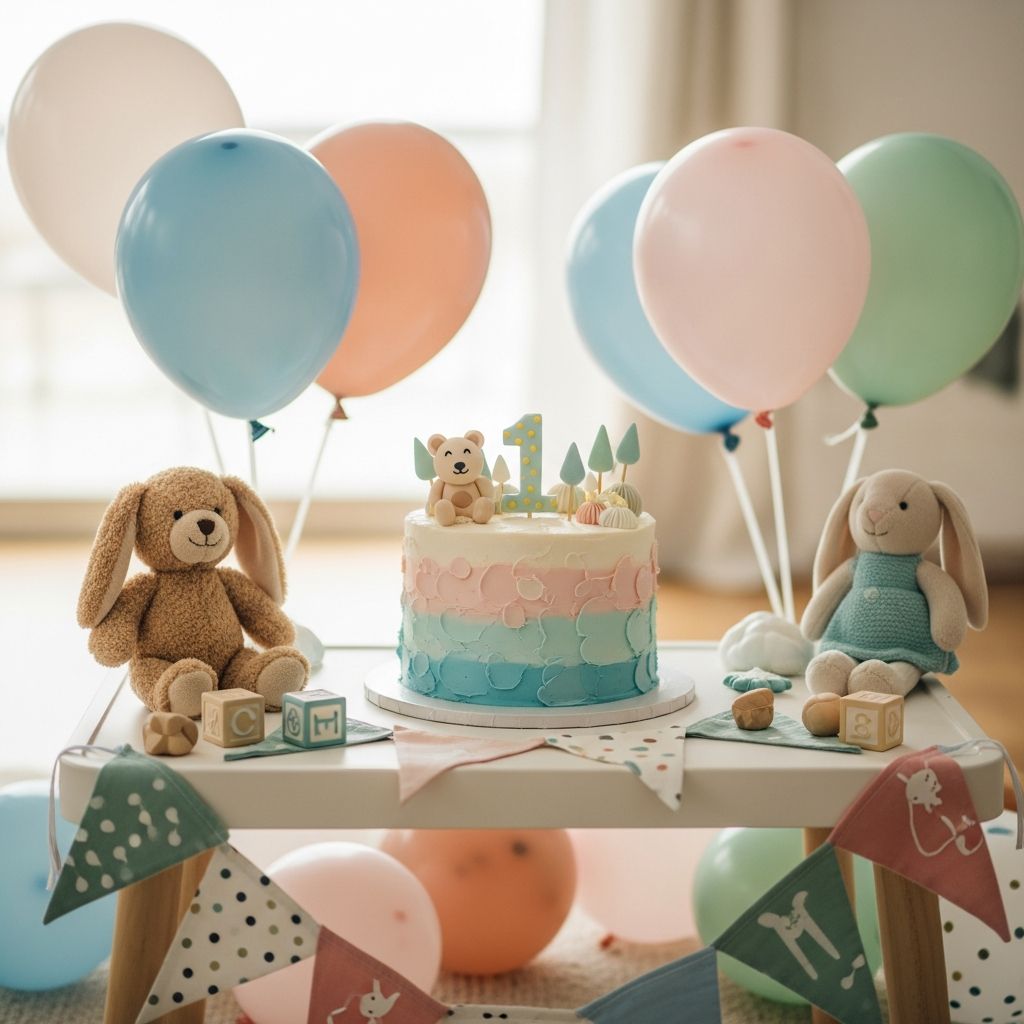
Your baby’s first birthday is a huge milestone, but it doesn’t need to be a huge production. The best celebrations keep your one-year-old’s needs at the center, while giving family and friends a warm, relaxed way to share in the joy.
Start With What Matters Most
Before choosing decorations or a cake design, take a moment to define your real goal. Is it documenting memories, bringing family together, keeping things low-key, or all of the above? Knowing your “why” helps you skip the pressure to host a picture-perfect event and focus on what will genuinely feel good for your household.
- Prioritize your baby’s comfort. A calm, rested child will enjoy a simple living-room party far more than a crowded, noisy event.
- Respect your budget. A handful of thoughtful touches almost always beats an overstuffed party that leaves you financially and emotionally drained.
- Think about your energy level. If you are juggling work, siblings, or sleep deprivation, give yourself permission to keep things easy.
Choosing the Right Time and Place
For most one-year-olds, timing matters more than theme. A well-chosen time of day and a practical location can make the difference between happy smiles and overtired tears.
Timing Around Naps
- Plan the party for a window when your baby is usually cheerful—often mid-morning or after their main nap.
- Limit the formal “party time” to 1.5–2 hours, even if close family lingers longer.
- Build in a quiet buffer before and after the party so your child can wind down.
Picking a Venue That Fits Your Life
You do not need to rent a fancy space. In fact, many parents find that the easiest first birthday venue is the one with the most familiar surroundings and least logistics.
- At home: Perfect for small guest lists, easy access to diapers, snacks, and nap spaces.
- Local park: Ideal for bigger groups and active older siblings; just watch the weather and have a backup plan.
- Community room or play space: Good if your home is small or you want built-in play equipment.
| Venue | Best For | Pros | Things to Consider |
|---|---|---|---|
| Home | Small, cozy gatherings | Low cost; familiar to baby; easy access to supplies | More cleanup; limited space for big groups |
| Park | Large guest lists; mixed ages | Open space; built-in entertainment like playgrounds | Weather dependency; permits or shelter reservations |
| Indoor play center | Cold or rainy climates | Ready-made activities; less setup at home | Higher cost; may be overstimulating for some babies |
Theme Ideas That Stay Baby-Friendly
A theme can be as simple or as elaborate as you like. At this age, high-contrast visuals, soft textures, and familiar objects are much more meaningful than complicated concepts.
Gentle, Simple Themes
- Favorite animals: Think bunnies, bears, ducks, or a single animal your baby loves on books and pajamas.
- Color-based: Choose one or two colors (like sunshine yellow and white), and echo them in balloons, plates, and a small banner.
- Storytime: Use a beloved board book as inspiration and build decor around its colors and shapes.
Personality-Inspired Themes
- Little explorer: Maps, soft globes, and toy binoculars for a baby who loves to roam and peek into everything.
- Music lover: Toy instruments, a simple playlist, and musical note decorations for a baby who loves rhythm.
- Water baby: Soft blue decor, bubble machines, and water play (if weather allows) for bath-time enthusiasts.
Decor: Cozy, Safe, and Photo-Ready
Your decorations don’t need to be elaborate. A few carefully chosen elements can create a festive atmosphere and beautiful photos, without overwhelming your baby or your budget.
Low-Stress Decoration Ideas
- Use a small cluster of balloons or paper lanterns instead of filling the whole room.
- Create a simple backdrop—a sheet, curtain, or plain wall with a garland—for photos and cake time.
- Display one-year photos by taping prints to a string or placing frames on a shelf.
Safety Considerations
- Avoid small decorations that can become choking hazards, such as loose confetti or detachable embellishments.
- Secure balloons and banners well out of reach; dispose of popped balloons quickly.
- Keep candles, hot drinks, and fragile decor on high, stable surfaces.
Guest List and Invitations
First birthdays often end up being more about the adults than the baby, and that’s okay. The key is to choose a guest list you can comfortably host, while still keeping the environment manageable for a one-year-old.
Shaping the Guest List
- Start with immediate family and caregivers who are part of daily life.
- Add close friends and any children your baby sees regularly.
- Consider your space and stress level; it’s fine to keep it very small.
Invitation Tips
- Share the time frame clearly so guests know when to arrive and when to say goodbye.
- Note any special requests, like “no wrapped gifts” or “please avoid nuts” if allergies are a concern.
- Opt for digital invitations if you want quick RSVPs and less paper clutter.
Food Ideas for Little Tummies and Big Appetites
Your menu does not need to be elaborate. In fact, simple, familiar foods often work best, especially when you have a mix of toddlers and adults.
Baby and Toddler-Friendly Snacks
- Soft fruit slices (such as ripe banana, peeled pear, or very soft berries, cut appropriately).
- Cheese cubes or thin slices, crackers, and soft bread pieces.
- Mini muffins with low sugar and simple ingredients.
Easy Options for Adults
- Sandwich platters, wraps, or a make-your-own slider bar.
- Simple salads, veggie trays, and chips with dips.
- One or two main dishes—like pasta bake or chili—served buffet-style.
Cake and “Smash” Alternatives
- Offer a small “smash” cake or cupcake just for baby, with minimal frosting and decorations.
- Serve a sheet cake, cupcakes, or a tray of brownies for guests, making portioning and cleanup easier.
- Consider a fruit “cake” made from stacked melon rounds if you prefer a lower-sugar option.
Activities That Match a One-Year-Old’s World
Most one-year-olds are happiest with simple, sensory play rather than structured games. Think open-ended activities that babies and toddlers can explore at their own pace.
Gentle Activity Stations
- Soft play corner: A mat or rug with pillows, baby-safe blocks, and a few favorite toys.
- Bubble zone: An adult with a bubble wand or a small bubble machine outside.
- Exploration baskets: Bins filled with safe objects like wooden spoons, fabric squares, silicone cups, and soft balls.
Ideas for Older Children
- Set up a coloring table with crayons, stickers, and paper.
- Offer simple outdoor games such as beanbag toss or chalk drawing if space allows.
- Keep a few quiet board games or puzzles on hand for school-age kids.
Capturing Memories Without Missing the Moment
Photos and videos are wonderful, but it is easy to spend the whole party behind a screen. A bit of light planning lets you capture the important shots and then put the camera down.
Key Moments to Photograph
- Arrival photo with your baby and the main caregivers.
- Close-ups of decorations and any keepsake items, like a special outfit or handmade banner.
- Cake moment: the candle, your baby’s reaction, and a family group shot.
Helping Guests Contribute
- Create a simple “memory note” station with cards where guests can write a wish or favorite memory.
- Encourage guests to share their best photos with you via a shared album link.
- Consider appointing one friend or relative as the unofficial photographer so you can stay present.
Planning Timeline: From Idea to Party Day
Even a small gathering benefits from a loose timeline. Spacing out tasks helps you avoid last-minute stress and enjoy the build-up to your baby’s big day.
One to Two Months Before
- Set your budget, choose your date and time, and decide on a venue.
- Pick a theme or color palette and start a simple checklist.
- Draft your guest list and create invitations.
Two to Three Weeks Before
- Confirm RSVPs and adjust your food and seating plan.
- Order or shop for decor, tableware, and non-perishable supplies.
- Plan your menu and place any bakery or catering orders.
Week of the Party
- Clean and declutter the party area, or confirm details with your chosen venue.
- Prep any make-ahead foods and assemble party favors if using them.
- Lay out a rough schedule for the party (arrival, snacks, cake, wind-down).
Day Of the Party
- Decorate the main spaces and set up activity stations first.
- Prepare or pick up food, then arrange the cake and photo area.
- Take a few early family photos while everyone is fresh, then relax and enjoy.
Budget-Smart First Birthday Tips
A meaningful first birthday does not require a big budget. A few thoughtful choices help you celebrate in style while keeping finances in check.
- Limit the number of decor pieces and reuse items you already own, like neutral tablecloths or glass jars for flowers.
- Choose one “wow” element—such as a special cake or custom banner—and keep everything else simple.
- Schedule the party between meals so you can serve snacks instead of a full spread, if necessary.
Frequently Asked Questions About First Birthdays
Do I have to throw a big party for my baby’s first birthday?
No. A “big” party is optional, not required. A small gathering—or even a celebration with just your household—can be just as meaningful, especially if that better fits your baby’s temperament and your current season of life.
How long should a first birthday party last?
For a one-year-old, 60–120 minutes of active party time is usually enough. You can always allow a bit of extra time at the start and end for close family to arrive early or stay later, but keeping the main event short helps prevent overstimulation.
Is a smash cake necessary?
Smash cakes are fun but not essential. If you prefer, you can give your baby a small cupcake, a piece of the main cake, or a fruit-based treat, or you can skip the messy cake moment entirely and focus on other special rituals.
What should my baby wear?
Choose an outfit that balances cuteness with comfort. Soft, breathable fabrics and layers work well so you can adjust for temperature, and you may want a backup outfit on hand for spills, drool, or cake-related messes.
How can I keep my baby from getting overwhelmed?
Respect your baby’s usual routines, limit noise and crowding, and create a quiet retreat space with a parent or caregiver where they can rest if needed. It also helps to keep introductions gentle and to avoid passing your baby from person to person if that tends to upset them.
A Celebration That Feels Like You
However you choose to mark this milestone—an afternoon at home with cupcakes, a picnic in the park, or a simple dinner with grandparents—the heart of a first birthday is the same: celebrating a year of growth, love, and countless small moments. When you center your plans on your baby’s comfort and your family’s real life, you create a celebration that feels joyful, manageable, and truly yours.