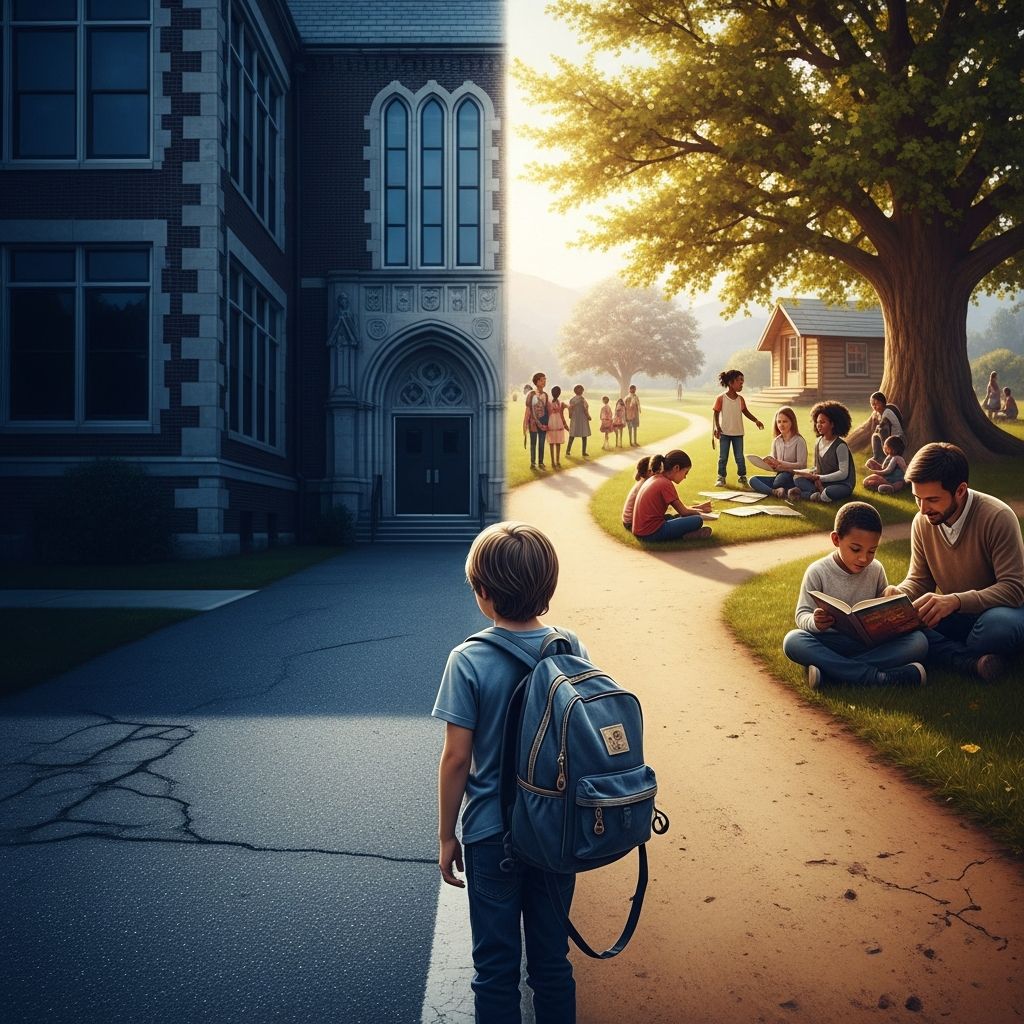
Most parents assume that sending a child to school is the safest and most responsible choice, but for some families the traditional classroom becomes a daily source of stress, fear, or conflict. When that happens, it is reasonable to pause and ask whether the current school setting truly serves the child’s best interests.
Understanding the Decision to Step Away from School
Deciding that your child should not remain in a particular school, or in traditional schooling at all, is a serious and emotional choice. It often comes after many conversations, repeated attempts to work with teachers or administrators, and a growing realization that the environment is doing more harm than good. The goal is never to avoid learning, but to protect a child’s well-being and to find a healthier way to educate them.
Parents who start questioning school usually notice patterns: constant anxiety, physical complaints tied to the school day, or worsening behavior only around school-related tasks. Those patterns can indicate that something deeper is wrong than simple reluctance or a normal dislike of homework.
1. Persistent Bullying and Social Cruelty
Bullying is often the first and most visible reason parents begin to doubt a school placement. Even with anti-bullying policies, some children endure daily harassment, social exclusion, or physical aggression that leaves them feeling unsafe and powerless.
- Bullying can be verbal, physical, relational (such as social exclusion), or digital (cyberbullying).
- Chronic bullying is strongly linked to anxiety, depression, and school refusal in children.
- Many parents find that repeated reports to the school do not result in meaningful change.
If a child dreads school because of classmates, struggles to sleep, or suddenly develops stomachaches only on school days, the social environment may be toxic. In such cases, keeping them in the same classroom or even the same institution can feel like asking them to endure ongoing harm.
2. Physical Health, Safety, and Lifestyle Concerns
Some families question traditional school because the environment clashes with their child’s physical needs or safety. Long hours of sitting, limited recess, and crowded rooms can increase stress for children who already struggle with weight, chronic illness, or sensory sensitivities.
Parents may also worry about exposure to violence, drug use near campus, or unsafe commutes. If a child’s daily reality involves threats in the neighborhood, dangerous routes to school, or repeated lockdowns, the argument that school is the safest place becomes less convincing.
Common Physical and Safety Red Flags
- Frequent unexplained injuries or complaints of rough behavior from peers.
- Excessive fatigue due to early start times and heavy homework loads.
- Chronic health issues that are not well accommodated on campus.
3. Mental Health Strain and Emotional Burnout
Growing numbers of children experience school-related anxiety, panic attacks, or depressive symptoms. For some, the combination of academic pressure, social comparison, and constant evaluation feels unbearable.
Children may begin to say they feel sick every morning, refuse to get dressed, or cling to caregivers at drop-off. While occasional resistance is common, intense, sustained distress can be a sign that school is damaging their emotional health.
Signs School Is Harming Mental Health
- Nightmares or sleep problems tied to school days.
- Sudden changes in appetite, mood, or interest in previously enjoyed activities.
- Frequent statements like “I’m stupid,” “Everyone hates me,” or “I can’t do anything right.”
4. Mismatch with Learning Style or Special Needs
Traditional classrooms are often designed around a narrow band of learning styles: sit still, listen quietly, complete written tasks on a strict schedule. Children with learning differences, attention challenges, or exceptional abilities may find that this one-size-fits-all model simply does not work for them.
When a child’s learning needs are not properly identified or accommodated, school can become a place of constant failure. Over time, that experience can crush motivation, damage self-esteem, and convince a child that they are “bad at learning,” even when the real problem is an unsuitable environment.
Typical Classroom vs. Child’s Needs
| Typical Classroom Expectation | Potential Child Need | Result When Needs Are Ignored |
|---|---|---|
| Sitting still for long periods | Movement breaks, flexible seating, hands-on tasks | Restlessness, behavior labels, repeated discipline |
| Learning primarily from lectures and worksheets | Visual, tactile, or project-based learning opportunities | Poor grades despite strong curiosity or verbal skills |
| Standard pace and uniform assignments | Individualized pacing, enrichment, or remediation | Boredom for advanced students or overwhelm for those who need more time |
5. Academic Pressure and Test-Driven Culture
In many schools, test scores and rankings drive everyday decisions. Children may be exposed to frequent standardized testing, high-stakes exams, and constant talk about grades, scores, and competition. For some students, this environment turns learning into a source of chronic stress rather than curiosity.
Parents might notice that their child focuses more on avoiding failure than on understanding ideas. Perfectionism, cheating, or extreme fear of mistakes can all arise when children feel that a single number defines their worth or future.
- Younger children may be pushed into academic work before they are developmentally ready.
- Creative subjects like art, music, and play-based exploration are often reduced to make room for test preparation.
- Students who learn at a different pace can feel constantly behind or chronically bored.
6. Erosion of Childhood: Play, Movement, and Free Time
Another reason parents balk at conventional schooling is the slow disappearance of unstructured play and outdoor time. Long school days, followed by homework and extracurriculars, can leave little room for rest, imagination, or simple family connection.
Researchers consistently link play and bodily movement to healthy brain development, emotional regulation, and social skills. When a child spends most waking hours indoors, in chairs, following adult-directed tasks, the cost can be a loss of joy and spontaneity in childhood.
Questions Parents Often Ask Themselves
- Does my child have enough time every day to play freely without adult direction?
- Is physical movement treated as a core need or as a privilege to be earned?
- Has school turned our evenings into a battle over assignments instead of a chance to connect?
7. Exposure to Substances and Risky Behavior
As children move into later elementary, middle, and high school, some parents grow concerned about exposure to substances like alcohol, vaping products, or illegal drugs. While no environment is completely risk-free, certain school cultures normalize or trivialize risky behavior in ways that alarm caregivers.
Peer pressure, unsupervised areas on or near campus, and access to older students can all increase a child’s vulnerability. When schools struggle to address these issues transparently, families may feel that removing their child from that environment is the only way to keep them safe.
- Warning signs can include sudden changes in friends, secrecy about activities, or unexplained items or smells in belongings.
- Some students turn to substances as a way to cope with other school-based stressors like academic pressure or bullying.
8. Misalignment with Family Values or Culture
For some families, the core problem is not bullying or academics, but a deeper misalignment between the school’s culture and their own values. This might involve views on competition, discipline, technology, sexuality, religion, or civic issues.
When children receive strong, repeated messages at school that clash with what they hear at home, confusion and conflict can follow. Parents may feel that they spend every evening “deprogramming” ideas that feel hostile to their beliefs or identity.
Examples of Value Conflicts
- Emphasis on constant competition rather than cooperation and community.
- Disciplinary approaches that the family views as shaming or overly punitive.
- Lack of representation or understanding of the child’s cultural background.
9. Family Circumstances and Practical Realities
Sometimes the reason a child does not attend traditional school is practical rather than philosophical. Frequent moves, health crises, caregiving duties for relatives, or parents’ nontraditional work schedules can make standard school hours and attendance rules very difficult to meet.
In these situations, alternative forms of education can provide needed flexibility. Rather than seeing the family as noncompliant, it can be more helpful to see them as trying to reconcile learning with survival, employment, or caregiving demands.
- Children who travel often with their families may benefit from portable, home-based learning.
- Young carers who help support siblings or elders may need adjusted workloads and timing.
- Online or hybrid programs can sometimes bridge the gap between formal schooling and complex family realities.
Considering Alternatives to Traditional School
Recognizing that a particular school is not working is only the first step. Parents then face the question of what comes next. Fortunately, many educational paths exist beyond the standard classroom, and the goal is to match the option to the child’s needs and the family’s capacity.
Common Alternatives
- Homeschooling: Parents take primary responsibility for instruction, choosing curricula and schedules tailored to the child.
- Online or virtual schools: Structured programs delivered remotely, often with certified teachers and set syllabi.
- Microschools and learning pods: Small, community-based groups with more flexibility and personal attention.
- Alternative or specialty schools: Institutions designed around particular philosophies, interests, or learner profiles.
Action Steps for Concerned Parents
If you suspect that traditional school is harming your child, it helps to move step by step rather than making decisions in isolation or in a moment of crisis. Careful documentation and open communication can clarify what is really happening and what support is possible.
- Observe and document: Keep notes about your child’s mood, sleep, physical complaints, and specific incidents at school.
- Talk with your child: Create calm, nonjudgmental spaces for them to share their experiences in their own words.
- Meet with school staff: Share concerns, ask about support options, and request evaluations if learning differences are suspected.
- Consult professionals: Consider input from pediatricians, counselors, or educational psychologists.
- Research legal requirements: Learn about local laws governing homeschooling, transfers, or alternative programs.
Frequently Asked Questions (FAQs)
Is it legal to withdraw my child from traditional school?
In most regions, parents are permitted to choose alternatives such as homeschooling or private programs, provided they follow local education laws. Requirements can include registration, periodic assessments, or specific curriculum standards, so it is essential to check the regulations where you live.
How do I know if my child’s complaints are serious or just normal dislike of school?
Many children occasionally say they do not want to go to school, especially on busy or stressful days. Red flags include intense daily resistance, physical symptoms tied only to school days, sudden academic decline, or clear signs of bullying, anxiety, or depression.
Won’t leaving school harm my child’s social skills?
Social development does not depend solely on traditional classrooms. Children can build strong social skills through clubs, sports, community groups, online classes, and neighborhood friendships. The key is to provide consistent opportunities for safe, varied interaction with peers and caring adults.
What if I cannot afford private schools or extra programs?
Many families use low-cost or free resources, such as public libraries, online materials, community centers, and local co-ops. Some public systems also offer alternative or virtual programs at no additional tuition cost, which can provide flexibility without major financial strain.
How can I be sure my child still receives a good education outside traditional school?
Quality education is about consistent progress, curiosity, and mastery of core skills, not only about a specific building. Families can track learning through portfolios, standardized tests (when desired), project work, and regular reflection, while tailoring subjects and pacing to fit the child’s abilities and interests.
Final Thoughts
Choosing to question or leave traditional school is not an act of neglect; it can be a profound expression of care. When a child is unsafe, unseen, or chronically unhappy in the classroom, staying the course simply because it is familiar may do more harm than good.
Every family’s situation is different, but each child deserves an education that nurtures both learning and well-being. Exploring alternatives, advocating for better support, or even changing schools can be powerful ways to protect that right.