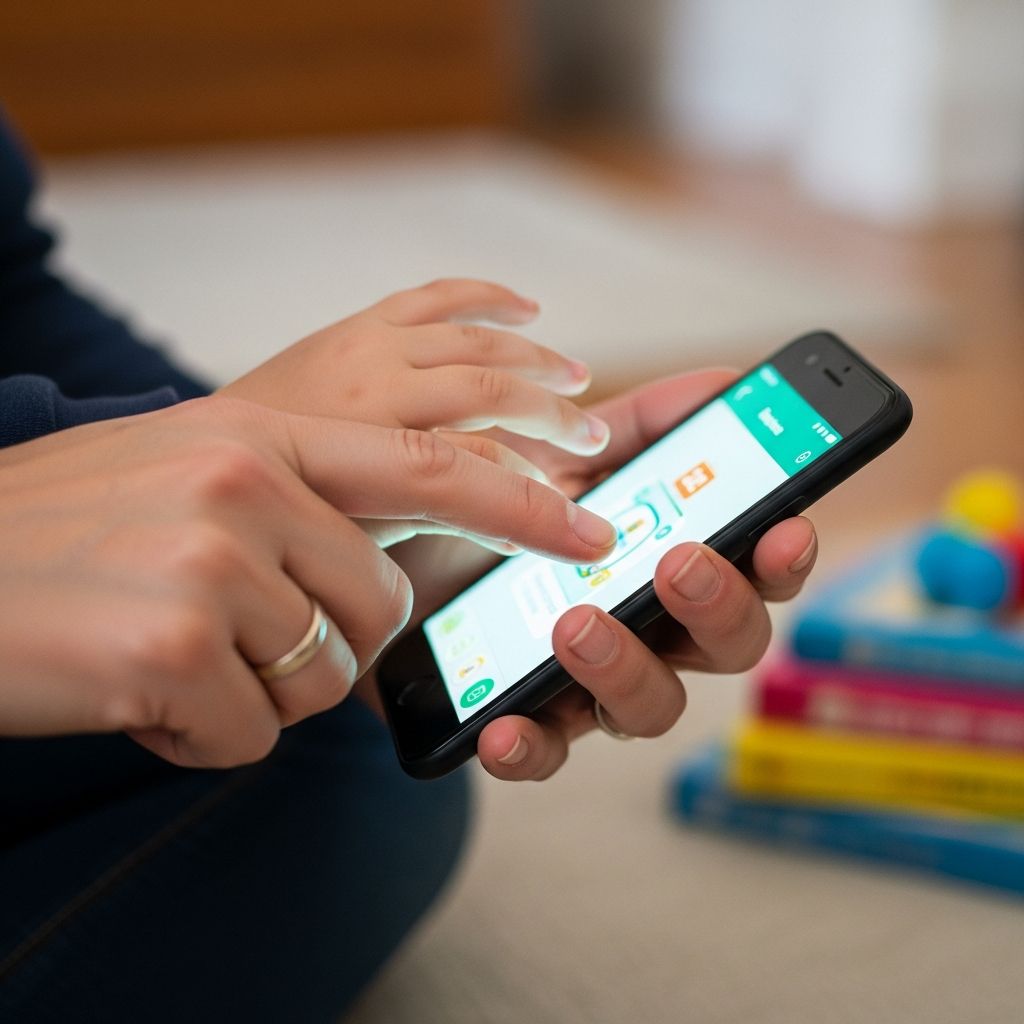
Handing your child their first cell phone can feel exciting and terrifying at the same time. A phone connects your child to you and the world, but it also opens the door to distractions, unsafe content, and social pressures. This guide helps you decide when your child is ready and how to set up rules that build responsibility instead of conflict.
Why a First Phone Is a Big Milestone
Phones today are not just for calling. They are hand-held computers that bring your child into contact with friends, strangers, and a constant stream of information. Research shows that brain areas involved in planning and impulse control, especially the prefrontal cortex, keep developing through adolescence and into the mid-20s. That means children often need strong guidance to manage time online, handle peer pressure, and make safe choices.
Viewed positively, a first phone can become:
- A safety tool for staying in contact when your child is away from trusted adults.
- A training ground for financial responsibility (data, apps, in-app purchases).
- A chance to learn digital citizenship, privacy, and kindness online.
But without limits, it can also contribute to sleep loss, distraction from schoolwork, and exposure to cyberbullying or inappropriate content.
Is Your Child Ready? Key Signs to Look For
There is no single “right age” for a first phone. Professional groups like the American Academy of Pediatrics emphasize matching digital privileges to a child’s maturity, your family values, and your child’s schedule. Instead of focusing only on age, consider the behaviors you see.
| Readiness Area | Questions to Ask Yourself | What You’re Looking For |
|---|---|---|
| Responsibility with belongings | Does your child frequently lose or break items like jackets, glasses, or school supplies? | Track record of caring for important items and accepting consequences if something is lost. |
| Rule-following | Does your child usually respect screen-time limits and household rules without constant arguments? | Ability to follow rules even when no adult is watching. |
| Emotional maturity | How do they handle teasing, disappointment, or being left out? | Can recover from conflict, ask for help, and talk about feelings rather than lashing out online. |
| Independence needs | Are they walking to school, activities, or friends’ houses without an adult? | Genuine safety need for a communication tool when away from supervision. |
| Tech habits today | How do they use shared devices now (tablets, family computer)? | Evidence they can log off, avoid off-limits sites, and respect others online. |
If many of these answers raise concerns, you might delay a full-featured smartphone and start with something more limited, such as a basic phone with call and text only, or a device restricted to approved contacts.
Clarifying the Purpose of the Phone
Before you buy anything, decide what the phone is for in your family. A clear purpose shapes the rules and type of device you choose.
- Safety and logistics: staying in touch when your child is out, coordinating rides, or handling emergencies.
- Social connection: group chats, friendships, photos, and shared interests.
- School and learning: calendar, homework apps, educational tools (if allowed by the school).
Once you name the main purpose, it becomes easier to say “yes” or “no” to specific apps, data plans, and activities.
Designing a Family Phone Agreement
Many experts recommend setting clear expectations before the phone is turned on. Putting rules in writing transforms them from last-minute lectures into a shared plan. You can call it a “phone agreement,” “family tech plan,” or simply “house rules.” The name matters less than the conversation around it.
Core Topics to Include
- Ownership: Clarify that the phone and service are provided by you and can be checked or removed if misused.
- Usage times: When the phone is allowed and when it must be silent, off, or stored elsewhere.
- Apps and downloads: Who decides what is installed, and how new apps are approved.
- Privacy and sharing: What personal information must stay offline, including full name, address, school, and location.
- Respectful communication: Rules against bullying, spreading rumors, or sharing embarrassing images of others.
- Consequences: What happens if rules are broken—ideally specific, proportional, and known in advance.
To encourage buy-in, invite your child to suggest rules first. Then adjust them to match your standards. When children help build the agreement, they are more likely to feel responsible for keeping it.
Sample Areas for Specific Rules
You can adapt language to fit your child’s age and your values, but consider clear boundaries in these areas:
- School: Many schools require phones to be off and in lockers or bags; your family rules should support school policies.
- Family time: For example, no phones at dinner, during family games, or during important talks.
- Bedtime: Phones are turned off and charged overnight in a common area, not in bedrooms, to protect sleep and limit late-night messaging.
- Driving (for older teens): No phone use while driving, including texts and social media; this aligns with safety campaigns and many state laws.
Using Parental Controls and Safety Features Wisely
Parental control tools are not a substitute for guidance, but they are a useful safety net while your child is learning. Official consumer and child-health resources encourage combining technical tools with ongoing conversations.
Common Tools to Consider
- Content filters that block or limit access to adult content or specific categories of websites and apps.
- Time limits that control how long devices or individual apps can be used each day.
- App approval settings that require a parent password or permission before installing new software.
- Location settings that let you find the device in emergencies, while turning off unnecessary location sharing to apps to protect privacy.
As your child demonstrates consistent responsibility, you can gradually relax some controls. Let them know that these tools are training wheels, not permanent surveillance.
Coaching, Not Just Policing: Day-to-Day Supervision
Simply handing over a phone and checking the bill once a month leaves your child on their own to figure out complex social and ethical situations. Instead, treat the first year as a coaching period.
Everyday Habits That Build Responsibility
- Regular check-ins: Ask what they are doing on their phone and how it makes them feel. Encourage openness rather than fear of punishment.
- Spot checks: Let your child know that you reserve the right to review call logs, messages, or apps occasionally, especially early on. This encourages them to think before they post or send.
- Discuss online events: Use news stories or school incidents about texting, cyberbullying, or privacy problems to spark conversations about values and safety.
- Monitor costs: Review usage together, especially data and in-app purchases, so your child connects their behavior to real-world cost.
The aim is to help your child practice self-control and judgment while you are still close enough to guide and support them.
Teaching Safety, Privacy, and Digital Manners
Responsible phone use is about more than screen time. It also includes treating others with respect, guarding personal information, and recognizing risky situations.
Online Safety Basics to Cover
- Personal information: Never post or send full name with address, school, daily schedule, or other identifying details without a parent’s approval.
- Strangers and scams: Ignore or block unknown callers and messages, especially ones asking for money, passwords, or codes; government and banking agencies do not ask for this by text.
- Location sharing: Turn off automatic location tags except for a small set of trusted apps agreed to with you.
- Photos and videos: Once something is shared, it can be copied, saved, or forwarded. Teach your child never to take or send sexual or degrading images—this can also have legal consequences when minors are involved.
Respectful Communication
Phones can make unkind behavior feel easier because the other person is not in the room. Clarify your expectations for how your child treats others, online and offline.
- No insults, threats, or repeated unwanted messages.
- No sharing screenshots, private texts, or embarrassing photos without permission.
- Step away from the phone when angry; cool down before responding.
- Tell an adult immediately if they receive bullying messages or see someone else being targeted.
Balancing Screen Time with Real-Life Activities
Health organizations caution that heavy screen use can crowd out sleep, physical activity, and face-to-face time, especially for children and teens. A first phone should fit into a balanced life, not replace other important experiences.
- Protect sleep by setting a cutoff time and charging phones outside the bedroom.
- Support focus by requiring phones to be put away during homework, except when needed for school tasks.
- Preserve offline fun by planning regular phone-free activities—outdoor play, board games, crafts, or reading.
- Encourage movement with sports, biking, or walking that do not revolve around screens.
When you model these same habits—such as not checking your phone during meals—children learn that people come before devices.
When Problems Happen: Responding Calmly and Constructively
Even the most careful families will run into bumps: a late-night text, an argument in a group chat, a scary message from a stranger. Treat these as teachable moments.
- Stay calm first. If your child fears an extreme reaction, they may hide problems instead of asking for help.
- Gather facts. Ask what happened, who was involved, and how your child felt.
- Review the agreement. If a rule was broken, follow through on the agreed consequence, such as a temporary reduction in privileges.
- Re-teach skills. Talk through what your child could do differently next time—block, report, log off, or come to you sooner.
- Seek outside help if there is serious bullying, threats, or illegal activity. This may include the school, your phone provider, or law enforcement, depending on the situation.
Frequently Asked Questions (FAQs)
Q: What age is appropriate for a first phone?
A: There is no universal age. Many families wait until late elementary or middle school, when children start traveling or spending time away from adults. Focus on maturity, need, and current behavior with screens rather than age alone.
Q: Should my child be allowed to take a phone to school?
A: Check your school’s policy first; many require phones to be off and stored during the day. If allowed, you can limit use to before and after school for safety and transportation, not during class or social time.
Q: How much should I monitor my child’s messages?
A: For younger or new phone users, occasional checks—with your child’s knowledge—can help ensure safety and reinforce expectations. As your child grows and earns trust, you can gradually give them more privacy while encouraging them to come to you with problems.
Q: Are parental control apps really necessary?
A: Controls are helpful training tools, especially for blocking adult content, limiting time, or requiring approval for purchases and downloads. However, they work best alongside ongoing conversation and education, not as the only strategy.
Q: What if my child says they are the “only one” without a phone?
A: Acknowledge their feelings and explain how your decisions are based on their safety, health, and readiness. You might offer stepped privileges—like limited use on a shared device—while they demonstrate the responsibility needed for their own phone.
References
- A Child’s First Cell Phone: A Guide for Parents — Lifespan/Brown University Health System. 2022-06-15. https://www.brownhealth.org/be-well/childs-first-cell-phone-guide-parents
- Kids and Cell Phones — Federal Trade Commission, Consumer Advice. 2023-05-01. https://consumer.ftc.gov/articles/kids-cell-phones
- Responsible Mobile Phone Use: Pre-teens and Teenagers — Raising Children Network (Australian Government–funded). 2023-03-10. https://raisingchildren.net.au/pre-teens/entertainment-technology/digital-life/responsible-phone-use
- A Parent’s Guide to Safe and Responsible Kids’ Cell Phone Use — Little Otter Health. 2022-09-20. https://www.littleotterhealth.com/blog/a-parents-guide-to-safe-and-responsible-kids-cell-phone-use
- Media and Young Minds — American Academy of Pediatrics, Policy Statement. 2016-11-01. https://doi.org/10.1542/peds.2016-2591