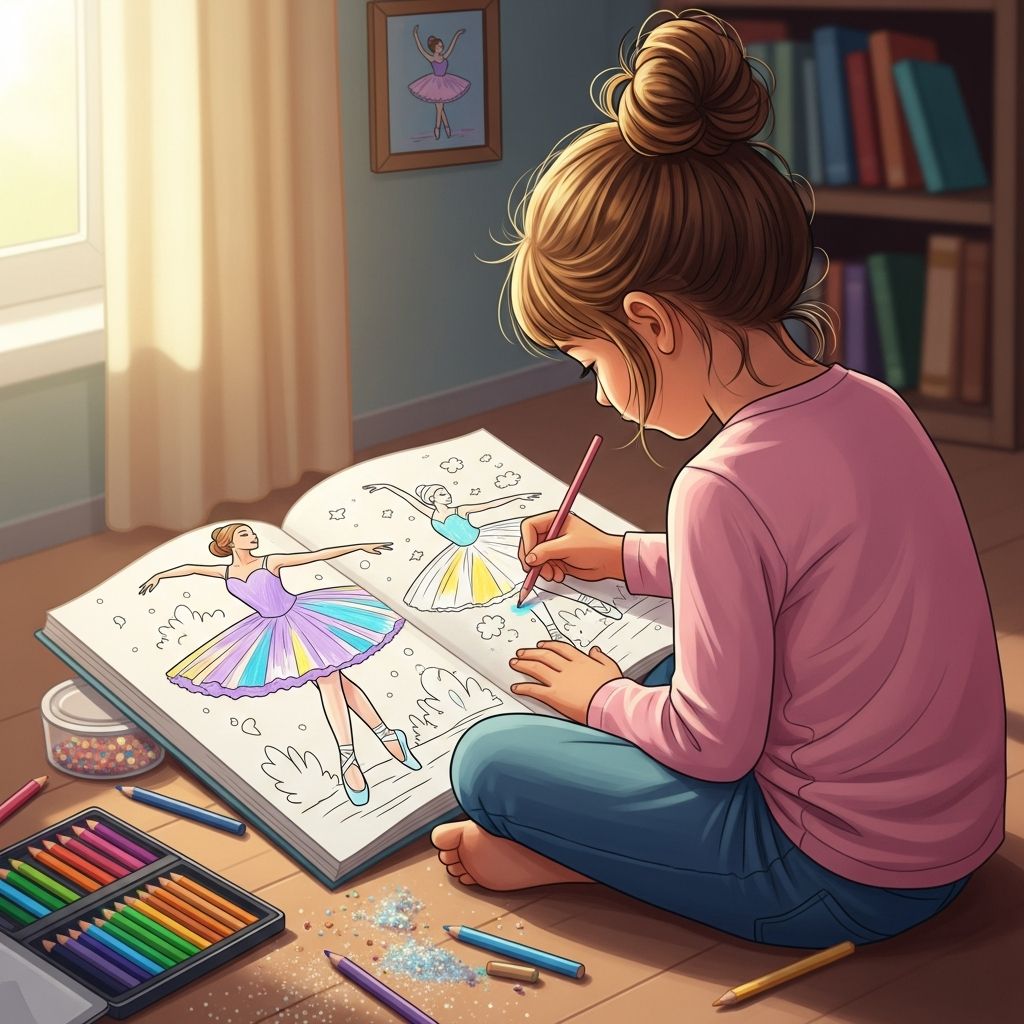
Ballerina coloring pages combine the magic of dance with the calm joy of art, giving children a beautiful way to relax, imagine, and create. Whether a child already loves ballet or is just drawn to the sparkle of tutus, these themed pages can turn a simple coloring session into a graceful creative adventure.
This guide explores how ballerina coloring activities support learning and emotional development, offers practical ideas for parents and teachers, and shares inspiring ways to extend coloring into crafts, storytelling, and themed play.
Why Ballerina Coloring Pages Captivate Kids
Ballet has a sense of elegance and magic that appeals to many children. When combined with coloring, it becomes a low-pressure, screen-free way to explore movement, costumes, and storytelling.
- Beautiful poses and costumes inspire children to imagine themselves on stage.
- Soft tutus, graceful lines, and flowing hair offer many small details to color, which keeps kids engaged.
- Children who already take dance classes feel proud seeing their interests reflected in art.
Developmental Benefits of Coloring Ballerinas
Coloring is more than just filling in shapes; it supports crucial developmental skills. Ballerina-themed pages add a layer of motivation, especially for kids who enjoy performing arts.
- Fine motor control: Staying inside the lines and adding tiny details strengthens finger muscles and pencil grip.
- Hand–eye coordination: Children learn to guide their hands based on what they see, an important foundation for writing and drawing.
- Attention and patience: Completing a detailed tutu or stage background encourages focus and perseverance.
- Emotional expression: Kids can express moods through color, like bright, happy costumes or soft, dreamy shades.
Choosing the Right Ballerina Pages by Age
Selecting appropriate designs for a child’s age and skill level keeps the activity fun instead of frustrating. Consider the level of detail, pose complexity, and background elements.
| Age Range | Design Features | Recommended Details |
|---|---|---|
| 2–4 years | Large, simple ballerina shapes with thick outlines | Minimal background, big tutu sections, simple shoes |
| 5–7 years | Clear poses, more clothing details, simple props | Flowers, stars, stage curtains, basic patterns on skirts |
| 8–10 years | More realistic anatomy and varied poses | Lace, layered tutus, stage lights, audience silhouettes |
| 11+ years | Intricate line art and dynamic dance positions | Shading areas, complex backgrounds, ornate costumes |
Creative Themes for Ballerina Coloring
To keep coloring sessions exciting, rotate through different themes. Each theme can become a mini-lesson in storytelling, costume design, or emotion.
- Classroom rehearsal: Ballerinas at the barre, stretching, or practicing basic steps.
- On stage: Dancers under bright lights, with curtains, props, and audiences.
- Fairy-tale ballet: Princess ballerinas, enchanted forests, magical castles, and sparkling wands.
- Seasonal scenes: Winter snowflake ballerinas, spring flower dances, or summer garden performances.
- Animal ballerinas: Cats, bunnies, or bears in tutus add humor and charm for younger children.
Coloring Tools That Enhance the Experience
The right materials can transform simple pages into treasured artworks. Offer a mix of tools so kids can try new techniques and discover what they enjoy most.
- Crayons: Ideal for young children because they are sturdy, easy to grip, and forgiving of mistakes.
- Colored pencils: Perfect for older children who want sharper details like lace, hair strands, and shadows.
- Washable markers: Provide bold, vibrant colors that look striking on stage lights and costumes.
- Metallic and glitter pens: Add sparkle to tiaras, jewelry, and special performance costumes.
- Pastels or chalk: Great for creating soft backgrounds such as misty stages or evening skies.
Tips for Parents to Encourage Creativity
Children benefit when adults support creativity without taking over the project. Simple strategies can turn coloring time into a warm and encouraging routine.
- Ask open-ended questions like “What kind of music is she dancing to?” or “Why did you choose these colors?”
- Focus more on effort and imagination than staying inside the lines.
- Display finished pages on the fridge, in frames, or in a “ballet gallery” wall to show pride and appreciation.
- Keep a special folder or binder as the child’s “ballet portfolio” to track progress over time.
Ideas for Teachers and Group Leaders
Ballerina coloring pages are a flexible resource for classrooms, dance studios, and clubs. They can be used in art centers, as calm-down activities, or as part of thematic units on music and movement.
- Create a ballet-themed art station with coloring pages, music, and simple props like ribbons.
- Pair coloring with a brief introduction to famous ballets or composers, adapted to the children’s age.
- Use completed pages to decorate bulletin boards, recital programs, or classroom doors.
- Encourage children to share short stories about their ballerina characters during circle time.
Turning Coloring Pages Into Keepsake Crafts
Instead of leaving finished pages in a stack, turn them into crafts that children can use, display, or gift. This shows that their artwork has value, boosting confidence.
- Mini posters: Mount colored ballerinas on colored cardstock and add borders, stickers, or hand-lettered names.
- Bookmarks: Cut narrow strips from decorated areas, laminate (or cover with tape), and punch a hole for ribbon.
- Room decor: String several ballerinas on yarn or ribbon to create a garland for bedrooms or playrooms.
- Gift tags: Cut out small ballerina figures and glue them to folded cardstock for unique tags or cards.
Storytelling With Ballet Characters
Every ballerina on the page can become a character in a child’s story. Combining art and narrative builds language skills and encourages deeper engagement.
- Invite kids to name their ballerina and describe her favorite dance or music.
- Ask them to imagine where she is performing: a big city theater, a forest, or a magical kingdom.
- Encourage older children to write short stories or comics featuring their colored characters.
- Have a “show and tell” session where each child shares the story behind a completed picture.
Connecting Coloring With Real Ballet
Coloring can be a doorway into learning more about the real world of ballet. Use the interest sparked by ballerina pages to introduce simple concepts about dance, music, and performance.
- Talk about basic ballet positions and steps, showing simple, safe movements kids can try.
- Listen to short pieces of classical music and ask children which colors or motions the music makes them think of.
- Watch short, age-appropriate ballet clips and compare costumes or poses to their coloring pages.
Inclusive and Diverse Ballerina Designs
Ballet belongs to everyone, and coloring pages can reflect that. Offering diverse characters helps every child feel included and represented.
- Look for or create ballerinas with different skin tones, hair types, and body shapes.
- Include dancers wearing glasses, braces, or adaptive equipment to normalize differences.
- Encourage children to color ballerinas however they like, free from narrow stereotypes.
Setting Up a Ballerina Coloring Corner
A dedicated space makes it easy for kids to start creating whenever inspiration strikes. It doesn’t have to be large or elaborate.
- Use a small table or a cleared section of a larger desk with good lighting.
- Store coloring tools in labeled containers or caddies so children can find and put away materials independently.
- Keep a folder of ballerina pages sorted loosely by difficulty or theme.
- Add a small speaker to play soft instrumental music during coloring sessions.
Encouraging Mindfulness Through Coloring
Coloring ballerinas can be calming for both kids and adults. The repetitive motion and gentle focus can ease stress and encourage mindfulness.
- Invite children to notice how they feel before and after they color.
- Suggest focusing on one part of the picture at a time, such as the skirt or shoes, without hurrying.
- Encourage deep, slow breathing while they work, linking art to relaxation.
Safety and Practical Considerations
A few simple guidelines keep ballerina coloring sessions safe and comfortable for children of all ages. Paying attention to posture and materials reduces frustration and discomfort.
- Use non-toxic, child-safe art supplies, especially for toddlers who may put tools in their mouths.
- Ensure children are seated at a height-appropriate table to reduce strain on backs and shoulders.
- Offer short breaks if coloring sessions are long, particularly for younger kids.
Frequently Asked Questions
Are ballerina coloring pages only for kids who take dance classes?
No. Any child who enjoys imaginative play, costumes, or movement can enjoy ballerina coloring pages. Dance classes can deepen interest, but they are not a requirement for appreciating ballet-themed art.
How can I keep older children interested in ballerina coloring?
Offer more detailed, realistic designs and encourage advanced techniques like shading, color blending, and creating backgrounds. Pair coloring with storytelling, research about famous dancers, or designing entirely new costume styles.
What if my child doesn’t like traditional pink tutus?
Invite them to design costumes in any color palette they choose. Ballerinas can wear bold blues, deep greens, or even patterns like stripes and polka dots; the goal is creative freedom, not following a specific expectation.
Can ballerina coloring help with school skills?
Yes. Coloring supports fine motor skills used in handwriting, encourages focus and task completion, and can be combined with reading and writing when children create stories or labels for their artwork.
How often should children color to see benefits?
There is no strict rule, but regular short sessions—several times a week—can help maintain and gradually improve skills. The key is keeping the activity enjoyable rather than turning it into an obligation.
Inspiring Lifelong Creativity Through Ballet and Art
Ballerina coloring pages offer a gentle blend of movement, music, and visual art. With thoughtful guidance, they can help children develop fine motor skills, imagination, and self-confidence, all while enjoying the graceful world of ballet in their own unique way.