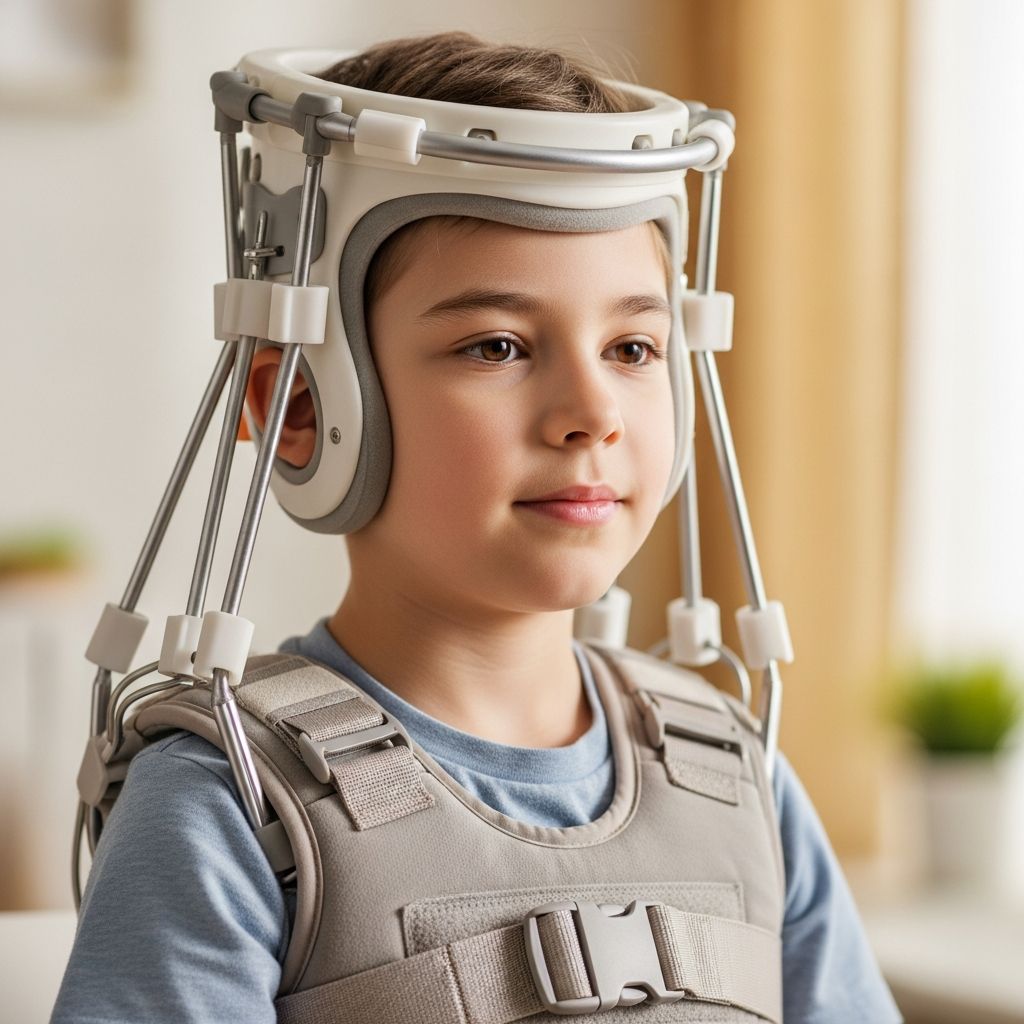
When a child needs a halo brace, it can feel overwhelming and scary for the whole family. This guide explains, in simple and reassuring language, what a halo brace is, why it is used, and how parents can support their child through treatment.
What Is a Halo Brace?
A halo brace is a medical device designed to keep a child’s head and neck very still so that the bones, joints, and ligaments in the upper spine can heal safely. It connects the head to the upper body so that when the child moves, the head, neck, and torso move together as one unit.
By tightly controlling movement, the halo brace protects delicate structures in the neck after an injury, surgery, or in preparation for a future operation. It is usually worn continuously for several weeks or months, including during sleep and everyday activities.
Why a Child Might Need a Halo Brace
Doctors recommend a halo brace when the neck needs strong external support that softer collars or regular braces cannot provide. The goal is to protect the spinal cord and allow the bone and ligaments to heal in the correct position.
A child may be fitted with a halo brace for several reasons, including:
- Healing from a fracture in the bones of the upper neck or the base of the skull.
- Stabilizing the neck after surgery on the cervical spine.
- Supporting the spine while correcting certain deformities or abnormal curvatures.
- Protecting the neck after a serious accident or traumatic injury.
Main Parts of a Halo Brace
Although the device may look intimidating, a halo brace is made of a few basic parts that work together to hold the spine in a stable position.
- Halo ring: A circular metal ring that surrounds the head like a crown.
- Pins or screws: Small metal fasteners that connect the ring to the skull bone. These are placed by a trained medical team.
- Vest: A rigid shell (usually plastic or fiberglass) that fits around the upper body, similar to a cast.
- Liner: A soft layer inside the vest to cushion the skin and absorb sweat.
- Rods or bars: Metal supports that connect the halo ring to the vest, turning the head, neck, and torso into a single unit.
How a Halo Brace Is Fitted
The fitting process takes place in a hospital or surgical center so that the team can keep the child comfortable and make sure the neck is aligned correctly. Pain control and calming medicines are usually given so the child is as relaxed and still as possible.
In general, the steps include:
- The child is positioned so the neck is in the safest, most stable alignment.
- The skin where the pins will be placed is cleaned and numbed.
- The halo ring is gently placed around the head and secured with several pins.
- The vest is fitted around the torso, and the connecting rods are attached.
- Imaging tests, such as X-rays, are used to check that the spine is properly supported.
How Long a Child Wears a Halo Brace
The length of time a child needs to wear a halo brace varies and is decided by the medical team. It depends on the type of injury or surgery, how well the bones are healing, and how stable the spine appears on follow-up images.
Many children wear the brace for several weeks to a few months. During this period, the device remains in place day and night and is only removed by a healthcare professional when it is safe to do so.
Daily Life With a Halo Brace
While the brace limits certain movements and activities, most children can return to many pieces of their usual routine with some adjustments. Routine and familiarity help the child feel more in control and less anxious.
Activities and School
A halo brace does not mean a child must stay in bed all day. In fact, gentle activity and social contact are often encouraged.
- Many children can attend school, complete homework, and join quiet classroom activities.
- Walking, reading, board games, and crafts are usually allowed if the child feels steady.
- Running, contact sports, climbing, biking, and any activity that risks falling are typically restricted.
Before returning to school or daycare, parents can speak with teachers and staff so they understand the brace, know how to help, and can create a safe, respectful environment.
Sleeping and Resting
Finding a comfortable sleeping position takes some trial and error. Because the brace stays on at all times, children may need new pillow arrangements.
- Extra pillows or rolled towels can support the neck, shoulders, and halo ring.
- Children may sleep on their back, side, or, in some cases, their stomach, depending on what the doctor allows.
- Keeping the bed area free from clutter lowers the risk of getting tangled or bumped.
Safe Movement and Fall Prevention
Because the child cannot turn or tilt the head normally, balance and depth perception can feel different. This makes fall prevention especially important.
- Keep floors free of toys, cords, and loose rugs that could cause tripping.
- Use handrails on stairs and consider a cane or walker if recommended by the care team.
- Encourage the child to move slowly, especially when changing positions or walking in crowded spaces.
Skin, Pin Site, and Vest Care
Good skin and pin care helps prevent infections and keeps the child more comfortable. The medical team will give detailed instructions specific to the family’s situation.
Pin Site Care
The pin sites where the halo attaches to the skull must be kept clean and monitored regularly. Parents usually learn a step-by-step routine before going home.
- Clean the pin areas gently as instructed, often once or twice a day.
- Look for any redness, warmth, swelling, drainage, or increased pain.
- Apply any recommended ointment or dressing using clean hands and supplies.
Skin Care Under the Vest
The vest can trap heat and sweat, so careful attention to the skin underneath is important. The goal is to keep the skin dry, cushioned, and free from pressure sores.
- Follow the healthcare team’s directions on how and when to change the liner.
- Check for redness, rashes, or sore spots around the edges of the vest.
- Use soft, breathable clothing that fits smoothly under the brace without thick seams.
Personal Care: Bathing, Dressing, and Eating
Everyday care takes a little creativity when a child is wearing a halo brace. With practice, families often develop new routines that work well.
Bathing and Hair Care
Most halo vests cannot be fully removed at home, so regular showers or baths may not be possible. Instead, parents can use alternative methods to keep the child clean.
- Use a damp washcloth or sponge baths to clean the skin around the vest and exposed areas.
- Dry the skin thoroughly to avoid dampness around the liner and pins.
- Wash hair carefully, often with the child lying back over a sink or using a no-rinse shampoo if approved.
Dressing and Clothing Tips
Clothing choices can help the child feel more comfortable and confident while wearing the brace.
- Choose loose, soft tops that open in the front, such as button-down or zip-up shirts.
- Avoid tight necklines or heavy fabrics that can bunch up under the vest.
- Consider larger sizes to fit over the brace and allow easier dressing.
Eating and Mealtime
The brace can limit how far the child can bend forward, which may change how they sit and eat at the table.
- Use a chair with good back support and armrests if possible.
- Raise plates or bowls closer to mouth level with a stable tray or table.
- Encourage small bites, slow eating, and upright posture to reduce the risk of choking.
Emotional Support for Your Child
Wearing a halo brace can affect how a child feels about their body, their independence, and their friendships. Emotional support is just as important as physical care.
- Let the child talk openly about worries, embarrassment, or frustration.
- Explain in age-appropriate terms why the brace is necessary and how it is helping the spine heal.
- Encourage friends and classmates to stay connected through visits, messages, or video calls.
Some families find it helpful to ask a nurse, child life specialist, or social worker to speak with the child’s school or peer group about the brace and how to be supportive.
Sample Daily Routine With a Halo Brace
Establishing a predictable schedule helps children feel secure and gives caregivers clear times for care tasks.
| Time of Day | Activities |
|---|---|
| Morning | Pin site care, skin check, dressing, breakfast, light stretching as allowed. |
| Midday | School or home learning, quiet play, brief walk with supervision. |
| Afternoon | Homework, crafts, reading, check for any new soreness or redness. |
| Evening | Sponge bath, comfortable clothing, family time, prepare pillows for sleep. |
| Night | Sleep with supportive pillows, monitor for discomfort or trouble breathing. |
When to Call the Doctor Right Away
Parents are often the first to notice early signs that something is wrong. Contact the child’s healthcare provider immediately if any of the following occur:
- Pin sites look very red, swollen, or begin to drain fluid.
- The child develops a fever or seems unusually tired or ill.
- Any part of the vest, halo ring, or rods feels loose, broken, or out of place.
- The child reports new or worsening neck pain, headaches, or pressure.
- There is new numbness, tingling, weakness, or difficulty walking.
- The child suddenly can nod or move the head in ways that were not possible before.
Preparing for Halo Brace Removal
When the healthcare team decides the spine is stable, they will schedule a time to remove the halo brace. This is usually done in a controlled setting, such as a clinic or hospital.
After removal, the neck may feel stiff and weak, and movements may be limited at first. The doctor may suggest physical therapy, gentle exercises, or a softer collar while the child adjusts to using the neck muscles again.
Frequently Asked Questions (FAQs)
Is a halo brace painful for my child?
The fitting process can cause pressure or brief discomfort, but pain medicine and numbing techniques are used to reduce this. After the device is in place and adjusted correctly, most children describe it as heavy or awkward rather than constantly painful. Any ongoing or increasing pain should be reported to the medical team.
Can my child ever take the halo off at home?
No. The halo brace is designed to stay on at all times until the healthcare provider decides it is safe to remove. Families should never loosen the pins, rods, or vest without direct medical supervision.
Will my child be able to play with friends?
Yes, but with limits. Quiet play, board games, drawing, reading, and many other activities are usually fine. Roughhousing, running, or any game that involves pushing, falling, or fast movement should be avoided until the doctor gives clear approval.
How can we explain the halo brace to classmates?
Simple explanations work best, such as saying that the brace is a special support to help the neck heal. Some families ask a nurse, teacher, or school counselor to talk with the class, answer questions, and set expectations for kindness and safety.
Will my child have scars after the halo is removed?
Small marks or scars may be visible where the pins touched the skin. Over time, many of these marks fade. The healthcare team can offer guidance on caring for the skin and managing any long-term cosmetic concerns.
Key Takeaways for Parents
- A halo brace is a powerful tool that stabilizes the neck so bones and ligaments can heal properly.
- With planning and support, most children continue school, friendships, and favorite quiet activities while wearing the brace.
- Careful skin and pin care, fall prevention, and attention to emotional well-being help the child stay as safe and comfortable as possible.
- Regular follow-up appointments ensure that the device is working correctly and that healing is on track.