Navigating the world of personal hygiene with children often brings unexpected questions, especially as they approach puberty. Body odor marks a key milestone in a child’s development, signaling the need for deodorant. This guide explores the essentials of selecting and using deodorant safely, helping parents foster good habits while prioritizing skin health and safety.
Understanding Body Odor in Children
Body odor arises when bacteria on the skin interact with sweat, producing unpleasant smells. In young children, sweat is mostly odorless because apocrine glands, which generate stronger-smelling sweat, activate during puberty—typically between ages 8 and 13. These glands, located in areas like armpits and groin, release sweat rich in proteins and lipids that bacteria thrive on. Early signs include noticeable smells after play or sports, even with regular bathing. Genetics, diet, and activity levels influence when this begins; some kids notice it as young as 7, while others start later.
Addressing odor promptly builds confidence and teaches responsibility. Unlike excessive sweating, which is normal and healthy for regulating body temperature, odor requires management through hygiene products. Daily showers with antibacterial soap lay the foundation, but deodorant provides targeted protection.
Signs Your Child Is Ready for Deodorant
- Persistent smell after physical activity or by day’s end, despite bathing.
- Puberty indicators like underarm hair growth or increased sweating.
- Social awareness: Your child mentions feeling self-conscious about smells.
- Age range: Commonly 8-12 years, but observe individual cues over strict timelines.
These cues help time introduction perfectly, avoiding premature use on delicate skin or delay that leads to embarrassment.
Deodorant vs. Antiperspirant: Key Differences
Parents often confuse these products, but they serve distinct roles. Deodorants mask or neutralize odor-causing bacteria without blocking sweat glands. Antiperspirants, containing aluminum compounds like aluminum chloride, temporarily plug ducts to reduce perspiration and odor. For children, deodorants are usually preferable since kids don’t typically sweat excessively, and natural sweating supports thermoregulation.
| Feature | Deodorant | Antiperspirant |
|---|---|---|
| Purpose | Odor control | Sweat + odor reduction |
| Key Ingredients | Fragrances, antibacterials | Aluminum salts |
| Best For Kids? | Yes, gentler | If heavy sweating |
| Sweat Impact | None | Blocks glands |
Experts note no proven harm from antiperspirants in children, but preferences lean toward aluminum-free options for sensitive skin.
Safety of Deodorant for Young Skin
Most deodorants are safe when used as directed, with child-specific formulas available. Concerns like parabens—preservatives mimicking estrogen—exist, but levels in products are too low to pose cancer risks. Aerosol types risk inhalation, potentially causing respiratory issues if misused, so stick to solids or roll-ons for kids. Ingestion from overuse might lead to nausea, but this is rare; consult a doctor if symptoms appear.
Natural deodorants gain popularity for avoiding synthetics. They use plant-based antibacterials, yet even these require patch testing for allergies. Baking soda, common in naturals, can irritate by stripping oils, so seek low or zero-soda formulas.
Top Ingredients for Safe Kids’ Deodorants
Choose formulas gentle on developing skin. Prioritize these evidence-backed components:
- Coconut oil: Antibacterial moisturizer that fights odor without drying.
- Shea butter: Soothes inflammation, non-greasy for clothes.
- Witch hazel: Astringent that tightens pores and evaporates sweat mildly.
- Essential oils (tea tree, rosemary): Natural antibacterials; dilute to prevent irritation.
- Arrowroot powder: Absorbs moisture naturally.
Avoid alcohol, heavy fragrances, and high baking soda concentrations, which dry or sensitize skin. pH-balanced options suit sensitive types.
How to Choose the Best Deodorant for Your Child
Selection involves skin type, preferences, and lifestyle. For active kids, seek all-day protection. Sensitive skin? Aluminum-free naturals. Test via patch on inner arm for 24 hours.
- Read labels: Free of parabens, phthalates, artificial dyes.
- Consider form: Sticks easiest for small hands; avoid sprays initially.
- Fragrance: Mild or unscented to dodge headaches.
- Brands: Kid lines like those with natural bases offer fun scents without harshness.
Effectiveness varies; bodies adjust over 1-2 weeks. If odor persists, switch formulas.
Step-by-Step Guide to Applying Deodorant Properly
Teaching correct use prevents waste, stains, and irritation:
- Prep skin: Dry underarms post-shower.
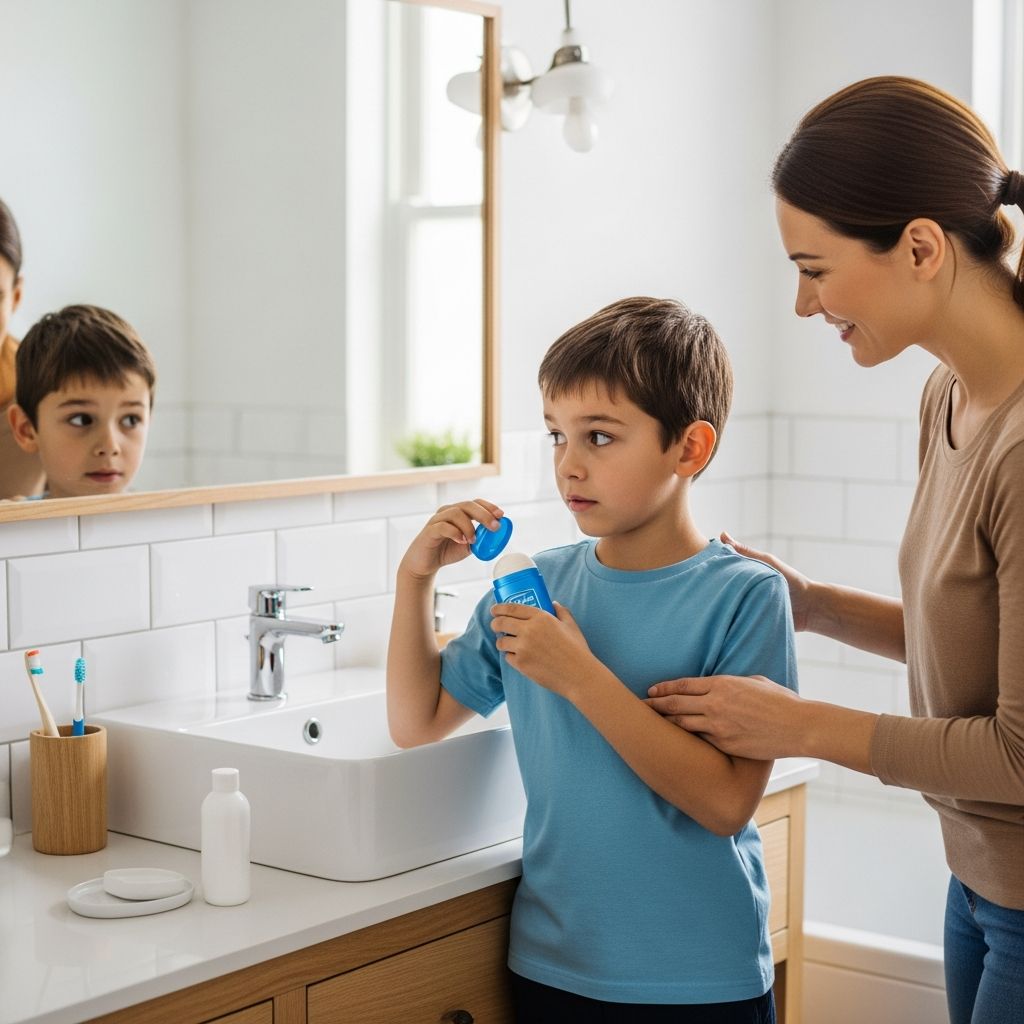
- Apply sparingly: 2-3 swipes max for solids; pea-sized for roll-ons.
- Timing: Morning routine staple; reapply after sports if needed.
- Clean up: Wipe excess to avoid marks on clothes.
Overapplication heightens irritation risk. Demonstrate first, then supervise.
Common Myths About Kids’ Deodorant Debunked
- Myth: Aluminum causes cancer. No studies link topical use to disease.
- Myth: Kids don’t need deodorant pre-puberty. Hormonal shifts can cause early odor.
- Myth: Natural always better. Some naturals irritate; test all.
- Myth: Antiperspirants stop sweating forever. Effects temporary; glands rebound.
Building Lasting Hygiene Habits
Beyond products, instill routines: nightly baths, breathable fabrics, hydration. Discuss openly to normalize puberty changes, boosting self-esteem. Track progress; adjust as needed. For heavy sweaters, clinical antiperspirants like Certain Dri work under pediatric guidance.
Environmentally, natural options align with sustainable parenting, free of microplastics.
Frequently Asked Questions (FAQs)
Q: At what age should kids start using deodorant?
A: Around 8-12, when body odor appears, regardless of exact age. Watch for signs over calendars.
Q: Are natural deodorants effective for children?
A: Yes, they neutralize odor effectively; allow 1-2 weeks for microbiome adjustment.
Q: Can deodorant cause rashes in kids?
A: Possible with irritants like baking soda; patch test and choose gentle formulas.
Q: Is antiperspirant safe for preteens?
A: Generally yes, but prefer deodorant unless sweating is excessive.
Q: How to transition kids to deodorant?
A: Start with fun, mild scents; teach application; combine with hygiene talks.
Q: What if my child hates the smell?
A: Try unscented or custom blends with safe oils like lavender.
This comprehensive approach equips parents to handle deodorant confidently, promoting healthy, odor-free kids ready for any adventure. (Word count: 1678)
References
- Is It Safe for Kids to Use Deodorant? — WebMD. 2023-10-15. https://www.webmd.com/children/is-it-safe-for-kids-to-wear-deodorant
- Deodorant for Kids: The Safe Options — Healthline. 2024-05-22. https://www.healthline.com/health/parenting/deodorant-for-kids
- Is SONDR deodorant safe for kids? — SONDR Fresh. 2024-02-10. https://sondrfresh.com/en-us/blogs/sondr-blog/is-sondr-deodorant-safe-for-kids
- When Should Kids Start Wearing Deodorant? — HealthPark Pediatrics. 2023-11-08. https://www.healthparkpediatrics.com/when-should-kids-start-wearing-deodorant/
- How Safe are Antiperspirants for Children? — Banner Health. 2024-01-20. https://www.bannerhealth.com/healthcareblog/teach-me/how-safe-is-antiperspirant-for-children