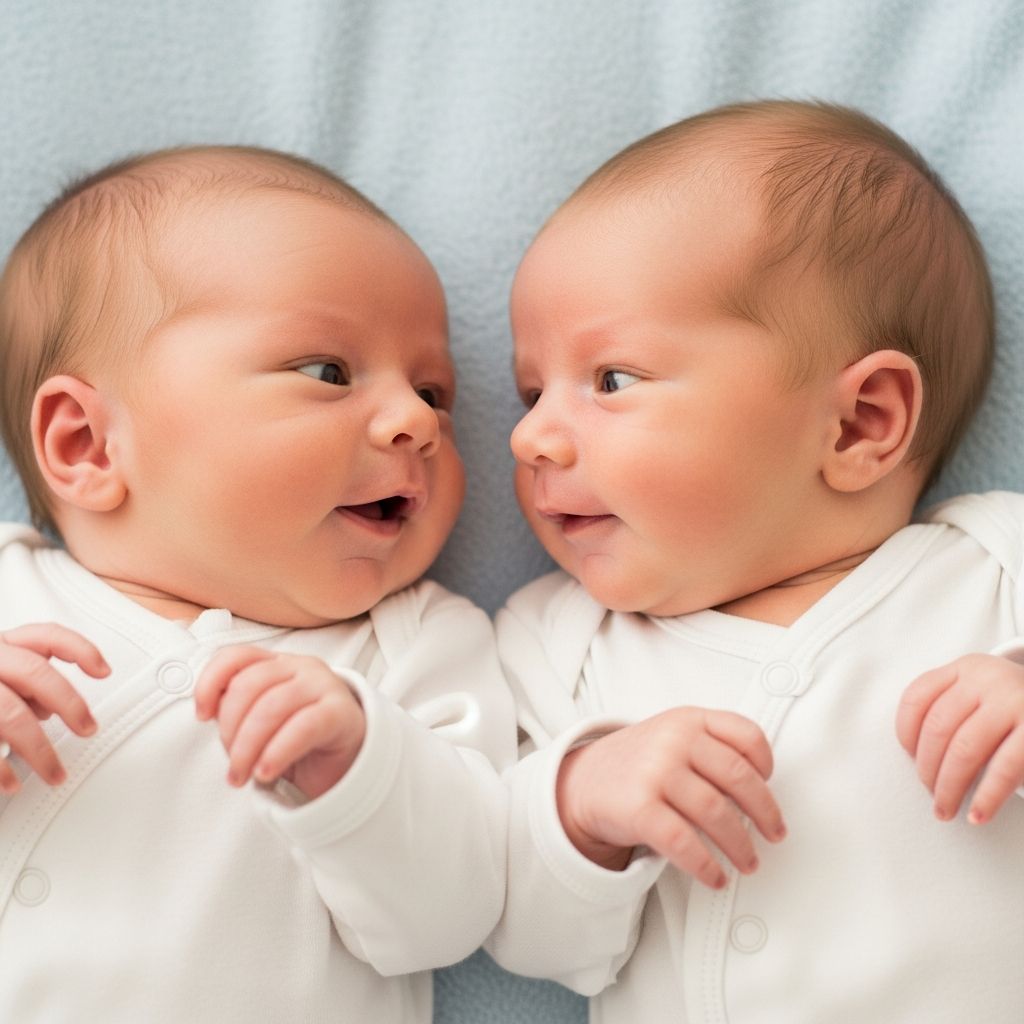
The moment twin newborns truly notice each other and light up with smiles is one of the most powerful experiences a parent can witness. It brings together emotion, early development, and the beginning of a bond that will likely last a lifetime.
Why This First Moment Feels So Magical
For many parents of twins, those first few weeks are a blur of feeds, diapers, and attempts to get everyone sleeping at the same time. In the middle of that chaos, seeing two tiny faces suddenly lock eyes and respond with a smile or a spark of recognition can feel almost unreal. It is a sign that your babies are not just reacting to you and their surroundings, but also beginning to recognize each other as special and familiar.
Unlike a typical sibling relationship that starts when one child is already older, twins have literally shared space and experiences from the very beginning. That first moment of visible recognition outside the womb gives a small window into a connection that has been forming for months before birth.
- It reassures parents that their babies are starting to engage socially.
- It hints at a unique sibling relationship shaped by constant closeness.
- It turns an ordinary day of newborn care into an unforgettable memory.
How Early Do Twins Start Noticing Each Other?
Twins share a prenatal environment and often begin interacting in simple ways while still in the womb. Once born, however, their early weeks are dominated by basic needs: sleep, feeding, and adjusting to a completely new world. Social engagement with each other tends to emerge gradually rather than all at once.
In the very early days, twins may appear unaware of each other, even when lying side by side. Over time, their gaze begins to steady, their focus expands beyond light and shapes, and they start lingering longer on faces. That is when parents begin to notice one baby turning toward the other, tracking arm movements, and eventually responding with expression and sound.
- In the first weeks, any contact is usually accidental rather than deliberate.
- As visual focus improves, babies begin to notice their twin’s face and movements.
- Smiles and coos directed at each other tend to appear after social smiling with adults has started.
The Science of Early Twin Bonding
Early bonding between twins is supported by both biology and environment. They often share similar sensory experiences, hear each other’s cries, and feel each other’s movements from day one. These repeated interactions create a pattern of familiarity that lays the groundwork for a very close relationship.
As their brains develop, twins grow more capable of coordinating attention between caregivers, objects, and each other. They do not just respond to faces, but start to anticipate reactions, imitate expressions, and show excitement when the other baby becomes active or vocal. This gradual shift turns two separate infants into a responsive pair.
- Shared prenatal and early-life experiences may encourage a strong sense of familiarity.
- Repetitive daily routines bring twins into frequent visual and physical contact.
- Mutual imitation, like copying smiles or sounds, strengthens their early social bond.
Newborn Milestones That Lead Up to That First Shared Smile
The first time twins obviously notice each other usually follows a series of smaller, less dramatic milestones. Each tiny developmental shift makes that moment more likely: better vision, steadier eye contact, longer periods of wakefulness, and increasing interest in faces. Parents may not see everything happening behind the scenes, but these skills are quietly building.
Even if the first “real” interaction feels sudden, it is actually the result of many subtle changes coming together. Understanding these building blocks can help parents relax if it takes a little longer than expected for their twins to clearly respond to each other.
Key Early Social Milestones
- Focusing on faces: Newborns gradually become better at noticing and following faces around them.
- Tracking movement: Twins begin watching each other’s arms, legs, and facial expressions.
- Social smiling: Smiles that began as reflexes become genuine responses to familiar people.
- Cooing and vocal play: Sounds move from simple cries to playful noises, especially when someone responds.
Typical Timing Overview
| Approximate Age Range | What Parents May Notice Between Twins |
|---|---|
| First weeks | Mostly accidental bumps and contact; minimal eye contact with each other. |
| Early months | Longer gazes in each other’s direction, curiosity about movements and sounds. |
| Later in the first half year | Purposeful eye contact, smiles, coos, and early attempts at imitation. |
What Parents See on Their Twins’ Faces
When twins first notice each other, their faces often tell the entire story. One baby may suddenly pause, stare with wide eyes, and then break into a shy or delighted smile. The other might kick, wave arms, or respond with an equally bright grin. To parents watching, this brief exchange can feel like a whole conversation.
Not all babies react in the same way. Some twins seem amused; others look deeply curious or simply calm and content. The important part is not the exact expression, but the fact that they are investing attention in each other and responding as if they recognize that this other tiny person is special.
- One twin may appear more expressive or engaged at first, with the other catching up later.
- Reactions can range from big smiles to quiet, focused watching.
- Repeated moments of shared attention help normalize and strengthen their connection.
Ways Parents Can Encourage Twin-to-Twin Interaction
While twins will naturally encounter each other often, intentional opportunities to connect can make their interactions more frequent and more meaningful. Simple routines and thoughtful positioning can help them see, hear, and feel each other more clearly. The goal is not to force interaction, but to provide gentle chances for it to happen.
Parents do not need elaborate setups or special equipment. Small, consistent habits can go a long way toward supporting early twin bonding while still allowing each baby to develop as an individual.
Practical Tips for Everyday Routines
- Place twins side by side on a safe surface, such as a play mat, during supervised awake time so they can see each other’s faces.
- Use tummy time sessions where they are close enough to glance at each other but still have room to move.
- Talk to both babies at once, turning their attention toward one another when one looks particularly interested.
- Offer matching soft toys or rattles so they can explore similar sounds and textures together.
- Capture short video clips of their interactions, which can help parents notice small progress over time.
Balancing the Twin Bond with Individuality
It is easy to focus on the twin bond because it is so visible and often very strong, especially when those early shared smiles start appearing. At the same time, each baby is still a complete individual with unique needs, preferences, and temperaments. Healthy development involves both their connection as a pair and their sense of self as separate people.
Parents can celebrate twin moments without turning every experience into a shared one. Providing space for each baby to have one-on-one time with caregivers and to develop at a personal pace helps ensure that the bond strengthens without overshadowing individual growth.
- Offer separate cuddling or play sessions with each twin whenever possible.
- Avoid comparing milestones too closely; one twin may smile or engage sooner than the other.
- Use their names individually rather than always addressing them as a single unit.
Emotional Impact on Parents and Families
Watching twin newborns connect for the first time often brings a wave of emotions, from relief and joy to awe. Many parents describe feeling like they are seeing something almost private between their babies, a hint that the children share a history and understanding no one else fully has. These small moments can become bright spots that carry families through sleepless nights and demanding schedules.
Family members and siblings also tend to react strongly to these interactions. Grandparents, relatives, and even older brothers or sisters may be deeply moved by the sight of two tiny babies clearly responding to each other. Sharing photos or stories of those first smiles can help loved ones feel connected to the twins’ early journey.
- Parents often remember the first clear twin interaction as a defining early memory.
- These moments can strengthen family bonds by giving everyone something joyful to celebrate.
- Documenting the milestones can become part of the twins’ shared story as they grow.
Common Concerns About Twin Interactions
It is natural for parents to worry if twin interactions seem slow to develop or uneven. One baby might appear very responsive and social, while the other seems more reserved or distracted. The important thing to remember is that each child follows a unique timeline, even in a twin pair. Differences in temperament, energy levels, and health can all influence early social behavior.
Occasional missed opportunities or brief interactions are not usually cause for alarm. However, if parents have broader concerns about eye contact, responsiveness, or communication in either baby, it is always wise to talk with a pediatrician. Watching twins over time, rather than focusing on a single day, gives a more accurate picture of their progress.
- Variation between twins is very common and does not always signal a problem.
- Monitoring trends over several weeks is more helpful than reacting to a single quiet or fussy day.
- Professional guidance can offer reassurance and, if needed, early support.
Frequently Asked Questions About Twin Newborns Noticing Each Other
Do twins recognize each other right away after birth?
Twins share a long history before birth, but recognition outside the womb develops gradually. In the very early days, their responses are mostly driven by basic needs and reflexes. Over time, as their vision improves and they spend more time awake, their reactions to each other’s faces and movements become easier to see.
Why does one twin seem more interested in the other?
Differences in personality and energy are visible even in newborns. One twin might be naturally more alert or outgoing, making it appear that they lead most interactions. The quieter twin may participate in more subtle ways at first, such as brief glances, gentle movements, or softer vocalizations.
How can parents tell if twins are engaging socially rather than just lying next to each other?
Signs of social engagement include sustained eye contact, smiles, changes in facial expression, vocal sounds directed toward the other baby, and movements that seem to respond to what the other twin is doing. Even short bursts of attention can signal that they are beginning to treat each other as more than just part of the background.
Is it okay if my twins spend a lot of time apart during the newborn stage?
Practical demands such as feeding, medical needs, or differing sleep patterns can lead to more separate time, and that is often unavoidable. The twin bond does not depend on being together every second. Occasional shared playtime, side-by-side rest, and gentle interaction are usually enough to help the connection grow while still respecting each baby’s individual needs.
Will that first shared smile affect their relationship later in life?
One early interaction alone will not determine the entire course of their relationship, but it does reflect important foundations: comfort, familiarity, and the ability to respond to each other. Consistent, caring experiences over time are what truly shape their bond. The first shared smile is best viewed as a beautiful early sign of what is possible as they grow together.
Making the Most of These Precious Early Moments
The day your twins first clearly notice and respond to each other may arrive suddenly, during an ordinary feeding or playtime. There may be no perfect camera angle or carefully planned setup, just two babies discovering each other on their own terms. That simplicity is exactly what makes the moment so powerful.
By providing calm opportunities for closeness, allowing interactions to unfold naturally, and honoring each baby’s individual pace, parents can help nurture both the shared and separate paths of their twins. Those first shared smiles are only the beginning of countless expressions, conversations, and memories they will create together.