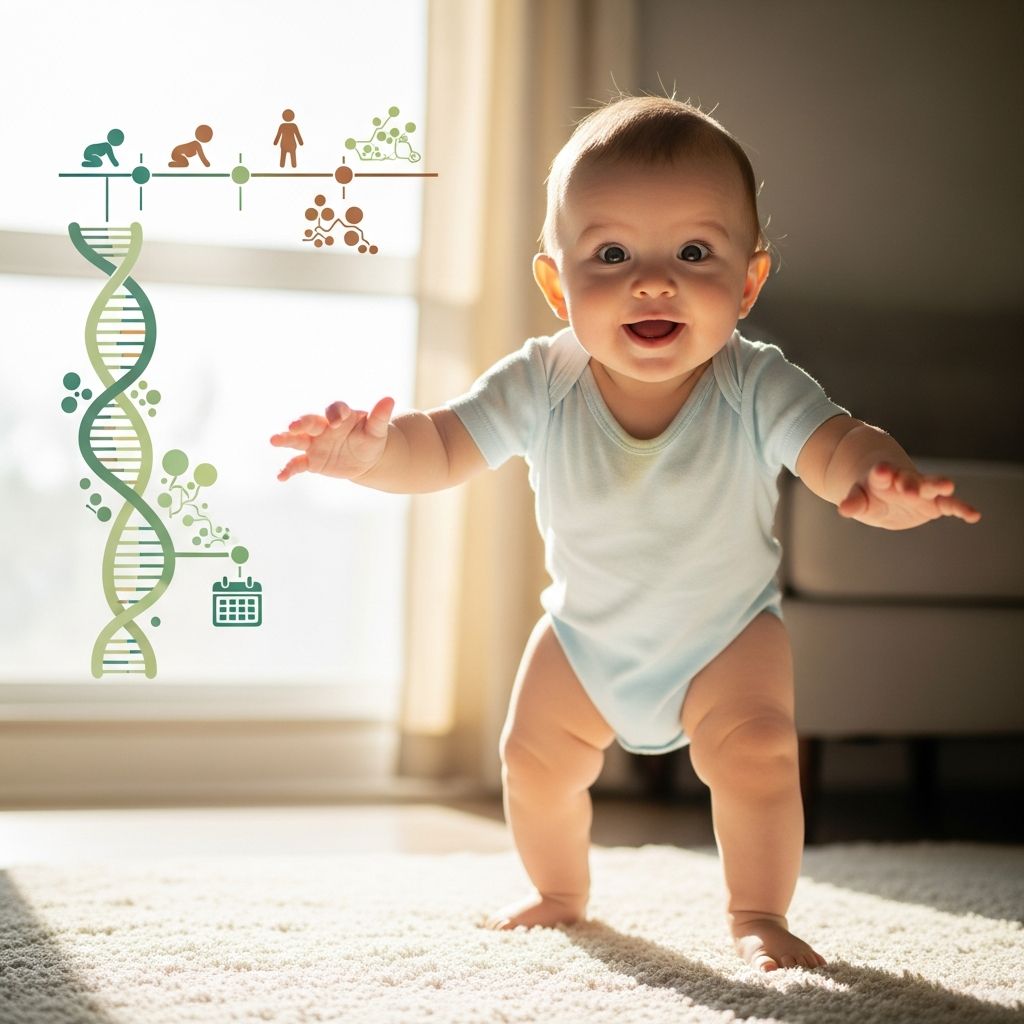
The moment a baby takes their first independent steps is a thrilling milestone for parents, typically occurring between 9 and 18 months of age, with genetics playing a pivotal role alongside environmental factors. While the average is around 12 months, variations are normal and often hereditary, helping parents set realistic expectations without undue worry.
Understanding Genetic Influences on Walking
Genetic makeup significantly dictates the timing of a baby’s first steps, as motor development patterns frequently mirror those of siblings or parents. Studies indicate that if parents walked early or late, their children often follow suit, highlighting heritability in muscle strength, balance, and coordination. For instance, babies in families with later walkers may not step out until 15-16 months, yet this remains within healthy norms.
Environmental factors interact with genes; less crowded spaces allow more practice, accelerating progress for genetically predisposed infants. Nutrition, tummy time, and responsive caregiving further modulate genetic potential, ensuring optimal bone and muscle development. High-credibility research from the World Health Organization underscores that genetic baselines set a range, but daily opportunities refine skills.
Key Developmental Stages Leading to Walking
Babies build walking proficiency through sequential motor milestones, each strengthening the foundation for the next. These stages vary, but most follow a predictable progression from rolling to independent strides.
- 4-6 Months: Core Strength Building – Infants lift their head steadily during tummy time and roll from back to belly, developing neck and trunk control essential for upright posture.
- 6-8 Months: Sitting and Mobility – Unsupported sitting emerges, followed by creeping or crawling on hands and knees, which enhances arm and leg coordination. Note that some babies bottom-shuffle instead, still achieving similar outcomes.
- 8-10 Months: Standing Transitions – Pulling up on furniture or caregivers’ hands marks leg weight-bearing readiness, often with stiff-legged initial stands evolving to flexed knees.
- 9-12 Months: Supported Movement – ‘Cruising’ along furniture side-steps build sideways balance, while hand-held walking forward shifts weight between legs.
- 12+ Months: Independence – First unassisted steps follow, initially wobbly, maturing into confident gait by 18-24 months with arms at sides.
This progression requires upper body control, weight shifting, and motivation, like reaching for toys, with crawling on all fours linked to slightly earlier walking.
Signs Your Baby Is Primed for First Steps
Watch for behavioral and physical cues signaling imminent walking, often clustering between 9-12 months as energy focuses on practice.
| Sign | Description | Typical Age |
|---|---|---|
| Pulling to Stand | Grips furniture or legs to rise, holding briefly | 7-10 months |
| Standing Alone | Balances unsupported for seconds | 9-12 months |
| Cruising | Sidesteps holding furniture edges | 9-12 months |
| Hand-Held Steps | Walks forward when supported by hands | 9-11 months |
| Interest in Movement | Fusses less, fixates on distant objects | 10-14 months |
These indicators reflect strengthened legs from repeated ‘squats’ and growing confidence; fussiness or sleep changes may accompany growth spurts. Secure heavy furniture to prevent tip-overs during cruising.
Encouraging Safe Walking Practice
Parents can nurture genetic potential through targeted activities, prioritizing safety over speed. Avoid baby walkers, as they delay skills and risk injuries.
- Provide ample floor time with soft mats for pulling up and cruising.
- Hold hands for assisted walks, praising efforts to boost motivation.
- Offer push toys for balance support once standing independently.
- Ensure clear, obstacle-free paths in low-traffic areas for practice.
- Limit time in swings or seats to maximize active movement.
Outdoors, bare feet or soft shoes build foot muscles; shoes are only needed for rough surfaces. Responsive play, like placing toys just out of reach, ignites intrinsic drive.
Family Patterns and Expectations
Recalling when siblings or parents walked provides context; early walkers (under 12 months) often have athletic genes, while later ones (up to 18 months) thrive equally long-term. Cultural practices, like carrying styles, influence timelines but don’t alter outcomes. Track personal milestones via apps or journals to celebrate unique paces.
When to Consult a Pediatrician
Most delays are benign, but seek advice if no pulling up by 12 months, no standing by 14 months, or no steps by 18 months, especially with other concerns like weak head control. Early intervention, per WHO guidelines, addresses rare issues like muscle tone disorders promptly. Regular well-visits monitor progress holistically.
Frequently Asked Questions
At what age do most babies walk independently?
Around 12 months on average, but 9-18 months is normal.
Does skipping crawling affect walking?
No, some babies skip it; all-fours crawlers may walk 0.9 months earlier, but outcomes equalize.
Are baby walkers helpful?
No, they delay development and pose risks; focus on free movement.
Can I speed up walking with devices?
Devices like exersaucers limit natural progression; hands-on practice is best.
Is late walking genetic?
Often yes, mirroring family patterns without concern if other milestones hit.
References
- When Do Babies Start Walking? Signs, Tips, and Milestones — Pampers. 2023. https://www.pampers.com/en-us/baby/development/article/when-do-babies-start-walking-your-babys-first-steps
- When do babies start walking? The stages of learning to walk — Medical News Today. 2023-10-12. https://www.medicalnewstoday.com/articles/when-do-babies-start-walking
- When do babies start walking, and how does it develop? (illustrated) — Parenting Science. 2023. https://parentingscience.com/when-do-babies-start-walking/
- Developmental Milestones For Walking In Children — KidsHealth/YouTube (Nemours). 2023. https://www.youtube.com/watch?v=GUgb4s_MCD4
- Learning to walk — Pregnancy Birth and Baby (Australian Government). 2024. https://www.pregnancybirthbaby.org.au/learning-to-walk