Understanding When Your Baby Is Ready for Cheerios
Many parents wonder when they can introduce Cheerios to their babies as a first finger food. Rather than focusing solely on age, the key is recognizing whether your child has achieved specific developmental milestones that indicate readiness for self-feeding. Most babies demonstrate these readiness markers somewhere between 7 to 12 months of age, though the timeline varies considerably from child to child.
Introducing finger foods prematurely can lead to frustration for both parent and baby, while waiting too long might cause you to miss an ideal window for developing self-feeding skills. Understanding your individual baby’s capabilities is far more important than adhering to a strict age guideline.
Essential Developmental Milestones for Cheerios Readiness
Before offering Cheerios or any comparable finger food, your baby should demonstrate several interconnected developmental skills. These milestones ensure that your baby can safely manage a small food item and reduce the risk of choking or aspiration.
Independent Sitting Ability
Your baby must be able to sit upright without support or with minimal assistance. This position is crucial because it allows gravity to work in favor of safe swallowing and prevents food from being aspirated into the lungs. A baby who slumps to the side while eating faces increased choking risk, even with a highly dissolvable food like Cheerios. Proper posture during feeding is non-negotiable for safety.
Development of the Pincer Grasp
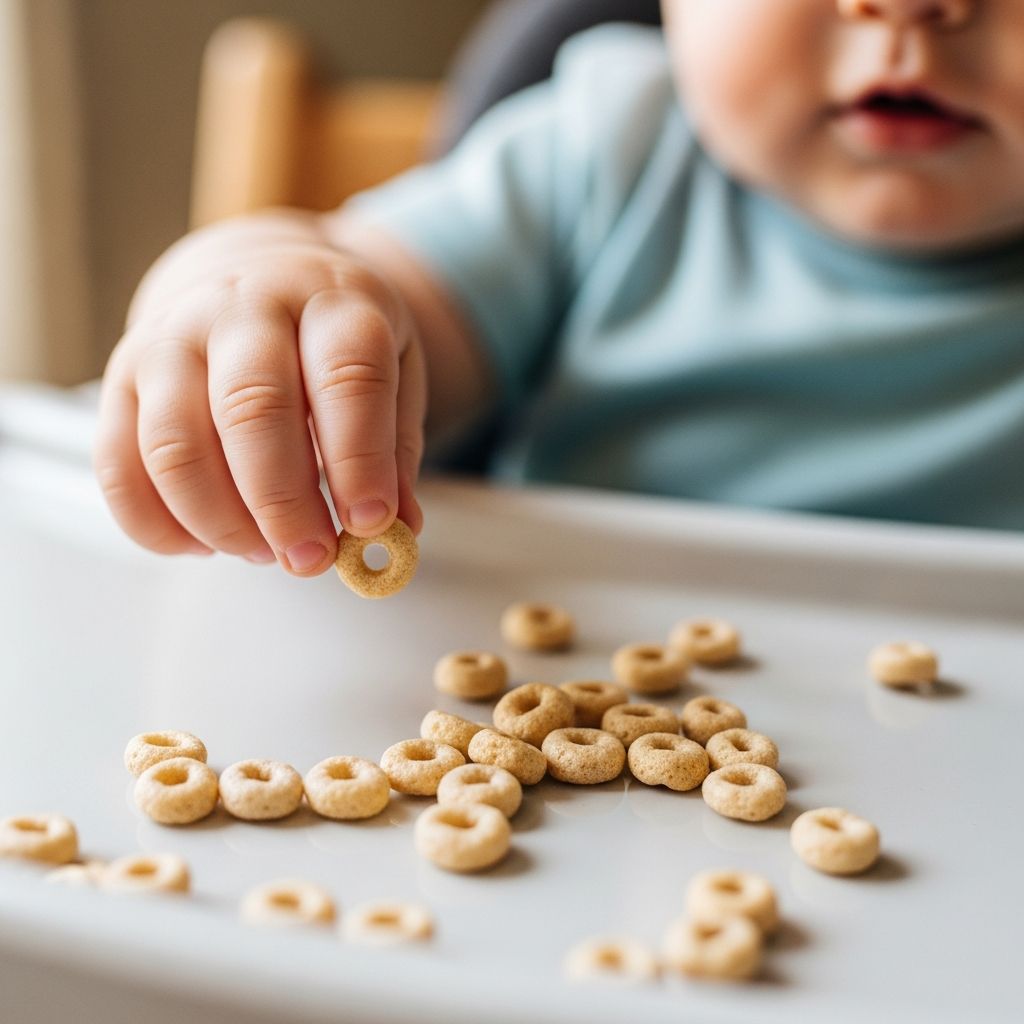
The ability to pick up small objects between the thumb and forefinger—known as the pincer grasp—is a critical fine motor skill. Without this skill, your baby cannot independently bring food to their mouth, which defeats the purpose of offering finger foods. Babies typically begin developing this grasp around 8 to 9 months, though some develop it earlier or later. You can encourage this skill by offering larger, easy-to-grab foods first, such as soft fruits or cooked vegetables cut into appropriate sizes.
Elimination of the Extrusion Reflex
Newborns have an automatic tongue-thrust reflex that pushes food out of their mouths, protecting them from choking on objects they cannot swallow. As babies mature and begin consuming solids around 6 months, this reflex gradually diminishes. By the time your baby is ready for finger foods, this protective reflex should be mostly gone. If your baby continues to push foods out of their mouth with their tongue, wait a few more weeks before introducing Cheerios.
Demonstrated Chewing or Munching Motion
Even without teeth, babies can develop a munching motion using their gums. You may notice your baby making up-and-down chewing movements while watching you eat, playing with teethers, or consuming soft baby food. This indicates that your child is developing the oral motor skills necessary to process foods of varying textures. Cheerios require some degree of manipulation in the mouth before swallowing, so this skill matters.
Clear Interest in Food
Babies who are ready for finger foods typically show genuine interest in eating. They may reach for food on your plate, watch intently while you eat, or open their mouths when food approaches. This curiosity and eagerness signal developmental readiness beyond just physical capability.
Why Cheerios Are an Excellent First Finger Food Choice
Cheerios have earned their reputation as an ideal introductory finger food for several compelling reasons. Their unique characteristics make them safer and more manageable than many other small foods that parents might consider offering.
Superior Dissolvability
The primary advantage of Cheerios is their ability to dissolve rapidly when exposed to saliva. A single Cheerio transforms from a crunchy, O-shaped cereal into a soft, mushy substance within moments of entering your baby’s mouth. This dissolvability significantly reduces choking risk because the food becomes easier to manage without requiring extensive chewing or gum mashing. Research has assessed the choking potential of common baby finger foods, and Cheerios consistently receive high marks for their safety profile due to this dissolvability factor.
Low Allergenic Potential
Cheerios’ primary ingredient is oats, which rarely triggers allergic reactions in infants. While any food theoretically can cause an allergy, the likelihood with Cheerios is exceptionally low. This means you can feel confident introducing this food without excessive worry about severe allergic complications. Food allergies in children are typically caused by a small set of common allergens, and oats are not among them.
Nutritional Value
Original Cheerios provide more than just a convenient finger food. They are fortified with important nutrients including iron, which supports cognitive development and oxygen transport in growing bodies. Cheerios also contain fiber, calcium, folate, and zinc—all essential minerals and vitamins for infant development. While the amount of nutrition from a few Cheerios is modest, they contribute to a varied diet and help establish healthy eating patterns.
Affordability and Accessibility
Cheerios are widely available, affordable, and convenient compared to many other finger food options. This accessibility makes them practical for parents managing busy schedules or budget constraints. Many nutrition experts have noted that Cheerios offer exceptional value as a baby food option.
Safety Guidelines for Offering Cheerios
While Cheerios are relatively safe, proper feeding practices are essential to prevent any incidents. Safety should always be your primary concern when introducing any new food to your baby.
Supervision Is Non-Negotiable
Never leave your baby unattended while eating, regardless of how safe the food is considered. You should remain within arm’s reach and keep your full attention on your baby during meals. This allows you to respond immediately if any issues arise and to monitor your baby’s reactions to the new food.
Proper Seating Position
Always place your baby in a high chair or secure feeding seat that supports proper posture. Your baby should be sitting upright with good head and neck control. Avoid feeding a baby who is lying down, reclined, or in a position where they cannot maintain an upright posture. Proper seating significantly reduces choking and aspiration risks.
Understanding Gagging Versus Choking
Many parents fear that their baby is choking when the baby is actually gagging. Gagging is a normal, protective reflex and is not dangerous. During gagging, your baby may cough, make noise, or appear uncomfortable, but the reflex is helping push food back to a safer position in the mouth. Persistent gagging, however, warrants a conversation with your pediatrician to rule out any underlying issues.
True choking is silent and dangerous—your baby will not be able to cough or cry out. If you suspect choking, seek emergency help immediately. Familiarizing yourself with infant CPR and choking rescue techniques before starting solids is a wise precaution.
Moistening Cheerios If Needed
If you notice that Cheerios are sticking to your baby’s tongue or causing excessive gagging, you can soften them further by soaking them in breast milk, formula, cow’s milk, or water. This additional moisture hastens the dissolving process and may make the food easier for your baby to manage.
Important Nutrition Considerations and Varieties
Not all Cheerios varieties are appropriate for babies under 12 months of age. Understanding the differences between types is crucial for making safe choices.
Original Cheerios: The Safe Choice
Original Cheerios are the recommended variety for babies under one year. They contain minimal added sugar, are fortified with important nutrients, and pose no safety concerns beyond standard choking precautions. These plain Cheerios should be your first choice when introducing this food to your baby.
Flavored Varieties and Sugar Content
Flavored Cheerios varieties beyond the original, such as Apple Cinnamon, are technically safe for babies under 12 months but contain higher levels of added sugar and sodium compared to Original Cheerios. While not prohibited, these varieties are better reserved for older children and are not ideal choices for babies just beginning their solid food journey. If you choose flavored varieties, do so sparingly and prioritize Original Cheerios instead.
The Honey Nut Cheerios Exception
Honey Nut Cheerios must be avoided for babies under 12 months of age. While processed foods containing honey are generally considered lower risk than raw honey due to pasteurization and heat treatment, the consensus among pediatricians is to avoid Honey Nut Cheerios altogether during a baby’s first year. Honey carries the risk of botulism, a serious illness caused by bacteria that can produce dangerous toxins. This risk applies specifically to babies under 12 months because their digestive systems have not yet developed sufficient acid levels to neutralize botulism spores.
If you accidentally gave your baby Honey Nut Cheerios once or twice, do not panic—accidental, occasional exposure is typically not dangerous. However, intentionally offering this variety before 12 months is not advisable. Once your baby turns one year old, Honey Nut Cheerios and other honey-containing products become safe options.
Alternative Finger Foods and Progression
While Cheerios are excellent starter finger foods, your baby will benefit from exposure to a variety of textures and flavors as skills develop. Understanding appropriate finger food progression helps you expand your baby’s palate safely.
Other Dissolvable Cereals
Baby puffs and other O-shaped cereals from various manufacturers can serve as alternatives to Cheerios. However, not all O-shaped cereals dissolve as easily as Original Cheerios. If you choose alternatives, research dissolvability carefully and introduce them with the same safety precautions as Cheerios. Some brands may pose slightly higher choking risks if they maintain their structure longer in the mouth.
Soft Fruits and Vegetables
As your baby develops more advanced chewing and manipulation skills, soft, age-appropriate fruits and vegetables become wonderful finger food options. Ripe banana pieces, steamed sweet potato cubes, and soft avocado are nutrient-dense choices. Always ensure these foods are cut into appropriately sized pieces—generally no larger than a chickpea or pea in diameter.
Important Foods to Avoid
Certain foods remain choking hazards for babies and should be avoided or modified. Whole grapes, cherry tomatoes, hot dog pieces, and whole baby carrots are dangerous even for babies with developed chewing skills. These foods can be made safer by cutting them into quarters or halves, depending on the item. Hard, sticky, chewy, or very crunchy foods should be avoided entirely during the early finger food phase.
Frequently Asked Questions
Can I give my 6-month-old Cheerios?
Most 6-month-olds have not yet developed the necessary skills for safe finger food consumption. While some developmentally advanced babies might begin showing readiness signs at 6 months, the majority of babies benefit from waiting until 7 to 9 months when multiple milestones align. Consult your pediatrician about your specific baby’s readiness.
What should I do if my baby gags on Cheerios?
Gagging is a normal, protective reflex and typically not a cause for concern. However, if gagging is persistent or if your baby seems distressed, pause offering that food and consult your pediatrician. You might also try moistening the Cheerios to help them dissolve faster.
Are Cheerios a choking hazard?
Cheerios are not considered a primary choking hazard because they dissolve quickly in saliva. However, any small food can theoretically pose a choking risk if a baby is not developmentally ready, is not sitting upright, or is not properly supervised. Proper feeding practices are essential.
Can babies be allergic to Cheerios?
Allergies to Cheerios are extremely rare because oats—the primary ingredient—rarely trigger allergic reactions. However, watch for any unusual symptoms such as rashes, swelling, vomiting, or diarrhea after introducing Cheerios, and contact your pediatrician if you notice concerning reactions.
When can my baby transition from Cheerios to other finger foods?
As your baby becomes more skilled at managing Cheerios, typically after a few weeks of regular exposure, you can begin introducing other soft finger foods. Progress at your baby’s pace, and always ensure new foods are appropriately sized and soft enough for safe consumption.
What if I accidentally gave my baby Honey Nut Cheerios before 12 months?
A single accidental exposure to Honey Nut Cheerios is generally not dangerous, especially given modern food safety processes. However, do not make it a regular practice. If you notice any concerning symptoms such as constipation, weakness, or difficulty feeding in the days following, contact your pediatrician.
How many Cheerios should I give my baby at first?
Start with a small handful—about 5 to 10 Cheerios—placed on the high chair tray or table in front of your baby. This allows your baby to practice the pincer grasp and self-feeding skills while you observe for any adverse reactions. As your baby becomes more comfortable and skilled, you can gradually increase the quantity.
References
- At what age can I introduce Cheerios to a healthy 6-month-old? — Dr. Oracle AI. Accessed 2026. https://www.droracle.ai/articles/681934/at-what-age-can-i-introduce-cheerios-to-a
- When Can Babies Eat Cheerios? — Sneak Peek Genetic Testing. https://sneakpeektest.com/blog/when-can-babies-eat-cheerios/
- When Can Babies Eat Cheerios and Finger Foods? — Mama Knows Nutrition. https://mamaknowsnutrition.com/when-can-babies-eat-cheerios/
- Cheerios for Babies – First Foods for Baby — Solid Starts. https://solidstarts.com/foods/cheerios/
- When can Babies Eat Puffs, Cheerios, & Other Foods Safely? — Your Kid’s Table. https://yourkidstable.com/when-can-babies-eat-cheerios/
- When Can Babies Have Cheerios — Malina Malkani, MS, RDN, CDN. https://www.malinamalkani.com/blog/when-can-babies-have-cheerios