Adding a bottle to a breastfed baby’s routine can be surprisingly emotional. Parents often feel squeezed between returning to work, maintaining milk supply, and protecting a hard-won breastfeeding relationship. This guide walks through what really matters when introducing a bottle, so you can make a plan that supports both you and your baby.
Why Parents Worry About the First Bottle
Many new parents hear conflicting advice: offer a bottle as soon as possible, wait several weeks, never use bottles, only use bottles—the noise can be overwhelming. Underneath those opinions are two very real concerns: keeping breastfeeding on track and making sure baby accepts an alternative feeding method when needed.
Thinking through your goals early—whether that is exclusive breastfeeding with the occasional bottle, mixed feeding, or a gradual transition to more bottle feeds—can help you choose an approach that fits your family rather than following rigid rules.
Finding the “Just Right” Window for Bottle Introduction
There is no single perfect day when every baby must meet the bottle, but timing does matter. The goal is to let breastfeeding become reasonably steady while avoiding such a long delay that baby becomes suspicious of new feeding tools.
For many families, a practical window to consider is sometime in the first couple of months, once latch is comfortable and weight gain is reassuring, yet before baby settles into a breast-only routine that is hard to change. Talk with your pediatric provider or lactation support person about your baby’s specific needs and any medical factors that may shift this window earlier or later.
Key Factors to Consider Before You Start
- Your breastfeeding stability: Has pain improved, is milk transfer adequate, and is baby gaining weight as expected?
- Upcoming separations: Are you returning to work or school, or planning travel or medical procedures?
- Your emotional bandwidth: Introducing a bottle is easier to troubleshoot when you are not in crisis mode the night before going back to work.
- Baby’s temperament: Some babies accept changes calmly, while others need more gradual practice and patience.
Looking honestly at these factors helps you decide whether to move slowly, test a single practice bottle, or begin building a regular bottle routine.
Safeguarding Breastfeeding While Adding a Bottle
One of the biggest fears around bottles is the idea of “nipple confusion” or a baby suddenly preferring a faster, easier flow. While the term itself is debated, the underlying issue is real: bottles can alter how a baby sucks and how the parent’s body produces milk.
Instead of focusing on fear, think in terms of protecting breastfeeding patterns. The more your routine still resembles on-demand feeding at the breast—whether directly or via pumping—the more resilient your milk supply and nursing relationship will be.
Choosing a Bottle and Nipple Without Overthinking It
The baby-care aisle is full of claims about “just like the breast” bottles. In reality, different babies prefer different shapes, and the best choice is usually the one your baby accepts comfortably while allowing paced, controlled feeding.
- Flow rate: Start with a slow-flow nipple to encourage an active suck and prevent milk from pouring into baby’s mouth too quickly.
- Nipple shape: A gradual, not overly long, nipple helps many babies maintain a wide mouth and avoid a shallow, choppy suck.
- Vent system: Anti-colic vents can reduce swallowed air, which may make feeds more comfortable for sensitive babies.
There is no need to purchase every bottle on the market; begin with one or two options. If baby struggles, experimenting with a different nipple shape or texture is often more useful than cycling through dozens of similar products.
Step-by-Step Plan for the First Bottle
Instead of treating the first bottle as a high-stakes test, view it as a gentle practice session. The aim is familiarity, not perfection. The following sequence works well for many families, and you can adapt it to your baby’s cues.
- Pick a calm day and time. Choose a window when you are not rushing out the door or up against a major deadline.
- Offer the breast first. Let baby take a short, calming nurse so you are not working with an extremely hungry, frustrated infant.
- Switch caregivers if possible. Have a partner, grandparent, or trusted friend offer the bottle while the nursing parent leaves the room or even the home.
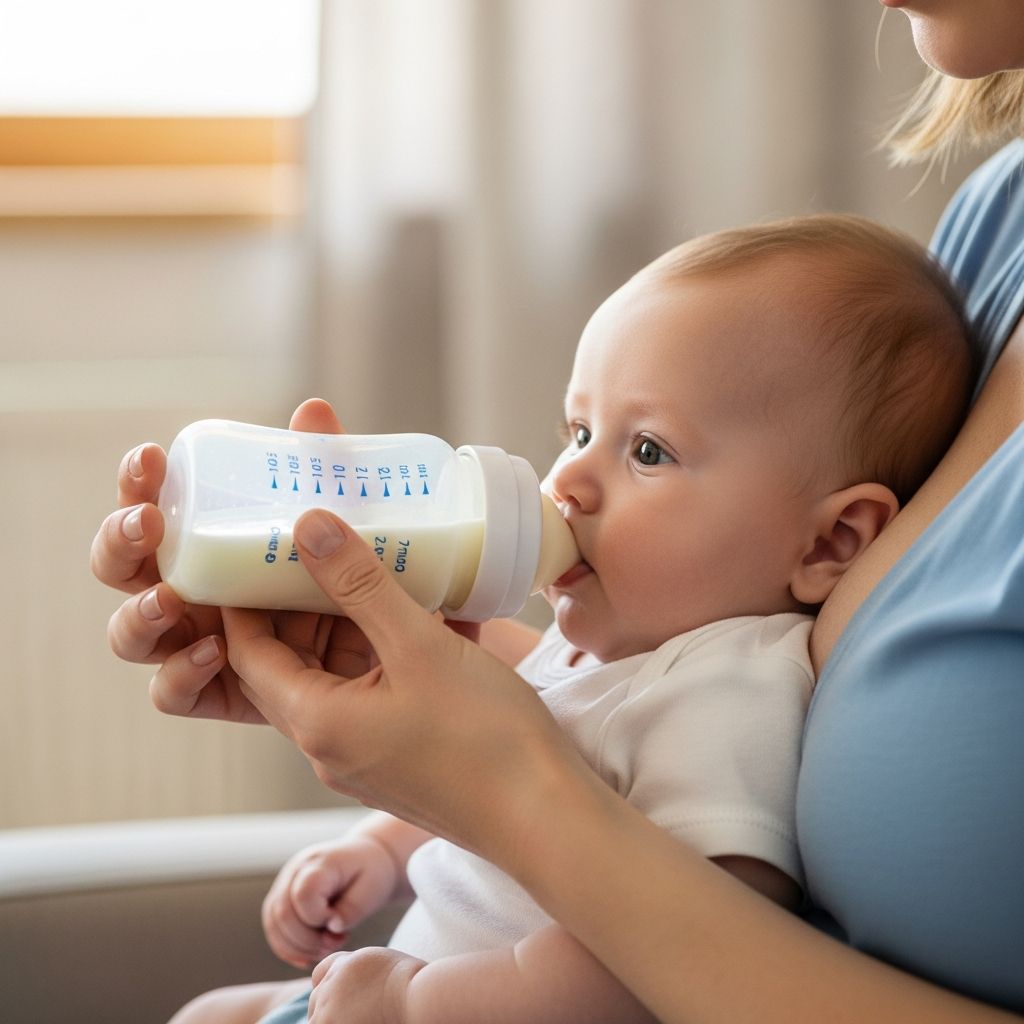
- Hold baby upright. A semi-upright position with the bottle more horizontal than vertical encourages baby to work a bit for milk rather than having it gush into the mouth.
- Use paced bottle-feeding. Gently touch the nipple to baby’s upper lip, wait for a wide open mouth, then let baby draw the nipple in. Offer frequent pauses by tipping the bottle down to slow the flow.
- Stop at the first signs of stress. If baby stiffens, cries hard, or turns away repeatedly, pause, cuddle, and try again later or another day.
A single partial feed—just an ounce or two—is enough to count as a successful introduction. There is no requirement that baby drain the bottle.
Using Paced Bottle-Feeding to Mimic the Breast
Paced bottle-feeding is a simple technique designed to slow the flow and help babies feed in a rhythm closer to breastfeeding. When used consistently, it can reduce the chances that baby begins to favor the bottle purely because it is faster.
- Keep baby mostly upright instead of lying flat.
- Hold the bottle at a slight angle so milk fills only part of the nipple.
- Let baby pause every few swallows by lowering the bottle or pulling it back slightly without removing it entirely.
- Watch baby’s cues for fullness instead of aiming for an arbitrary number of ounces.
This method supports better self-regulation, which may also help prevent overfeeding and digestive discomfort.
Maintaining Milk Supply When Bottles Enter the Picture
Every bottle that replaces a breastfeed is a signal your body does not receive. To keep milk production robust, it helps to pair bottle feeds with pumping or hand expression, especially during times when your baby would normally nurse.
| Situation | How Often Baby Gets a Bottle | Pumping Strategy |
|---|---|---|
| Occasional date night or appointment | 1–2 times per week | Pump once for each missed feed, ideally within an hour of when baby would usually nurse. |
| Part-time work or school schedule | 1–2 bottles on workdays | Pump at roughly the same times baby receives bottles, plus nurse more often when together. |
| Full-time work away from baby | Multiple bottles daily | Plan regular pumping breaks (often every 2–3 hours), then nurse on demand at home, including evenings and nights if desired. |
| Planned gradual weaning | Increasing bottles over weeks | Reduce pumping slowly in parallel with dropped feeds to minimize engorgement and maintain comfort. |
Your body adapts gradually. Sudden changes—either adding many bottles without pumping or abruptly stopping pumping—can trigger supply dips or uncomfortable fullness, so small adjustments usually work best.
Signs Your Baby Is Ready for Bottle Practice
Every baby is different, but many show subtle cues when they are capable of trying a bottle calmly. Watching baby instead of the calendar can prevent frustration for both of you.
- Feeding sessions at the breast feel smoother, with less frantic crying or slipping off.
- Baby is alert and curious for brief periods between naps, rather than constantly sleepy or overwhelmed.
- Weight checks with your healthcare provider show consistent growth.
- You can usually distinguish hunger cries from other fussiness, making it easier to offer the bottle before a meltdown.
If your baby is still struggling to latch, not gaining well, or feeding is painful, prioritize in-person feeding support before adding bottle practice unless medically necessary.
Common Challenges and Gentle Troubleshooting
Even with thoughtful planning, many families hit bumps when blending breast and bottle. Most issues are solvable with time, experimentation, and reassurance.
When Baby Flat-Out Refuses the Bottle
Some babies clamp their lips, scream, or turn away as soon as they see a nipple that is not attached to a parent. While distressing, refusal is usually about unfamiliarity rather than permanent dislike.
- Try when baby is calm but slightly hungry, not in full cry.
- Switch locations: another room, walking outside, or gentle motion in a chair.
- Experiment with water-warm milk versus slightly cooler milk.
- Test a different nipple shape or a slower or faster flow, depending on whether baby seems overwhelmed or bored.
When Baby Seems to Prefer the Bottle
If baby begins to fuss at the breast yet guzzles from the bottle, the issue may be about flow speed or technique rather than “preference.” Bottles often require less effort, which can make the breast feel like extra work.
- Use paced feeding and slow-flow nipples so bottle feeds take about as long as nursing sessions.
- Offer the breast for comfort, not just nutrition, reinforcing it as a cozy place to be even when not ravenous.
- Consider temporarily reducing non-essential bottles while you rebuild baby’s confidence at the breast.
Coordinating Return to Work and Bottle Feeding
Returning to work or school is one of the most common reasons parents introduce bottles. Planning ahead by a few weeks can prevent last-minute panic and help caregivers feel confident.
- Begin offering a small practice bottle a few times per week in the month leading up to your return.
- Walk through handling and storage of milk with all caregivers so your pumped milk is used safely and efficiently.
- Request predictable breaks to pump, especially at the beginning, to maintain comfort and avoid clogged ducts.
It can be helpful to remember that breastfeeding is not all-or-nothing. Many families successfully combine workday bottles with evenings, nights, and weekends at the breast for many months or even years.
Supporting the Non-Nursing Caregiver–Baby Bond
Bottles are sometimes framed as a way to let more people participate in feeding. While that can be true, bonding does not require bottles—skin-to-skin contact, baths, walks, and playtime all build connection.
- Encourage the non-nursing caregiver to develop their own soothing routines such as babywearing, singing, or gentle rocking.
- Invite them to be the primary bottle-giver, especially in the early practice phase, to build confidence and familiarity.
- Rotate other calming tasks like bedtime stories, diaper changes, and morning cuddles so both caregivers are central in baby’s world.
Seeing feeding as one of many ways—not the only way—to connect can reduce pressure around bottles and allow more flexibility if plans change.
Frequently Asked Questions About Introducing a Bottle
Is it ever “too early” to offer a bottle?
In the very first days after birth, most full-term babies and their parents benefit from focusing on learning to latch, building milk supply, and recovering from birth. If medical reasons require earlier bottles, you can still protect breastfeeding by using techniques that promote deep latch at the breast and by expressing milk whenever possible.
Can I wait several months before trying a bottle?
Some exclusively breastfed babies will accept a bottle for the first time at three or four months old without much fuss, especially if they are easygoing and curious. Others strongly reject unfamiliar feeding tools after weeks of nursing only, so delaying can increase the chance of resistance. If you think you might need bottles later, a handful of early practice feeds can act as “insurance.”
What if I plan to breastfeed only briefly?
Families who expect to breastfeed for a short time may choose to introduce bottles sooner and transition fully to pumped milk or formula. Even a few weeks of breastfeeding can be meaningful, and you can still shape bottle-feeding to be responsive and nurturing, watching baby’s cues and allowing pauses instead of insisting on finishing every ounce.
Do I need special bottles for breast milk versus formula?
Most modern bottles work for both breast milk and formula. The more important piece is matching the flow and shape to your baby’s needs and practicing paced feeding, rather than relying on marketing claims that a certain bottle is mandatory for breastfed babies.
How do I know if baby is getting enough from the bottle?
Signs of adequate intake are similar across breast and bottle: regular wet diapers, soft stools appropriate for age, and steady growth on your baby’s personal curve. Because bottles provide visible ounce markings, it is easy to become fixated on numbers; try to pair that information with your baby’s cues rather than forcing extra volume when baby seems satisfied.
When should we move away from bottles altogether?
As babies grow, parents gradually shift from bottles to cups. Many families begin offering small sips of water or milk in an open cup or straw cup during solid meals in the second half of the first year, then slowly phase out bottles as skills and confidence improve. Your pediatric provider can help you tailor a timeline that fits your child’s development and family routine.
Key Takeaways for a Smooth Bottle Introduction
- There is no single perfect age, but combining stable breastfeeding with not waiting indefinitely works well for many families.
- Paced bottle-feeding and slow-flow nipples help preserve breastfeeding patterns and reduce flow-related preference.
- Replacing breastfeeds with bottles without pumping can lower milk supply; pairing bottles with expression helps protect production.
- Most challenges—refusal, preference shifts, or schedule changes—are solvable with time, flexibility, and support.
Above all, remember that feeding is a relationship, not a performance. Whether your baby receives milk at the breast, from a bottle, from a cup, or some combination, the warmth, responsiveness, and presence you bring to each feed are what matter most.