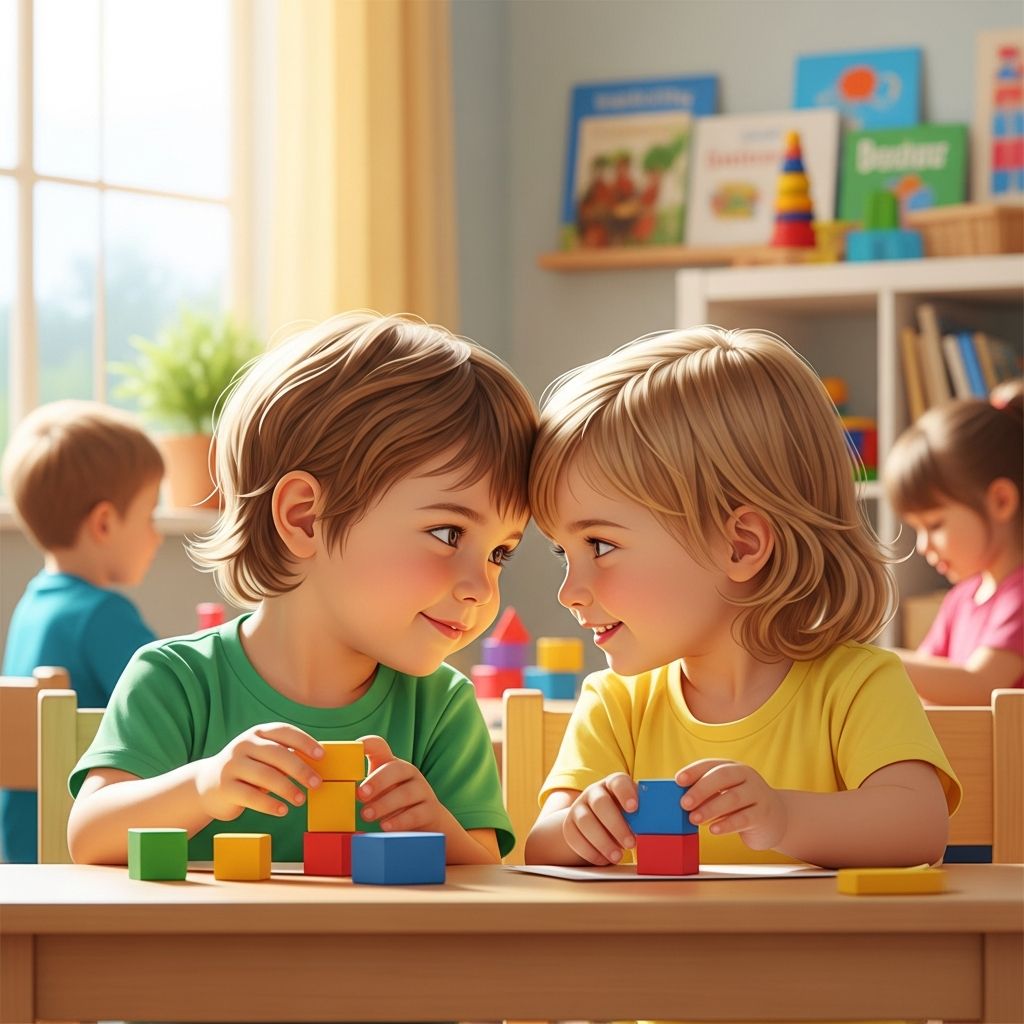
Many parents are surprised to discover how intensely a 3- or 4-year-old can latch onto a single friend. Your child might talk about this friend nonstop, insist on playing only with them, or become upset and even aggressive if anyone else joins in. This can look like an unhealthy obsession, but in most cases it’s a sign of big feelings and an immature nervous system rather than a serious problem.
This guide offers a calm, practical roadmap: what’s typical at this age, early warning signs that your child is overwhelmed, and specific ways to respond so your child gradually learns to feel secure, share friends, and form a wider circle of relationships.
Why Preschool Friendships Feel So Intense
To an adult, a preschool friendship might look like a simple playmate connection. To a 3-year-old, it can feel like a lifeline. At this age, children are only beginning to separate emotionally from their parents and often look for another “special person” who makes the world feel safe and exciting.
Several developmental factors fuel this intensity:
- Limited emotional tools: Preschoolers feel big emotions but don’t yet have the language or self-regulation skills to manage fear, jealousy, or disappointment.
- All-or-nothing thinking: A child may believe, “If my friend plays with someone else, I’ve lost them forever,” because they don’t yet understand that relationships can stretch and include others.
- Emerging identity: Children often define themselves through one person: “I’m her best friend.” When that identity feels threatened, they may cling or try to control.
Normal Attachment vs. Unhealthy Obsession
Not every intense friendship is a problem. The key is looking at patterns rather than one difficult day. Use the table below as a quick reference to understand the difference between typical closeness and behavior that may need more support.
Preschool Friendships: What’s Typical, What’s Concerning?
| Aspect | Healthy Intensity | Potentially Unhealthy |
|---|---|---|
| Talk about friend | Talks about friend often but can also talk about other people or interests. | Talks about friend constantly; most stories, drawings, and play revolve around that one child. |
| Play at school | Prefers one friend but sometimes joins others and can adapt if friend is absent. | Refuses to play with anyone else; may seem lost or distressed without that friend. |
| Response to sharing friend | Shows mild jealousy, may feel sad, but recovers with support. | Gets very upset or aggressive when friend plays with others; tries to control who can join. |
| Life outside friendship | Enjoys family, hobbies, and other playmates at home or in different settings. | Much of their happiness seems to depend on contact with this one friend. |
| Duration | Intensity waxes and wanes over weeks or months. | Strong, rigid pattern that continues for many months with little flexibility. |
If your child shows a mix of both columns, that’s very common. The goal isn’t to eliminate intense affection; it’s to help your child feel secure enough that they don’t need to control or cling.
What Your Child May Be Feeling
Underneath bossy or possessive behavior, most young children are driven by raw, vulnerable emotions they cannot yet articulate. Understanding what might be going on inside helps you respond with empathy instead of just correcting behavior.
- Fear of loss: Your child may feel, “If my friend plays with someone else, they’ll forget me,” which can trigger panic.
- Need for security: The special friend can feel like an anchor in a chaotic social world, especially if your child is shy or sensitive.
- Jealousy and comparison: Seeing their friend enjoy others can stir feelings of not being “enough,” even in very young children.
- Hidden loneliness: An intense focus on one friend can sometimes mask deeper feelings of isolation, anxiety, or difficulty reading group dynamics.
When you respond to the feeling underneath, instead of only the surface behavior, your child gradually learns that the world is safe enough to share and to let relationships breathe.
Common Behaviors You Might Notice
Each child is unique, but parents frequently describe similar patterns when a preschooler becomes over-focused on a friend. Recognizing them helps you intervene early and calmly.
- Latching onto the friend the moment they arrive and following them around.
- Getting angry or pushing away other children who try to join the play.
- Insisting at home that they “only” want that friend and no one else.
- Feeling anxious or miserable on days they won’t see the friend, or when the friend is absent.
- Acting out at pickup time if the friend leaves with someone else or doesn’t say goodbye “properly.”
These behaviors are communication: your child is telling you they feel unsafe, threatened, or unsure how to manage their emotions. The task is not to shame or punish, but to guide.
Core Principles for Responding
Before focusing on specific tools, it helps to anchor your approach in a few big-picture principles. These will keep you steady even on difficult days.
- Connection first, correction second: Children cooperate far better when they feel seen and safe. Validate feelings before setting limits.
- Boundaries are love: Protecting other children’s right to play, and your child’s need to tolerate frustration, is part of loving them well.
- Play is the language of healing: Many feelings are easier to work through in pretend play and silly games than in serious talks.
- Progress is gradual: Expect steps forward and back. The goal is not perfection, but a slow expansion of your child’s capacity.
What to Do at Home: Building Security and Flexibility
Home is the safest laboratory for social and emotional learning. These strategies help your child feel more secure inside, which naturally softens clingy or controlling behavior with friends.
1. Name and validate big feelings
When your child talks about their friend or melts down after a difficult day, resist the urge to dismiss or fix immediately. Instead, reflect what you see:
- “You really missed your friend today. It felt like your heart hurt.”
- “It was so hard when she played with the other kids. You wanted her just for you.”
This does not mean you agree with trying to control the friend. It simply shows your child that their inner world makes sense to you, which reduces anxiety and defensiveness.
2. Use play to explore sharing and separation
Pretend play lets children experiment with feelings that feel too scary to discuss directly. You can rotate through simple, light-hearted games that gently introduce themes of sharing and taking turns with friends.
- “Preschool” role-play: Take turns being your child, the friend, and another child. Act out scenes where the friend sometimes plays only with your child and sometimes includes others. Exaggerate your reactions in a silly way to trigger giggles.
- Stuffed animal playdates: Give your child control by letting them decide who plays with whom among the toys. Later, when they’re relaxed, have a toy express, “I like playing with you and with others too,” and see how your child responds.
Giggling in these games is powerful: it helps release tension, making it easier for your child to handle real-life disappointments.
3. Strengthen your one-on-one connection
When a child feels deeply connected at home, they often feel less desperate to cling to peers. Small daily rituals matter more than occasional big outings.
- Set aside 10–15 minutes of “special time” most days where you follow your child’s lead in play without distractions.
- Create simple connection anchors: a bedtime story ritual, a secret handshake at drop-off, or a goodbye song.
- Offer lots of physical affection—hugs, lap time, and playful roughhousing (if your child enjoys it)—to discharge tension and refill their emotional tank.
4. Gently broaden their world
Without forcing new friendships, you can quietly expand your child’s sense that there are many people who enjoy them.
- Arrange occasional playdates with other children, ideally one-on-one and in calm settings.
- Notice and comment when your child has fun with someone new: “You and Sam laughed so much with the blocks today!”
- Expose them to group activities (parks, library story time, classes) where they can watch and slowly join in at their own pace.
Partnering with Teachers and Caregivers
Your child’s teachers see social dynamics up close and can be invaluable allies. Approach them as partners, not judges of your child’s behavior.
- Ask how your child manages when the friend is absent or engaged elsewhere. This gives a more complete picture than your child’s retelling.
- Discuss classroom norms that support inclusion, such as “everyone is allowed to play” or group games that mix partners often.
- Brainstorm gentle interventions: teachers might redirect your child to join parallel play, invite small groups instead of pairs, or coach simple phrases like, “Let’s all play together.”
If possible, keep communication with the other child’s family open and friendly, without blaming. The goal is a balanced situation that respects both children’s needs.
Setting Clear, Calm Limits
Empathy alone is not enough; young children also need firm, predictable boundaries around behavior. The art is to hold those limits with warmth, not harshness.
Guidelines for healthy boundaries
- Separate feelings from actions: “It’s okay to feel upset when your friend plays with others. It’s not okay to push or hit.”
- State what will happen: “If you push, we will take a break from the game together until your body is calm.”
- Use simple, consistent language: Repeat the same phrases so your child knows what to expect each time.
- Stay physically close: Young children often need an adult nearby during tricky social moments to help them regulate.
Sample scripts you can adapt
- “You really want her to play only with you. It’s hard to share. Friends are allowed to play with lots of kids. I won’t let you push. I’m right here to help.”
- “You feel so mad when he runs off with someone else. You want to grab him back. My job is to keep everyone safe. Let’s stomp our mad feet with me instead.”
Over time, your child internalizes both messages: their feelings are valid, and there are safe ways—not aggressive ways—to handle them.
Helping Your Child Talk About School
Three-year-olds rarely give detailed, accurate reports of their day, but you can still create regular space for gentle debriefing. The goal is to invite feelings, not extract a perfect story.
- Use open prompts: “What was the hardest part of today?” “Was there a time you felt left out?”
- Tell small stories you’ve heard from teachers and let your child correct or add details.
- Validate both sides: “Part of you loves playing with just her, and part of you gets mad when she wants to dress up with others.”
When your child feels free to share painful moments without being corrected or rushed, those feelings lose their intensity and are less likely to drive extreme behavior.
Red Flags: When to Seek Extra Support
Most preschool obsessions with a friend naturally soften as children mature and gain social experience. However, in some cases it helps to consult a pediatrician, child therapist, or developmental specialist for guidance.
Consider professional help if you notice:
- Frequent physical aggression toward the friend or other children that does not improve despite consistent support and boundaries.
- Extreme distress (inconsolable crying, panic, or shutdown) whenever the friend is absent or plays with someone else.
- Severe anxiety, sleep problems, or regression in other areas (toileting, language, eating) linked to the friendship.
- Very limited interest in any other relationships or activities over a long period.
Seeking help is not a sign of failure. It’s a proactive step to give your child extra tools and to reassure you about what’s developmentally expected.
Frequently Asked Questions
Is it normal for a 3-year-old to have only one friend?
Yes, it’s very common for young children to form a strong attachment to one particular companion. At this age, friendships tend to be more about familiarity and comfort than shared interests. The main concern is not how many friends they have, but whether they can gradually tolerate others joining in and enjoy life in other settings.
Should I limit playdates with this friend?
There is no single rule that fits every child. If the friendship is warm and mostly positive, you don’t need to cut off contact. However, if your child’s behavior around this friend is consistently possessive or distressed, it can help to gently reduce extra get-togethers for a while and balance them with time spent with other children and family activities.
What if the other child doesn’t want to be “best friends” anymore?
This is painful for adults and children alike. Your role is to comfort your child through the grief rather than trying to fix the relationship. Acknowledge the loss, allow tears, and remind your child of all the people who still love and enjoy them. Over time, with support and new experiences, most children are able to form fresh connections.
My child copies everything the friend does. Is that a problem?
Imitation is a normal and important way young children learn. It only becomes concerning if your child seems unable to express their own preferences at all or feels intense anxiety when they differ from the friend. In that case, you can gently highlight and celebrate your child’s unique choices at home—what they like to wear, play, or draw—to strengthen their sense of self.
How long does this intense phase usually last?
There is wide variation. For some children, a particular friendship burns bright for a few months and then naturally shifts. For others, the intense attachment may last a year or more, but the way they handle it becomes more flexible as their emotional skills grow. Consistent empathy, clear boundaries, and playful support tend to shorten the most difficult phase.
Supporting Your Child—and Yourself
Watching your preschooler cling to one friend, or fall apart when that friend turns away, can be heart-wrenching. It can stir your own memories of rejection or jealousy. Be gentle with yourself as well as with your child. You are learning alongside them.
By offering steady connection, clear limits, and lots of chances to practice in low-stakes ways, you are doing the deep work of helping your child build resilience, empathy, and confidence in relationships. Those skills will outlast any preschool obsession and serve them for a lifetime.