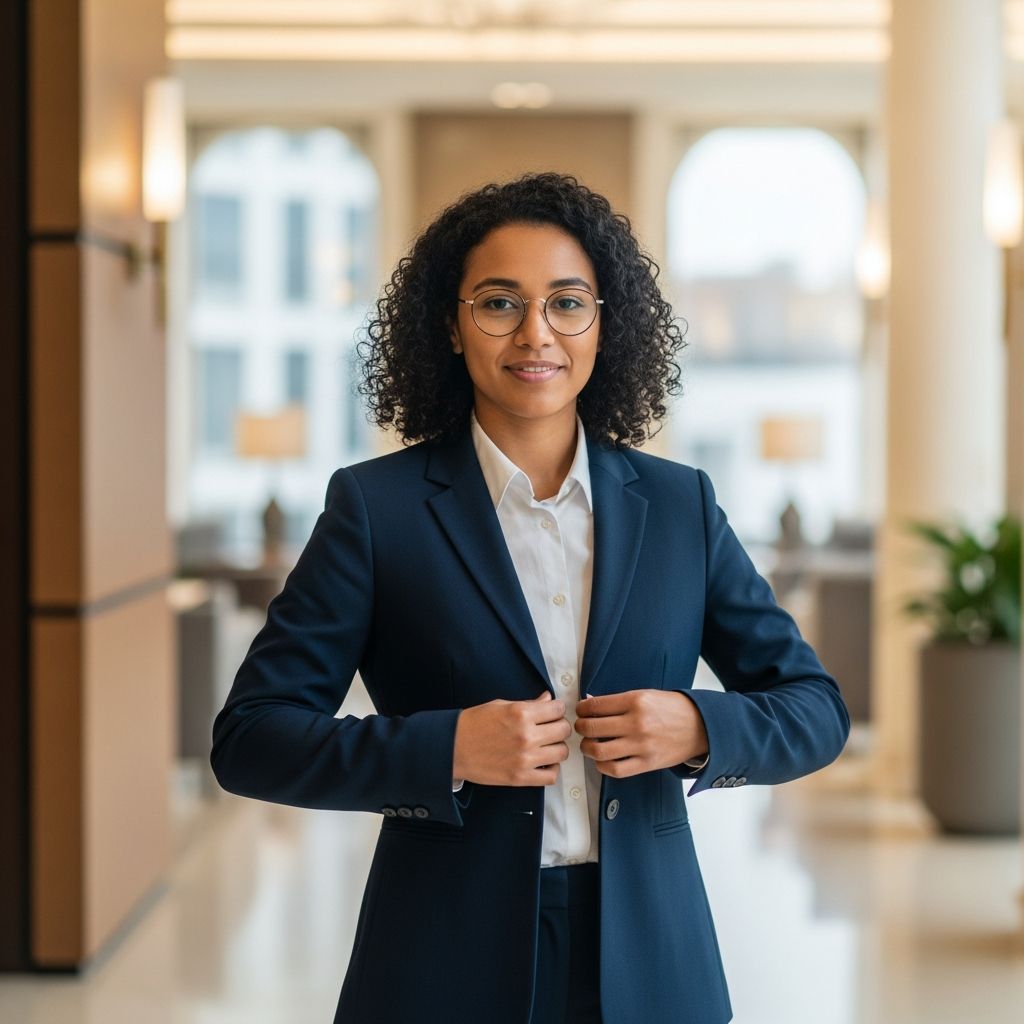
Your interview outfit is silent communication. Before you say a single word, your clothes, shoes, and grooming are already telling your interviewer how seriously you take the opportunity, how prepared you are, and whether you understand their workplace culture. The goal is not to be the trendiest person in the room, but to look capable, respectful, and ready to work.
This guide will help you build an interview outfit that fits the role, the industry, and your personal style—without distracting from your qualifications.
1. The Strategy: Dress One Step Above the Everyday
Most career advisors recommend dressing slightly more formal than the organization’s typical day-to-day dress code. That shows you did your homework and that you take the interview seriously.
- Corporate or conservative fields (finance, law, consulting): aim for business formal.
- Most offices and hybrid roles: aim for business casual.
- Creative, tech, or startup roles: aim for polished casual or creative professional.
- Hands-on or field roles (trades, warehouse, some healthcare support): aim for neat, practical, safety-appropriate.
The common thread: everything should be clean, in good condition, and fit properly—nothing stained, torn, or overly tight.
2. Understanding Interview Dress Codes
Use this table as a quick reference for different work environments and how you might dress for each.
| Environment | Dress Code Target | Typical Outfit Elements |
|---|---|---|
| Law, banking, consulting, high-level corporate | Business formal | Dark suit, neutral shirt/blouse, closed-toe dress shoes, minimal accessories |
| Corporate office, education, government roles | Business professional / business casual | Blazer with dress pants or skirt, shirt or blouse, polished shoes |
| Tech, marketing, design, startups | Polished casual or creative professional | Smart jeans or chinos, blouse/shirt or knit top, optional blazer, clean shoes |
| Retail, hospitality, customer service | Baseline or business casual | Dark jeans or trousers, simple top, closed-toe shoes, light accessories |
| Trades, warehouse, lab, some healthcare support | Neat functional / safety-aware | Clean pants, solid top, industry-appropriate footwear (e.g., safety shoes), minimal jewelry |
3. Building Blocks of a Strong Interview Outfit
Regardless of industry, several principles apply almost everywhere.
3.1 Fit and Comfort
- Clothes should skim your body without pulling, sagging, or gaping.
- You should be able to sit, stand, and walk comfortably.
- Avoid anything that you constantly need to adjust or tug into place.
Good fit helps you look more polished and lets you focus your attention on the conversation rather than your clothes.
3.2 Colors and Patterns
- Lean on neutrals like navy, gray, black, tan, and white—they photograph well and signal professionalism.
- Soft blues, burgundy, or muted greens can add interest without overpowering.
- Save loud prints or neon colors for another day unless you are interviewing for a very creative role and are sure it aligns with the culture.
3.3 Grooming and Presentation
- Hair should be clean and styled away from your face so you’re not tempted to touch it repeatedly.
- Nails should be clean and trimmed; if polished, opt for neutral or subtle shades.
- Avoid strong fragrances; many workplaces prefer scent-free or very light scents.
- Light, natural-looking makeup (if you wear it) is typically safest for conservative environments.
4. Outfit Ideas by Level of Formality
These are starting points—you can adapt for your gender expression, body type, and culture while keeping the same level of polish.
4.1 Business Formal (Most Conservative)
This is your safest choice for highly traditional fields or senior-level roles.
- Top + layers: Crisp button-down shirt or structured blouse in white or pale color; optional conservative tie or scarf.
- Jacket: Matching suit jacket in navy, charcoal, or black.
- Bottom: Matching suit trousers or a knee-length skirt.
- Shoes: Closed-toe dress shoes (oxfords, loafers, or low-to-moderate heels).
- Accessories: Simple watch, small earrings or ring; avoid large or noisy jewelry.
4.2 Business Professional / Business Casual
Great for most office roles, education, and many corporate interviews where a full suit may not be necessary.
- Top: Button-down shirt, blouse, or fine-gauge knit top (not sheer, low-cut, or overly casual).
- Layer: Blazer, cardigan, or structured jacket that coordinates but does not have to match exactly.
- Bottom: Dress pants, chinos in a dark neutral, or a knee-length skirt.
- Shoes: Closed-toe flats, loafers, low heels, or simple dress boots, all clean and in good repair.
- Extras: Belt that matches your shoes, subtle jewelry, professional-looking bag or portfolio.
4.3 Polished Casual / Creative Professional
Useful for interviews at startups, tech companies, creative agencies, or workplaces with a relaxed dress code.
- Top: Blouse, button-down, or neat knit top; patterns are fine if not too loud.
- Layer: Blazer, casual jacket, or sleek cardigan to elevate the look.
- Bottom: Dark, well-fitting jeans with no rips, or chinos; casual skirts or dresses that reach at least to the knee.
- Shoes: Clean loafers, oxfords, boots, or stylish flats; avoid athletic sneakers unless you know they are acceptable.
- Personality: A statement watch, interesting but tasteful earrings, or a colorful scarf can show individuality without compromising professionalism.
4.4 Practical and Safety-Conscious Roles
If you are interviewing for roles where you may tour a warehouse, job site, lab, or clinical space, you may need to balance professionalism with safety and practicality.
- Top: Collared shirt, neat polo, or solid top with sleeves.
- Bottom: Chinos, trousers, or dark jeans without rips, tears, or heavy distressing.
- Footwear: Closed-toe, non-slip, and possibly steel-toed footwear if requested.
- Accessories: Minimal jewelry that will not interfere with equipment or safety protocols.
5. Adding Personality Without Losing Professionalism
Interview outfits do not have to feel like a costume. You can still look like yourself while reading as professional and prepared.
- Introduce a subtle signature color in a tie, scarf, blouse, or pocket square.
- Choose textures like tweed, subtle patterns, or interesting weaves instead of loud prints.
- Wear jewelry or accessories that are meaningful to you but not distracting—think small pendant, classic watch, or simple studs.
- Use your bag to express style: a structured tote, sleek backpack, or professional briefcase can all work if they are clean and not worn-out.
The rule of thumb: if an accessory is the first thing people notice or comment on, it may be too bold for an interview.
6. Common Interview Outfit Mistakes to Avoid
Career centers and employer surveys highlight recurring outfit mistakes that can subtly undermine your first impression.
- Wrinkled or dirty clothing: Always iron or steam items and inspect for stains or pet hair.
- Ill-fitting pieces: Very tight clothing can look unprofessional; very loose items can read as sloppy.
- Overly casual items: Athletic sneakers, hoodies, graphic tees, and ripped jeans rarely belong in an interview, even in casual environments.
- Distracting details: Loud logos, heavy perfume, jangling jewelry, or very bright makeup can pull attention away from your skills.
- Uncomfortable shoes: If you struggle to walk in them, do not wear them to an interview.
7. Final 24-Hour Checklist
To reduce last-minute stress, do a quick run-through the day before your interview.
- Lay out your entire outfit, including shoes, socks, undergarments, and accessories.
- Check for missing buttons, loose threads, stains, or wrinkles and fix them.
- Ensure your clothes are comfortable when you sit, stand, and reach.
- Pack a professional-looking bag with copies of your résumé, a pen, and a notepad.
- Plan your hair and grooming; if needed, schedule enough time in the morning.
- Have a backup top (or full backup outfit if possible) in case of spills or weather changes.
Frequently Asked Questions (FAQs)
Q1: What should I wear to a video or virtual interview?
Dress as if you were going to the office, at least from the waist up. A blazer or structured top in a solid color works well on camera. Avoid busy patterns and make sure your background is tidy. Choose pants or a skirt you could comfortably stand up in, in case you need to move during the call.
Q2: Is it okay to wear jeans to an interview?
Dark, well-fitting jeans with no rips or distressing can be acceptable for casual or creative workplaces, especially when paired with a blazer and polished shoes. For very corporate or traditional settings, it is safer to choose dress pants instead.
Q3: How much jewelry or makeup is appropriate?
Most career centers advise keeping both jewelry and makeup moderate and non-distracting—small earrings, a watch, and natural-looking makeup if you wear it. In conservative industries, it is better to err on the side of being slightly understated.
Q4: Do I need to wear a suit for every interview?Not always. A suit is recommended for formal industries and some corporate roles, but business casual outfits are often appropriate for many offices and non-corporate settings. Research the company’s culture and dress one level more formal than their everyday standard.
Q5: What if I cannot afford new professional clothes?
You do not need an expensive wardrobe to look professional. Focus on one or two neutral, well-fitting basics you can mix and match. Many universities and community organizations offer career closets or low-cost options for interview clothing—check with local career centers or non-profits in your area.
References
- How to Dress for an Interview — University of Cincinnati Career Education. 2023-08-15. https://www.uc.edu/campus-life/career-co-op-support/interviews/how-to-dress.html
- How to Dress for Every Type of Job Interview — Montana State University Billings Career & Employment Services. 2023-01-10. https://www.msubillings.edu/careers/pdf/How%20to%20Dress%20for%20Every%20Type%20of%20Job%20Interview%202023.pdf
- Dressing for an Interview — University of North Texas Career Center. 2022-09-01. https://careercenter.unt.edu/resources/dressing-for-an-interview/
- How to Dress for a Job Interview — Indeed Career Guide. 2023-06-20. https://www.indeed.com/career-advice/interviewing/how-to-dress-for-a-job-interview
- Interview and Workplace Attire — Temple University Career Center. 2022-08-30. https://careercenter.temple.edu/students/fly/interview-and-workplace-attire
- What to Wear to an Interview: Guide — Coursera Career Academy. 2024-02-05. https://www.coursera.org/articles/what-to-wear-to-an-interview