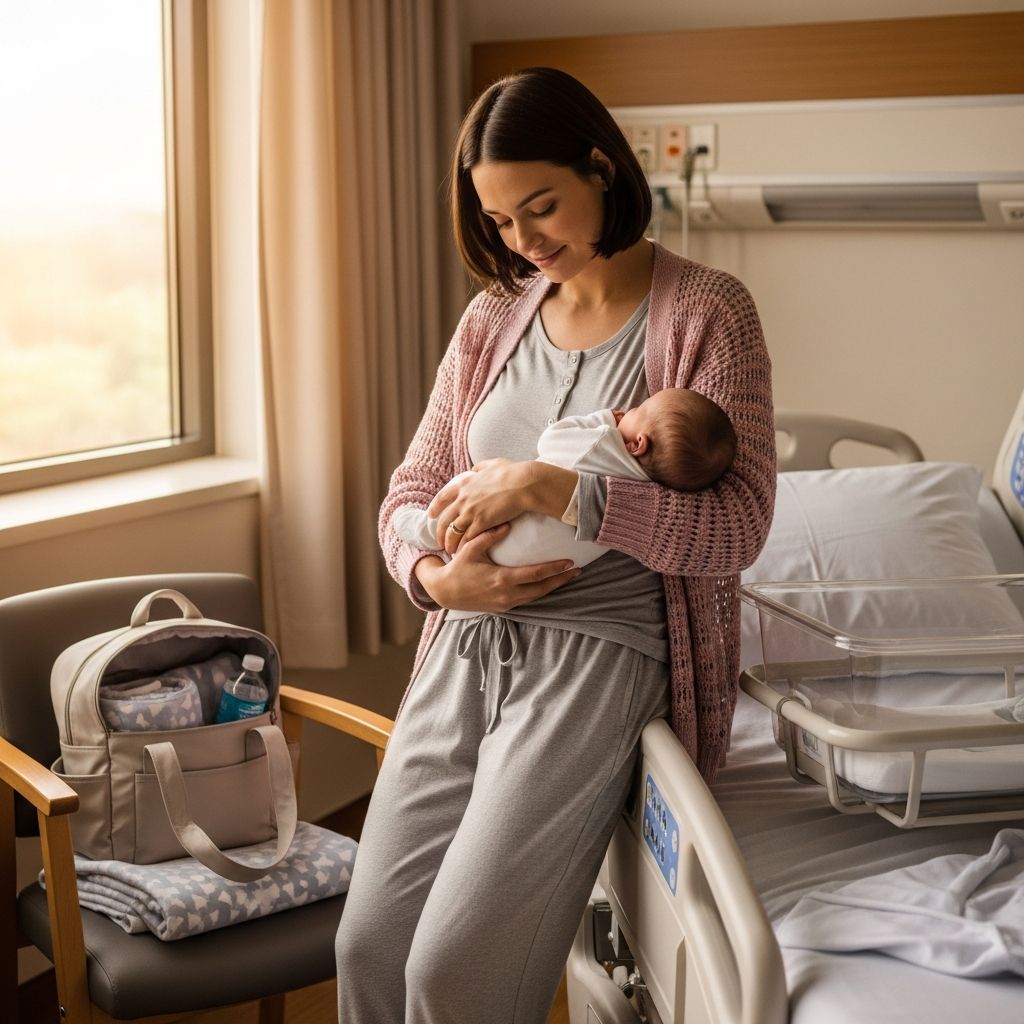
Choosing what to wear in the hospital for labor and those first postpartum days can feel surprisingly stressful. You want to be comfortable, covered, and photo-ready, but you also need clothes that work with monitors, nursing, and a body that just did something huge. This guide breaks down what to wear at each stage of your stay so you can pack with confidence instead of guesswork.
Why Your Hospital Outfit Choices Matter
Most hospitals provide gowns and disposable underwear, and you can absolutely use only those if you want. But many parents feel more comfortable and in control when they bring a few carefully chosen items from home.
Thoughtful clothing can:
- Keep you comfortable in a cold, bright, and very medical-feeling environment.
- Support breastfeeding or pumping with easy access tops and bras.
- Protect a tender abdomen after vaginal birth or C-section with soft, non-restrictive fabrics.
- Help you feel a bit more like yourself in photos and when visitors drop by.
- Make skin-to-skin contact easier, which supports bonding and can help regulate baby’s temperature and heart rate.
Planning by Stage: Labor, Recovery, and Going Home
Instead of one generic “hospital outfit,” it helps to think in stages, because your needs change quickly.
| Stage | Main Priorities | Ideal Clothing Features |
|---|---|---|
| Labor & Delivery | Mobility, access for monitoring, temperature control | Loose, sleeveless or short-sleeve, easy to remove |
| Early Postpartum | Breastfeeding access, bleeding management, comfort | Soft waistbands, nursing-friendly tops, dark colors |
| Going Home | Comfort in car, easy bathroom access, weather-appropriate | Light layers, forgiving fits, supportive undergarments |
What to Wear During Labor
Labor can last a few hours or more than a day, and you may be walking, changing positions, or laboring in water before pushing. Comfort and flexibility matter far more than style.
Option 1: Hospital Gown Only
Many people simply wear the standard hospital gown for labor, and that’s perfectly fine.
- It opens in the back to allow easy access for epidurals, checks, and monitoring.
- You do not have to worry about stains or washing it afterwards.
- If you are planning an epidural or C-section, staff are already used to working around this gown.
Option 2: Your Own Labor Outfit
If you would rather wear something from home, choose pieces that you do not mind getting stained or possibly cutting off in an emergency.
- Oversized T-shirt or soft nightgown that falls above the knee.
- Supportive but stretchy sports bra if you would like coverage on top, especially for birthing pools.
- Open-back or snap-shoulder gown designed for labor, which allows IVs and monitors more easily.
Ask your care team ahead of time what is allowed during labor, particularly if you hope to use a tub, shower, or wireless monitoring.
Labor Footwear and Layers
- Non-slip socks or slippers: Hospital floors can be cold and slippery, and you’ll likely be encouraged to walk to help labor progress.
- Light robe or open cardigan: Easy to throw on if you feel chilly between contractions.
- Hair ties or headband: Keeping hair out of your face can make you feel less overwhelmed and more focused.
Clothing for the First 24–48 Hours After Birth
Once baby is born and you are moved to a postpartum room, your needs change. You will be recovering, bleeding, learning to feed your baby, and likely having your photo taken a lot. Layers and softness become your best friends.
Postpartum Tops and Gowns
Whether or not you plan to breastfeed, having tops that open in the front makes it easier for providers to check your chest, do skin-to-skin, and help with latching.
- Button-front pajamas or nightshirt: Easy access for nursing, pumping, or chest checks.
- Nursing tank or cami: Built-in shelf bra, soft material, and clip-down cups can make frequent feeds simpler.
- Loose V-neck T-shirt: If you prefer not to show much, choose a stretchy neckline for quicker access.
Bottoms That Don’t Dig In
Your belly will still look several months pregnant after birth, and your abdomen—especially after a C-section—will be sensitive. Choose bottoms that are gentle and forgiving.
- High-waisted, soft-waistband pants that sit above a C-section incision.
- Loose joggers or lounge pants in breathable fabrics.
- Knee-length or midi dress if pants feel too restrictive or you prefer no waistband at all.
Underwear and Support Garments
Hospitals generally provide mesh underwear and large pads for the first hours and days of postpartum bleeding. Many people like to switch to their own items after the heaviest bleeding slows.
- High-rise cotton underwear big enough to hold large postpartum pads comfortably.
- Postpartum or period underwear for extra leak protection once bleeding lessens.
- Soft, wireless nursing bra or bralette that can adjust as your milk comes in and your breasts change size.
Skip tight shapewear or anything that compresses too much until your provider says it’s safe, especially after a C-section.
Nursing- and Pumping-Friendly Outfit Features
If you plan to breastfeed or think you might try, choosing clothes with built-in access can remove one major stressor in the early days. Lactation consultants often encourage frequent, on-demand feeds in the first 24–48 hours, so you will be opening your top often.
- Clips or snaps at the straps that let you lower the cup of a bra or tank with one hand.
- Button-down fronts on shirts, gowns, or pajama tops.
- Wrap-style tops or dresses you can pull aside quickly.
- Stretchy necklines wide enough to pull down without stretching out immediately.
For pumping in the hospital, you might also appreciate a hands-free pumping bra, which holds flanges in place and frees your hands for holding baby or eating a snack.
Comfort Extras That Make a Big Difference
Clothing is not just shirts and pants. Small comfort-focused items from home can dramatically change how you feel in your hospital room.
- Robe: Lightweight for warmer climates or fleece for winter; ideal over a nursing nightgown or tank.
- Cozy socks or slippers: Pack at least two pairs so one can be washed or replaced if dirty.
- Soft blanket or shawl: Hospitals often keep rooms on the cool side to reduce infection risk, so an extra layer is comforting.
- Lip balm and moisturizer: Hospital air is dry due to controlled humidity, which can dehydrate your skin and lips.
What to Wear Home After Birth
Leaving the hospital is a big emotional moment—and usually involves stairs, elevators, and at least one car ride. Your going-home outfit should prioritize ease and comfort over tight, pre-pregnancy fits.
Choosing the Right Outfit for Your Body
- Plan to look 5–6 months pregnant in terms of belly size; your uterus and body need weeks to months to return toward baseline.
- Pick stretchy fabrics like jersey, modal, or cotton blends instead of stiff denim.
- Avoid waistbands that hit directly on a C-section incision; high-rise or under-bump styles are more comfortable.
Going-Home Outfit Ideas
- Loose maxi or midi dress: Simple, forgiving, and easy to pair with a cardigan or denim jacket.
- Maternity leggings with a long top: You can keep wearing maternity leggings postpartum; pair with a tunic or relaxed sweater.
- Soft joggers and nursing tee: Great if the weather is cooler or you want something more like pajamas.
Match your outfit to the season: add a warm coat, hat, and gloves in winter, or a sun hat and light scarf in summer.
Coordinating Outfits with Baby (Optional but Fun)
If you like the idea of coordinated photos, you can plan outfits that complement your baby’s hospital and going-home clothes.
- Choose neutral or pastel tones that look good on camera: soft blues, blush, cream, gray, or olive.
- Repeat a color from baby’s hat, swaddle, or onesie in your top or robe.
- Use simple patterns (stripes, small florals) on one person and solids on the other to avoid clashing.
Just remember: the most important thing is your comfort and baby’s safety; matching outfits are a bonus, not a requirement.
How Many Outfits Do You Really Need?
You do not need to pack a full suitcase. For a typical 1–3 day hospital stay, a basic clothing checklist for mom might look like this:
- 1 outfit or gown for labor (or use the hospital gown).
- 2–3 postpartum tops (nursing tanks, tees, or button-front pajamas).
- 2 pairs of bottoms (joggers, lounge pants, or leggings).
- 1 robe or cardigan.
- 3–4 pairs of underwear (plus any postpartum or period underwear you like).
- 2 nursing bras or soft bralettes.
- 2 pairs of non-slip socks and 1 pair of slippers or slide sandals.
- 1 going-home outfit you feel good in.
If you are planning a longer stay, having an extra set of clothes or asking a partner to wash and bring more can be helpful.
Frequently Asked Questions (FAQs)
Do I have to bring my own clothes, or can I wear only hospital gowns?
You can absolutely rely entirely on hospital gowns if you prefer. They are functional, allow easy access for medical care, and you do not have to worry about stains. Many parents still like to bring at least a robe, socks, and a going-home outfit for comfort.
What fabrics are best for hospital outfits?
Look for soft, breathable fabrics such as cotton, bamboo, modal, or cotton-blend jersey. These materials are gentle on sensitive skin, help with temperature regulation, and are generally easy to wash.
Should I size up in postpartum clothes?
Most people find that late-pregnancy or one size up from their pre-pregnancy size is the most comfortable immediately after birth. Your belly will still be enlarged, and your chest may increase in size when your milk comes in.
What should I avoid wearing at the hospital?
- Tight waistbands or shapewear that press on your abdomen or a C-section incision.
- Complicated outfits (like jumpsuits) that make bathroom trips difficult.
- Delicate or sentimental clothing that you would be upset to stain.
- Underwire bras in the very early days if you are breastfeeding, as they may contribute to clogged ducts for some people.
How many nursing bras do I really need in the hospital?
Two is enough for most short stays: one to wear and one backup. You can always add more once you are home and have a better sense of your size and comfort needs.
Is it worth buying special “hospital sets” that match with baby?
Special matching sets can be fun for photos and may be made with very soft fabrics, but they are not a medical necessity. If your budget allows and it makes you happy, go for it; otherwise, you can easily create a cozy, practical wardrobe from items you already own.
References
- Pregnancy, Birth and Baby: What to Pack in Your Hospital Bag — Australian Government Department of Health and Aged Care. 2023-05-16. https://www.pregnancybirthbaby.org.au/what-to-pack-in-your-hospital-bag
- Improving the Hospital Experience for New Mothers — Agency for Healthcare Research and Quality (AHRQ). 2020-09-01. https://www.ahrq.gov/patient-safety/settings/maternity/index.html
- What to Pack in Your Hospital Bag — BabyCenter Medical Advisory Board. 2024-01-10. https://www.babycenter.com/pregnancy/your-body/what-to-pack-in-your-hospital-bag_10393430
- Newborns: Skin-to-Skin Contact — World Health Organization. 2017-11-01. https://www.who.int/news-room/questions-and-answers/item/newborns-skin-to-skin-contact
- Breastfeeding and Breast Care — Office on Women’s Health, U.S. Department of Health & Human Services. 2023-03-15. https://www.womenshealth.gov/breastfeeding/breast-care