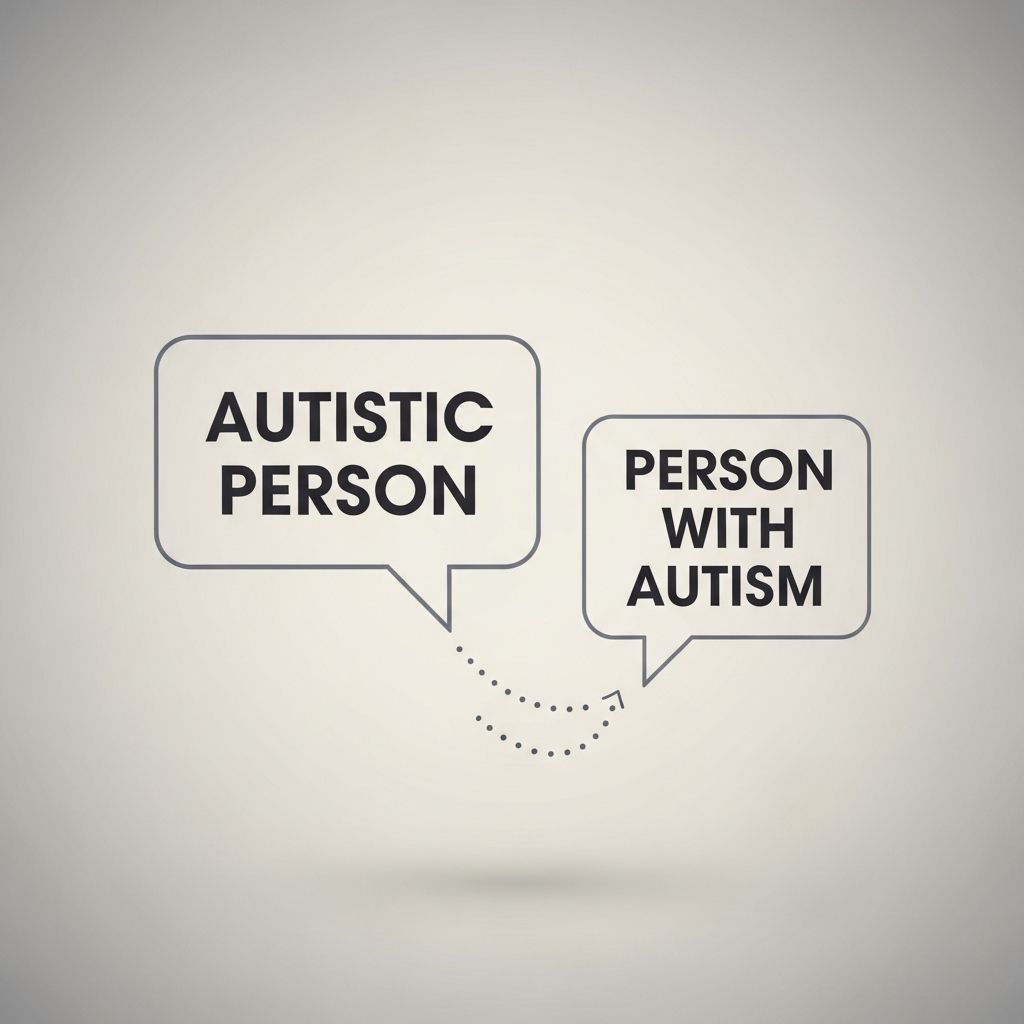
The words we use to describe autism carry weight far beyond simple grammar or semantics. Language shapes perception, influences self-image, and signals respect or dismissal to the communities being described. For autistic individuals and their families, the choice between describing someone as “autistic” versus “a person with autism” represents a meaningful distinction rooted in identity, dignity, and how autism is conceptualized within society. This seemingly small linguistic choice reflects deeper conversations about neurodiversity, acceptance, and what it means to be autistic in a world designed by and for non-autistic people.
Why Terminology Matters in Autism Communication
Precise and respectful language serves multiple critical functions when discussing autism. First, it facilitates effective communication among healthcare providers, educators, families, and autistic individuals themselves. When everyone uses consistent terminology, misunderstandings decrease and clarity improves. Second, language shapes public perception and influences how autism is understood culturally. Words that frame autism as a deficiency versus a difference affect funding priorities, research directions, and social attitudes. Third, terminology directly impacts the dignity and self-perception of autistic people, particularly children who are forming their identities.
Research and community guidelines increasingly emphasize that understanding autism terminology is essential for creating inclusive environments. When language is chosen thoughtfully, it reduces stigma, avoids outdated or inappropriate terminology that perpetuates misconceptions, and fosters better comprehension and acceptance within society. The autistic community has made clear that they often prefer language that recognizes autism as an integral part of identity rather than something separate from the person.
Identity-First Language: “Autistic Person”
Identity-first language positions autism before the person, as in “autistic person” or “autistic individual.” This phrasing reflects how many autistic people experience their neurotype: as a fundamental aspect of who they are, inseparable from their identity. Just as someone might say “I am Irish” rather than “I have Irishness,” many autistic individuals prefer “I am autistic” because it acknowledges that autism shapes how they think, perceive, and interact with the world.
Advocates for identity-first language argue that it recognizes autism as a natural form of human neurodiversity rather than pathology. This approach aligns with the neurodiversity movement, which posits that neurological differences—including autism, ADHD, dyslexia, and dyspraxia—represent natural variations in human neurocognition rather than defects requiring correction. When autism is presented as an identity characteristic, it elevates the conversation from one of disability and deficiency to one of difference and diversity.
The autistic self-advocacy community has been particularly vocal in preferring identity-first language. Many autistic adults and advocates report that this terminology feels more affirming and aligns with how they understand themselves. Additionally, identity-first language can foster a sense of community solidarity, similar to how many disability communities and other marginalized groups have reclaimed language related to their identities.
Person-First Language: “Person with Autism”
Person-first language prioritizes the individual before their diagnosis, phrasing such as “person with autism” or “individual with an autism diagnosis.” Historically, this approach emerged from disability rights movements advocating that people should not be defined solely by their conditions. The reasoning was that emphasizing personhood first would combat dehumanization and reinforce that a diagnosis does not encompass the entire identity of an individual.
Families and some medical professionals have traditionally favored person-first language because it emphasizes that the person is more than their diagnosis. This perspective reflects a desire to ensure that children and adults with autism are recognized for their full humanity and diverse characteristics beyond their neurotype. Some parents find this language reassuring, as it suggests that their child is a complete person whose autism is one aspect of their existence.
Person-first language can also be more accessible in certain contexts, particularly when communicating with audiences unfamiliar with neurodiversity frameworks. In medical settings, educational documentation, or when speaking to grandparents or community members, person-first language may be more readily understood as respectful and inclusive.
The Community Consensus: What Autistic Individuals Prefer
While both language approaches exist, the autistic self-advocacy community has increasingly expressed a clear preference. Extensive surveys, community consultations, and guidelines from autism research organizations indicate that identity-first language is more widely preferred among autistic individuals, particularly within the autistic self-advocacy movement. This preference reflects the understanding that autism is not something someone “has” the way one might have a broken bone, but rather something that is integral to how their brain and mind function.
However, this preference is not universal. Some autistic individuals prefer person-first language, while others use both interchangeably depending on context. The most important principle is respect for individual preference. When interacting with an autistic person, the best practice is to ask how they prefer to be described and honor that preference in future interactions. This individual-centered approach acknowledges that autistic people are the experts on their own experiences and identities.
Language to Avoid: Moving Beyond Outdated and Stigmatizing Terms
Beyond the identity-first versus person-first distinction, significant shifts have occurred in which autism-related terms are considered appropriate. Several categories of language should be avoided:
- Functioning labels: Terms like “high-functioning” or “low-functioning” autism are increasingly discouraged by major health organizations. These labels are stigmatizing and fail to capture the complexity of autistic experiences. A person who appears to function well in some areas may struggle significantly in others, and these labels can result in reduced support services or dismissal of genuine challenges.
- Deficit-focused language: Phrases such as “suffers from autism,” “autistic symptoms,” or “lacks empathy” frame autism primarily through pathology. Instead, strengths-led or neutral terminology—such as “autistic traits,” “autistic skills,” or describing specific areas where someone “needs support”—provides a more balanced and respectful picture.
- Medicalized or normalizing language: Terms implying that being non-autistic is “normal” or “healthy” while being autistic is abnormal should be avoided. Describing non-autistic people as “normal controls” in research contexts or using language that positions autism as medically wrong perpetuates harmful biases. Instead, use terms like “non-autistic” or “neurotypical” as neutral descriptors.
- Outdated diagnostic labels: Asperger’s Syndrome is no longer an official diagnosis under the DSM-5 and has been integrated into autism spectrum condition. Using outdated terminology can fragment the autistic community and misrepresent current understanding of autism.
- Problem-focused language: Describing autistic behaviors as “problem behaviors,” “challenging behaviors,” or “disruptive behavior” emphasizes negative framing. More neutral or strengths-based alternatives include “distress behaviors,” “meltdowns and shutdowns,” or describing “stimming” and “self-soothing” behaviors in their own terms without pathology.
Reconceptualizing Autism: From Disorder to Spectrum Condition
The terminology shift extends beyond individual versus person-first language to how the broader condition is named and conceptualized. The term “Autism Spectrum Disorder” (ASD) has been standard in diagnostic manuals, but increasingly, “Autism Spectrum Condition” (ASC) or simply “autism” are preferred. The rationale is significant: the word “disorder” implies that something is inherently wrong and undesirable about being autistic. By contrast, “condition” or “autism” alone maintains clinical accuracy while reducing stigmatizing implications.
The spectrum concept itself is crucial to understanding modern autism terminology. The spectrum does not represent a linear progression from mild to severe but rather reflects the multidimensional nature of autism. Individuals on the spectrum may have varying support needs in different domains—strong in certain academic or technical areas while needing more support in social communication, or vice versa. This recognition has led to support-level classifications in diagnostic frameworks rather than functioning labels.
Language in Different Contexts: Schools, Medical Settings, and Home
The appropriateness of specific terminology can vary by context, though respect should remain constant across all settings. In educational environments, individualized education plans (IEPs) increasingly adopt strength-led language and description of specific support needs rather than deficit-focused terminology. Medical settings may employ clinical diagnostic terms while still respecting individual preferences regarding identity-first or person-first language.
Within families, conversations about autism language matter significantly. Parents and caregivers who intentionally use affirming language model respect and acceptance to their autistic children. When a parent refers to their child as “my autistic daughter” rather than framing autism as something separate, they communicate that autism is an acceptable and integral part of identity. This language choice influences how children internalize their autistic identity during crucial developmental years.
Practical Guidance for Using Respectful Autism Language
Navigating autism terminology respectfully involves several practical principles:
- Ask individuals their preference: When possible, directly ask autistic people or the parents of autistic children how they prefer to be described. This simple step honors self-determination and prevents assumptions.
- Default to identity-first language: When speaking generally about the autistic community or when individual preferences are unknown, identity-first language (“autistic person”) reflects community preference as expressed through self-advocacy organizations.
- Avoid functioning labels and deficit language: Move away from high- or low-functioning labels, problem-focused descriptors, and language that positions autism as purely negative.
- Use current, evidence-based terminology: Refer to “autism” or “autism spectrum condition” rather than outdated diagnoses. Avoid terms like Asperger’s Syndrome when discussing current diagnostic categories.
- Acknowledge strength alongside support needs: When describing autistic individuals, balance any discussion of areas where they need support with recognition of strengths, skills, and abilities.
- Remain flexible and correctable: If corrected about terminology preferences, accept the feedback gracefully without defensiveness. Language evolves as communities lead, and showing openness to learning demonstrates respect.
Frequently Asked Questions
Q: Is it ever appropriate to use person-first language when discussing autism?
A: Yes, if that is an individual’s stated preference. Some autistic people do prefer person-first language, and respecting individual choice is paramount. Additionally, in certain professional or formal contexts where person-first language is standard, it can be used respectfully while still avoiding stigmatizing terminology.
Q: Why is “high-functioning” or “low-functioning” problematic?
A: These labels are stigmatizing and inaccurate because they oversimplify the multidimensional nature of autism. An autistic person might be “high-functioning” in academics but struggle with sensory processing or social communication. These labels can also result in people being denied needed supports based on a “high-functioning” label or being underestimated regarding abilities based on a “low-functioning” label.
Q: Should I correct others when they use outdated autism terminology?
A: Approach this contextually. If you are an autistic person or parent of an autistic child, you have standing to correct language directly affecting you or your child. In broader contexts, gently providing updated terminology can be educational without being accusatory. Frame corrections as opportunities to learn rather than attacks.
Q: How do I talk to my autistic child about the language I use to describe them?
A: Age-appropriately discuss how different people describe autism and ask your child what language feels right to them. Make it clear that all autistic people deserve respect and that autism is a valued part of who they are. As they grow, their preferences may evolve, and that is normal.
Q: Is the term “neurodivergent” the same as “autistic”?
A: No. “Neurodivergent” is a broader umbrella term describing anyone with a neurocognitive condition like autism, ADHD, dyslexia, or dyspraxia. “Autistic” specifically describes someone whose neurotype is autism. It is preferable to use the specific term (autistic) unless multiple neurodivergent conditions are relevant to the discussion.
Q: What should I do if an autistic person corrects my language use?
A: Accept the correction gracefully, thank them for the feedback, and adjust your language going forward. This demonstrates respect and shows that you value their perspective on their own identity and experience.
References
- Community-Preferred Terminology around Autism – AIMS-2-TRIALS Guide — AIMS-2-TRIALS Research Consortium. 2024. https://www.aims-2-trials.eu/wp-content/uploads/AIMS-2-TRIALS_Guide_-Preferred_Terminology_Glossary__Rationale.pdf
- Assessment and Diagnosis Guideline: Glossary — Autism Cooperative Research Centre. 2023. https://www.autismcrc.com.au/best-practice/assessment-and-diagnosis/guideline/glossary
- A Comprehensive Guide to Autism Terminology — Autism Behavior Services. 2024. https://autismbehaviorservices.com/guide/comprehensive-guide-to-autism-terminology/
- Glossary – Reframing Autism — Reframing Autism. 2024. https://reframingautism.org.au/service/glossary-terms/
- Autism Style Guide — National Institutes of Health (NIH). 2025. https://www.nih.gov/nih-style-guide/autism
- Terminology Guide: Why Words Matter — Autism Education Trust & National Exam Network. 2024. https://www.nen.org.uk/sites/default/files/2024-12/terminology_guide_-_why_words_matter.pdf
- What is Autism? — Autism Speaks. 2025. https://www.autismspeaks.org/what-autism