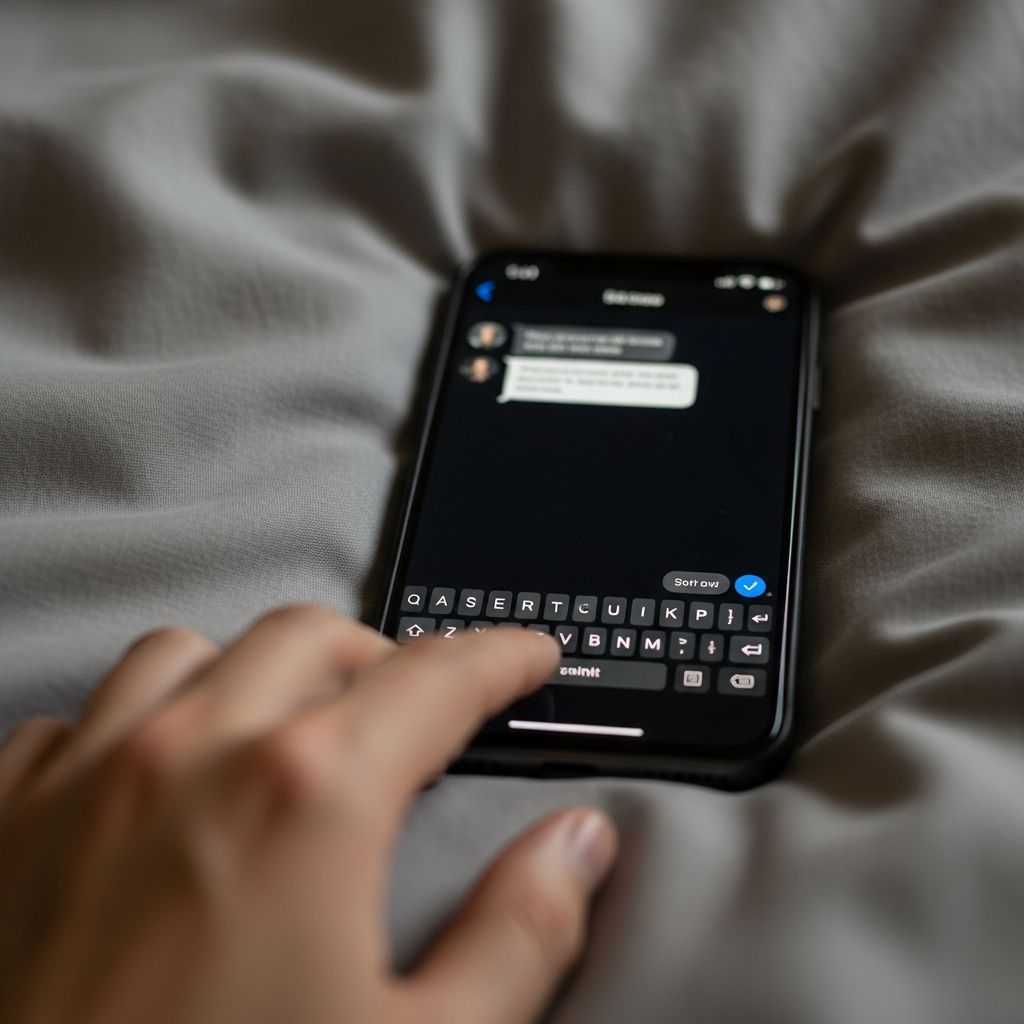
Sending the first message after a big argument can feel terrifying. You do not want to say the wrong thing and restart the fight, but silence can feel just as painful. This guide explains how to use texting thoughtfully after conflict so you calm emotions, show care, and reopen connection instead of deepening the rupture.
Why Texts Matter So Much After a Fight
Right after a major argument, both people are usually stressed and flooded with emotion. Research on conflict and stress shows that intense arguments can trigger the body’s fight-or-flight response, increasing heart rate, muscle tension, and stress hormones, which makes clear thinking and listening harder in the moment. A well-timed, considerate text can:
- Signal safety (“I’m not attacking you anymore.”)
- Show that the relationship matters, even if you still disagree
- Bridge the gap between an explosive moment and a calmer conversation later
- Prevent stonewalling or long periods of cold distance that damage trust
The goal is not to solve the entire conflict by text, but to send messages that lower the temperature and invite constructive repair.
Step One: Pause Before You Type
Even a helpful text can backfire if you send it while you are still boiling inside. Relationship and communication experts consistently recommend allowing time for your nervous system to settle before re-engaging after conflict.
Signs you may need more time before texting:
- You are rehearsing comebacks or “winning” speeches in your head
- You feel the urge to prove a point or correct the other person
- Your heart is racing or you are shaking
- You cannot imagine any way you might have contributed to the problem
Instead of texting immediately, try:
- Taking a walk or doing light exercise to burn off adrenaline
- Journaling about what you felt and needed during the fight
- Practicing slow breathing or mindfulness for 5–10 minutes
Once you feel calmer and more open to understanding the other person’s perspective, you are in a better place to write a thoughtful message.
Clarify Your Intention Before You Hit Send
Before writing the first word, ask yourself: What is the purpose of this text? Common healthy intentions include:
- To show you still care about the person
- To take responsibility for your part
- To acknowledge their pain or perspective
- To schedule a calmer conversation
- To reassure them that the relationship matters more than the argument
If your honest intention is to win, punish, shame, or force an instant resolution, wait longer. A text crafted from defensiveness usually escalates the conflict rather than repairing it.
Core Principles for Post-Fight Texting
Most effective after-argument texts share a few consistent qualities supported by relationship research on repair and reconciliation.
| Helpful Principle | What It Looks Like in a Text |
|---|---|
| Ownership | Clearly naming your behavior without blaming theirs. |
| Empathy | Recognizing how they might feel, even if you disagree on details. |
| Low pressure | Inviting, not demanding, a response or conversation. |
| Respect for space | Letting them know it is okay if they need more time. |
| Concrete care | Offering a small, specific next step rather than vague promises. |
Types of Texts That Help Repair After Conflict
Different fights and relationships call for different kinds of messages. Below are several categories of texts you can adapt to your own voice and situation. Do not copy them word-for-word; instead, use them as templates to think about tone and structure.
1. Acknowledging the Tension
Sometimes the first step is simply naming that things feel off. Ignoring the obvious can make the other person feel dismissed or unimportant.
Key elements for this type of text:
- Simple, direct acknowledgement that the argument was rough
- No analysis or blame
- An emphasis on the relationship still mattering
Purpose: to break the silence and show that you are emotionally present.
2. Taking Responsibility for Your Part
Research on apologies suggests that effective repair includes acknowledging wrongdoing, expressing remorse, and, when possible, taking steps toward change. A text cannot cover everything, but it can begin that process.
When you focus on your part, you:
- Reduce the chance of triggering defensiveness
- Model maturity and accountability
- Make it safer for the other person to admit their own missteps later
What to include:
- A specific behavior (e.g., “raising my voice,” “interrupting,” “walking out”)
- An acknowledgement of the impact (“I imagine that felt…”)
- A genuine statement of regret
3. Validating Their Feelings (Even If You Disagree)
Emotional validation does not mean agreeing with every detail; it means recognizing that their internal experience is real. Couples research highlights that people feel more satisfied in conflict when their feelings are heard and reflected back, even if a full solution takes time.
To validate in a text:
- Reference their emotion (“hurt,” “ignored,” “disrespected,” “overwhelmed”)
- Avoid “but” right after acknowledging their feeling
- Keep the focus on understanding, not defending
4. Reaffirming the Relationship
After a big fight, many people secretly worry, “Is this the beginning of the end?” A brief reassurance that the bond still matters can be deeply calming.
Elements that help:
- Stating that the relationship is more important than the argument
- Expressing that you want to work through it, even if you do not know how yet
- Keeping the tone gentle and steady, not dramatic or clingy
5. Asking for a Calmer Conversation
Text is useful for opening the door, but most complex conflicts are best worked through in real-time conversation. Many therapists recommend “repair conversations” once both partners are calm enough to listen.
A good invitation text:
- Asks permission rather than assuming they are ready
- Proposes a time or window (“later tonight,” “tomorrow afternoon”)
- Frames the conversation as a chance to understand, not just re-argue
6. Offering Space Without Withdrawing Love
Sometimes the most healing message is one that does not demand an immediate reply. Space can lower intensity, but emotional cut-off can harm connection. The difference is whether you stay emotionally available.
Consider sending a text that:
- Recognizes they may need time alone
- States clearly that you will be there when they are ready
- Avoids guilt trips like “I guess you don’t care enough to respond”
Common Texting Mistakes That Reignite the Fight
Even with good intentions, it is easy to send messages that unintentionally restart the conflict. Watch out for these patterns, which research links to ongoing relationship distress when repeated often.
- Re-arguing the facts: Long messages proving you were “technically right” often feel dismissive of the other person’s emotions.
- Backhanded “apologies”: Phrases like “I’m sorry you feel that way” shift blame rather than own behavior.
- Ultimatums over text: Big relationship decisions are best made in person or in a calm setting, not in emotional, pressured texts.
- Message flooding: Sending a rapid series of long texts can overwhelm and escalate defensiveness.
- Silent treatment: Completely ignoring attempts to repair for long periods can damage trust and attachment.
Adapting Your Texts to Different Relationships
The best message after a fight depends on who you are texting and what kind of closeness you share.
Romantic Partners
With a partner, texts after conflict can touch on emotional intimacy and the future of the relationship. It is usually helpful to:
- Acknowledge how the argument might have affected their sense of security with you
- Reassure them that you care about the long-term bond
- Suggest a voice or video call, or an in-person talk when possible
Close Friends
Friendships can suffer silently if conflicts are never addressed. A brief, sincere message can prevent distance from growing:
- Keep language straightforward and down-to-earth
- Focus on shared history and what you value about the friendship
- Offer to meet somewhere neutral and low-pressure (coffee, walk, etc.)
Family Members
Family fights can tap into long histories and repeated patterns. Texts here may need extra boundaries:
- Stick to the current conflict rather than reviewing every past issue
- Use “I” language to reduce defensiveness
- Consider involving a mediator or therapist for deep, recurring patterns
Using Text to Support, Not Replace, Real Conversations
Texting has strengths and limitations. It can reduce immediate intensity and give both people time to think, but it also lacks tone of voice, facial expression, and physical presence. Misinterpretations are common in written communication, especially when people are already upset.
Experts in couples and family therapy often recommend combining text with in-person or live conversations:
- Use text for short, clear messages that show care, responsibility, or logistical planning.
- Reserve complex explanations and problem-solving for voice, video, or in-person talks.
- If a text thread starts to heat up, suggest a pause and a later conversation.
Turning a Fight Into Future Growth
A single text will not transform a relationship, but it can be part of a larger pattern of learning to repair after conflict. Relationship research suggests that strong couples are not those who never fight, but those who know how to reconnect afterward and learn from disagreements.
After the initial making-up, consider reflecting together (in person, not by text) on questions like:
- What did each of us need in that moment that we did not know how to ask for?
- Which parts of the disagreement are about this specific situation, and which are part of a recurring pattern?
- What early warning signs can we notice next time before it becomes a full-blown fight?
- Are there skills (listening, emotional regulation, boundary-setting) we want to build together?
Think of your post-fight texts as practice in these deeper skills: owning your impact, staying connected even when you are hurt, and choosing the relationship over the temporary satisfaction of being right.
Frequently Asked Questions (FAQs)
How soon should I text after a big fight?
There is no universal rule, but it is wise to wait until your body and emotions have calmed enough that you can write without attacking, blaming, or proving you are right. For some people this is an hour; for others, it might be overnight. The key is to avoid both impulsive texting and long, punishing silence.
What if I do not think I was wrong at all?
You can still acknowledge that the other person felt hurt or misunderstood without admitting to something you do not believe you did. Validating feelings (“I can see you were really upset”) and reaffirming that the relationship matters are productive even when you disagree about the details.
Is it okay to break up or end a friendship over text after a fight?
For serious or long-term relationships, most mental health professionals recommend having major conversations, including breakups, in person or at least by voice or video call when safety allows. Text alone can feel abrupt and disrespectful, and it often leaves both people with lingering questions.
What if they do not respond to my repair text?
A lack of immediate reply usually means they are still processing, not necessarily that they have rejected the relationship. Give them space and avoid sending a stream of follow-up messages. If they remain silent for a long time, you can send one more brief, low-pressure text reaffirming you are open to talking when they are ready.
When should we consider professional help?
If most conflicts escalate quickly, if either person feels unsafe, or if repair attempts rarely work, working with a licensed therapist or counselor can help you learn healthier patterns of communication and conflict resolution. Professional support is especially important if arguments include threats, intimidation, or any form of abuse.
References
- How to Make Up After a Fight: Repair and Reconnect — Growing Self Counseling & Coaching. 2022-06-15. https://www.growingself.com/how-to-make-up-after-a-fight/
- After the Argument: How Can You Begin Again? — Psychology Today. 2024-09-09. https://www.psychologytoday.com/us/blog/falling-in-love-is-easy/202409/after-the-argument-how-can-you-begin-again
- Couples Therapy: How to Talk After an Argument — Lia Huynh, LMFT. 2020-03-10. https://liahuynh.com/how-to-talk-after-an-argument/
- After the Argument: How to Begin Again — The Gottman Institute. 2017-08-10. https://www.gottman.com/blog/after-the-argument-how-to-begin-again/
- The Behavioral Economics of Apology — Mediators Beyond Borders / research summary referencing apology effectiveness literature. 2018-05-01. https://mediatorsbeyondborders.org/apology/