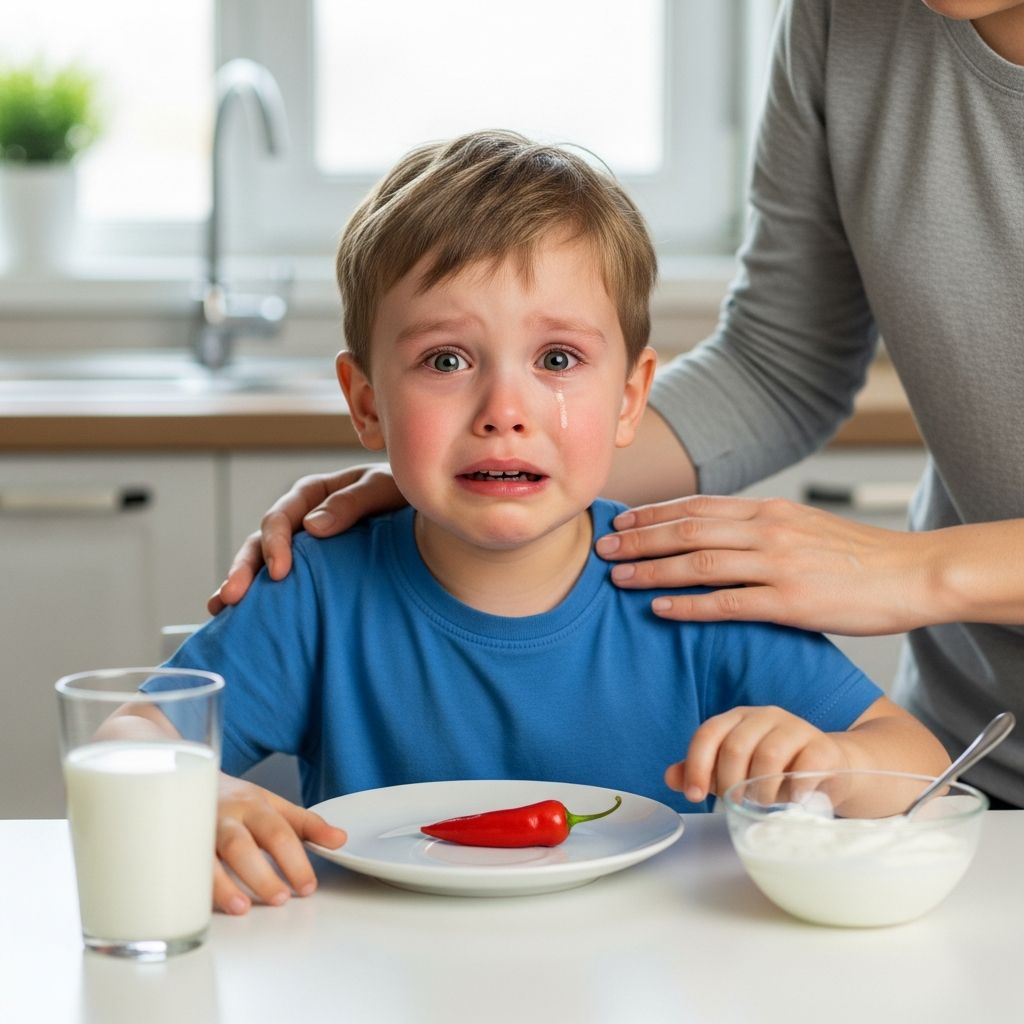
Many parents eventually face that heart-stopping moment when an eager child insists on tasting a hot pepper, only to feel instant regret as the burning sensation hits. What feels like a small kitchen experiment can quickly become an emotional and physical emergency for a young child, but it is also a powerful opportunity to teach about safety, consent, and listening to guidance.
Why Kids Are Drawn to Spicy Foods
Brightly colored peppers and other spicy foods often look fun and harmless to children, especially when adults are eating them without obvious distress. Kids are naturally curious, and the desire to “do what grown-ups do” can outweigh their ability to understand risk fully. This mix of curiosity and imitation can lead them to demand a taste, even when warned it might hurt.
Children also tend to take literal meaning from words like “hot” and may confuse temperature with spiciness. Without prior experience of capsaicin, the compound that creates the burning sensation in chili peppers, they have no frame of reference for how intense the feeling can be.
Immediate Safety Steps When a Child Eats a Hot Pepper
If a child takes a bite of a hot pepper and reacts with pain or panic, parents can reduce discomfort with calm, practical steps. The priority is to ease the burning in the mouth and to keep the child from rubbing their eyes or face, where capsaicin can cause even more irritation.
- Stay visibly calm so your child feels safe and reassured rather than more frightened.
- Offer dairy products like milk or yogurt if there are no allergies, since the fat and casein can help break down capsaicin.
- Use starchy foods such as bread, rice, or crackers to help absorb some of the oils and reduce the intense sensation.
- Encourage the child to spit out remaining bits of pepper rather than swallowing if they still have food in their mouth.
- Gently wipe the child’s hands and mouth and remind them not to touch their eyes or face.
If the child shows any signs of difficulty breathing, swelling of the lips or tongue, or intense coughing that does not subside, emergency medical care is necessary. Most typical hot pepper incidents end in tears but resolve with comfort and time; however, parents should be ready to escalate if symptoms seem serious or unusual.
Common Mistakes to Avoid in the Moment
Well-meaning caregivers sometimes respond in ways that accidentally make the experience more frightening or uncomfortable. Understanding what not to do can help keep the situation from escalating emotionally or physically.
- Avoid laughing at their pain. While the situation can look humorous from the outside, the child’s distress is genuine, and feeling mocked can damage trust.
- Do not insist they keep eating. Once a child expresses regret or pain, forcing more bites can create long-term fear and distrust around new foods.
- Skip water as the main remedy. Water can spread the capsaicin around the mouth instead of calming the burn, often making the sensation feel worse.
- Do not shame their curiosity. Criticizing them harshly for wanting to try something new can discourage healthy exploration in other areas.
Turning a Spicy Mishap into a Teaching Moment
After the immediate crisis has passed and your child has calmed down, there is a unique window for gentle teaching. Rather than focusing on blame, parents can highlight the importance of listening, bodily awareness, and making informed choices in the future.
This conversation does not have to be long or complicated. Short, age-appropriate explanations help children connect the cause (the pepper) with the effect (the burning feeling), and show them how to avoid similar discomfort while still being curious and brave.
How to Talk About Pain, Risk, and Boundaries
Experiences like eating a hot pepper offer a natural entry point to talk about how different things feel in the body and what it means to respect those sensations. When a child recognizes discomfort quickly and seeks help, they are practicing essential skills they will need in many other situations.
- Explain that some foods are “strong” or “spicy” and can make the mouth feel like it is burning, even though there is no actual fire.
- Validate their feelings by acknowledging that the pain is real and that it is okay to be upset about it.
- Reinforce that they did the right thing by telling you immediately and asking for help when something felt wrong.
- Introduce the idea that listening to their body’s messages helps keep them safe in all kinds of situations, not only with food.
Respecting a Child’s Autonomy While Keeping Them Safe
One of the hardest parenting balances is allowing a child enough autonomy to learn while still protecting them from serious harm. A hot pepper incident is a relatively low-stakes example of this tension, which is why it can be so valuable as a learning scenario.
Parents can frame the experience as a collaboration: the child’s role is to be curious and to speak up about how things feel, and the adult’s role is to provide guidance and boundaries. This helps children understand that rules are not arbitrary, but rooted in care and safety.
Simple Table: Safe vs. Risky Food Experiments
To make discussions more concrete for kids, it can help to categorize foods into different levels of risk and supervision. The table below offers a child-friendly way to talk about which experiments need adult guidance.
| Type of Food Experiment | Examples | Adult Supervision Needed? | Why It Matters |
|---|---|---|---|
| Mild new flavors | New fruits, mild sauces, different bread | Helpful but not critical | Allergy checks and modeling polite tasting behavior. |
| Temperature changes | Hot soup, ice-cold drinks | Yes | Prevents burns from hot liquids and brain freeze discomfort. |
| Spicy foods | Chili peppers, hot sauces, spicy chips | Always | Manages pain, watches for breathing issues or intense distress. |
| Potential allergens | Nuts, shellfish, eggs (for some kids) | Always | Allows quick response to any signs of allergy or swelling. |
Using Humor Carefully and Kindly
Many adults instinctively respond to a spicy mishap with nervous laughter, especially if they have seen similar moments turned into viral clips online. While humor can help release tension, it must not come at the child’s expense or make them feel ridiculed for their mistake.
Parents can choose to laugh together with their child only after the child is comfortable again and has clearly relaxed. Reframing the event as a funny “remember when” story can strengthen family bonds, as long as the tone remains compassionate and the child’s distress is not minimized.
Deciding Whether to Share the Moment Online
In an era when many family moments end up on social media, it is worth pausing before posting a video of a child’s reaction to a hot pepper. Even if the clip feels harmless, the child’s future privacy and feelings should come first.
- Ask yourself whether the child would likely feel embarrassed or exposed watching the video years later.
- Consider if you would want an equally vulnerable moment of your own childhood permanently available online.
- Think about whether the clip teaches or helps others in some way, or if it mainly exists for entertainment at your child’s expense.
Whenever possible, wait and involve older children in the decision, explaining what it means to have a video widely shared. This builds media literacy and shows respect for their autonomy.
Age-Appropriate Ways to Introduce Spicy Foods
Some families enjoy spicy cuisine as a regular part of their culture, and it can be important for parents to share those flavors with children. The key is to introduce heat gradually and intentionally, with an eye on both safety and enjoyment.
- Start with very mild spice levels mixed into familiar foods, and observe the child’s reaction.
- Teach them to use small test bites, rather than large mouthfuls, when trying something new.
- Have a “cool-down” food ready, such as yogurt or plain rice, so the child associates spicy experiments with a feeling of support and comfort.
Helping Siblings and Other Kids Respond Kindly
When one child has a dramatic reaction to a hot pepper, siblings or nearby kids may be tempted to tease or laugh. This is a chance to set expectations about kindness and empathy within the family or group.
Parents can gently remind other children that anyone can misjudge how something will feel, and that supporting one another during mistakes is part of being a good friend or sibling. Encouraging phrases like “Are you okay?” and “Can I bring you water or a towel?” help children practice empathy in real time.
Preventive Tips for Future Food Experiments
Although some trial-and-error is inevitable in childhood, parents can reduce the risk of intense regrets by setting clear and consistent food-ground rules. Simple routines and visual cues can help younger kids remember what is safe to grab and what needs adult approval.
- Keep very spicy foods, strong sauces, and raw hot peppers stored out of reach of young children.
- Use labels or color-coded containers to indicate which foods kids may take freely and which require permission.
- Revisit food-safety talks regularly, especially before holidays, parties, or meals featuring unfamiliar dishes.
Frequently Asked Questions (FAQs)
Is a child eating a hot pepper dangerous?
For most healthy children, eating a small amount of hot pepper is not medically dangerous, though it can be extremely uncomfortable. The burning sensation, tears, and upset can look alarming, but they usually pass with time, soothing foods, and reassurance. However, if a child has trouble breathing, persistent vomiting, or swelling of the lips or tongue, immediate medical care is essential.
What should I give my child after a spicy-food accident?
Dairy products like milk, yogurt, or cheese can help reduce the burn because their fat and proteins interact with the capsaicin in the pepper. Starches such as bread, tortillas, or rice can also provide relief by absorbing some of the oils. Water is less effective for soothing the pain and may even spread the spicy oils around the mouth.
Should I let my child try spicy foods again?
Once your child has fully recovered, it is usually fine to offer spicy foods again in much smaller, controlled amounts if your family cuisine includes them. Emphasize small test bites and respect for their own limits, and let your child lead the pace of future experiments. Forcing them to try spice again immediately after a bad experience can build long-term resistance and fear.
How can I talk about this without shaming them?
Focus on describing what happened rather than criticizing your child’s choices or personality. Phrases like “Now we know this pepper is very strong” and “You were brave to tell me right away” highlight learning and communication instead of blame. By separating the behavior from their sense of self, parents preserve confidence while still teaching safer decision-making.
Is it okay to film or share my child’s reaction?
Families have different comfort levels with sharing children’s images online, but children’s dignity and future feelings should guide the decision. Ask whether the video respects your child’s vulnerability, or if it turns their pain into entertainment. If there is any doubt, keeping the clip private or sharing only within a small, trusted circle is usually the most respectful choice.
From Instant Regret to Long-Term Growth
One fiery bite of a hot pepper can feel like a disaster in the moment, but it often becomes a memorable chapter in a child’s growing independence. When caregivers respond with calm, compassion, and clear guidance, the experience shifts from sheer discomfort to a meaningful lesson in listening, communicating, and honoring boundaries.
Handled thoughtfully, a spicy mishap can remind parents and children alike that mistakes are not failures but part of the learning process. The next time a child begs to try something “grown-up,” families can draw on this shared memory to make safer, more informed choices together.