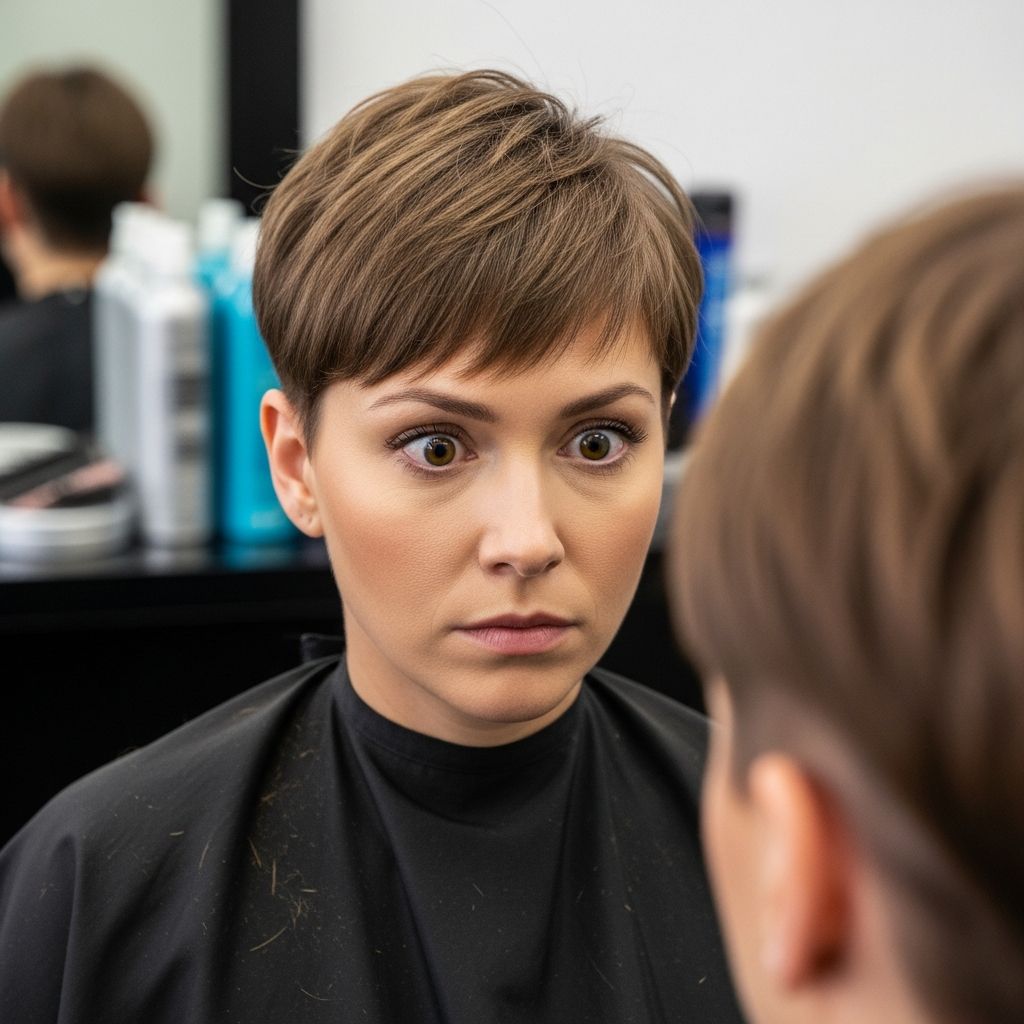
Walking out of the salon feeling worse than when you walked in is frustrating, emotional, and sometimes expensive. But it does not have to end in tears, hats, or drastic DIY fixes. With a clear plan and steady mindset, you can often turn a disappointing appointment into a manageable, even positive, outcome.
This guide walks you through what to do when you are unhappy with your hair cut, color, or treatment: how to assess the damage, how to talk to your stylist, what to request, and how to protect your hair and your confidence moving forward.
Step One: Pause Before You Panic
The first minutes after you see a result you hate can feel intense. Your instinct may be to cry, argue, or say nothing and silently vow never to return. None of those reactions actually help you fix your hair.
- Take a breath. Ask for a moment in the restroom or at your chair to collect yourself before reacting.
- Look at your hair in neutral lighting. If possible, check a mirror near a window or in the hallway rather than relying only on strong salon lights.
- Separate emotion from facts. Feeling upset is valid, but try to define what, specifically, you dislike.
Once you can describe the problem clearly, you are in a much stronger position to get a useful solution instead of a defensive conversation.
Step Two: Identify Exactly What Feels Wrong
Most unhappy salon experiences fall into a few common categories: the cut is too short, too layered, or the wrong shape; the color is too dark, too light, too warm, or patchy; or a treatment has left hair feeling damaged. Naming the issue helps your stylist understand whether it is a technical problem, a miscommunication, or simply not your personal taste.
Common “Something Is Off” Scenarios
- Cut issues: Your hair feels thinner than expected, your face shape looks harsher, or styling suddenly takes much longer than before.
- Color issues: Roots do not match lengths, brassiness shows up where you expected a cool tone, or your hair looks flat and monochromatic.
- Texture issues: Curls have dropped, hair feels drier or rougher, or you feel product buildup from treatments.
Write a short list in your phone or on a note card if that helps you stay focused when you talk to your stylist.
How Much Can Be Fixed Right Away?
Not every hair problem can be solved during the same visit, and trying to do too much at once can make the situation worse. This is where realistic expectations matter: some fixes are simple, while others require time and multiple appointments.
| Issue | Possible Same-Day Fix | Requires Time / Multiple Visits |
|---|---|---|
| Layers are uneven or choppy | Refining the cut, blending layers, softening weight lines | Growing out short or aggressive layers |
| Color is slightly too dark or too warm | Toner adjustment, gentle lightening in targeted areas | Gradually lifting over several sessions to protect hair health |
| Highlights look streaky or harsh | Additional foils for blending, root smudge, or lowlights | Correcting severe banding or overlapping lightener |
| Hair feels dry after a chemical service | Professional conditioning treatment, trimming damaged ends | Long-term repair with masks, protein balance, and trims |
| Cut is drastically shorter than expected | Minor shaping only; length cannot be restored | Growing out, using styling strategies and possibly extensions |
Use this as a mental reference: if the issue is about shape, blending, or tone, there is often a same-day adjustment available. If it is about length or severe damage, the plan usually involves patience and strategic care.
How To Speak Up Effectively (Without Feeling Rude)
Many people stay silent because they fear hurting their stylist’s feelings, or they do not know how to phrase their complaint. Being honest does not mean being harsh; clarity is respectful to both you and the professional who worked on your hair.
Simple Phrases You Can Use
Customize these to sound like your own voice, but keep the structure: describe what you expected, what you got, and ask for help.
- For a cut: “I was hoping to keep more length around my face, but it feels shorter than I expected. Is there a way to soften this area or adjust the shape a bit?”
- For color: “The overall color looks darker than I pictured from the photos we discussed. Could we talk about lightening certain sections or cooling down the tone?”
- For styling: “Right now, it is styled in a way that makes it hard for me to see how I will wear it daily. Could you show me another way to style it that is more casual?”
The key is to stay specific and neutral. Avoid blanket statements like “This is terrible” and focus on what you want changed.
When You Realize You Are Unhappy After You Get Home
Sometimes disappointment only sets in after your first home shampoo or once you try to style your hair on your own. That does not mean you lost your chance to say something. Reputable salons want feedback and will often offer a solution within a set period.
How To Follow Up By Phone or Email
- Contact the salon within a few days. Do not wait weeks; by then it may be unclear what was salon work and what is regrowth or fading.
- Be brief and factual. Explain what service you had, when it happened, and what is not working for you.
- Ask about their adjustment policy. Many salons offer complimentary or reduced-cost fixes for reasonable concerns within a specific time window.
If you feel nervous, you can draft a short message first: state your appointment details, describe the result, share one or two photos in natural light, and ask kindly whether you might schedule a correction.
Understanding Salon Policies and What You Can Request
Each salon has its own guidelines for handling unhappy clients, but there are some common practices you can reasonably expect. These policies protect both customers and professionals, and they help define what is realistic in a redo.
Typical Options Salons May Offer
- Complimentary adjustment visits. Minor tweaks to shape or tone within a short time after the original service.
- Discounted corrective services. When a more complex color correction or restyling is needed.
- Alternative stylist within the same salon. If communication with the original stylist felt off, some salons will offer another team member for the fix.
Before scheduling, ask what will be included, how long the appointment will take, and whether there are any additional costs. This helps you avoid new surprises while you are already feeling vulnerable.
Protecting Your Hair After a Disappointing Service
Being unhappy with your hair is emotional, but aggressive DIY experiments at home (extra bleaching, random box dye, or cutting your own bangs out of frustration) can quickly escalate a fixable problem into a long-term struggle. A gentle, protective approach gives your hair a chance to recover.
Immediate Care Tips
- Pause on further chemical treatments. Avoid more bleach, color, or perms until a professional has assessed your hair’s condition.
- Focus on moisture and strength. Use hydrating masks, mild shampoos, and leave-in conditioners to keep strands supple.
- Minimize heat styling. If you must use hot tools, lower the temperature and always use heat protectant.
If your hair truly feels compromised (breaking, stretchy when wet, or extremely rough), prioritize health over chasing a specific color or style for a while. Healthy hair always looks better than perfectly toned but fried hair.
Style Tricks To Survive the Awkward Phase
Even with a correction, you may still go through a transition period where your hair is not exactly what you wanted. Clever styling can make this stage feel less painful and more intentional.
Short-Term Styling Solutions
- Use parting strategically. Changing your part can disguise uneven layers or overly short pieces around the face.
- Incorporate accessories. Headbands, scarves, clips, and hats can instantly make a challenging cut look purposeful.
- Experiment with texture. Soft waves, curls, or smoothing products can change how layers sit and how color reads.
If your budget allows, professional blowouts or styling lessons can help you learn techniques tailored to your new cut or color, making daily life easier while everything grows and settles.
How To Decide Whether To Return or Move On
Not every disappointing experience is a sign that you must abandon a salon forever. Sometimes a one-off miscommunication can be resolved and lead to better understanding for next time. Other situations, however, do warrant finding a new stylist.
Signs You Might Give the Salon Another Chance
- The stylist listens carefully to your concerns and takes responsibility where appropriate.
- The salon offers a reasonable correction plan without making you feel guilty or demanding extra payment for basic fixes.
- Missteps seem rooted in communication, not lack of skill or care.
Signs It May Be Time To Leave
- Your concerns are dismissed, minimized, or blamed entirely on you.
- There is a pattern of you leaving unhappy, not just one off day.
- Safety or hygiene felt questionable at any point.
Trust your instincts. Your hair, time, and money are valuable. You are allowed to seek a professional who aligns better with your needs and comfort level.
Preventing Future Disappointments
The most powerful tool you have is prevention. Preparing better for future appointments greatly reduces the chance of miscommunication or mismatched expectations. Think of it as building a partnership with your stylist rather than rolling the dice every time you sit in the chair.
Preparation Checklist for Next Time
- Gather clear visual references. Bring several photos showing length, color tone, and style from multiple angles.
- Be honest about your habits. Tell your stylist how often you are willing to come in, how much styling effort you realistically put in, and what tools you use.
- Ask about maintenance before committing. Find out how often you will need touch-ups and what products will be necessary.
Good stylists appreciate clients who communicate openly. They can then recommend options that fit both your hair type and your lifestyle instead of guessing.
Frequently Asked Questions
1. Should I still tip if I am unhappy with my hair?
Tipping is ultimately your decision. Some people tip based on the time and effort invested, especially if the stylist worked hard and immediately tried to fix the issue. Others adjust or withhold the tip if the experience felt dismissive or careless. If you decide not to tip, remaining polite while you communicate your concerns is still important.
2. Is it okay to go to another salon for a fix?
Yes. You are never obligated to stay with a stylist or salon if you do not feel heard, safe, or confident in their plan. If you choose to see someone new, bring photos of your starting point (before the service, if available) and your current hair so the new stylist can understand what has been done.
3. How soon can I color my hair again after a bad dye job?
The answer depends on your hair’s condition, not just the calendar. In some cases, a gentle toner or targeted adjustment can happen within days. In other cases, especially after aggressive lightening or overlapping color, you may be advised to wait several weeks or longer while focusing on repair. A strand test with a trusted professional is often the safest way to decide.
4. What if my stylist insists the hair looks fine and I am just not used to it?
There is a difference between needing time to adjust and genuinely disliking the cut or color. If you have clearly explained what feels wrong and you still feel dismissed, you are allowed to politely ask for a manager, owner, or another stylist’s opinion, or simply choose not to return in the future.
5. Can I fix a bad haircut myself at home?
Trimming a tiny piece of fringe is one thing; reworking a full haircut is another. Without training, it is easy to accidentally cut too much or create uneven lines that are even harder to correct later. When in doubt, book a professional you trust, even if it is just for a small shaping appointment to improve what you have.
Empowerment Over Embarrassment
A disappointing salon visit can make you want to hide, but it can also become a turning point in how you advocate for yourself. When you pause, describe the issue clearly, communicate calmly, and prioritize the health of your hair, you transform a bad day in the chair into an opportunity to find better options and better professionals.
Your hair will grow, the color will evolve, and new stylists are always out there. What matters most is that you remember your voice, your comfort, and your boundaries matter every time you sit in that chair.