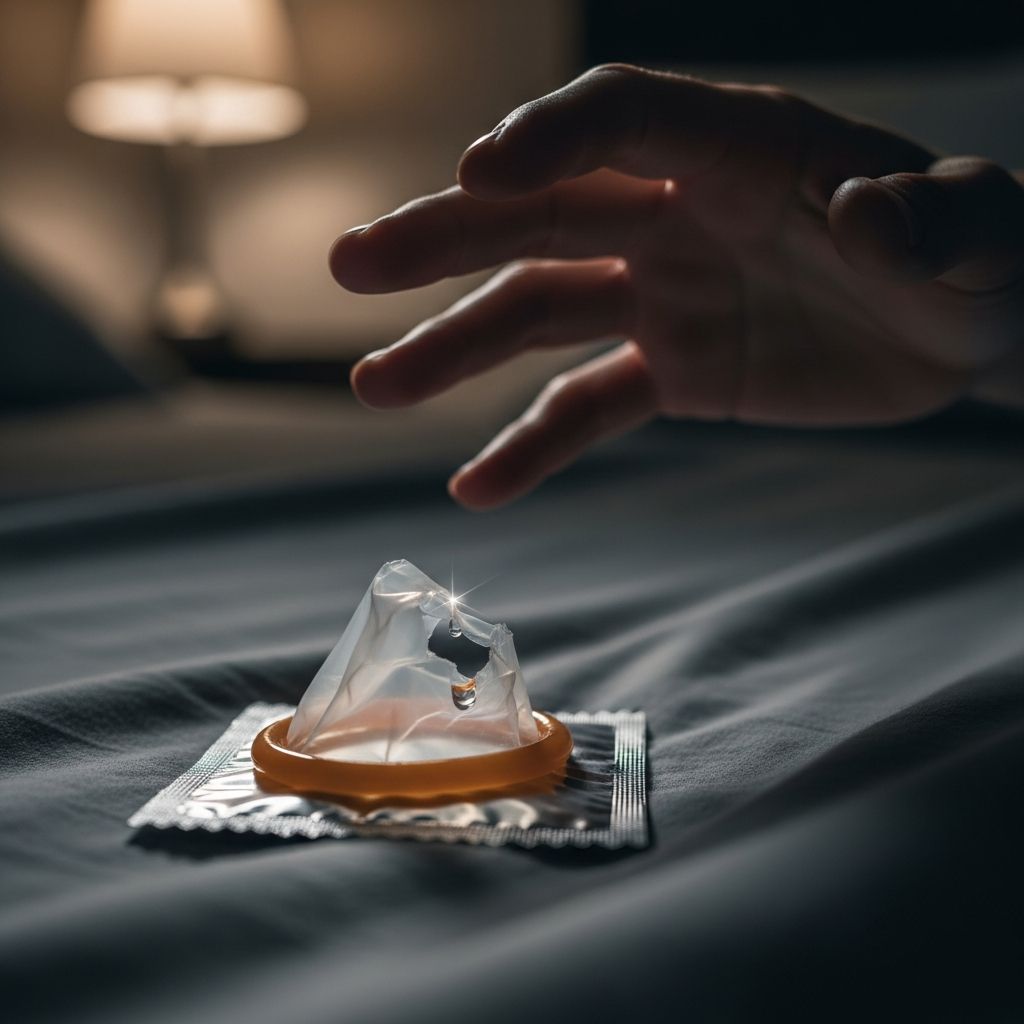
Condoms are one of the most common ways teens protect themselves from pregnancy and sexually transmitted infections (STIs). When a condom breaks, tears, or slips off, it can feel scary, confusing, and urgent all at once. Knowing what to do right away can help lower your chances of pregnancy and infection and give you back a sense of control.
This guide explains, in clear and simple terms, what condom failure means, what your real risks are, when to get help, and how to protect yourself going forward.
Understanding Condom Failure
Condoms are highly effective when used correctly every time, but they are not perfect. Typical-use failure rates for external (“male”) condoms are around 13% per year for pregnancy, mainly due to incorrect or inconsistent use. That means problems usually come from how they are used rather than the condom itself.
Condom failure can happen in a few main ways:
- Breaking or tearing during sex or withdrawal
- Slipping off inside the vagina, anus, or outside after ejaculation
- Leaking because of damage (like tiny tears) or incorrect use
Any of these problems can expose you to semen, vaginal fluids, rectal fluids, or blood, which can lead to pregnancy (in vaginal sex) and/or STIs.
First Steps Right After a Condom Breaks
If you notice the condom ripped, slipped, or came off during sex, try to stay as calm as you can. There are clear steps you can take right away.
1. Stop sexual contact
As soon as you realize there is a problem with the condom:
- Pause intercourse or any genital contact.
- Check where the condom is (on the penis, in the vagina/anus, or fully off).
2. Carefully remove the condom if it is inside
If the condom slipped off and is inside the vagina or anus:
- Gently reach in with clean fingers to remove it.
- If you cannot find or remove it comfortably, contact a healthcare provider or clinic for help.
3. Avoid douching or harsh cleaning
Many people panic and want to “wash everything out” immediately. This can cause more harm than good:
- Do not douche (rinse or wash inside the vagina).
- Do not put soap, household products, or other chemicals inside the vagina or anus.
Douching does not prevent pregnancy or STIs and can irritate or damage delicate tissue, which may actually make infection more likely.
Pregnancy Risk: When Could You Get Pregnant?
Pregnancy is only a risk if semen (or pre-ejaculate that may contain sperm) gets into the vagina or onto the vulva. If the condom fails during vaginal sex, pregnancy is possible.
| Situation | Is pregnancy a risk? |
|---|---|
| Condom broke and ejaculation happened in the vagina | Yes, higher risk |
| Condom slipped off inside the vagina after ejaculation | Yes, risk (semen may leak) |
| Condom broke during anal or oral sex only | No pregnancy risk, but STI risk is present |
| Condom came off after withdrawal, no semen near the vulva | Low pregnancy risk, but not zero |
If there is any chance semen contacted the vagina or vulva, emergency contraception (EC) may help reduce the chance of pregnancy.
Emergency Contraception: Acting Quickly
Emergency contraception, sometimes called the “morning-after pill,” can greatly lower the chance of pregnancy after unprotected vaginal sex or condom failure if taken soon enough.
Types of emergency contraception
- Levonorgestrel pills (often over-the-counter in many countries)
- Work best when taken within 72 hours (3 days), but may have some effect up to 5 days.
- Ulipristal acetate pill (prescription-only in some places)
- Effective up to 120 hours (5 days) after sex, and tends to work better than levonorgestrel later in that window.
- Copper IUD (placed by a healthcare provider)
- Can be inserted up to 5 days after unprotected sex and is the most effective form of EC; it also provides long-term contraception.
When should you consider emergency contraception?
Think about EC if:
- The condom broke, tore, or leaked during vaginal sex.
- The condom slipped off inside the vagina.
- You are not using another reliable birth control method (like the pill, implant, or IUD).
- You are unsure if ejaculation happened but are worried semen or pre-ejaculate got in.
Contact a pharmacist, clinic, or doctor as soon as possible. Many sexual health services and pharmacies offer EC without a full exam.
STI Risk and Testing After Condom Failure
Condoms are the only contraception that help protect against STIs like chlamydia, gonorrhea, HIV, and others by blocking the exchange of sexual fluids and some skin-to-skin contact. If a condom fails, your protection drops.
When you should consider an STI check
It is wise to get tested if:
- You had vaginal, anal, or oral sex with a partner whose STI status you do not know.
- You or your partner have other partners.
- You notice symptoms like burning when peeing, unusual discharge, sores, itching, or pelvic pain in the weeks after sex.
- You are worried about possible HIV exposure (especially with high-risk situations, such as unprotected anal sex or a partner known to have HIV).
Some STIs have no symptoms at all, especially at first, so the only way to know for sure is testing.
HIV post-exposure prophylaxis (PEP)
In some higher-risk situations, post-exposure prophylaxis (PEP) for HIV may be recommended. PEP is a short course of HIV medicines that can reduce the chance of infection if started within 72 hours of exposure.
If you think you had a high-risk exposure to HIV because of a condom break, contact an emergency department, urgent care, or sexual health clinic immediately to ask about PEP.
Getting Help: Where to Go and What to Say
It can feel intimidating to reach out for help, especially as a teen. Remember that healthcare providers and sexual health clinics see situations like this all the time, and their job is to support, not judge.
Places you can contact
- Pharmacies for emergency contraception and basic advice.
- Sexual health or STI clinics for testing, treatment, and counseling.
- Your regular doctor or nurse for pregnancy and STI advice.
- Telephone or online health services (such as national helplines) if you are unsure where to start.
What information helps the provider help you
You do not have to share details you are not comfortable with, but certain details can help them guide you more accurately:
- When the condom broke or slipped off (date and time).
- What kind of sex you had (vaginal, anal, oral).
- Whether ejaculation happened, and where.
- Whether you use any other birth control.
- Any known STIs in you or your partner.
In many places, teens have the right to confidential sexual health care, meaning providers usually cannot tell parents or others without your permission, except in specific safety situations. Check your local laws or ask the clinic about confidentiality rules.
Lowering the Chance of Condom Problems Next Time
Not all condom failures can be prevented, but many can. Most breakages are related to incorrect use, expired products, or not using enough lubrication.
Choosing and storing condoms
- Use new, in-date condoms and check the expiration date before use.
- Look for condoms that meet quality standards (for example, CE or similar regulatory marks in your region).
- Store condoms in a cool, dry place, not in a hot car or a wallet for long periods.
Using condoms correctly
Key steps that help reduce the risk of breaking or slipping include:
- Put the condom on before any genital contact.
- Open the package carefully with your fingers, not with teeth or sharp objects.
- Make sure the condom is the right way up so it can roll down smoothly.
- Pinch the tip to leave space for semen and to remove trapped air.
- Roll it all the way to the base of the penis.
- Use a water-based or silicone-based lubricant with latex condoms; avoid oil-based products like petroleum jelly or body oils, as they can weaken latex and cause breaks.
- Hold the condom at the base of the penis while pulling out after ejaculation to stop it from slipping off.
Common mistakes to avoid
- Using two condoms at once (this increases friction and makes breaking more likely).
- Reusing a condom.
- Putting the condom on late, after penetration has already started.
- Flipping a condom over and reusing it after it has already touched the penis (pre-ejaculate can contain sperm and STIs).
Looking After Your Emotional Health
Feeling anxious, guilty, embarrassed, or scared after a condom fails is extremely common. You might worry about being judged by adults, or feel pressure from a partner. Your feelings are valid.
Some ways to take care of yourself emotionally:
- Talk to someone you trust, such as a close friend, counselor, or healthcare professional.
- Remind yourself that taking steps like EC and STI testing is a sign of responsibility, not failure.
- Use the experience to have a calm discussion with your partner about safer sex and shared responsibility.
Talking With Your Partner About What Happened
Open communication can make situations like this much less stressful. If it feels safe to do so, talk with your partner about:
- What went wrong (for example, condom too small/large, not enough lube, put on late).
- What steps you will both take now (EC, testing, follow-up appointments).
- How you can prevent similar problems in the future (practicing putting on condoms, choosing another contraception in addition to condoms, using more lube).
Sexual health should be a shared responsibility. Both people involved can help plan, buy protection, and support each other in getting care.
Frequently Asked Questions (FAQs)
How do I know if the condom really broke?
Sometimes breaks are very obvious (a big tear or the condom hanging off). Other times, there may be a small rip you only notice after sex. If the condom is missing, torn, or you see semen leaking out, treat it as a condom failure and consider emergency contraception and STI testing.
What if the condom broke during anal or oral sex — can I still get pregnant?
Pregnancy requires sperm to reach the vagina and then the uterus, so anal or oral sex alone does not cause pregnancy. However, condom failure during anal or oral sex can increase your risk of STIs, so you may still want to get tested and talk to a healthcare provider about your risks.
I took emergency contraception. Do I still need a pregnancy test?
Emergency contraception lowers the chance of pregnancy but does not guarantee it. If your period is more than a week late, lighter or shorter than usual, or you are worried, take a pregnancy test about 3 weeks after the condom failure or see a healthcare provider.
Will using emergency contraception or getting tested for STIs affect my ability to have children later?
No. Emergency contraception does not affect long-term fertility. Getting tested and treated for STIs early actually protects your future fertility, because untreated infections like chlamydia and gonorrhea can sometimes lead to complications that affect the reproductive organs.
I am embarrassed to go to a clinic. Can I just wait and see?
It is normal to feel embarrassed, but waiting can increase your risk of pregnancy or STIs. Many clinics are teen-friendly, confidential, and see situations like this daily. Acting quickly gives you more options, like emergency contraception and early treatment for any infection if it is found.
References
- Condoms — NHS. 2023-10-11. https://www.nhs.uk/contraception/methods-of-contraception/condoms/
- For Teens: How to Use a Male Condom — UMass Memorial Health. 2022-08-01. https://www.ummhealth.org/health-library/for-teens-how-to-use-a-male-condom
- Using condoms — Island Sexual Health. 2024-03-01. https://www.islandsexualhealth.org/sex-safety/using-condoms/
- Condoms: Types, Use, Effectiveness & How They Work — Cleveland Clinic. 2023-05-12. https://my.clevelandclinic.org/health/treatments/9404-condoms
- Internal & External Condom Steps — Healthy Teen Network. 2024-08-01. https://www.healthyteennetwork.org/resources/condom-steps/