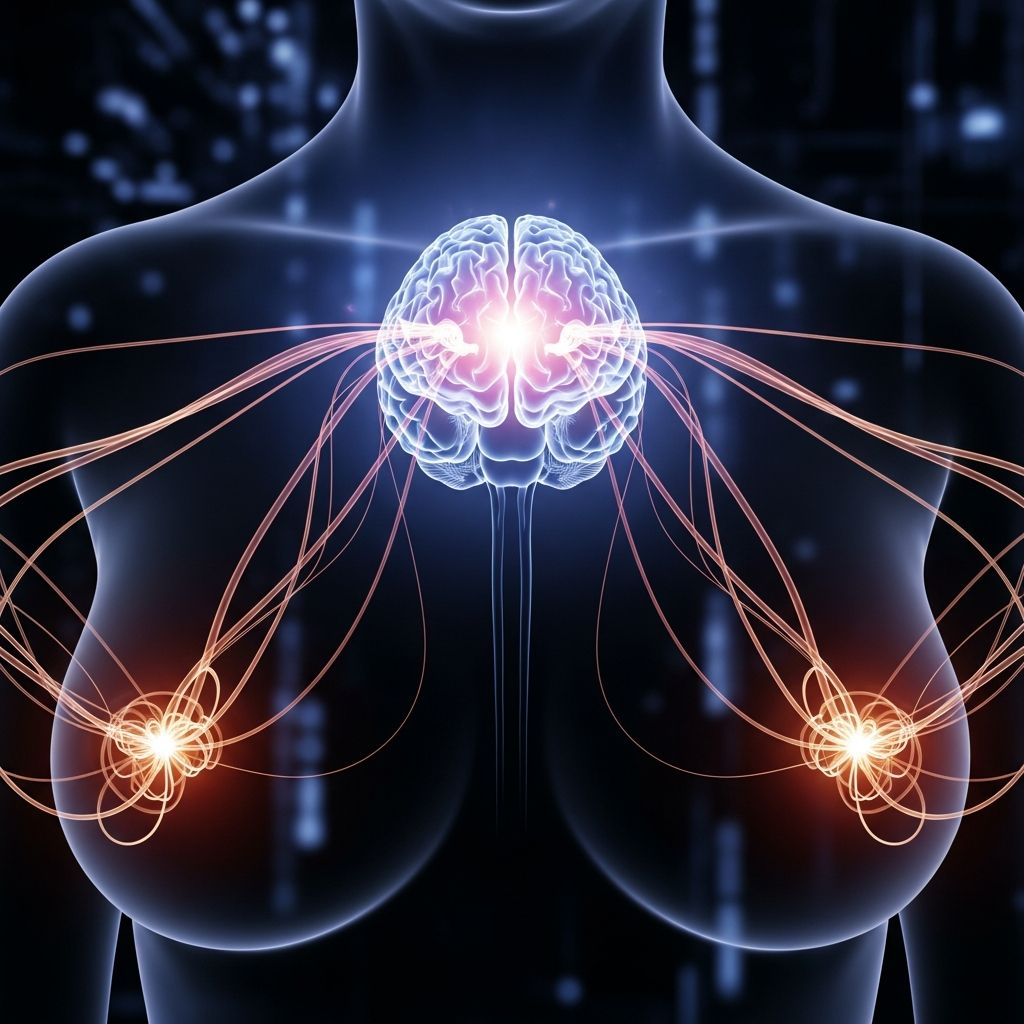
Human attraction is often described in poetic terms, but when it comes to men looking at women’s breasts, researchers have also taken a much more literal approach: they have tracked eye movements, measured brain responses, and analyzed hormones to understand what is going on. This article unpacks what science suggests men “see” when they see breasts — not just visually, but psychologically and socially.
From First Glance to Full Picture: How Men’s Eyes Move
Modern eye-tracking technology allows scientists to record exactly where people look, in what order, and for how long when viewing an image. In studies using images of women’s bodies, men’s visual attention is far from random.
- Rapid first fixations: Within a fraction of a second, men’s gaze tends to land on key body regions such as the breasts or the waist rather than the legs or feet.
- Focus on reproductive regions: Men spend more time looking at the chest, waist, and hips — areas linked with fertility cues such as breast development and waist-to-hip ratio (WHR). Eye-tracking research shows these “reproductively significant” zones draw the most attention when judging attractiveness.
- Aesthetic details matter: When observers (both men and women) rate breast aesthetics, the lower breast and nipple–areola complex receive the longest fixations and the highest number of gaze points.
In other words, when men see breasts, they are not just seeing “a chest”; their eyes are unconsciously scanning shape, size, symmetry, and position, and quickly integrating this into broader judgments about attractiveness.
Why Breasts Capture Attention: Evolutionary Explanations
One major line of research interprets male interest in breasts through an evolutionary lens. While evolutionary explanations are always probabilistic rather than absolute, several recurring themes appear across studies.
| Breast Feature | Hypothesized Evolutionary Signal | Research Insight |
|---|---|---|
| Overall breast size and fullness | Potential cues of sexual maturity, energy reserves, and hormonal profile | Men visually attend to breasts regardless of size, but often combine that information with waist-to-hip ratio when judging attractiveness. |
| Waist-to-hip ratio (WHR) around 0.7 | Associated in some studies with higher fertility and better health markers | Men rate women with lower WHR as more attractive and give these body regions more visual attention. |
| Nipple–areola complex appearance | Potential indicator of breast development, symmetry, and age | Observers fixate heavily on the lower breast and areola when evaluating aesthetics and symmetry. |
From this perspective, men’s intense visual interest is not simply about culture or habit; it may partially reflect evolved mechanisms for detecting signs of reproductive health, even if modern individuals are not consciously thinking about fertility at all.
Brains, Hormones, and Reward: What Happens Inside
Visual attention is just one piece of the puzzle. When men see breasts they find attractive, multiple biological systems can be involved.
- Reward circuitry: Like other sexual stimuli, attractive body parts can activate brain regions involved in reward and motivation, such as parts of the limbic system and striatum, which help encode pleasure and desire.
- Dopamine and motivation: Sexual cues can influence dopamine pathways, which are central to wanting and seeking behavior, reinforcing patterns of attention and interest.
- Oxytocin and bonding: Physical contact with breasts during intimacy and breastfeeding is associated with release of oxytocin, a hormone linked to bonding and social connection. This can reinforce positive emotional associations with breasts beyond simple sexual arousal.
These neurochemical processes help explain why breasts may feel emotionally significant as well as visually compelling. Over time, repeated pairings of breast-related touch or visuals with pleasurable or intimate experiences can strengthen these associations.
More Than Sex: Breasts as Signals of Care and Comfort
While sexual attraction often dominates the conversation, many men’s responses to breasts are layered with nonsexual meanings rooted in early development and caregiving.
For many infants, the breast is:
- a source of nutrition and warmth
- a site of soothing touch and close body contact
- closely associated with the caregiver’s face, voice, and smell
Some researchers have speculated that early associations between the breast and comfort may later blend with sexual maturation, contributing to adult sexual interest. This does not mean that men are consciously recalling infancy; rather, early experiences can shape bodily maps of pleasure and intimacy that the brain builds over time.
Culture’s Role: Why Context Changes What Men See
Biology does not operate in a vacuum. Cultural norms dramatically influence how men perceive and respond to breasts, including what they notice, what they feel, and what they believe is acceptable behavior.
How Society Shapes the Gaze
- Norms of exposure: In societies where breasts are routinely sexualized and covered, glimpses of cleavage may attract more attention because they are relatively rare and norm-violating.
- Media standards: Movies, advertising, and pornography often emphasize particular breast sizes or shapes, which can skew men’s expectations about what is “normal” or “ideal.”
- Objectification pressures: When media repeatedly reduce women to body parts, some men may internalize viewing habits that prioritize breasts and buttocks over faces and individuality.
Cultural influences can amplify or dampen biological predispositions. For example, eye-tracking research shows that heterosexual men devote more attention to the face and chest of real women than to similar regions on human-like robots, underlining that social meaning and perceived humanity magnify breast focus.
Do All Men Look the Same Way?
Individual variation is substantial. Not all men are equally captivated by breasts, and not everyone interprets them in the same way.
- Sexual orientation: Heterosexual men, on average, pay more visual attention to women’s breasts than gay men do. Studies comparing attention to human versus robotic bodies show particularly strong chest-focused interest for heterosexual males.
- Personal preference: Some men prioritize breasts, while others are more attentive to the face, legs, or buttocks. Eye-tracking indicates that even when breasts receive many fixations, overall attractiveness judgments depend on multiple regions, including WHR and facial features.
- Personality and values: Men who strongly objectify women or endorse rigid gender norms may be more inclined to focus on specific body parts rather than the whole person, whereas men with more egalitarian views may pay a more balanced type of attention.
- Relationship status: Being in a committed relationship does not eliminate attraction to others, but some evidence suggests men in satisfying relationships may regulate or redirect their attention more deliberately.
What men “see” when they see breasts is therefore a mix of shared patterns and highly personal filters.
Eye Contact vs. Chest Staring: The Social Dimension
One of the practical questions that emerges from this science is how men should manage their attention in everyday social situations, especially when they notice themselves drawn to someone’s chest.
Key social dynamics include:
- Respect and consent: Even if gaze patterns arise partly from automatic processes, social norms expect people to regulate where and how long they look at someone else’s body.
- Impact on women: Being stared at, especially repeatedly or in a sexualized way, can contribute to feelings of discomfort, objectification, or threat. Research on sexual objectification links such experiences to stress and diminished sense of safety.
- Self-awareness: Men who acknowledge their automatic reactions can choose to adjust their behavior — for example, returning their gaze to the other person’s face, engaging in respectful conversation, and being sensitive to nonverbal cues.
Understanding that some aspects of attention are automatic does not excuse disrespectful behavior; it simply explains why managing attention can feel effortful and why conscious choices matter.
Breasts, Relationships, and Emotional Meaning
In intimate relationships, breasts often acquire deeper meanings that extend far beyond initial visual attraction.
From Visual Attraction to Emotional Symbol
- Intimacy and trust: Partners may experience breast touch as a sign of closeness, vulnerability, and mutual trust, not just sexual stimulation.
- Shared transitions: Pregnancy, breastfeeding, aging, illness, or surgery can all change breast appearance and sensation. Couples who communicate well often re-negotiate the emotional and sexual meaning of breasts across these life stages.
- Body image: Men’s reactions to changes in a partner’s breasts, such as post-breastfeeding or after mastectomy, can strongly influence the partner’s body image. Supportive, affirming responses help buffer against shame and distress.
Here, what men “see” is not just the physical breast, but a symbol of their history together, their values, and their willingness to prioritize the partner’s comfort and health.
Common Myths About Men and Breasts
Scientific findings help debunk several persistent myths:
- Myth 1: Men only care about large breasts.
Eye-tracking studies reveal that men pay attention to breasts across sizes and that they frequently prioritize waist-to-hip ratio and overall body proportion over size alone. Preferences vary widely between individuals. - Myth 2: Breasts are purely sexual organs.
Breasts are involved in feeding infants, bonding, and comfort; they are also part of a person’s broader body image and identity. Their meaning cannot be reduced to sex alone. - Myth 3: If men look, they must be disrespectful.
Attention can be partially automatic, but behavior is still a choice. Men can notice attraction while still acting respectfully and maintaining appropriate boundaries. - Myth 4: Science fully explains attraction.
Biology, psychology, culture, and personal history all interact. Research provides pieces of the puzzle but does not capture the full richness of human desire.
Practical Takeaways for Men and Partners
Understanding these processes can help both men and their partners navigate attraction and boundaries more thoughtfully.
For Men
- Recognize that some visual attention is automatic, but lingering or repeated staring is a behavior you can and should control.
- Use self-awareness cues: if you catch yourself focused on someone’s chest, consciously redirect your gaze to their face or disengage from the situation as needed.
- Reflect on the media you consume and how it shapes what you expect from real women’s bodies.
- In relationships, talk openly with partners about what feels comfortable, sexy, or off-limits when it comes to breasts.
For Women and Other Partners
- Know that attraction patterns are not a referendum on your worth; research shows wide variation in men’s preferences and strong roles for non-physical traits in long-term bonding.
- Set clear boundaries about where you are comfortable being looked at and touched, and communicate them early in relationships.
- If you experience unwanted attention, your discomfort is valid, regardless of whether someone insists it was “just looking.”
Frequently Asked Questions (FAQs)
Q: Are men biologically “programmed” to stare at breasts?
Research suggests that certain body regions, including breasts, waist, and hips, attract more automatic visual attention in heterosexual men, likely because they can carry cues related to fertility and health. However, social norms, personal values, and conscious choices still play a major role in how men manage that attention in real-life situations.
Q: Do women look at other women’s breasts in the same way men do?
Some eye-tracking studies on breast aesthetics show that both male and female observers focus heavily on the lower breast and nipple–areola complex when evaluating shape and symmetry. However, the underlying motives may differ: women may focus more on comparison or assessment, while men may be more oriented toward sexual attractiveness, on average.
Q: Is breast size the main factor in men’s attraction?
No. While some men report size preferences, studies indicate that overall body proportion, especially waist-to-hip ratio, plays a stronger role in attractiveness judgments than breast size alone. Men’s preferences are also highly individual, and personality, behavior, and compatibility are crucial for long-term appeal.
Q: Why might some men not be especially interested in breasts?
Variation in sexual interests is normal. Men differ in which body parts they find most appealing, their sexual orientation, cultural background, and personal experiences. Biology creates tendencies, not uniform rules, and no single pattern defines “normal” male attraction.
Q: Can understanding this science improve relationships?
Yes. Knowing that attention to breasts can be partly automatic but still subject to control can help couples talk more openly about boundaries, insecurities, and desires. It can also encourage men to balance instinctive attraction with empathy and respect, especially when partners are navigating body changes related to pregnancy, breastfeeding, illness, or aging.
References
- Male and Female Perception of Physical Attractiveness — Pazhoohi F, Lighthall NR, Kingstone A. 2016-02-12. https://journals.sagepub.com/doi/10.1177/1474704916631614
- Analysis of the Visual Perception of Female Breast Aesthetics and Symmetry Using Eye-Tracking Technology — Ooms M et al. 2020-01-01. https://pubmed.ncbi.nlm.nih.gov/31764626/
- Physiological Reasons for Attractiveness of Female Breast — Vidya R. 2014-03-24. https://www.scirp.org/journal/paperinformation?paperid=44845
- There’s More to Humanity Than Meets the Eye: Differences in Gaze Between Humans and Robots — Vannucci M et al. 2019-03-26. https://www.frontiersin.org/articles/10.3389/fpsyg.2019.00693
- Eye-Tracking of Men’s Preferences for Waist-to-Hip Ratio and Breast Size of Women — Dixson BJ et al. 2011-02-01. https://canlabvuw.files.wordpress.com/2015/05/eye-tracking-of-men_s-preferences-for-waist-to-hip-ratio-and-breast-size-of-women.pdf
- Eye Tracking of Men’s Preferences for Female Breast Size and Areola Pigmentation — Dixson BJ, Grimshaw GM. 2014-01-01. https://www.semanticscholar.org/paper/Eye-Tracking-of-Men%E2%80%99s-Preferences-for-Female-Breast-Dixson-Grimshaw/375f1080ee08d346a2bc11a39b17533a4c0f783b