Many parents swear there is a very specific age when kids are at peak cuteness. The chubby cheeks, wobbly walk, and nonstop curiosity can feel almost weaponized against your patience. But is there really a scientifically cutest age, or is that just something tired parents say to comfort themselves? Research in developmental science, evolution, and psychology can help explain why toddlerhood often feels uniquely adorable.
What Do Scientists Mean by “Cute”?
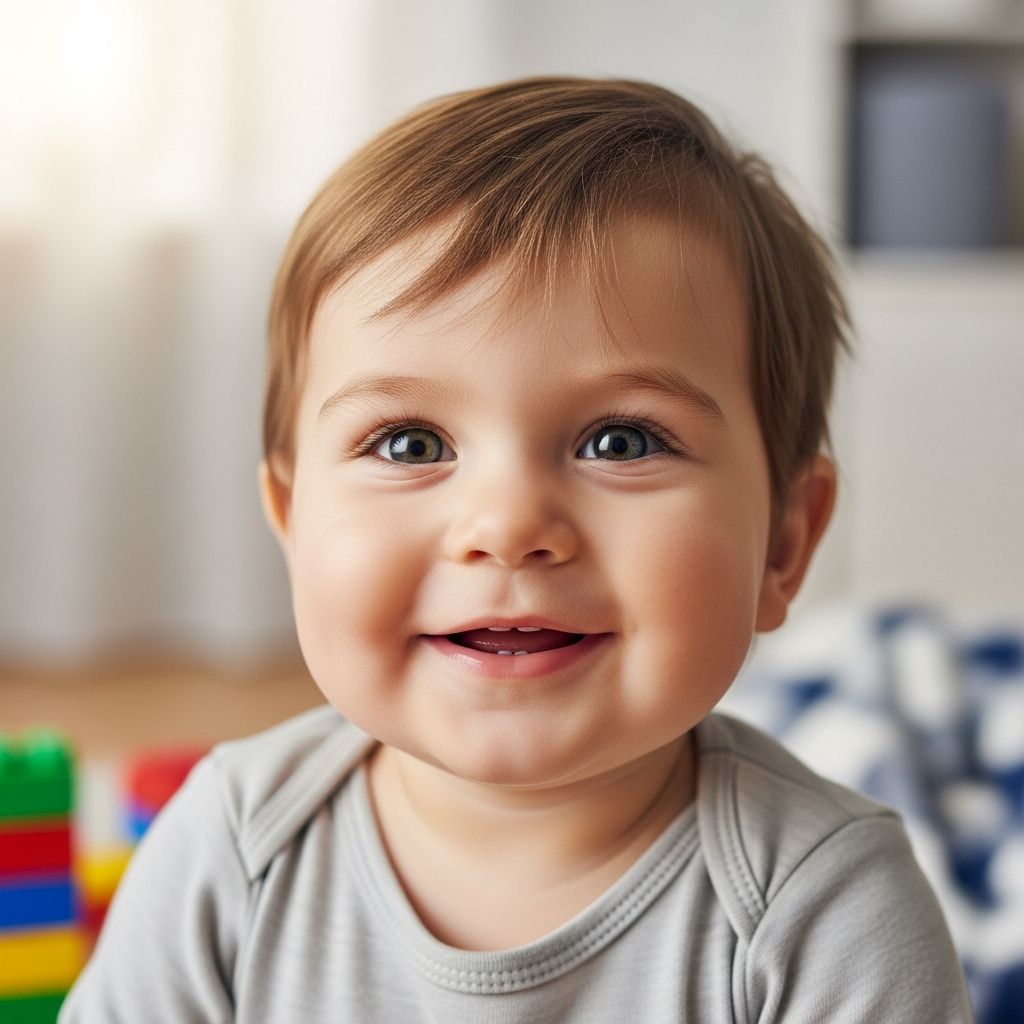
In everyday life, we call kids cute when they make us want to smile, cuddle them, or protect them. In science, this response is often traced back to what’s known as the baby schema: a set of features (big eyes, round face, small nose, soft skin, clumsy movements) that reliably trigger caregiving responses in adults.1
- Physical traits: large head compared to body, round cheeks, soft facial contours
- Behavioral traits: babbling, mispronouncing words, toddling rather than walking smoothly
- Emotional traits: open expressions of joy, surprise, or distress
These traits are not accidental: they are tightly linked to how children’s brains and bodies develop across the first years of life.4
How Cuteness Helps Children Survive
From an evolutionary perspective, human babies are born extremely dependent. They cannot walk, feed, or protect themselves and rely entirely on caregivers for survival. Researchers argue that cuteness is one of nature’s tools to keep adults invested in this long, demanding process.6
- High dependency: Human children remain dependent on adult care longer than most mammals.
- Motivating care: Cute signals make adults more likely to nurture, protect, and tolerate disruptions (like night waking or tantrums).
- Social bonding: Positive emotional reactions to children’s faces and voices help strengthen bonds in families and communities.
In other words, the things that make your child irresistibly sweet are closely tied to keeping them safe while their brain and body mature.
Key Developmental Stages That Shape Cuteness
Children’s development does not move in a straight line; it passes through distinct stages that change how they look, act, and interact with others.13 These shifts play a major role in when adults tend to see kids as especially adorable.
| Approximate Age | Development Highlights | Why Adults Often Find It Cute |
|---|---|---|
| Birth–12 months (Infancy) | Rapid brain growth, first smiles, sitting, crawling, early babbling85 | Soft features, giggles, first social smiles feel deeply rewarding |
| 1–3 years (Toddlerhood) | Walking, first words and phrases, emerging independence and imitation29 | Clumsy movements, funny language, and intense curiosity are highly endearing |
| 3–6 years (Early childhood) | Imaginative play, improved language, stronger social skills910 | Make-believe games and vivid storytelling can feel charming |
| 6–12 years (Middle childhood) | More logical thinking, school skills, friendships, and hobbies13 | Less “babyish” in appearance but still emotionally warm and playful |
Why Toddlerhood Often Feels Like “Peak Cute”
Although every child and family is different, many parents describe ages roughly between one and three as uniquely heart-melting. Several developmental changes overlap in this window, making it feel like a perfect storm of adorableness.
1. The Mix of Baby Features and New Skills
Toddlers often still have round cheeks, smaller noses, and relatively large heads—classic baby-schema traits—but they are now much more active and expressive.87
- They walk and run but with an unsteady, bouncing gait that many adults find cute.
- They talk in short phrases, experimenting with sounds and grammar in often humorous ways.
- They show strong preferences for people, toys, and foods, giving a sense of budding personality.
Developmental psychologists describe this period as one where children are gaining mental representations and symbolic thought: they can imagine, pretend, and use language in new ways, but their understanding of the world is still simple and direct.2
2. Emotional Expression Is Intense and Honest
Toddlers are not subtle. Their joy, frustration, pride, and fear all tend to show clearly on their faces and in their bodies. This emotional intensity is closely linked to brain and social development.76
- Joyful reactions: They may dance, clap, or squeal with happiness over small things.
- Big feelings: Tantrums are frequent because self-regulation skills are still emerging.
- Attachment behaviors: Seeking comfort, hugs, and reassurance highlights their trust in caregivers.
Even though the difficult moments are exhausting, many parents find the honest enthusiasm and affection incredibly warming, enhancing that sense of cuteness.
3. Rapid Learning Creates Daily “Firsts”
Brain development in the early years is extraordinarily rapid; neural connections form at high rates and are shaped by experiences.6 During toddlerhood, this translates into new skills appearing almost weekly.
- First pretend tea parties, drawn circles, or two-word sentences
- New problem-solving attempts, such as figuring out how to reach a desired object
- Growing social awareness, like comforting another child or imitating adult routines
Parents often experience these rapid changes as a kind of emotional highlight reel, which can make this period stand out vividly in memory.
How Parent Perception Shifts with Each Age
The “cutest age” is not only about children’s traits; it is also shaped by how adults feel at different stages of parenting. Sleep, stress, expectations, and experience all color the way we see our kids.
Early Months: Fragile and Fascinating
Newborns and young infants trigger strong protective instincts. Their limited abilities and vulnerability encourage close physical contact and round-the-clock care.58
- Parents are often exhausted, especially with frequent night waking.
- Cuteness can feel mixed with worry, responsibility, and learning curves.
- Small milestones like the first social smile can have huge emotional impact.
Middle Childhood: Less Babyish, More Capable
By school age, children’s bodies lengthen, their faces look more mature, and their thinking becomes more logical and organized.31
- They are often more independent with daily routines.
- They can explain their thoughts and hold conversations.
- Parents may admire their skills and character more than baby-like cuteness.
At this stage, many parents shift from emphasizing cuteness to taking pride in abilities, kindness, and emerging identity.
Why Science Can’t Name One Definitive Cutest Age
Although research helps explain why certain ages feel particularly endearing, there is no universal, scientifically fixed “cutest age.” Several factors get in the way of a single answer.
- Individual differences: Children develop at different rates—from physical growth to language and personality.7
- Cultural variation: Different cultures value different traits (e.g., obedience vs. independence), shaping what is seen as charming or appropriate.
- Family context: Birth order, family stress, health issues, and parental support systems all influence how any age feels.
- Parental temperament: Some adults love newborn snuggles, others prefer talking with older kids; both reactions are normal.
Instead of seeking a single magic age, it is more accurate to say that certain periods—especially toddlerhood—tend to combine many traits that humans are wired to find adorable.
How Understanding Cuteness Can Help Parents
Seeing the science behind cuteness is not just an interesting fact; it can influence how parents respond to daily challenges.
Balancing Adoration and Boundaries
When small children look and act adorably, it can be tempting to overlook behaviors that need gentle correction. Remembering that your brain is designed to respond strongly to cute signals can help you pause and respond more intentionally.
- Enjoy the cuteness, but still set age-appropriate limits.
- Recognize that tantrums are often signs of immature self-regulation, not defiance.
- Use warmth and structure together: comforting tone plus clear boundaries.
Appreciating Every Stage
Parents often grieve, in small ways, when the toddler years pass—the mispronounced words disappear, the clumsy walk becomes smooth, and the round cheeks narrow. Understanding that each stage brings new kinds of connection and satisfaction may soften that feeling.
- Infancy offers intense bonding and skin-to-skin closeness.
- Toddlerhood offers constant discovery and spontaneous affection.
- Early school years bring shared games, conversations, and inside jokes.
Rather than ranking stages, it can be helpful to notice what is uniquely rewarding at the age your child is right now.
Frequently Asked Questions (FAQs)
Is there a proven age when children are objectively cutest?
No single age is universally proven to be the cutest. Research describes how baby-like traits and toddler behaviors trigger strong caregiving responses, but what feels cutest varies by culture, family, and individual preference.67
Why do I sometimes feel guilty for liking one age more than another?A: It is common for parents to feel more comfortable with certain stages. Newborn care, toddler tantrums, or school pressures may feel easier or harder depending on your own temperament, support, and life situation. Preferring a stage does not mean you love your child less at other ages.
Q: Do children become less cute as they grow more independent?
Children’s appearance gradually shifts away from baby-like features, but many parents report new kinds of affection and pride in later stages, such as sharing hobbies, conversations, and jokes. The nature of enjoyment changes rather than simply decreasing.39
How does brain development relate to cuteness?
Early brain development builds the foundations for movement, language, and emotion. As these systems mature, children show new skills—like walking or talking in short sentences—that many adults find irresistible. The same brain changes that improve abilities also transform how endearing children appear.67
Can knowing the science make parenting easier?
Understanding that your strong reaction to cuteness is part of human biology can normalize your feelings, from intense protectiveness to occasional frustration. It can also remind you that challenging behaviors like tantrums are linked to developmental limits, not simply willfulness, which may help you respond with more patience.
References
- Major Theories of Child Development: Frameworks for Learning — American Public University System. 2021-06-10. https://www.amu.apus.edu/area-of-study/education/resources/major-theories-of-child-development/
- Piaget’s Theory and Stages of Cognitive Development — Simply Psychology. 2023-08-28. https://www.simplypsychology.org/piaget.html
- Developmental Stages — EBSCO Research Starters. 2019-01-01. https://www.ebsco.com/research-starters/biology/developmental-stages
- Child Development — Yale Medicine. 2022-07-01. https://www.yalemedicine.org/conditions/child-development
- CDC’s Developmental Milestones — Centers for Disease Control and Prevention. 2022-03-31. https://www.cdc.gov/act-early/milestones/index.html
- The Science of Early Childhood Development — Center on the Developing Child at Harvard University. 2023-10-01. https://developingchild.harvard.edu/wp-content/uploads/2024/10/Science_Early_Childhood_Development.pdf
- Child Development: Milestones, Ages and Stages — CHOC Health. 2021-05-15. https://choc.org/ages-stages/