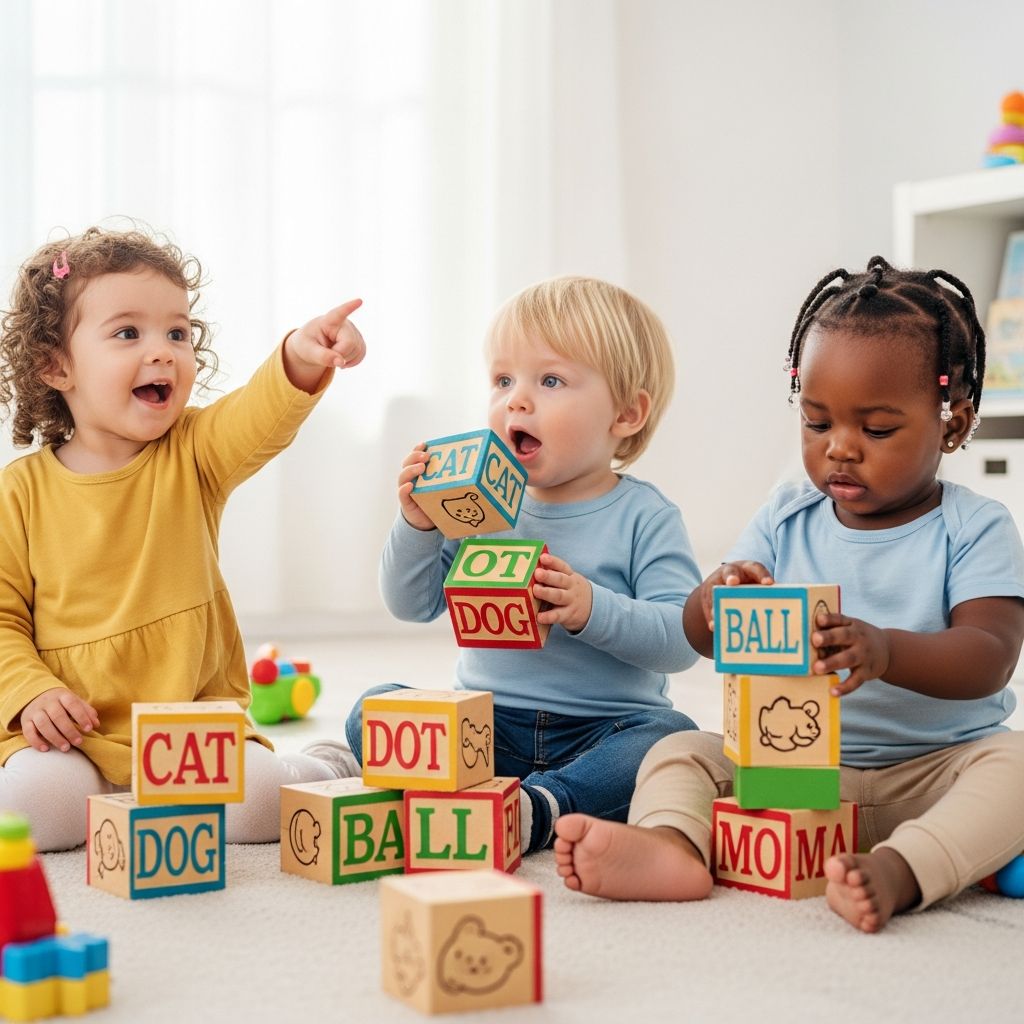
Between 32 and 39 months, toddlers experience a remarkable surge in language abilities, often amassing vocabularies approaching 1000 words. This period marks a transition from basic phrases to sophisticated sentences, enabling children to express thoughts, emotions, and stories with increasing clarity and creativity.
Understanding the Vocabulary Explosion
The leap to a 1000-word vocabulary reflects rapid neural development and environmental exposure. Toddlers at this stage absorb words like sponges, learning several new ones daily through interactions, books, and play. By 36 months, many comprehend far more words than they speak, using nouns for objects, verbs for actions, adjectives for descriptions, and pronouns for self-reference.
Key drivers include daily conversations, reading sessions, and repetitive exposure. Parents notice children naming everyday items, describing feelings, and questioning their surroundings with words like “what,” “where,” and “why.” This expansion supports cognitive growth, problem-solving, and social bonds.
Building Sentences and Grammar Foundations
Around 32 months, toddlers combine 3-4 words into sentences, evolving to 4-5 words by 39 months. Examples include “Mommy push swing high” progressing to “I want Mommy to push the swing higher.” Grammar emerges with plurals (“dogs”), past tenses (“walked”), and possessives (“mine” vs. “yours”).
Irregular forms may trip them up, like “foots” or “goed,” but consistent correction through modeling refines accuracy. Speech intelligibility improves dramatically; by 39 months, strangers understand 75-90% of utterances, aided by clearer consonants like k, g, f, t, d, and n.
Spatial Concepts and Descriptive Mastery
Toddlers grasp prepositions such as “in,” “on,” “under,” and “behind,” following commands like “Put the ball under the table.” Descriptive words like “big,” “happy,” “wet,” or “cold” enrich expression. They categorize objects (foods, clothes), recognize colors, and describe functions (“Fork for eating”).
| Concept Type | Examples | Typical Use |
|---|---|---|
| Spatial | in, on, under, next to | “Book on shelf” |
| Descriptive | big/small, hot/cold, happy/sad | “Big red ball” |
| Pronouns | I, you, me, her, mine | “That’s mine!” |
| Questions | who, what, where, why | “Where teddy?” |
Play, Social Interaction, and Language Integration
Language thrives in play. Toddlers voice toys, engage in pretend scenarios, and join group play, negotiating turns with phrases like “Your go now.” Rhyming, singing, and storytelling build phonemic awareness. Bilingual homes see parallel development, with children switching languages contextually.
- Engage in role-play: Assign voices to dolls or animals.
- Group activities: Share toys while describing actions.
- Creative expression: Narrate daily routines or invent stories.
These interactions foster turn-taking, empathy, and advanced vocabulary like opposites (hot/cold) or sizes (big/little).
Daily Strategies to Boost Language Growth
Parents play a pivotal role. Narrate activities (“We’re stirring the batter to make cookies”), expand utterances (Child: “Dog run.” Parent: “Yes, the big brown dog is running fast in the park.”), and read daily. Books with rhymes and pictures prompt pointing and labeling.
- Read aloud 20 minutes daily, asking “What happens next?”
- Respond to every attempt, even babbles.
- Use songs and rhymes for rhythm and memory.
- Limit screens; prioritize face-to-face talk.
- Praise efforts: “I love how you said that!”
These habits accelerate the path to 1000 words and fluid communication.
Recognizing and Addressing Developmental Red Flags
While most toddlers hit milestones, monitor for delays. At 32 months, inability to combine two words, follow simple instructions, or point to body parts warrants attention. By 39 months, persistent unclear speech, limited vocabulary under 500 words, or ignoring instructions signal potential issues like hearing loss or speech disorders.
- No 2-3 word phrases by 32 months.
- Struggles with 2-step directions (“Get shoes, then coat”).
- No questions or pretend play.
- Family understands less than 50% of speech.
Early intervention via speech therapy yields best outcomes. Consult pediatricians for screenings.
Long-Term Benefits of Strong Early Language
Robust language at 32-39 months predicts school readiness, literacy, and social success. Children with 1000+ words excel in reading by kindergarten and show stronger executive function. Conversely, delays correlate with academic challenges, underscoring proactive support.
Invest now: Talk, read, play. Your toddler’s brain is wiring for lifelong learning.
Frequently Asked Questions
Is a 1000-word vocabulary normal at 32-39 months?
Yes, many toddlers reach 500-1000 words by 36 months, using varied sentence structures. Individual pace varies, but steady growth is key.
How can I help my toddler expand vocabulary?
Read daily, narrate routines, expand their words, and engage in interactive play. Avoid screens under 2 years.
What if my 3-year-old’s speech is unclear?
Strangers should understand 75%+ by 39 months. If not, check hearing and consult a specialist.
Does bilingualism delay language milestones?
No, bilingual toddlers meet milestones across languages, often with metalinguistic advantages.
When should I worry about language delays?
By 32 months: No 2-word combos or simple instructions followed. Seek evaluation promptly.
References
- Language development: 2-3 years — Raising Children Network. 2023. https://raisingchildren.net.au/toddlers/development/language-development/language-2-3-years
- Age-Appropriate Speech and Language Milestones — Children’s Hospital of Philadelphia (CHOP). 2024. https://www.chop.edu/health-resources/age-appropriate-speech-and-language-milestones
- Language Development: 1-3 Years — KidCentral TN (Tennessee Department of Education partner). 2023. https://www.kidcentraltn.com/development/1-3-years/language-development-1-3-years.html
- Speech and Language Developmental Milestones for 2-Year-Olds — TherapyWorks. 2023. https://therapyworks.com/blog/developmental-milestones/speech-and-language-developmental-milestones-two-year-olds/
- Communication Milestones: 2 to 3 Years — American Speech-Language-Hearing Association (ASHA). 2024. https://www.asha.org/public/developmental-milestones/communication-milestones-2-to-3-years/
- Milestones by 2 Years — Centers for Disease Control and Prevention (CDC). 2024. https://www.cdc.gov/act-early/milestones/2-years.html