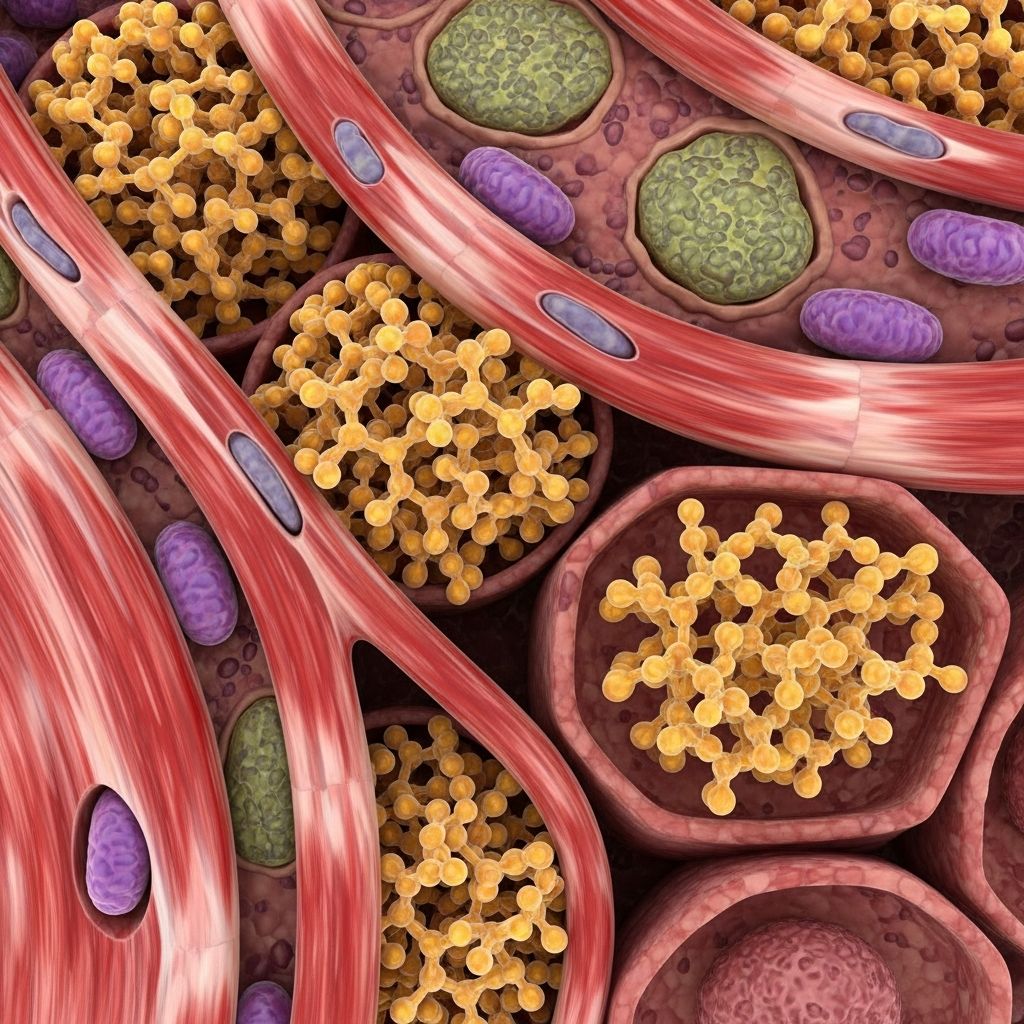
The Hidden Fuel Tank Inside You
Every time you move, think, or even breathe, your body is burning fuel. That fuel comes mostly from a simple sugar called glucose, which powers your cells and keeps your brain sharp. But glucose doesn’t just float around endlessly in your bloodstream. Instead, your body has a smart way of storing extra glucose for later: it packs it into a compact, branched molecule called glycogen.
Glycogen is often described as your body’s main form of stored carbohydrate. It’s not a separate substance you eat; it’s something your body builds from the sugars and starches in your food. When you eat a meal with bread, rice, pasta, fruit, or even protein-rich foods that can be converted to glucose, your body captures that glucose and tucks it away as glycogen for use between meals, during physical activity, or when food isn’t immediately available.
Where Glycogen Lives in Your Body
Glycogen isn’t stored in just one place. Your body keeps it in two main storage sites, each with a different job:
- Liver glycogen: Stored in liver cells, this form of glycogen acts like a central energy bank for the whole body. When blood sugar starts to dip—between meals, overnight, or during fasting—the liver breaks down its glycogen and releases glucose into the bloodstream to keep levels stable.
- Muscle glycogen: Stored inside skeletal muscle fibers, this glycogen is more like a personal fuel tank for each muscle. It’s used almost exclusively by the muscle itself during activity and doesn’t directly raise blood sugar for other organs.
While the liver holds a smaller total amount of glycogen, it plays a bigger role in keeping blood glucose in a safe range. Muscle tissue, on the other hand, stores more glycogen by weight because there’s simply more muscle mass in the body. Both stores are crucial, but they serve different purposes in energy balance.
How Glycogen Is Made and Used
The process of storing glucose as glycogen is called glycogenesis. After you eat, especially a meal rich in carbohydrates, glucose levels in your blood rise. In response, your pancreas releases the hormone insulin. Insulin signals cells in the liver and muscles to take up glucose from the blood and convert it into glycogen chains for storage.
When your body needs energy and glucose isn’t coming in from food, it reverses the process through glycogenolysis. Enzymes in the liver and muscles break down glycogen back into glucose (or glucose-6-phosphate in muscles) so it can be used for fuel. In the liver, this glucose can be released into the blood; in muscles, it’s used right where it’s stored.
This cycle of storage and release is tightly controlled by hormones and your body’s energy needs. It ensures that:
- Blood sugar doesn’t drop too low between meals
- Muscles have quick access to energy during exercise
- Excess glucose is safely stored instead of staying in the blood at high levels
Why Glycogen Matters for Blood Sugar
One of glycogen’s most important jobs is helping to maintain stable blood glucose levels. The brain, in particular, relies heavily on a steady supply of glucose. Even when you’re not eating—like overnight or during a long gap between meals—your brain still needs fuel.
Liver glycogen is key here. When blood sugar begins to fall, the pancreas releases another hormone, glucagon, which tells the liver to break down glycogen and release glucose into the bloodstream. This keeps blood sugar in a normal range and prevents symptoms like shakiness, dizziness, or difficulty concentrating that can come with low blood sugar.
Without enough liver glycogen, your body would have to rely more on making new glucose from other sources (a process called gluconeogenesis), which takes more time and energy. Glycogen acts as a fast-acting buffer that helps smooth out the ups and downs of blood sugar throughout the day.
Glycogen and Physical Activity
If you’ve ever felt strong at the start of a workout but hit a wall later on, glycogen is likely part of the story. During exercise, your muscles burn through their stored glycogen to power movement. The more intense the activity, the faster glycogen is used.
Here’s how glycogen supports different types of activity:
- Short bursts of effort: Sprinting, jumping, or lifting heavy weights rely heavily on muscle glycogen for quick energy.
- Moderate-intensity exercise: Activities like jogging, cycling, or swimming use a mix of glycogen and fat for fuel.
- Endurance events: Long runs, rides, or games can deplete muscle glycogen, which is why “hitting the wall” often happens when glycogen runs low.
When muscle glycogen is low, performance can suffer. You might feel more tired, less powerful, or slower to recover. That’s why athletes often focus on “carb-loading” before big events—to maximize their glycogen stores and delay fatigue.
How Diet Affects Glycogen Levels
What you eat directly influences how much glycogen your body can store. Carbohydrates are the primary source of glucose for glycogen synthesis, so your intake of bread, rice, pasta, potatoes, fruits, and other carb-rich foods plays a big role.
Here’s a simple breakdown of how different eating patterns affect glycogen:
| Eating Pattern | Effect on Glycogen |
|---|---|
| Regular meals with carbs | Maintains full liver and muscle glycogen stores |
| Low-carb or ketogenic diet | Liver and muscle glycogen are reduced; body relies more on fat and ketones |
| High-carb, low-fat diet | Maximizes glycogen storage, especially in athletes |
| Fasting or very long gaps between meals | Liver glycogen drops; muscle glycogen is preserved unless exercise is performed |
Protein and fat can also indirectly affect glycogen. Protein can be converted to glucose (through gluconeogenesis) and then stored as glycogen, especially in the liver. Fat, on the other hand, doesn’t turn into glycogen but can be used as an alternative fuel when glycogen is low.
Exercise and Glycogen Replenishment
After a hard workout, your muscles may be low on glycogen. Replenishing those stores is important for recovery and future performance. The body is especially good at rebuilding glycogen in the hours right after exercise, especially if you eat carbohydrates.
Key factors that influence how quickly glycogen is restored:
- Timing: Eating carbs soon after exercise (within 30–60 minutes) speeds up glycogen recovery.
- Amount: The more intense or long the workout, the more carbs you may need to fully refill stores.
- Type of carbs: Simple carbs (like fruit, sports drinks, or bread) are often absorbed quickly and can be useful right after a workout.
- Overall diet: A consistent intake of carbohydrates throughout the day helps keep both liver and muscle glycogen topped off.
For most active people, a balanced diet with enough carbs will keep glycogen levels in a healthy range. You don’t need to obsess over exact amounts unless you’re training for endurance events or have specific performance goals.
What Happens When Glycogen Runs Low?
Running low on glycogen doesn’t mean your body stops working—it just has to adapt. When glycogen stores are depleted, your body shifts to using other fuels:
- Fat: Your body breaks down fat stores into fatty acids and ketones, which can power many tissues, including muscles and the brain (to some extent).
- Protein: In prolonged fasting or very low-carb states, some amino acids from muscle protein can be converted to glucose to maintain blood sugar.
However, relying too much on these backup systems isn’t ideal for long-term health or performance. Low glycogen can lead to:
- Fatigue and reduced exercise capacity
- Difficulty concentrating or “brain fog”
- Increased hunger and cravings
- Slower recovery after workouts
For most people, occasional glycogen depletion (like after a long run or a day of fasting) is normal and not harmful. But consistently low glycogen, especially in active individuals, can interfere with energy, mood, and physical performance.
Common Myths About Glycogen
Because glycogen is linked to carbs, energy, and body composition, it’s often misunderstood. Here are a few common myths and the facts behind them:
- Myth: Glycogen makes you gain fat.
Fact: Glycogen itself is not fat. It’s stored with water, so high glycogen can make you feel heavier temporarily, but it doesn’t turn into body fat unless you’re consistently eating more calories than you burn. - Myth: You need to avoid carbs to lose weight.
Fact: Weight loss depends on overall calorie balance, not just carbs. Many active people do fine with moderate to high carb intake as long as they’re active and eating a balanced diet. - Myth: Muscle glycogen can raise blood sugar.
Fact: Muscle glycogen is used only by the muscle itself. It can’t be released into the blood like liver glycogen can, so it doesn’t directly affect blood sugar levels.
When Glycogen Metabolism Goes Wrong
In rare cases, problems with glycogen metabolism can lead to medical conditions. These are usually genetic disorders that affect the enzymes needed to make or break down glycogen. Examples include:
- Glycogen storage diseases: A group of inherited conditions where the body can’t properly store or use glycogen, leading to low blood sugar, muscle weakness, or liver problems.
- Insulin resistance and type 2 diabetes: In these conditions, the body’s response to insulin is impaired, which can affect how well glucose is stored as glycogen in the liver and muscles.
These conditions are different from normal fluctuations in glycogen due to diet or exercise. If you have concerns about blood sugar, energy levels, or muscle function, it’s important to talk to a healthcare provider rather than trying to self-diagnose.
Practical Tips for Healthy Glycogen Levels
You don’t need to be an athlete or a scientist to support healthy glycogen stores. Simple, everyday habits can make a big difference:
- Eat regular meals that include a source of carbohydrates, especially if you’re active.
- Include a mix of complex carbs (whole grains, vegetables, legumes) and some simple carbs (fruit, dairy) throughout the day.
- After intense or long workouts, have a snack or meal with carbs and some protein to help rebuild glycogen and repair muscles.
- Stay hydrated, since glycogen is stored with water and dehydration can affect energy and performance.
- Listen to your body: if you feel unusually tired, weak, or have trouble concentrating, it might be a sign that your energy stores (including glycogen) need attention.
Frequently Asked Questions
What is glycogen made of?
Glycogen is a large, branched molecule made up of many glucose units linked together. It’s often described as a “tree-like” structure with many branches, which allows the body to quickly add or remove glucose as needed.
Can you see or feel glycogen in your body?
No, glycogen is microscopic and stored inside cells. However, because glycogen holds water, changes in glycogen levels can affect how much water your body retains, which may show up as small changes in weight or how your clothes fit.
Does fasting deplete glycogen?
Yes, fasting or going for long periods without eating uses up liver glycogen first. After about 12–24 hours without food, liver glycogen drops significantly, and the body starts relying more on fat and other fuels. Muscle glycogen is preserved unless you’re also exercising.
How long does it take to refill glycogen after exercise?
For most people, muscle glycogen can be mostly restored within 24 hours with adequate carbohydrate intake. The fastest recovery happens when carbs are eaten soon after exercise, especially after intense or long workouts.
Is glycogen the same as starch?
Not exactly. Both glycogen and starch are made of glucose chains, but they’re different molecules. Starch is the main storage form of glucose in plants (like potatoes, rice, and wheat), while glycogen is the main storage form in animals, including humans.
Can too much glycogen be harmful?
Having full glycogen stores isn’t harmful for healthy people. However, consistently high blood glucose and insulin levels (often from overeating, especially sugary and refined carbs) can lead to problems over time, like insulin resistance. The issue isn’t glycogen itself, but the overall pattern of eating and activity.
References
- Glycogen — Wikipedia. Accessed 2023-11-15. https://en.wikipedia.org/wiki/Glycogen
- Biochemistry, Glycogen — StatPearls, NCBI Bookshelf, National Institutes of Health. 2023-07-31. https://www.ncbi.nlm.nih.gov/books/NBK539802/
- Glycogen — Physiopedia. Accessed 2023-11-15. https://www.physio-pedia.com/Glycogen