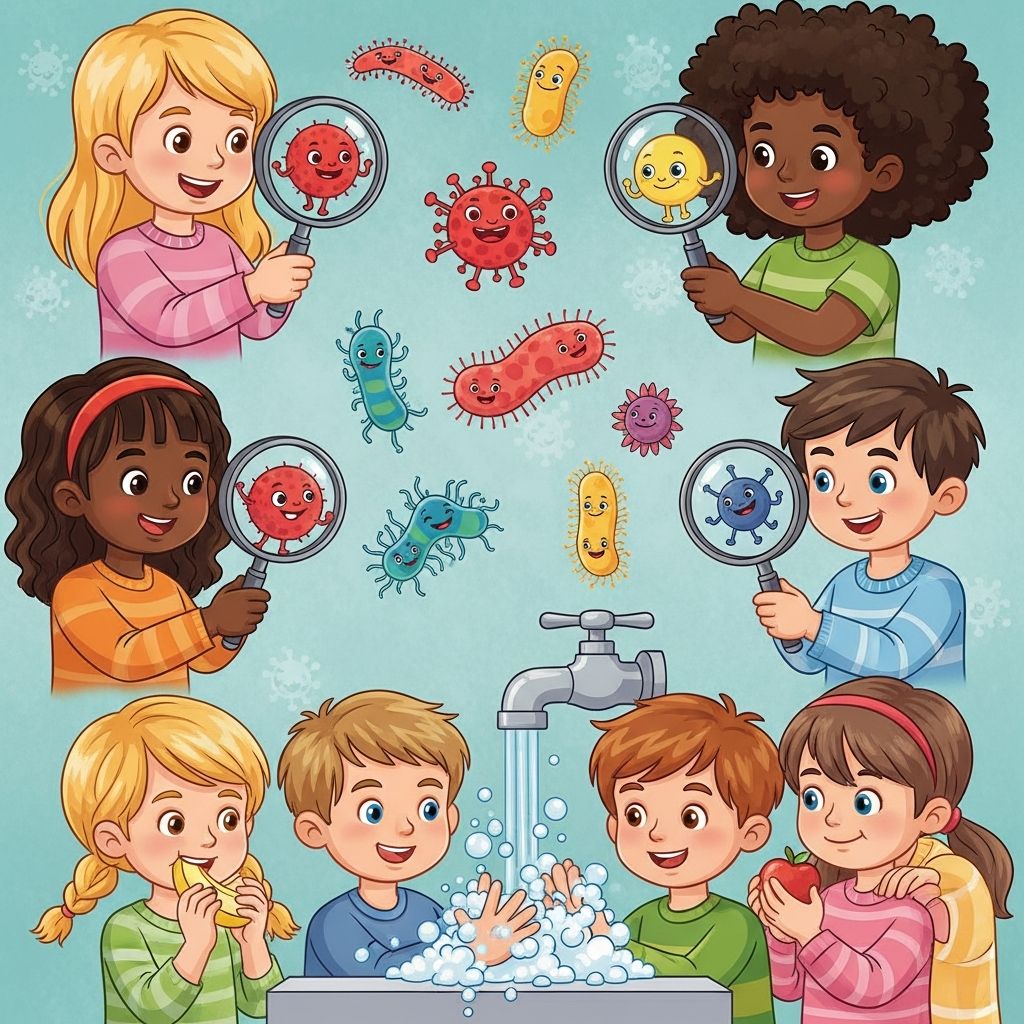
Infections can sound scary, but they are simply what happens when tiny germs get into the body and start causing trouble. This guide explains infections in clear, easy language so kids and families can recognize signs of sickness and know how to stay healthy.
What Is an Infection?
An infection happens when harmful germs enter the body, multiply, and interfere with how the body normally works. These germs can get in through the nose, mouth, eyes, cuts in the skin, or even through insect bites.
Your body does not just sit and let germs take over. It uses a special defense system called the immune system, which works hard every day to find germs and fight them off so you can get better.
- Germs are tiny: They are so small that you need a microscope to see most of them.
- Not all germs are bad: Some germs are helpful, but the harmful ones can cause infections.
- Infections can be mild or serious: Some get better quickly, while others need medicine and close care from a doctor.
Meet the Germs: Different Causes of Infection
Several types of germs can cause infections. Each type behaves a little differently, and doctors choose treatments based on which germ is causing the illness.
| Type of germ | What it is | Common examples of illnesses |
|---|---|---|
| Viruses | Tiny germs that must live inside your cells to multiply. | Colds, flu, some stomach bugs. |
| Bacteria | Single-celled germs that can live almost anywhere. | Strep throat, some ear infections, some skin infections. |
| Fungi | Germs that include molds and yeasts. | Some rashes on the skin, nail infections. |
| Parasites | Organisms that live on or inside another living thing. | Certain stomach infections, some infections from bug bites. |
Even though there are different types of germs, your immune system uses many of the same tools to fight them, such as special cells in your blood and chemicals that attack invaders.
How Germs Sneak Into the Body
Germs can spread quickly, especially in places where lots of people are close together, like schools, playgrounds, and sports teams. Understanding how germs move helps you learn how to block their path.
Common ways infections spread
- Through the air: When someone coughs, sneezes, or talks, tiny droplets carrying germs can float in the air and be breathed in by others.
- By touch: Germs can land on hands, desks, toys, or doorknobs. When someone touches these surfaces and then rubs their eyes, nose, or mouth, germs can enter the body.
- Through food and water: Eating or drinking something that has germs can cause infections in the stomach and intestines.
- Through cuts and bites: A scratch, cut, or insect bite can give germs a direct entrance into the body.
Because germs can travel in these ways, simple actions like covering a cough and washing hands can greatly reduce the chance of infection.
How the Body Fights Back: Your Immune System
The immune system is like a built-in security team that patrols your body 24/7. It looks for germs that do not belong and tries to remove them before they cause too much damage.
- White blood cells: These are special cells that find and attack germs.
- Antibodies: These are proteins that recognize specific germs and help your body remember how to fight them if they come back.
- Fever and swelling: These are signs that your immune system is working hard, creating a less comfortable place for germs to multiply.
Even though the immune system is powerful, it sometimes needs help from rest, fluids, and medicines prescribed by a doctor.
Common Signs You Might Have an Infection
Different infections cause different symptoms, but there are some common clues that germs are bothering your body. Paying attention to these signs helps you know when to tell an adult or see a doctor.
General warning signs
- Fever or feeling unusually hot or cold.
- Feeling very tired, weak, or worn out.
- Body aches, headaches, or chills.
- Loss of appetite or feeling like you do not want to eat.
Area-specific signs
- Throat and nose: Sore throat, stuffy or runny nose, sneezing, coughing.
- Chest: Cough that will not go away, trouble breathing, chest feeling tight.
- Stomach and intestines: Nausea, vomiting, diarrhea, stomach cramps.
- Skin: Redness, warmth, swelling, pain, or pus around a cut or rash.
- Ears: Ear pain, trouble hearing, or fluid leaking from the ear.
- Urinary tract: Burning when peeing or needing to pee more often than usual.
If symptoms are strong, last a long time, or suddenly get worse, it is important to let an adult know so they can contact a health professional.
When to Tell an Adult Right Away
Most infections are mild and go away with basic care. However, some warning signs mean you need help more quickly. Knowing these signs keeps you safer.
- Very high fever or a fever that does not improve after rest and fluids.
- Difficulty breathing, wheezing, or fast, hard breathing.
- Severe pain that will not go away, especially in the head, chest, or stomach.
- Confusion, trouble waking up, or acting very differently from usual.
- Stiff neck plus fever, or a rash that spreads quickly.
- Signs of dehydration, such as very dry mouth, dizziness, or not peeing much.
If any of these happen, an adult should contact a doctor, nurse, or emergency services for advice on what to do next.
How Doctors Find Out What Kind of Infection It Is
Doctors use clues from your symptoms and sometimes special tests to figure out what type of germ is causing an infection. This helps them choose the right treatment and decide whether medicine is needed.
Common steps during a checkup
- Questions: The doctor asks when the symptoms started, how you feel, and if anyone around you has been sick.
- Physical exam: The doctor checks your throat, ears, lungs, skin, and belly, and may measure temperature, heart rate, and breathing rate.
- Tests: Sometimes a swab from your throat or nose, a urine sample, or a blood test is needed to learn more about the infection.
These steps might feel a little uncomfortable, but they help make sure you get the care you need as quickly as possible.
Treating Infections: Rest, Care, and Medicine
Not all infections are treated the same way. Some get better on their own with rest, while others need specific medicine from a doctor. Taking care of your body helps the immune system finish the job.
Common treatments and what they do
| Treatment | What it helps with | Important notes |
|---|---|---|
| Rest and sleep | Gives the body energy to fight germs. | Try to relax, read, or nap when you feel tired. |
| Fluids | Prevent dehydration and help thin mucus. | Water, clear soups, and some electrolyte drinks are often helpful. |
| Fever and pain relievers | Lower fever and reduce aches and pains. | Only use medicines given or approved by a trusted adult and a health professional. |
| Antibiotics | Treat certain bacterial infections. | They do not work on viruses, and they must be taken exactly as prescribed. |
| Antiviral or antifungal medicines | Target specific viral or fungal infections. | Used only when a doctor decides they are needed. |
When a medicine is prescribed, it is very important to follow the instructions, finish the full course if directed, and never share medication with anyone else.
Smart Habits to Prevent Infections
Preventing infections is often easier than treating them. Simple, everyday habits can greatly lower the chance that germs will make you sick or spread to other people.
Everyday prevention tips
- Wash hands often: Use soap and water, scrub all parts of your hands for at least 20 seconds, and rinse well.
- Use hand sanitizer when needed: If soap and water are not available, use a sanitizer with enough alcohol, and rub until hands are dry.
- Cover coughs and sneezes: Use a tissue or your elbow, not your hands, and throw tissues away right after using them.
- Avoid touching your face: Try not to rub your eyes, nose, or mouth, especially when your hands are not clean.
- Stay home when sick: Resting at home helps you recover and protects classmates and friends.
- Keep cuts clean: Wash small wounds with soap and water, then cover them with a clean bandage if needed.
Healthy lifestyle choices
- Eat a balanced diet with fruits, vegetables, and protein to support your immune system.
- Get enough sleep each night so your body can repair and recharge.
- Stay active with play and exercise to keep your body strong.
- Follow vaccination schedules recommended by your doctor to protect against certain serious infections.
Helping Others Stay Healthy Too
Preventing infections is not only about protecting yourself. It also helps family members, classmates, teachers, and people who might get very sick if they catch certain germs.
- Use your own towels, cups, and utensils instead of sharing them.
- Throw away used tissues right away and wash your hands afterward.
- Tell an adult if you do not feel well so you do not accidentally spread germs at school or activities.
- Be kind to classmates who are sick by sending a card or message instead of visiting when they are still contagious.
These small actions show respect for others and help communities stay healthier overall.
Fun Ways to Remember Infection Safety
Turning health habits into simple rules makes them easier to remember, even on busy days. You can create games or challenges with friends or family to practice these habits together.
- The handwash song: Sing a short song while washing hands so you scrub long enough.
- High-five check: Before giving a high-five, quickly ask yourself whether your hands are clean.
- Cough-and-cover challenge: Try to always use your elbow or a tissue when you cough or sneeze, and see how many days in a row you can remember.
- Water tracker: Use a chart or app to keep track of how many glasses of water you drink each day.
Making infection prevention into a habit now can help you stay healthier for the rest of your life.
Frequently Asked Questions About Infections
Are all infections contagious?
No, not all infections are contagious. Some are caused by germs that do not spread easily from person to person, while others move quickly through coughing, sneezing, touch, or shared items. A health professional can explain whether a specific infection is likely to spread to others.
Can you get an infection even if you are very healthy?
Yes. Even strong, healthy bodies can sometimes get infections because germs are everywhere. Being healthy, getting enough sleep, and eating well usually help you recover faster and reduce how often you get sick.
Why do doctors not always give antibiotics?
Antibiotics only work against certain bacterial infections and do not help with illnesses caused by viruses or other germs. Using antibiotics when they are not needed can make them less effective later, so doctors are careful to prescribe them only when they truly help.
How long does an infection last?
The length of an infection depends on the type of germ, how strong your immune system is, and whether medicine is needed. Some infections clear up in a few days, while others may take a week or more, especially if the body needs extra time to heal.
Can you go to school if you have a mild infection?
This depends on how you feel and what kind of infection you have. If you have a fever, vomiting, diarrhea, or a very contagious illness, it is usually safer to stay home until an adult and a health professional say it is okay to return.
Do vaccines cause infections?
Vaccines are designed to train your immune system without giving you the full illness. Some people feel mild side effects, like a sore arm or a low fever, but vaccines are carefully tested to be safe and to protect against serious infections.
Understanding how infections work and how germs spread gives kids and families the power to make smart choices every day. With good hygiene, healthy habits, and timely medical care when needed, the body has an excellent chance of keeping infections under control.