When you fall, scrape your knee, or get a small cut, your body reacts fast. One of the most visible signs that your skin is fixing itself is a scab — that dry, crusty patch that appears over a wound. This guide explains what scabs are, how they form, and what kids can do to help them do their job.
What Is a Scab?
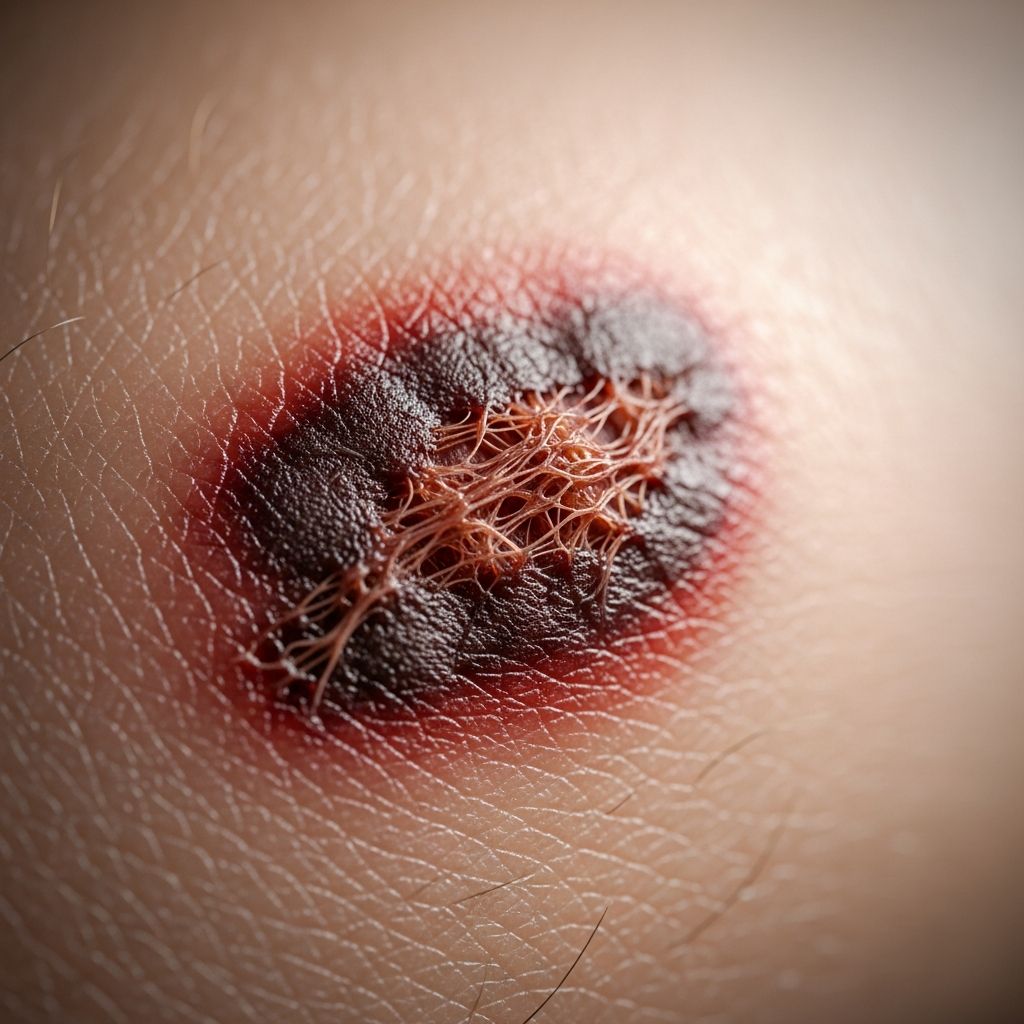
A scab is a hard, dried layer that forms over a cut, scrape, or other break in the skin as it heals. It is mostly made of dried blood and protective proteins that act like a natural cover for your wound.
- Color: Often dark red, brown, or nearly black.
- Texture: Usually rough, dry, and a little bumpy.
- Location: Forms wherever the skin has been damaged enough to bleed, such as knees, elbows, or hands.
Underneath the scab, your body is quietly building new skin and repairing small blood vessels so that the area can return to normal.
How Your Body Makes a Scab
The process of forming a scab is part of your body’s wound healing system, also called hemostasis and tissue repair. It happens in several quick steps.
1. The Skin Breaks and Bleeding Starts
Your outer skin layer, called the epidermis, creates a barrier between the inside of your body and the outside world. When you get a cut or scrape deep enough, tiny blood vessels in the skin open and you start to bleed.
2. Platelets Rush In
Your blood contains special cells called platelets that are always traveling through your bloodstream. When a blood vessel is damaged:
- Platelets stick to the edges of the broken vessel.
- They clump together, forming a soft plug.
- They release signals telling your body to start the clotting process.
3. A Clot Forms
Your body also uses proteins called clotting factors and a thread-like protein called fibrin to hold this plug together. Fibrin makes a mesh, like a tiny net, that traps more blood cells and strengthens the clot.
| Part | What It Is | What It Does |
|---|---|---|
| Platelets | Tiny blood cells | Form the first plug to stop bleeding |
| Fibrin | Thread-like protein | Makes a net to hold cells together in a clot |
| Red blood cells | Cells that carry oxygen | Get trapped in the clot and give it a dark red color |
| White blood cells | Infection-fighting cells | Attack germs and clean up damaged tissue under the scab |
4. The Clot Dries into a Scab
After the clot forms on the surface of your skin, the liquid part of the blood slowly dries. As it dries, the clot hardens into a protective crust — the scab you can see. This usually happens within hours of the injury.
What Is Happening Under a Scab?
A scab might look quiet and still from the outside, but under it your body is very active. Wound healing is often described in stages: inflammation, tissue growth, and remodeling.
Fighting Germs
When the skin breaks, germs like bacteria can try to enter the body. Your immune system responds by sending white blood cells to the area. These cells:
- Attack and destroy germs that slip into the wound.
- Clear away dead cells and tissue.
- Help prevent infection while the skin is still fragile.
Building New Skin
Next, your body starts to build new tissue:
- Fresh skin cells grow from the edges of the wound inward.
- Tiny new blood vessels form to bring oxygen and nutrients to the area.
- A soft, pink tissue sometimes called granulation tissue forms as a base for the new skin.
Finishing Touches
As healing continues:
- The new skin becomes stronger and more flexible.
- The scab loosens and eventually falls off on its own.
- The area may look pink or lighter than the surrounding skin for a while.
In many small cuts and scrapes, the skin may heal without leaving a scar. Deeper wounds are more likely to leave a mark after the scab is gone.
Why Scabs Are So Important
Even though scabs can be itchy or annoying, they do several important jobs that help keep you healthy.
- Stop bleeding: Scabs form from clotted blood, which seals broken vessels so you do not keep bleeding.
- Block germs: The hard surface acts like a shield to keep bacteria, dirt, and other irritants out of the wound.
- Protect healing tissue: They cover the delicate new cells growing underneath.
- Prevent dehydration of tissue: Scabs help keep the area from drying out too much, which supports healing.
Why You Should Not Pick a Scab
It can be tempting to peel or scratch off a scab, especially if it feels rough or starts to itch. But leaving the scab alone is almost always the best choice.
Problems Picking Can Cause
- Slower healing: Removing a scab too early exposes the tender new skin underneath and may cause the wound to open and bleed again.
- Higher risk of infection: Without its protective shield, germs and dirt can reach the healing area more easily.
- More scarring: Repeatedly scratching or picking can damage the new tissue and increase the chance of a visible scar later.
What To Do If a Scab Itches
Itching can be a normal part of the healing process because cells and chemicals involved in healing can irritate nearby nerves. To deal with itchiness without picking:
- Gently tap around (not on) the scab with clean fingers.
- Ask an adult if you can place a clean bandage loosely over the area.
- Keep the skin around the wound moisturized if a grown-up has given you permission to use a safe lotion or ointment.
- Distract yourself with a game, book, or activity when you feel like scratching.
How Kids Can Help Wounds Heal
There are simple steps you can follow to help a scab do its job and support the healing of cuts and scrapes.
Right After You Get a Cut or Scrape
- Tell an adult: Let a parent, teacher, coach, or another trusted adult know you are hurt.
- Rinse the area: Use clean, running water to gently wash away dirt and debris.
- Use mild soap nearby: Soap can help clean the area around the wound, but strong scrubbing should be avoided.
- Stop the bleeding: An adult may press a clean cloth or bandage on the wound to help the blood clot.
While the Scab Is in Place
- Keep the skin clean.
- Follow any bandage instructions given by a doctor or nurse.
- Try not to bump or scrape the area again.
- Resist the urge to scratch or pick.
Some health professionals recommend keeping certain wounds slightly moist with ointment and a bandage to help healing. In these cases, a thick scab may not form, but the skin can still heal well. Always follow your doctor’s or nurse’s advice for how to care for your specific wound.
What Can Cause Scabs Besides Cuts?
Scabs most often appear after common cuts and scrapes, but they can also show up after other kinds of skin problems that cause the surface to break open and bleed.
- Scratches and abrasions: Like sliding on pavement or falling off a bike.
- Small burns: Mild burns can damage the top layer of skin and later form a scab.
- Skin conditions: Problems like eczema or infections can cause open sores that scab over as they heal.
- Bites or blisters: Scratching bug bites or popping blisters can open the skin and lead to scabbing.
No matter how the wound started, the scab itself works in a similar way — to cover and protect the area until the skin beneath is ready to be uncovered.
When Will a Scab Fall Off?
Scabs do not all disappear at the same speed. How long a scab lasts depends on:
- The size and depth of the wound.
- Where it is on the body (joints that bend a lot may take longer).
- How well the wound is cared for.
- Your overall health and how quickly your body heals.
Many small scabs fall off by themselves in a few days to a couple of weeks as new skin grows underneath. When the skin is strong enough, the scab becomes loose and may flake off during normal activities, like bathing or getting dressed.
Signs Something Might Be Wrong
Most scabs are harmless and heal without problems, especially in otherwise healthy kids. Sometimes, though, a wound needs extra attention from an adult or a healthcare provider.
Ask an Adult for Help Right Away If:
- The cut is very deep, wide, or continues to bleed heavily.
- The wound was caused by a dirty or rusty object.
- An animal or a person caused the bite or scratch.
- The skin looks like it might need stitches.
Watch for Signs of Infection
According to health experts, infections happen when germs grow in the wound instead of being cleared away by your immune system. Ask an adult to call a doctor or nurse if you notice:
- Increasing redness or warmth around the scab.
- Swelling that gets worse instead of better.
- Pus or yellow-green fluid leaking from the wound.
- A bad smell coming from the area.
- Fever or feeling very unwell.
- Red streaks moving away from the wound.
These signs do not always mean a serious problem, but they do mean a healthcare provider should take a look.
Fun Facts About Scabs and Skin
- Your skin is your body’s largest organ and one of its main defenses against germs and injury.
- Doctors sometimes call scabs “crusts” when they describe them in medical notes.
- Not every wound will form a big, visible scab — some heal under a bandage in a moist environment.
- Healthy habits like eating well, sleeping enough, and staying active help your body repair skin more effectively.
Frequently Asked Questions About Scabs
Do all wounds make scabs?
No. Some very shallow scrapes or well-protected wounds may not form a thick scab. If a wound is kept slightly moist with ointment and covered, it can sometimes heal with only a thin film instead of a hard crust.
Is it okay if a scab gets wet in the bath or shower?
For most small cuts and scrapes, getting a scab gently wet while bathing is fine. Just avoid scrubbing or picking at it. If a doctor gave specific instructions, always follow those directions.
What if my scab accidentally comes off?
If a scab peels off early and the area starts to bleed or looks raw, tell an adult. They can help rinse the wound, apply pressure to stop any bleeding, and cover it with a clean bandage if needed.
Will I always have a scar after a scab?
Not necessarily. Many small, shallow wounds heal without a permanent scar if they are kept clean and protected. Deeper injuries are more likely to leave a mark even after the scab drops off.
Can I play sports if I have a scab?
Often yes, as long as the wound is small, covered if needed, and not painful. Check with your parent, coach, or school nurse. For larger wounds, rough sports might have to wait until the area is stronger.
Key Takeaways for Kids
- A scab is your body’s natural bandage that forms after a cut or scrape.
- It helps stop bleeding, keeps out germs, and protects new skin cells growing underneath.
- Picking at a scab can slow healing, increase the chance of infection, and may lead to more scarring.
- Keeping wounds clean and telling an adult when you get hurt are some of the best ways to help your body heal.
References
- What Is a Scab? — Cleveland Clinic. 2022-07-07. https://my.clevelandclinic.org/health/body/scab
- What Is a Scab on a Wound? Causes & Treatment — MedicineNet. 2021-08-20. https://www.medicinenet.com/what_is_a_scab_on_a_wound/article.htm
- Skin: Overview — U.S. National Library of Medicine, MedlinePlus. 2021-10-18. https://medlineplus.gov/skin.html
- Acute Wound Healing and Its Assessment — Wounds UK / National Library of Medicine. 2015-06-01. https://www.ncbi.nlm.nih.gov/pmc/articles/PMC4486737/