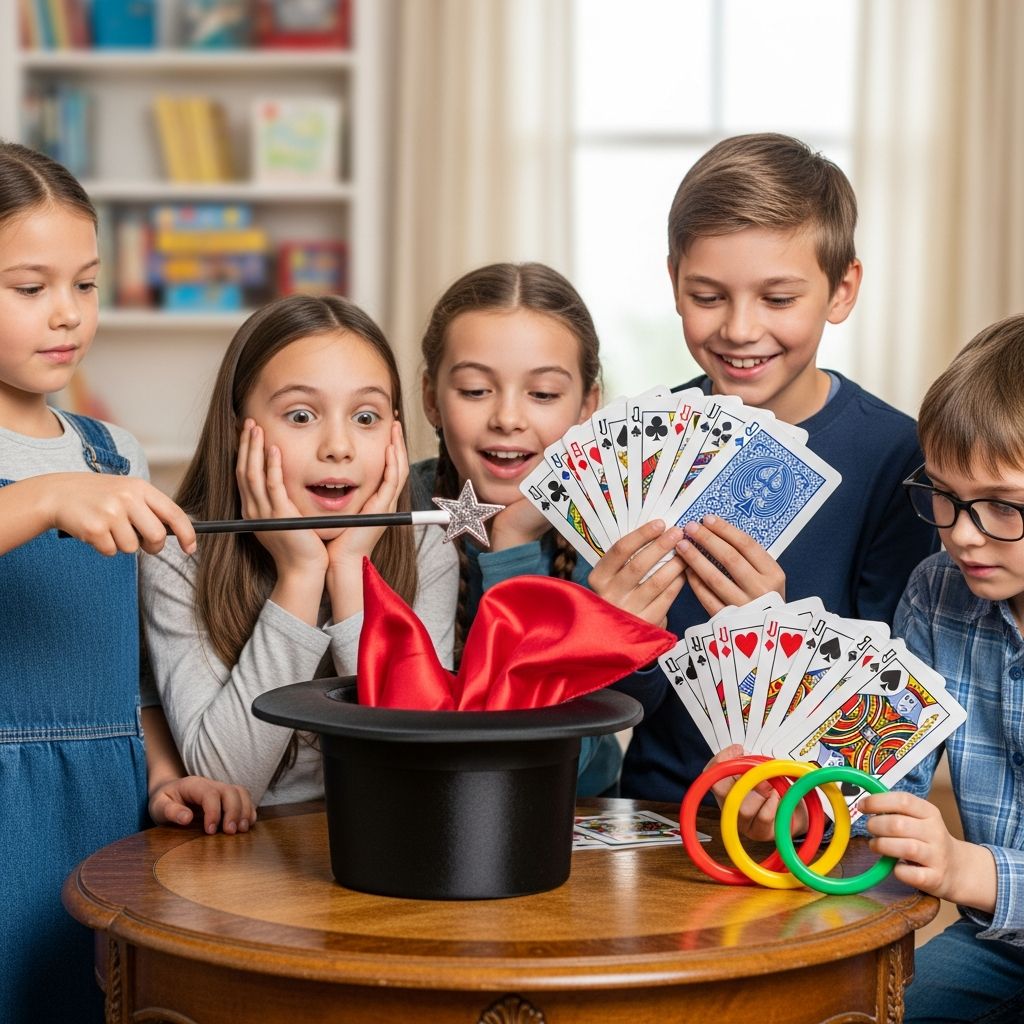
Introducing children to the enchanting world of magic tricks offers far more than mere entertainment. These seemingly simple illusions serve as powerful tools for holistic child development, nurturing skills that extend well beyond the stage. Parents and educators alike can harness this age-old art to foster creativity, confidence, and cognitive growth in young minds.
Building Unshakable Confidence Through Performance
One of the most profound impacts of learning magic comes from the performance aspect. When children master a trick and reveal it to family or friends, they experience an immediate surge in self-assurance. Research involving children aged 10-12 demonstrated that a single magic lesson led to clinically significant improvements in confidence and social skills, outperforming traditional self-esteem programs.
This boost stems from the tangible sense of accomplishment. Unlike abstract lessons, successfully fooling an audience provides instant validation. For children with ADHD, these effects are even more pronounced, with studies showing marked increases in self-esteem after learning basic illusions. Parents report that kids who once shied away from attention suddenly crave the spotlight, eagerly performing at family gatherings or school events.
- Practice makes perfect: Repetition in rehearsing tricks builds resilience against failure.
- Audience interaction: Positive reactions reinforce a child’s belief in their abilities.
- Adaptability: Adjusting tricks for different audiences teaches flexibility.
Sparking Creativity and Divergent Thinking
Magic inherently challenges children to think outside the box. Creating or performing illusions requires generating novel ideas, much like divergent thinking tasks in psychology. A study comparing magic-based activities to art interventions found that children who learned a magic trick showed significantly higher fluency and originality in idea generation, as measured by the Alternative Uses Task (AUT).
This creative spark arises from magic’s blend of mystery and logic. Kids must invent explanations for impossible feats, stretching their imagination. Thematic analysis from interventions reveals participants gaining a ‘childlike perspective,’ boosting curiosity and problem-solving. Over time, this translates to innovative approaches in school projects or playtime inventions.
| Activity Type | Impact on Creativity | Key Metric Improvement |
|---|---|---|
| Magic Tricks | High divergent thinking | AUT Fluency + Originality |
| Art-Based | Moderate | Lower than magic |
| Standard Lessons | Baseline | No significant gain |
Enhancing Fine Motor Skills and Coordination
Many magic tricks demand precise hand movements, such as palming coins or manipulating cards, which sharpen dexterity. This hands-on practice improves eye-hand coordination, benefiting activities like writing, sports, or playing instruments.
For young learners, starting with simple sleights—like the French Drop for vanishing objects—builds muscle memory. Regular practice refines these skills, making everyday tasks easier. Experts note that magic’s repetitive yet varied motions provide a fun alternative to traditional fine motor exercises, keeping children engaged without feeling like ‘work.’
Fostering Critical Thinking and Problem-Solving
Behind every magic trick lies a puzzle waiting to be decoded. Children learn to analyze sequences, predict outcomes, and devise strategies, honing logical reasoning. This mirrors executive function development, where planning and impulse control are key.
During shows, kids observe closely, testing hypotheses about ‘how it’s done.’ This methodical approach cultivates skepticism and evidence-based thinking, essential for science and math. Magic workshops have been shown to heighten critical thinking, preparing children for real-world challenges.
Boosting Social Skills and Reducing Anxiety
Magic encourages interaction, turning shy kids into communicators. Performing requires clear instructions, timing, and reading audience cues, all vital for social competence. Studies confirm reduced social anxiety and improved sociability after just one session, as children engage directly rather than passively.
In group settings, sharing tricks builds teamwork and empathy. For instance, teaching peers fosters generosity and patience. This is particularly valuable for neurodiverse children, where magic bridges social gaps.
Improving Focus, Memory, and Concentration
A successful trick hinges on unwavering attention. Children must memorize patter, sleights, and misdirection, strengthening working memory. This focused state enhances listening skills, aiding academic performance.
Magic’s demand for concentration during performance teaches mindfulness. Kids learn to block distractions, a skill transferable to homework or exams. Research highlights better retention and attentiveness post-magic activities.
Practical Tips for Parents: Getting Started with Magic
Begin with easy, safe tricks using household items—no expensive kits needed. Here’s a step-by-step guide:
- Choose age-appropriate illusions: Ages 4-6: Color changes; 7+: Card forces.
- Demonstrate first: Show the effect without revealing the method to build wonder.
- Practice privately: 10-15 minutes daily to master without pressure.
- Perform for pets or mirrors: Low-stakes audience builds comfort.
- Record and review: Videos help refine presentation.
Resources like online tutorials or local magic clubs provide structure. Integrate into playtime: ‘Magic math’ for counting cards or ‘science spells’ linking tricks to physics.
Age-Specific Magic Activities
| Age Group | Recommended Tricks | Skills Targeted |
|---|---|---|
| 3-5 years | Vanishing handkerchief, sponge balls | Motor skills, wonder |
| 6-8 years | Coin through hand, linking rings | Memory, basic logic |
| 9-12 years | Card predictions, mind reading | Critical thinking, performance |
Potential Challenges and Solutions
Frustration from failed attempts is common. Encourage persistence with praise for effort. For safety, supervise props to avoid small parts. If a child loses interest, rotate tricks to maintain novelty.
Address skepticism by explaining magic as ‘skill-based illusion,’ promoting ethical performance—never deceive harmfully.
Frequently Asked Questions (FAQs)
Is magic suitable for all children?
Yes, adaptable for various ages and abilities, including those with ADHD or learning differences, with proven benefits.
How long until I see improvements?
Effects on confidence and skills can appear after one session, with deeper gains over weeks.
Do I need magic supplies?
No—start with coins, cards, rubber bands. Kits under $20 enhance fun later.
Can magic help with school?
Absolutely: boosts focus, creativity, and presentation skills for better academics.
What if my child reveals secrets?
Teach the magician’s code: Effects for all, methods for none. Builds respect and discipline.
Long-Term Benefits into Adulthood
Skills from magic endure: adaptability from misdirection aids careers; presentation prowess shines in interviews. Former young magicians often credit it for innovation and poise. By embedding magic in childhood, parents invest in resilient, imaginative adults.
References
- Conjuring up creativity: the effect of performing magic tricks on children’s divergent thinking, wellbeing, and self-esteem — Norwood MF et al. 2021-04-07. https://pmc.ncbi.nlm.nih.gov/articles/PMC8053378/
- The impact of magic on children’s imagination — Wonder Edwrick. 2023. https://wonderedwrick.com/en/the-impact-of-magic-on-childrens-imagination/
- 8 Reasons Why Magic is a Great Hobby for Kids — Davis Magic Academy. 2022. https://www.davismagicacademy.com/8-reasons/
- Magic Lessons For Children: Kids Magic Workshop — CW Magic. 2023. https://www.cwmagic.co.uk/blog/magic-lessons-for-children
- National Magic Day: The Magical Learning Benefits of…Magic! — Tutor Doctor. 2022-09. https://www.tutordoctor.com/blog/2022/september/national-magic-day-the-magical-learning-benefits/
- How Learning Magic Can Strengthen Executive Function — ResearchILD. 2024. https://researchild.org/blog/magical-minds-how-learning-magic-can-strengthen-executive-function/
- Learning magic tricks can help self-esteem of kids with ADHD — UAB News. 2023. https://www.uab.edu/news/research-innovation/learning-magic-tricks-can-help-self-esteem-of-kids-with-adhd