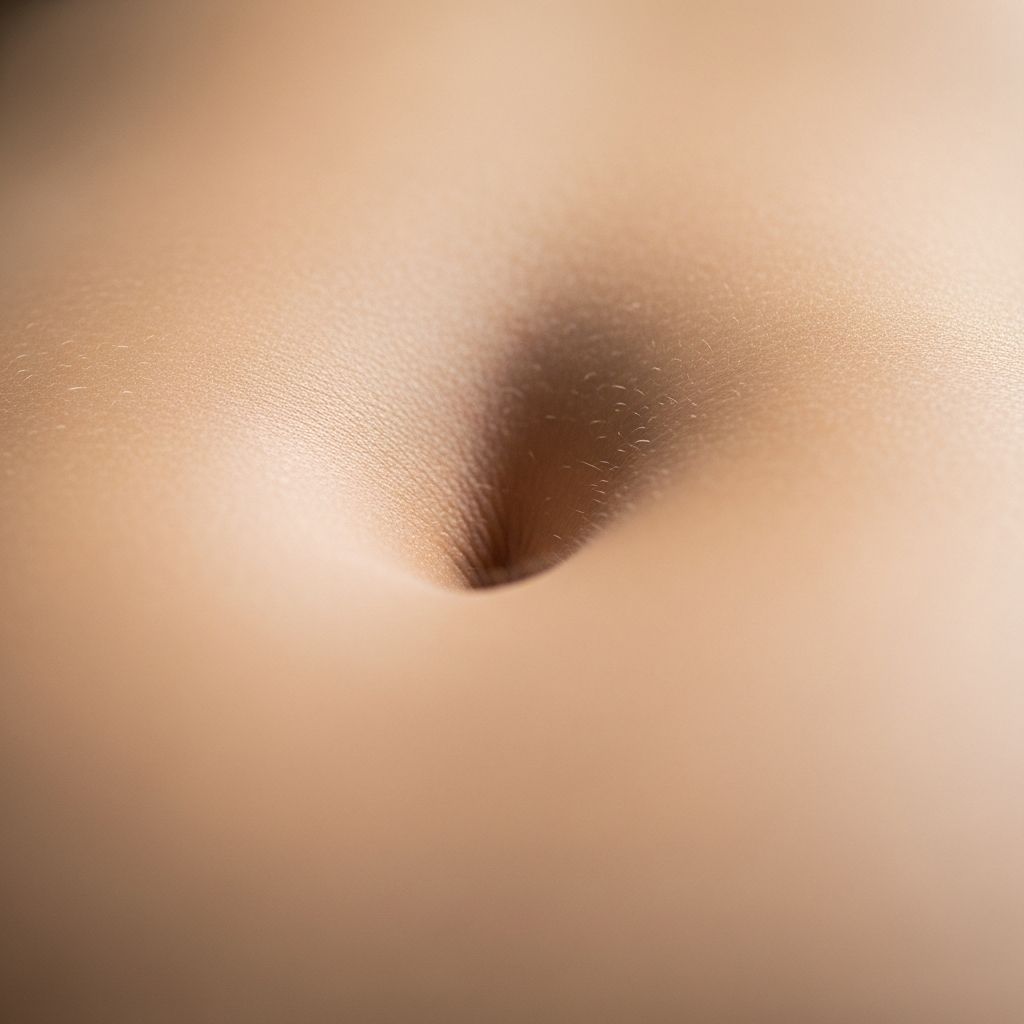
Your belly button sits right in the middle of your tummy, but it has a big story behind it. Long before you were born, that tiny spot was an important lifeline. Today, it is mostly just a neat reminder that you once lived inside a uterus, connected to your parent by a special cord.
In this article, you will learn:
- What the belly button really is
- How the umbilical cord helped you grow before birth
- Why belly buttons come in different shapes
- How to keep your belly button clean and healthy
- What to know about belly button piercings and infections
From Umbilical Cord to Belly Button
Every baby growing inside a uterus needs a way to get oxygen and nutrients. That job is done by the umbilical cord, a soft tube that connects the baby to the placenta, an organ that attaches to the inner wall of the uterus.
Through the umbilical cord, the baby receives:
- Oxygen for breathing
- Nutrients such as sugars, fats, vitamins, and minerals for growth
- Antibodies that help protect the baby from some infections
At the same time, waste products like carbon dioxide move from the baby back through the cord to the placenta so the parent’s body can remove them.
What Happens at Birth?
After a baby is born, the umbilical cord is no longer needed because the baby can breathe and eat on their own. The cord is clamped in two places and cut in between, which does not hurt the baby because there are no pain nerves in the cord itself.
A small stump is left on the baby’s tummy. Over a couple of weeks, that stump dries up, shrinks, and eventually falls off. The tiny scar left behind is what we call the navel or belly button.
Why Do Belly Buttons Look Different?
If you compare belly buttons with friends or family (without lifting shirts in places where it is not appropriate), you will see that they do not all look the same. Some seem to go inward, and others stick out a bit.
Belly buttons can vary in:
- Depth – shallow or deep
- Shape – round, oval, or a little slanted
- Direction – mostly inward or slightly outward
- Size – small or wider
The way the umbilical cord stump heals, along with your skin and body shape, helps decide how your navel will look. It is not something you can control and it does not affect your health.
| Type of Belly Button | What It Looks Like | What It Means |
|---|---|---|
| “Innie” | Goes inward, like a small dip or tunnel | Very common; just a normal way the scar healed |
| “Outie” | Sticks out a little, like a tiny bump | Often related to how the tissue grew or healed; usually harmless |
| Flat or wide | Not very deep, sometimes more spread out | Another normal variation of the skin and scar |
Doctors sometimes call a belly button that sticks out a little an umbilical hernia, especially in babies and young children. In many cases, these small hernias close on their own as the child grows, but a doctor should check any large or painful bulge around the navel.
What Does the Belly Button Do Now?
After birth, your belly button does not need to carry food or oxygen anymore. Instead, it is mainly:
- A scar from when the umbilical cord fell off
- A reminder of your life before birth
- A place where skin folds can trap sweat, oil, and lint
Even though it does not have a special job like your heart or lungs, it is still a part of your skin and needs basic care to stay clean and healthy.
Keeping Your Belly Button Clean
The skin around your navel can collect sweat, dead skin cells, and tiny bits of fabric from clothing. If it is not washed regularly, bacteria and yeast (types of germs) can grow there and cause irritation or infection.
Simple Cleaning Tips
- Gently wash your belly button with warm water and mild soap when you bathe or shower.
- Use your fingers or a soft washcloth to clean in and around the area.
- Rinse off all the soap so no residue is left behind.
- Pat the area dry with a clean towel to remove extra moisture.
- Avoid using sharp objects, cotton swabs pushed in too far, or harsh cleansers.
For most kids and teens, that is all the care the belly button needs. If you notice redness, a bad smell, or fluid coming from inside the navel, tell an adult and let a doctor take a look, because these can be signs of infection.
Belly Button Infections and When to See a Doctor
Like any area of skin, the navel can sometimes become irritated or infected. This is more likely if the area stays moist, very sweaty, or dirty, or if there is a piercing near or through the belly button.
Signs of a Possible Infection
- Redness that spreads around the belly button
- Swelling or warmth at the site
- Pain or tenderness to the touch
- Fluid that looks like pus or has a bad smell
- Skin that feels hot or very sore
If you see these signs, it is important to:
- Tell a parent, guardian, or trusted adult right away.
- Keep the area clean and dry until you can see a doctor.
- Avoid putting creams or ointments on it unless a health professional says to.
Doctors may suggest cleaning the area carefully, using a special cream, or taking medicine by mouth if the infection is more serious.
Thinking About a Belly Button Piercing?
Some older kids and teens think about getting their belly button pierced. Before anyone makes that decision, it is important to understand both the risks and how to lower them. Health organizations note that infections, allergic reactions, and scarring are among the most common problems with body piercings.
Possible Risks of a Navel Piercing
- Infection at the piercing site, especially if tools or jewelry are not sterile.
- Allergic reaction to metals like nickel in the jewelry, which can cause redness, itching, and rash.
- Scarring or keloids, which are raised, thick scars that can form around the piercing.
- Jewelry getting caught on clothing or objects and tearing the skin.
- Rare but serious infections in the blood or heart, especially in people with certain heart conditions.
Safety Tips for Those Old Enough to Consider Piercing
Medical groups and clinics recommend several steps to help reduce piercing risks:
- Wait until you are old enough to care for the piercing exactly as instructed.
- Choose a professional piercer who follows health and safety rules and uses sterile, single-use needles.
- Avoid piercing guns for body areas other than earlobes, because they can damage tissue and are harder to clean properly.
- Pick high-quality jewelry made from metals like surgical steel, titanium, or 14-karat or higher gold to lower allergy risk.
- Follow aftercare directions carefully for the full healing time, which can be many months for a navel piercing.
Kids and teens with certain health problems—like conditions affecting the heart, immune system, or blood—should talk to a doctor before getting any piercing, including a belly button piercing, because the risks may be higher.
Fun Facts About Belly Buttons
Even though the navel is small, it has some fun science behind it:
- Everyone who was born through a pregnancy has a belly button, because they all had an umbilical cord.
- The belly button is usually located near the center of the body from top to bottom, close to where your spine bends.
- Doctors sometimes use the navel as a starting point to measure or describe where organs are inside the abdomen.
- Surgeons may make small cuts near or inside the belly button during certain operations because scars there can be less noticeable.
Frequently Asked Questions (FAQs)
Can you feel your belly button being touched inside your body?
When you touch your belly button, you are touching skin and tissue on the outside of your body. You cannot feel the old umbilical cord inside because it is no longer there. Some people feel a ticklish or strange sensation because nerves in the skin send signals that can be felt deeper in the abdomen, but you are not touching any inner organs.
Does how the umbilical cord was cut decide if I have an innie or outie?
The way the cord is cut does not truly determine whether your belly button becomes an innie or an outie. The final shape mostly depends on how the tissues heal, how the muscles and skin form in that area, and whether there is any small hernia near the navel.
Is it bad if my belly button smells sometimes?
A mild odor can happen if sweat, oil, and dead skin cells build up in the navel, especially if it is deep. Regular gentle washing usually solves this. If you notice a strong smell, discharge, or pain, let an adult and a doctor know, because that might mean there is an infection that needs treatment.
Can I clean my belly button with cotton swabs?
For most kids and teens, just using warm water, mild soap, and your fingers or a soft washcloth is enough. If a cotton swab is used, it should be done gently around the opening, not pushed in deeply. Pressing too hard or going too far inside can irritate the skin.
When should I see a doctor about my belly button?
You should see a doctor if you notice redness that keeps getting worse, swelling, a lump that hurts, discharge that looks like pus, bleeding that does not stop, or if the skin feels very warm and painful. These can be signs of infection or a hernia that needs medical care.
References
- Body Piercing (for Teens) — Nemours KidsHealth. 2022-06-01. https://kidshealth.org/en/teens/body-piercing-safe.html
- Complications of Body Piercing — American Academy of Family Physicians (AFM). 2005-11-15. https://www.aafp.org/pubs/afp/issues/2005/1115/p2029.html
- Health and Safety Guide for Children’s Piercings: What Every Parent Should Consider — American SPCC. 2023-03-10. https://americanspcc.org/health-and-safety-guide-for-childrens-piercings-what-every-parent-should-consider/
- Belly Button Piercing and Your Health — WebMD. 2021-08-19. https://www.webmd.com/beauty/belly-button-piercing
- Body Piercing: Complications and Prevention of Health Risks — Reininger & Lee, American Journal of Clinical Dermatology. 2011-12-01. https://pubmed.ncbi.nlm.nih.gov/22175301/
- Piercings: How to Prevent Complications — Mayo Clinic. 2023-02-01. https://www.mayoclinic.org/healthy-lifestyle/adult-health/in-depth/piercings/art-20047317